
Interrogative Pronouns Worksheets
About These 15 Worksheets
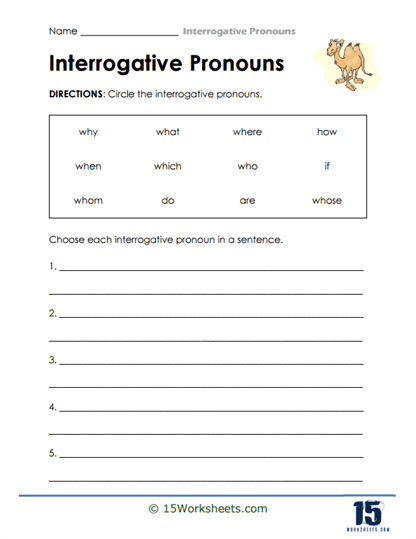
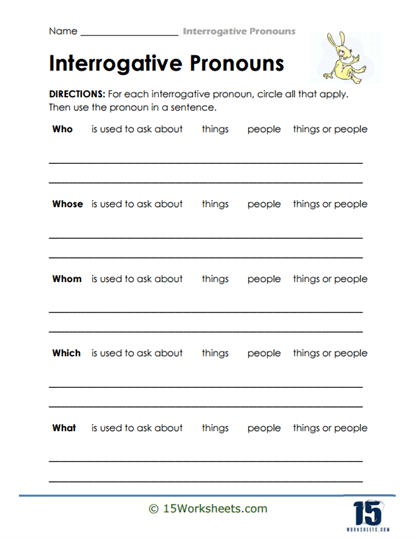
Questions become a lot more interesting when you know how to use the right interrogative pronoun. This collection of worksheets is designed to help students master who, whom, whose, which, and what in fun and practical ways. Through puzzles, riddles, picture prompts, and sentence rewrites, learners get hands-on practice using these little words that make a big difference.
The activities strike a balance between structure and creativity. Some worksheets focus on drills like choosing the correct pronoun or underlining examples in passages, while others encourage kids to build their own questions from prompts or images. With games like “Riddle Road,” “Clue Climb,” and “Curiosity Crusade,” the collection keeps grammar practice playful and engaging.
By working through these pages, students strengthen both their grammar accuracy and their communication skills. They learn how to ask sharper, clearer questions and connect those questions to answers. That means they’re not just memorizing pronouns; they’re using them as tools to explore, think, and interact with the world.
Have a Look Inside Each Worksheet
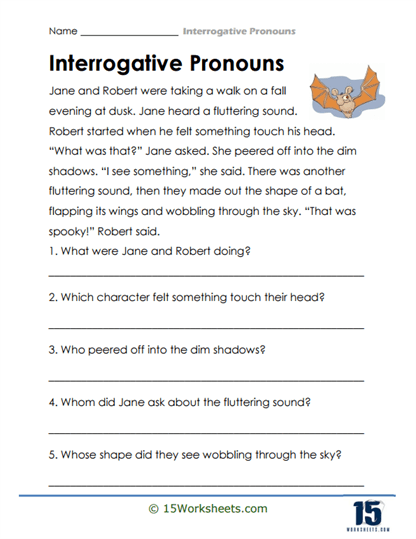
Twilight Questions
This worksheet asks students to use interrogative pronouns to create questions about short passages or prompts. It highlights how words like who, what, which, and whose shape inquiries. The activity blends reading comprehension with grammar. Kids practice connecting questions to context.
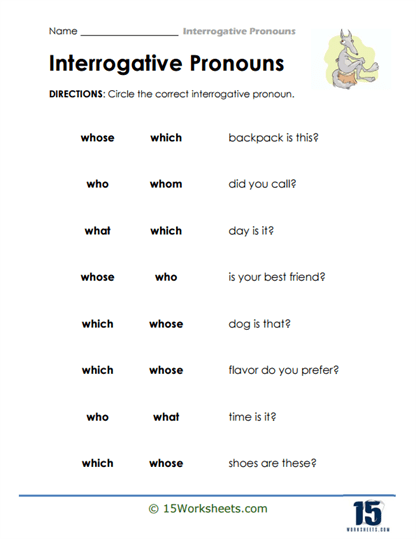
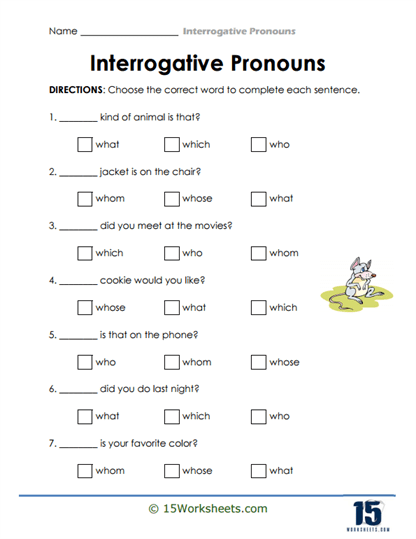
Pronoun Picker
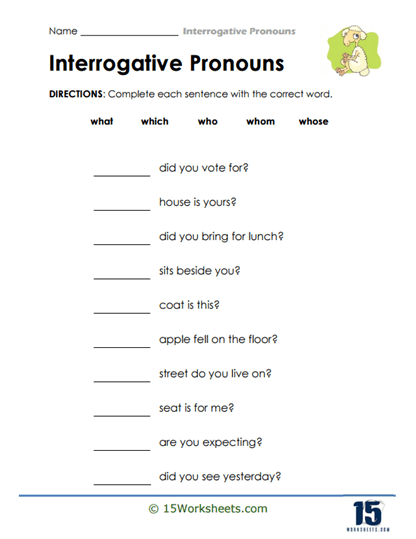
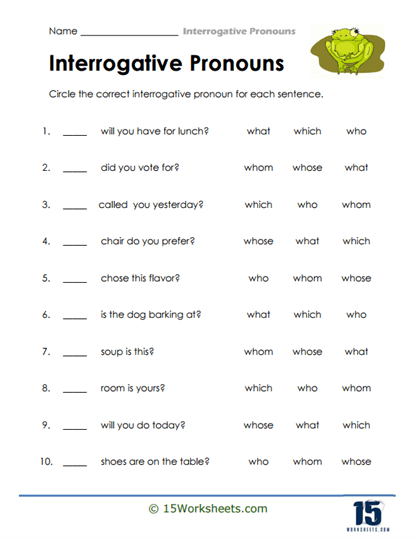
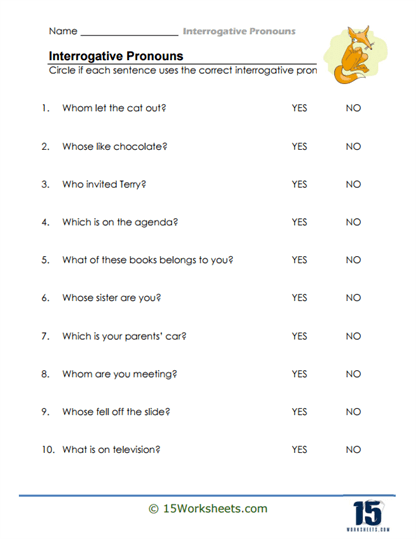
Students choose the correct interrogative pronoun to complete sentences. The task is multiple-choice style and fast-paced. It strengthens recognition and accuracy. Learners gain confidence in spotting the right pronoun form.
Riddle Road
Here kids answer and create riddles using interrogative pronouns. The playful format makes grammar feel like a game. It encourages critical thinking and creativity. Students see pronouns as part of fun problem-solving.
Curious Queries
This worksheet has learners write original questions using different interrogative pronouns. Prompts guide them to vary their question styles. It strengthens flexibility with grammar. Students also practice real-world inquiry skills.
Narration Change
Students rewrite sentences or dialogue using interrogative pronouns. The task emphasizes how pronouns change the tone and structure of questions. It builds editing and rewriting skills. Learners practice switching between narration and inquiry.
Pronoun Puzzle
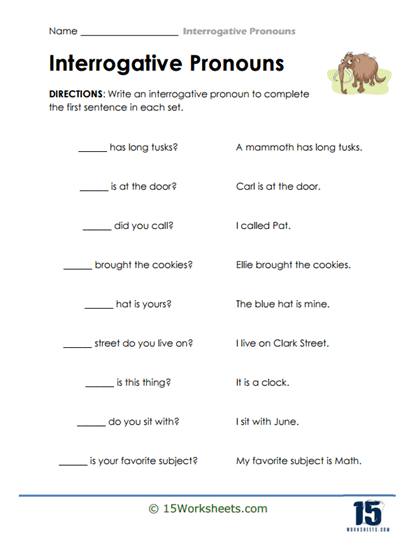
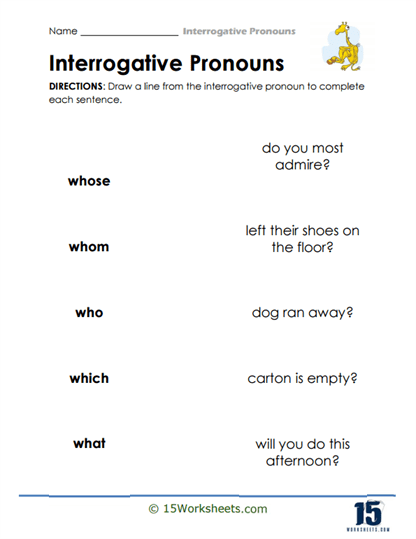
This activity works like a puzzle where kids match interrogative pronouns with their correct uses. The format keeps learning light and engaging. It’s a hands-on way to reinforce grammar knowledge. Students strengthen recognition through play.
Curiosity Crusade
Learners go on a “question quest,” writing and identifying questions with interrogative pronouns. The worksheet mixes recognition with creativity. It makes grammar practice feel like an adventure. Kids explore curiosity through structured prompts.
Pronoun Match
This worksheet focuses on matching interrogative pronouns with sentence fragments or situations. It shows how context determines which pronoun works best. The activity sharpens decision-making skills. It’s a quick, visual way to reinforce grammar.
Clue Climb
Students climb a “ladder” of clues by forming questions with interrogative pronouns. Each step adds a new challenge. The activity blends logic with grammar. It’s an engaging way to build fluency with questions.
Pronoun Puzzles
Here learners solve grammar puzzles centered on interrogative pronouns. They may unscramble, fill blanks, or connect phrases. The playful design makes repetition more fun. It keeps kids engaged while reinforcing usage.
The Answer Trail
Students follow a “trail” of questions and answers that highlight interrogative pronouns. The worksheet encourages back-and-forth thinking. It reinforces how questions naturally pair with answers. Learners build comprehension along with grammar.
Pronoun Check
This worksheet gives students short passages where they identify and underline interrogative pronouns. The task builds recognition skills in context. It feels like detective work with grammar. Kids practice spotting pronouns quickly.
Dialogue Change
Students rewrite dialogue to include interrogative pronouns. The activity makes grammar part of conversation practice. It shows how questions change tone and interaction. Learners strengthen both writing and speaking skills.
Picture Prompts
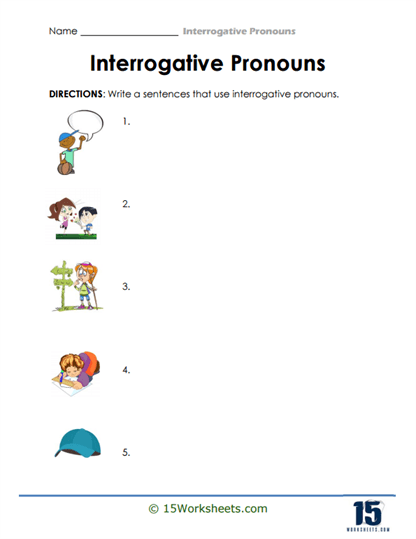
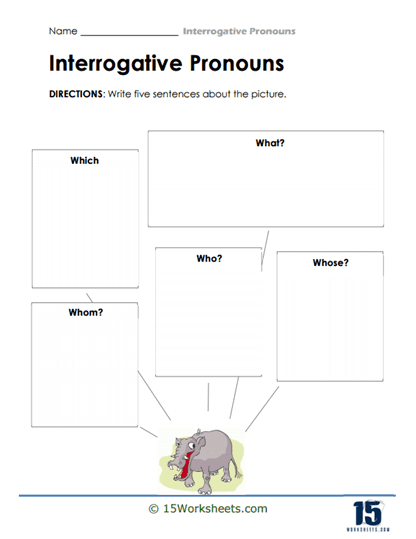
This worksheet uses images to inspire questions with interrogative pronouns. Students create questions about what they see. It connects grammar to real-world observation. The visual format makes it fun and engaging.
Question Builder
Here students are given prompts to build complete questions using interrogative pronouns. The structured activity guides them step by step. It reinforces word order and grammar accuracy. Learners gain confidence in forming clear, complete questions.
What Are Interrogative Pronouns?
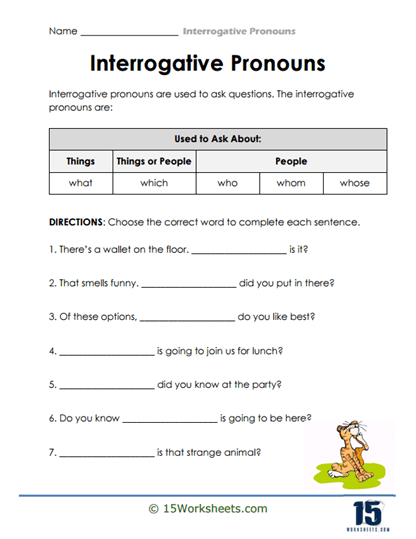
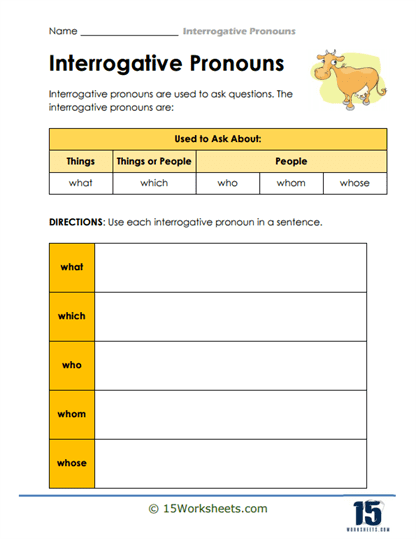
Interrogative pronouns are a specific type of pronoun used to ask questions. These pronouns include “who,” “whom,” “whose,” “what,” and “which,” and they are used to inquire about people, objects, or specific choices. “Who” is used when asking about a subject or person performing an action, as in “Who is coming to the party?” “Whom” is used when referring to the object of a verb or preposition, as in “Whom did you invite?” “Whose” asks about possession, as in “Whose book is this?” “What” is used for asking about things or seeking information in a more general sense, such as “What time is it?” Finally, “which” is used when a choice is being made among a limited set of options, like “Which dress do you prefer?”
They matter because they make questions shorter, clearer, and more natural. Without interrogative pronouns, we’d end up asking long, clunky questions like “What thing do you like?” instead of simply “What do you like?” These words allow us to ask about people, things, choices, and ownership with ease.
These worksheets give students a chance to practice interrogative pronouns in every kind of situation-filling blanks, building questions, rewriting dialogue, and even inventing riddles. By practicing, learners not only get the grammar right but also develop the curiosity and clarity that come with asking good questions.