
Salutations Worksheets
About These 15 Worksheets
Salutations might sound like a fancy word, but really, it’s just about how we say “hi,” “hello,” or “good morning” to one another. These worksheets take that simple idea and stretch it across all the little ways we greet people, whether it’s in person, on paper, or even in a digital inbox. The collection makes practicing polite language fun, approachable, and super relevant to everyday life. Think of it as a manners toolkit that comes disguised as games, puzzles, and writing prompts.
What makes these worksheets special is how they balance playful practice with real-world usefulness. Students don’t just match words to pictures-they also try role-plays, short writing tasks, and editing exercises. That means kids are actually rehearsing for those real-life moments when they’ll need to introduce themselves, write a letter, or send an email. It’s like getting a head start on both school success and everyday social interactions.
On top of that, many activities dip into culture and community. From greetings around the world to letters written to neighbors, kids see that salutations aren’t just words-they’re bridges that connect us. This helps them understand communication as something more than rules; it’s also about kindness, respect, and the way we show care for others. In short, these worksheets offer both language practice and a peek at the social world kids are growing into.
Have a Look Inside Each Worksheet
Greet Right
This worksheet helps kids learn when to use different greetings like “hi,” “hello,” or “good morning.” They’ll match situations with the right phrase, turning manners into a game. The activity encourages role-play for practicing real-world conversations. It’s a fun way to build social confidence and communication skills.
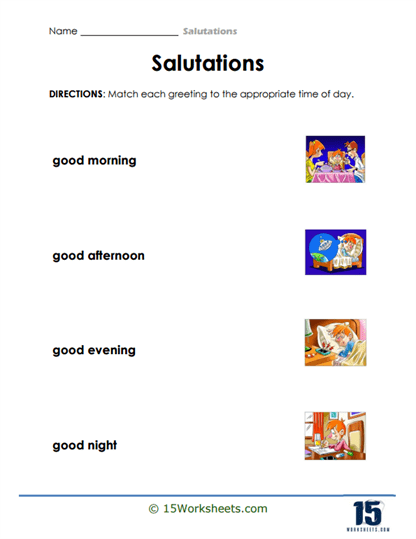
Time Greetings
Students practice greetings based on the time of day, such as “good evening” or “good afternoon.” They’ll connect clocks and scenarios to the correct phrases. This makes learning both visual and interactive. It helps kids master polite language they can use every day.
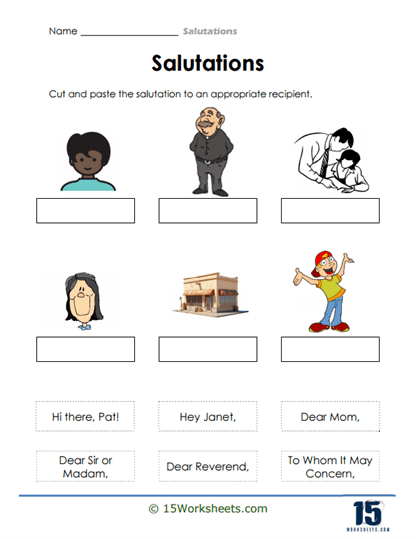
Greeting Match
Learners pair greetings with the situations they belong in. It feels like solving a matching puzzle with words and manners. The worksheet sharpens awareness of social context. Kids practice being polite while having fun.
Friendly Intros
This worksheet focuses on self-introductions and introducing others. Dialogue prompts give children simple scripts to follow. Role-play makes it feel like a mini social game. It boosts confidence and speaking fluency.
Greetings Galore
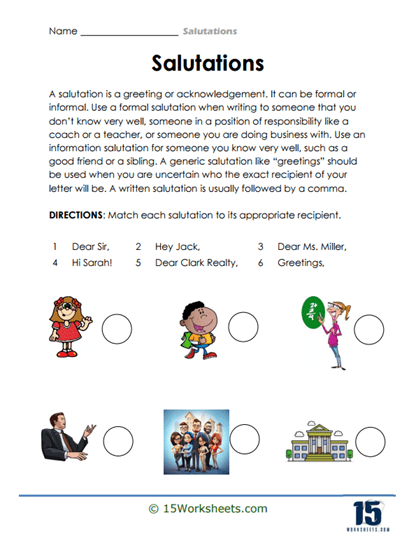
Kids explore a wide variety of greetings, from casual to formal. Activities include matching, writing, and role-playing. They’ll see how tone and word choice change the mood of a conversation. It helps them adapt language to fit different settings.
Greeting Sort
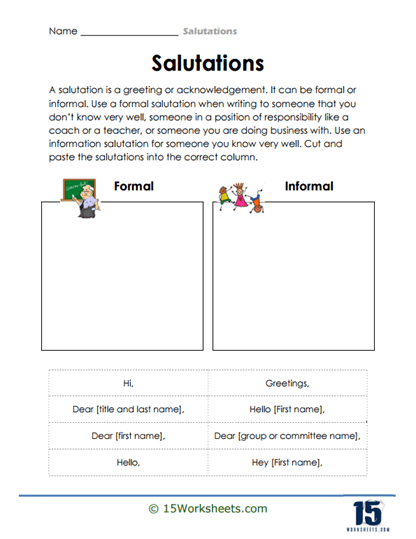
Children sort greetings into categories like formal, casual, or time-specific. The task works like a classification game that keeps learning light. Students start to think about audience and context. This strengthens awareness of appropriate communication.
Hello Choices
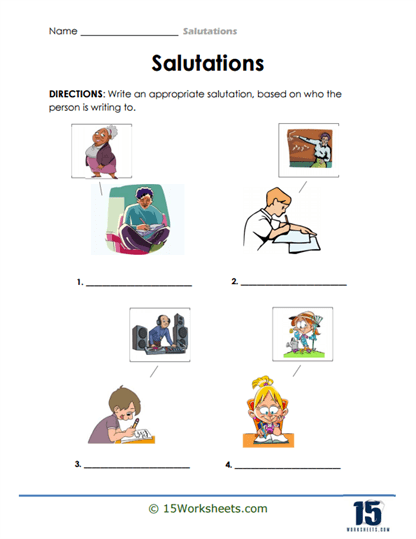
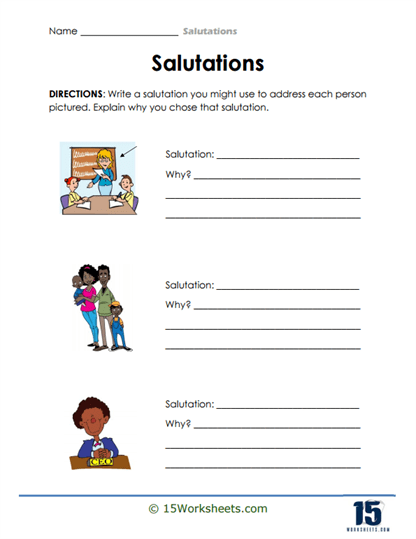
Students pick the best greeting for different scenarios. Each question lets them explain why one greeting fits better than another. Activities might involve circling, coloring, or highlighting answers. It makes manners engaging and memorable.
Greeting Facts
This worksheet adds fun trivia about greetings around the world. Students may match countries with their cultural salutations. It sparks curiosity about global customs and polite language. The activity connects classroom learning to real-world culture.
Inbox Etiquette
Here kids practice email and online communication. They’ll learn how to start messages with the right level of formality. Examples help them see the difference between chatting with a friend and writing to a teacher. It builds a foundation for digital manners.
Write Mail
Students practice writing letters or emails with proper greetings. Guided prompts help them choose openings and closings. They also work on structuring a message clearly. It makes writing practice both useful and creative.
Mail Ready
Kids review sample letters to spot whether the greeting fits. They act like editors, correcting mistakes in formality or tone. The task feels like solving a mini mystery. It strengthens proofreading and etiquette skills together.
Letter Launch
Students write a complete letter from start to finish. They’ll choose greetings, draft their message, and end with closings. The worksheet makes the process step-by-step and fun. It ties together everything learned in the salutations set.
Postcard Greetings
This worksheet introduces the playful side of writing postcards. Students learn short and friendly greetings to send to family or friends. They’ll practice writing quick notes with proper openings. It’s a cheerful way to blend writing and social skills.
Morning Scribbles
Here kids practice writing short morning notes with proper salutations. The activity encourages quick, daily writing that builds fluency. Prompts keep it light and fun, like writing a note to a classmate. It’s a gentle introduction to polite written communication.
Dear Neighbor
Students imagine writing letters or notes to a neighbor. They’ll practice using friendly greetings and closings. The worksheet makes kids think about kindness and community. It connects polite writing with real-life situations.
What Are Salutations?
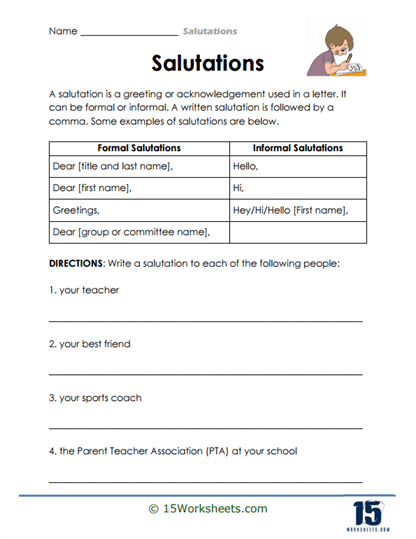
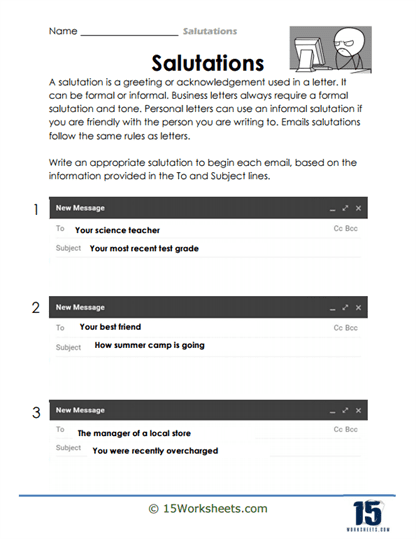
Salutations are the greetings or acknowledgements used at the beginning of a letter, email, or other forms of written communication. They serve as a formal or informal way to address the recipient, setting the tone for the rest of the message. In both grammar and language, salutations are crucial because they help establish the relationship between the writer and the reader, conveying respect, familiarity, or formality depending on the situation.
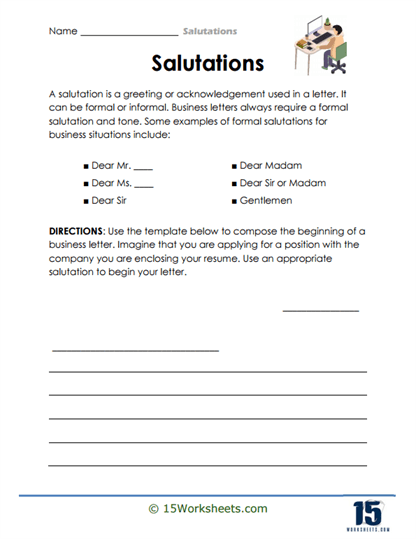
In grammar, salutations are typically followed by a comma or a colon, depending on the level of formality and the style guide being used. For example, “Dear Mr. Smith,” is a common formal salutation in a business letter, while “Hi Sarah,” might be used in a more casual email. The choice of salutation often reflects the writer’s awareness of social norms and conventions, showing an understanding of the appropriate level of formality or informality based on the relationship with the recipient.
From a linguistic perspective, salutations play an important role in communication as they help to create a connection between the writer and the reader right from the start. They function as a social cue that prepares the reader for the message that follows, whether it’s a friendly note, a formal request, or a professional correspondence. The use of an appropriate salutation can make the reader feel respected and valued, while an inappropriate one might lead to misunderstandings or convey a lack of respect.
Salutations also serve the purpose of setting the context for the message. By choosing the right salutation, a writer can immediately convey their intentions and the nature of the communication. For example, starting an email with “Greetings,” might indicate a formal or official communication, while “Hey there!” suggests a more relaxed and informal tone. This initial choice of words is a powerful tool in guiding the reader’s expectations and ensuring that the message is received in the intended manner.