
Word Use in Statements Worksheets

About These 15 Worksheets
Words are the building blocks of sentences, but how we use them makes all the difference. This collection of worksheets helps students practice spotting, choosing, and applying the right words in different contexts. From circling nouns and verbs to correcting common mistakes like to/too/two, learners get hands-on activities that make grammar feel approachable and practical.
The worksheets cover a wide variety of word skills. Some focus on identifying parts of speech-like nouns, verbs, and adverbs-while others emphasize precision with word choice in sentences. There are also creative activities, such as describing pictures or completing sentences, that help learners apply what they’ve practiced. The mix of structured drills and open-ended prompts keeps students engaged while reinforcing accuracy.
Most importantly, these worksheets connect grammar to real-world communication. Students learn that choosing the right word is key to clarity, whether they’re writing, speaking, or editing. By practicing across multiple word types and sentence contexts, learners build confidence and fluency. This collection turns “word work” into a meaningful step toward stronger language skills.
Have a Look Inside Each Worksheet
Circle Me
Students practice identifying specific words in sentences by circling them. The task sharpens recognition and attention to detail. It makes grammar feel like a game of “find and mark.” Learners build quick instincts for spotting key words.
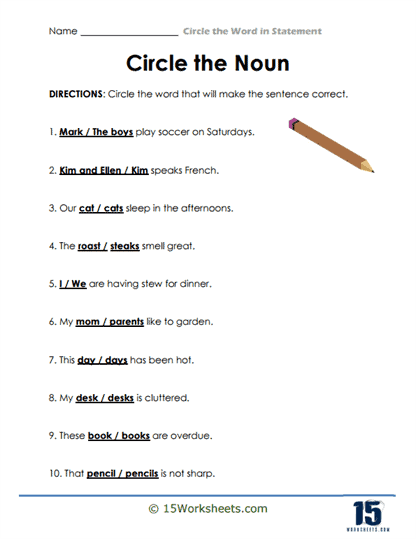
Circle the Noun
This worksheet focuses on finding nouns in given statements. Students underline or circle the correct words. The activity reinforces one of the most important parts of speech. It’s a simple but effective way to build grammar awareness.
Movement Words
Students learn to identify verbs that show movement or action. They read sentences and pick out the “doing” words. The activity connects grammar with real-life actions. It helps learners link meaning to word function.
What Makes The Sentence
This worksheet highlights the building blocks of a complete sentence. Students identify which words or groups of words make the sentence whole. The activity emphasizes structure and comprehension. Learners gain awareness of how words work together.
What Actions
Here, learners focus on spotting action verbs in sentences. They practice distinguishing between actions and other word types. The activity is straightforward but builds critical recognition skills. It makes verbs easier to identify in everyday use.
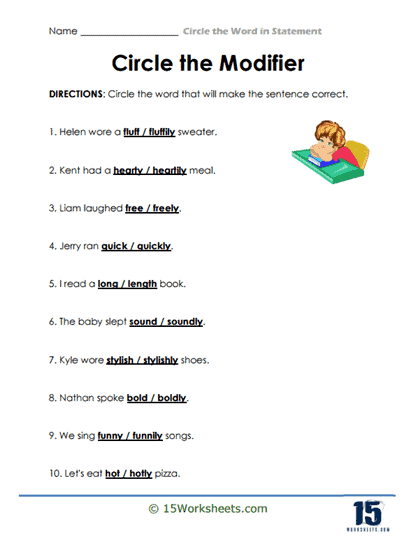
Using -ly
Students explore adverbs ending in -ly. They learn how these words modify verbs and adjectives. The activity reinforces both spelling and function. Learners expand vocabulary while understanding word roles.
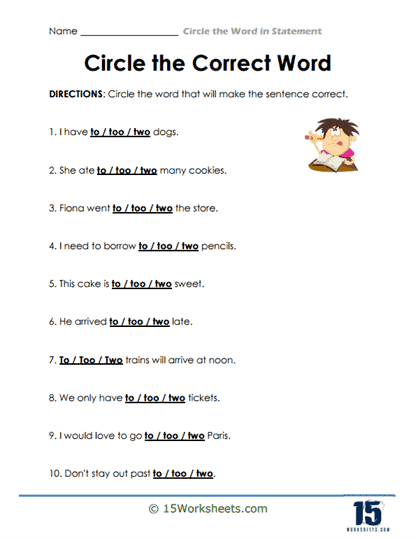
To, Too, Two
This worksheet focuses on homophones that often cause confusion. Students choose the correct form of to, too, or two in sentences. The activity builds precision and editing skills. It helps learners avoid common grammar mistakes.
This or That
Students practice using demonstrative words this and that correctly. They read sentences and decide which fits best. The activity emphasizes clarity and word choice. It makes abstract grammar concepts more concrete.
What Fits Best?
This worksheet asks learners to select the word that best completes each sentence. It’s a quick decision-making activity. The task reinforces sentence meaning and grammar. Students see how one word choice can change clarity.
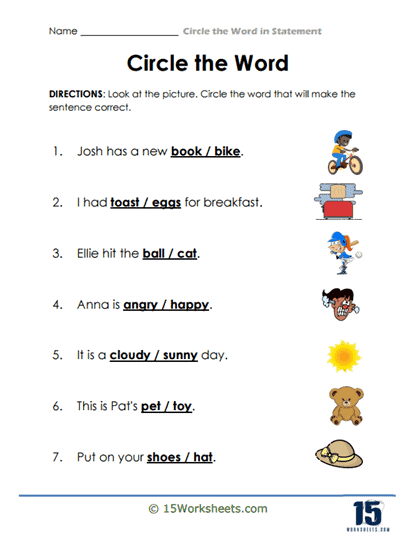
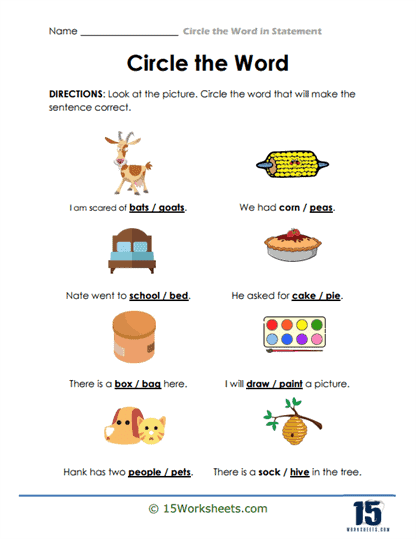
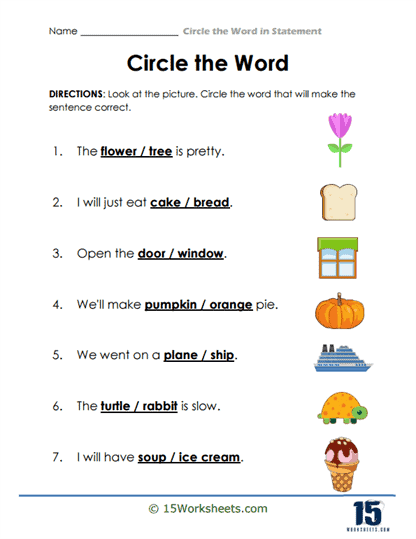
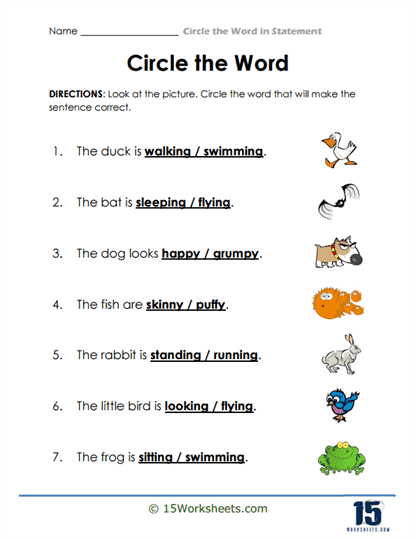
Picture Use
Students look at images and use the right words to describe them. The activity blends visuals with grammar practice. It helps learners apply vocabulary in real contexts. It’s fun, engaging, and hands-on.
Complete the Sentence
This worksheet has learners finish sentences with appropriate words. It builds writing fluency alongside grammar knowledge. The activity encourages creative word use. Learners practice thinking of multiple ways to finish thoughts.
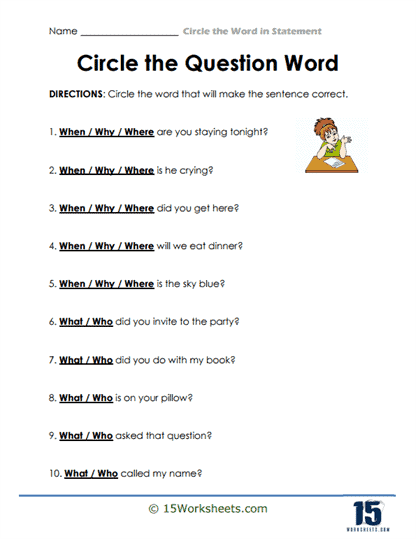
Question Words
Students practice using who, what, where, when, why, and how. The activity reinforces interrogative words in statements and questions. It builds both comprehension and writing skills. Learners gain confidence forming complete, meaningful sentences.
What Are They Doing?
Here, students describe actions in pictures using verbs. The activity connects grammar to observation. It keeps practice fun and visual. Learners strengthen their ability to describe real-world events.
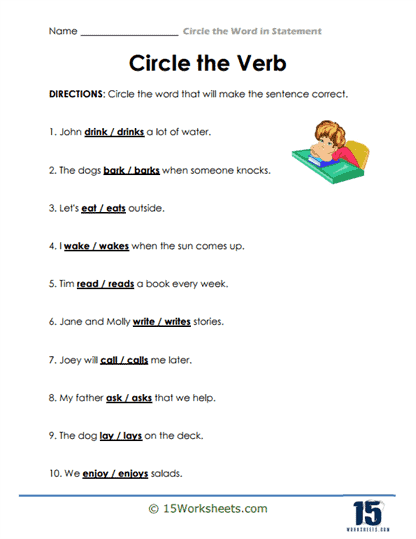
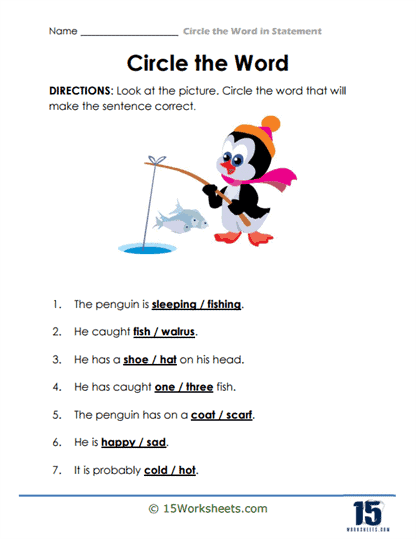
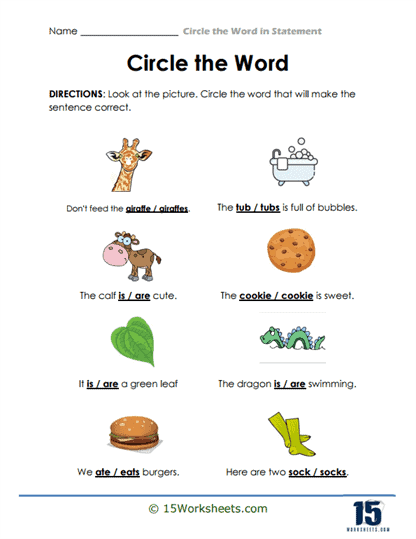
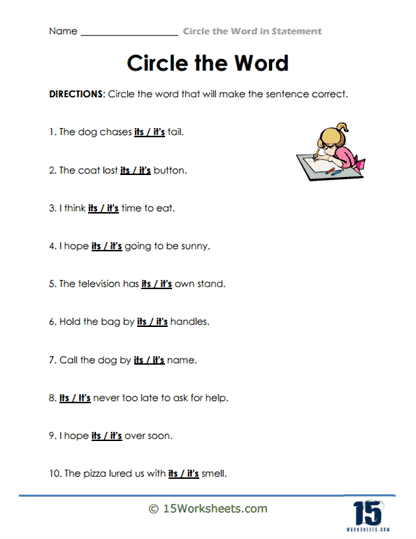
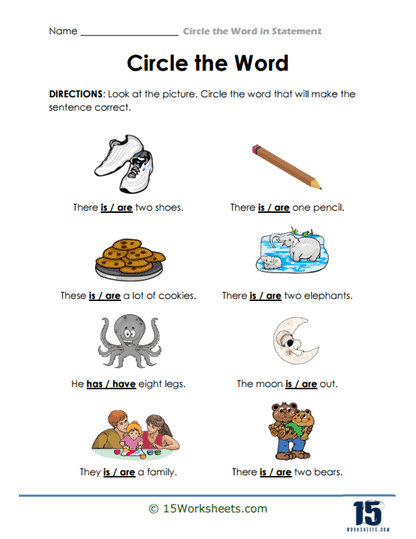
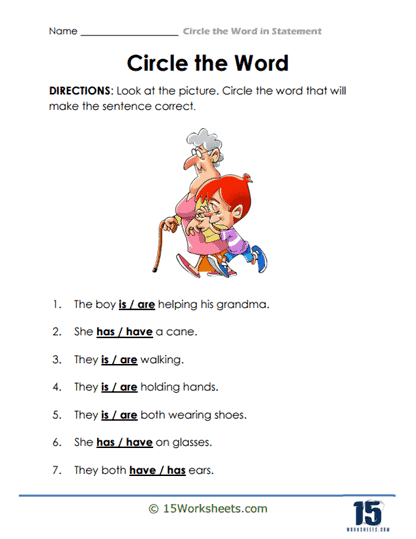
Circle the Word
Students identify and circle specific types of words in sentences. The task is simple but highly effective. It builds recognition and attention to detail. Learners improve at spotting grammar patterns quickly.
Make it Correct
This worksheet asks students to fix mistakes in sentences. They replace incorrect words with the right ones. The activity builds editing skills and attention to grammar rules. It shows how small changes make writing accurate.
Selecting the Proper Words for Statements
Every good sentence depends on choosing the right words. This collection of worksheets helps students practice selecting the proper nouns, verbs, adverbs, and other word types that make statements clear and accurate. Instead of guessing or repeating the same words, learners get hands-on activities that train them to recognize and apply the best word for each context.
The worksheets include a wide variety of exercises-circling nouns and action words, correcting common mix-ups like to/too/two, and completing sentences with the most fitting option. Some activities are straightforward drills, while others use pictures, creative prompts, or editing practice to make word selection more engaging. The mix ensures learners strengthen both accuracy and confidence.