
Collocation Worksheets
All About These 15 Worksheets
Collocations are like word best friends-certain words just love to hang out together. You “make a decision,” but you don’t “do a decision.” These worksheets give kids tons of practice noticing and using those natural word partnerships. The result? They start sounding less like learners stringing words together and more like confident English speakers.
Each worksheet in this collection tackles collocations from a fresh angle. Some focus on verbs (“make vs. do”), while others zoom in on prepositions, nouns, or adverbs. Kids get to circle, match, sort, and even puzzle their way through English word pairings. The variety keeps the learning active and fun, while giving students repeated practice until collocations start to “click.”
Beyond grammar drills, collocations are what make English sound authentic. We use them every day when we “take notes,” “earn money,” or “run late.” By working through these activities, students gain a natural feel for how English works in real life. It’s practice that pays off in smoother speaking, clearer writing, and more confident communication.
Have a Look Inside Each Worksheet
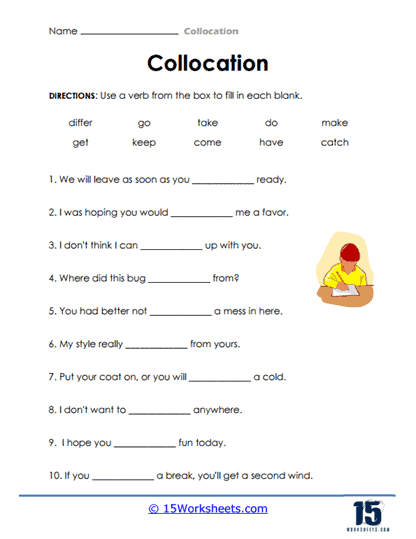
Verbs in Harmony
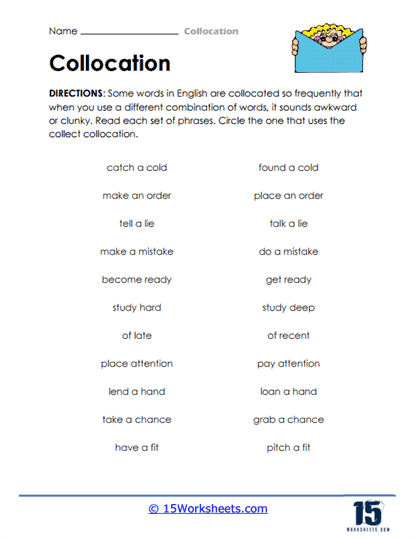
Students practice combining verbs with their natural collocation partners. This helps them learn which word pairs “sound right” in English. It’s like tuning up word instruments so the sentence music flows smoothly. A perfect way to sharpen fluency and vocabulary.
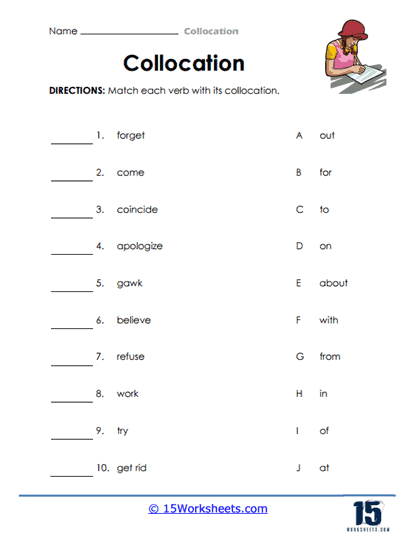
Collocation Connection
Learners match up word pairs such as “make progress” or “take notes.” It feels like a mix-and-match puzzle, making it interactive and fun. The activity builds an instinct for natural phrasing. It’s excellent practice for smoother writing and conversation.
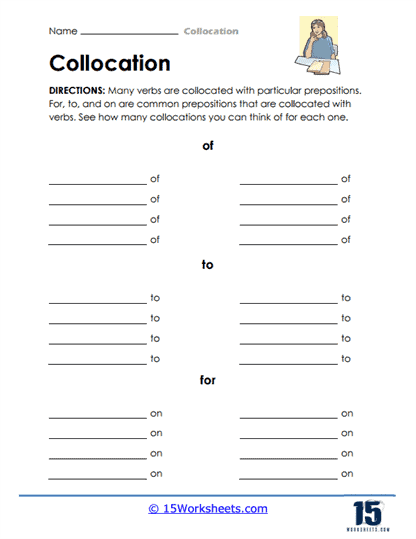
Preposition Bonanza
Students work on collocations that depend on the right preposition. It shows how little words like “in,” “on,” and “at” make big differences. The task sharpens grammatical precision. Great for tackling one of the trickiest areas of English collocations.
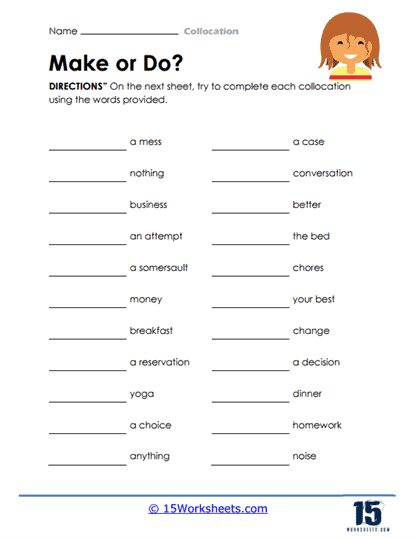
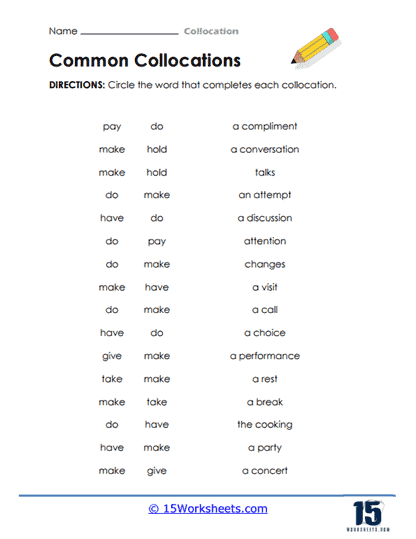
Make It or Do It?
This worksheet challenges kids to decide if “make” or “do” is the correct choice. It’s quick-fire practice with two high-frequency verbs. The exercise builds confidence in choosing the right collocation. Perfect for everyday speaking and writing situations.
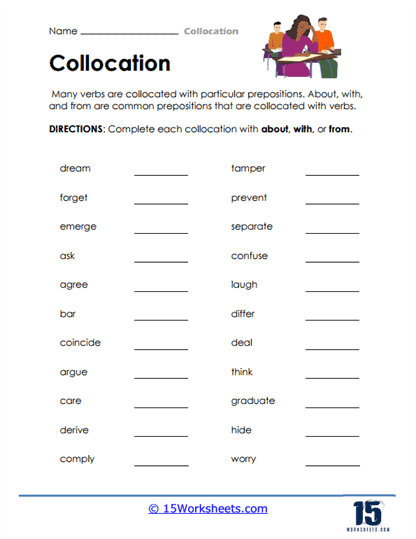
About, With, or From
Students pick the correct preposition to complete expressions. It’s a fill-in-the-blank challenge that encourages critical thinking. Learners get a better grasp of how prepositions connect naturally to words. It’s a handy way to boost accuracy and fluency.
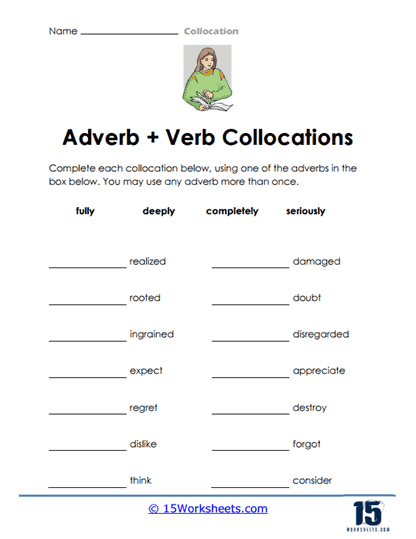
Adverb Magic
Here, students practice collocations with common adverbs like “deeply” or “strongly.” The activity shows how adverbs intensify meaning. Kids build vocabulary while polishing their grammar. It makes sentences more colorful and expressive.
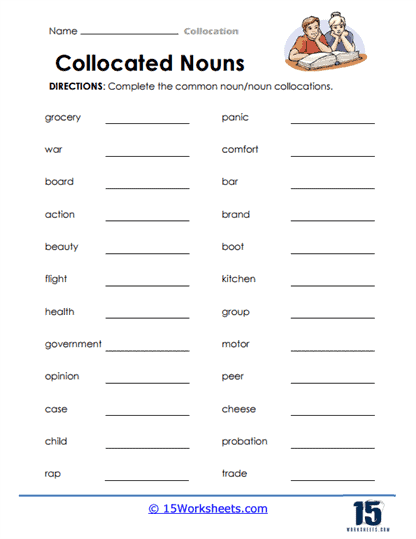
Noun Match-Up
Students pair nouns into collocations that commonly occur in English. It’s like a word-matching game with a real-life twist. This strengthens recognition of everyday phrases. It’s practical practice that builds reading and speaking fluency.
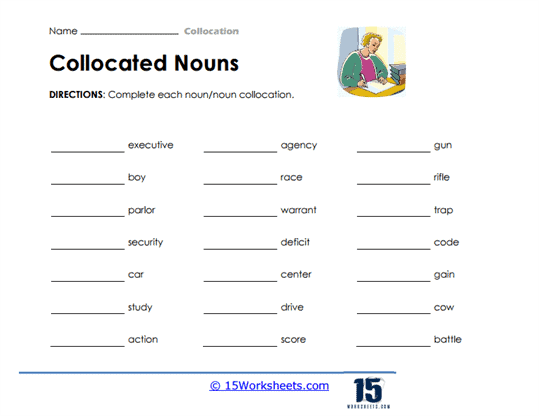
Noun Association
Learners link nouns with the words they naturally go with. The task is part puzzle and part vocabulary builder. It helps them see patterns in how English words combine. A useful boost for confidence in speaking and writing.
Circle to Complete
Kids choose the correct collocation by circling the right word in sentences. It’s simple but interactive. The worksheet strengthens recognition of the “right-sounding” choice. It builds instinctive comfort with English expressions.
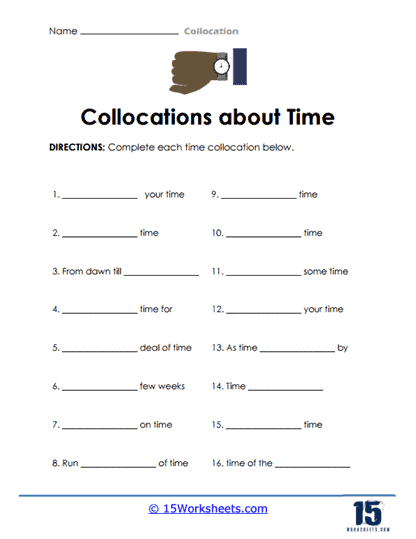
Completing Time Phrases
Students fill in blanks to complete collocations about time. Phrases like “on time” or “at the moment” become familiar. The activity makes English feel more natural. It’s excellent for both spoken and written practice.
Money Talks
This worksheet dives into collocations related to money. Learners use phrases like “spend money” and “earn interest.” It’s highly practical vocabulary with real-world connections. Kids get to practice English that will come up in everyday life.
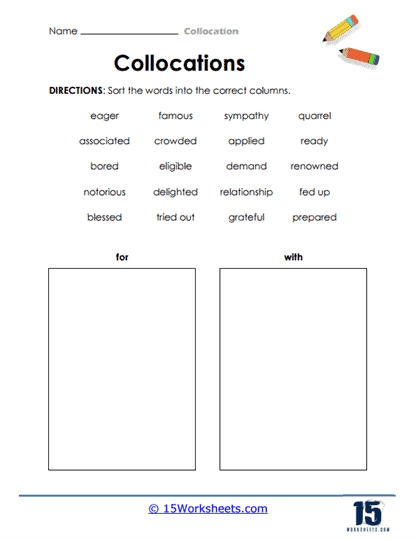
Sorting ‘For’ and ‘With’
Students sort collocations into groups depending on whether they use “for” or “with.” It’s a classification challenge with a grammar twist. The exercise highlights subtle differences. It’s a smart way to polish accuracy in preposition use.
Find the Right Word Combination
Learners pick the best-fitting collocation in different sentence contexts. It’s a multiple-choice style activity that makes kids think critically. They learn how to spot natural word pairings. It reinforces good instincts for fluent English.
Get What?
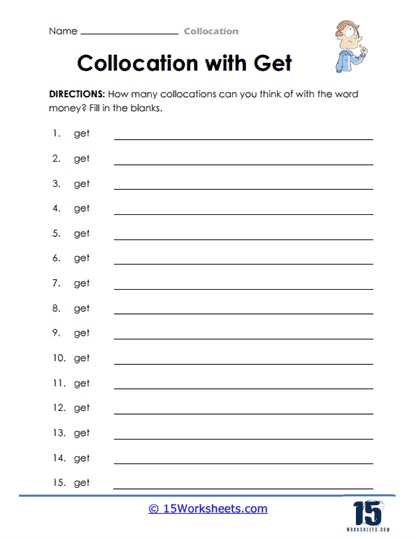
This worksheet focuses on collocations that use the verb “get.” Students practice completing expressions like “get ready” or “get permission.” It shows just how flexible one small verb can be. A fun, targeted way to expand vocabulary.
Mastering Common Pairings
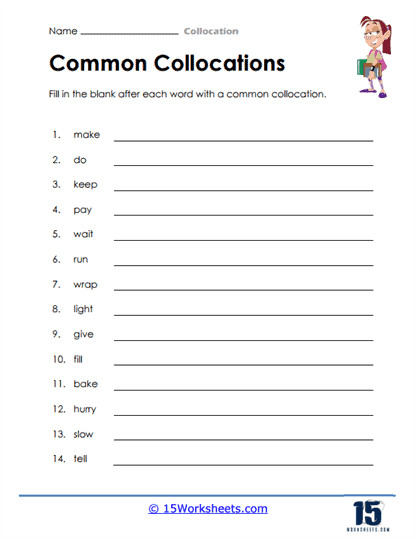
Students review a wide mix of collocations to reinforce what they’ve learned. The worksheet works like a capstone activity, pulling together all the patterns. It gives lots of practice for fluency and confidence. A perfect wrap-up for collocation mastery.
What Are Collocations?
Collocations are words that naturally stick together in a language. They’re the reason we “fast asleep” but not “quick asleep,” or “strong coffee” instead of “powerful coffee.” English has thousands of these common pairings, and learning them makes your speech sound more fluent and natural.
They matter because they help learners avoid awkward phrasing and misunderstandings. Knowing collocations is like having insider knowledge about how native speakers put words together. It’s not just grammar-it’s rhythm, flow, and word chemistry all rolled into one.
This worksheet collection takes that tricky idea and makes it simple. By practicing with collocations in different formats, students build a sharper ear for natural language. They don’t just memorize vocabulary-they learn how words actually live together in English sentences. That way, they can write and speak with the ease of someone who really “gets” English.