
Verb Tense Worksheets
About These 15 Worksheets
Verb tenses are how we show time in language-whether something already happened, is happening right now, or will happen later. This collection of worksheets gives students practice with all the major tenses, from the basics like past, present, and future to more advanced forms like participles and present perfect. By mixing drills, sentence rewrites, and creative prompts, the worksheets make grammar practice both structured and engaging.
The activities begin with simple recognition-spotting and labeling tenses in sentences-before moving into changing verbs from one tense to another. Students get practice with regular and irregular verbs, helping verbs, and participles. Eventually, they demonstrate mastery by writing their own original sentences in the requested tense. This step-by-step structure ensures that kids don’t just memorize rules, but actually apply them in meaningful contexts.
And because tenses are essential for storytelling, essays, and everyday conversations, these worksheets give students skills they’ll use constantly. Whether they’re explaining what they did yesterday, what they’re doing now, or what they’ll do tomorrow, verb tenses keep their writing and speech clear. With these worksheets, students build the confidence to express time accurately in any situation.
Have a Look Inside Each Worksheet
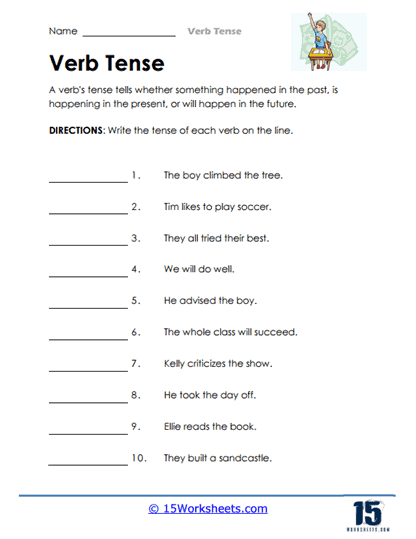
Label the Tense
Students read verbs in sentences and label them as past, present, or future. It’s a quick classification activity that builds awareness. The format encourages close reading and careful thinking. Perfect for introducing the idea of verb tenses.
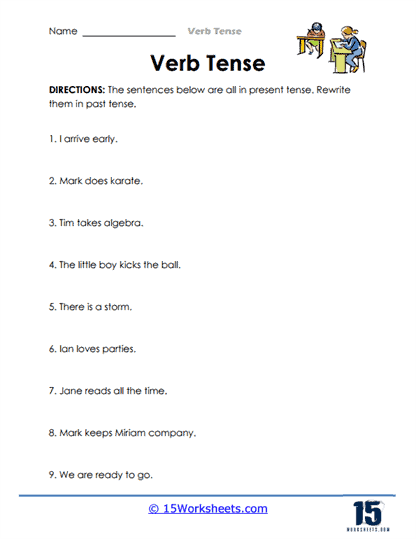
Present to Past Flip
Learners take present tense verbs and rewrite them in the past tense. This shows how verbs shift with time. The exercise reinforces regular and irregular patterns. A solid step for understanding changes in meaning.
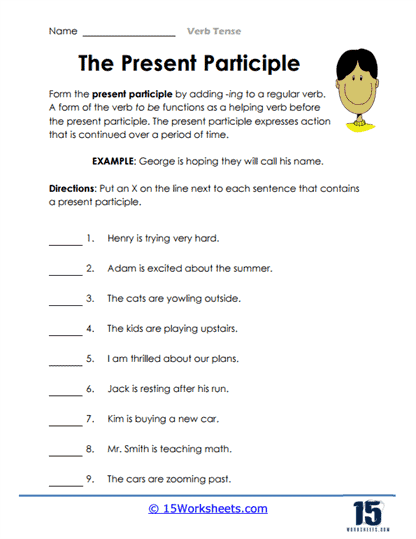
The Present Participle
This worksheet focuses on verbs ending in -ing. Students practice spotting and using them in sentences. It explains how participles help form continuous tenses. Repetition strengthens recognition and usage.
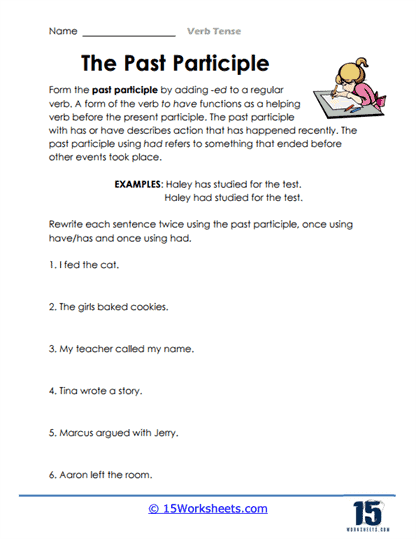
The Past Participle
Kids work with past participles like eaten, gone, or written. The activity highlights how they pair with helping verbs. It’s a practical way to reinforce perfect tense forms. Great for tackling irregular verbs too.
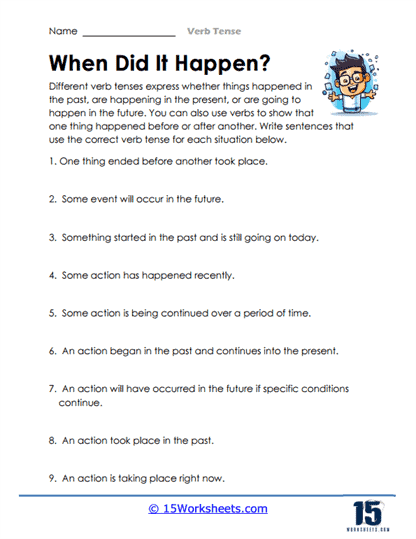
When Did It Happen?
Students identify the tense of each verb in context. They practice matching verb forms to time clues in sentences. This builds comprehension as well as grammar. A fun way to connect tense with storytelling.
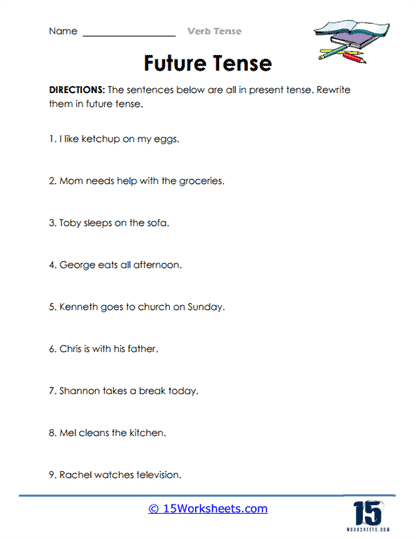
Place in the Future
Learners change given verbs into future tense forms. This highlights the use of will and going to. It helps students practice projecting actions forward in time. Clear and simple for building confidence.
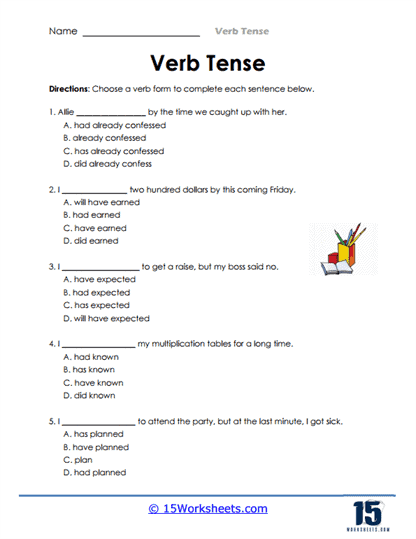
Verb Form
Students fill in blanks with the correct verb form based on context. It’s a versatile worksheet that touches on multiple tenses. Learners think critically about grammar and meaning. A flexible practice tool.
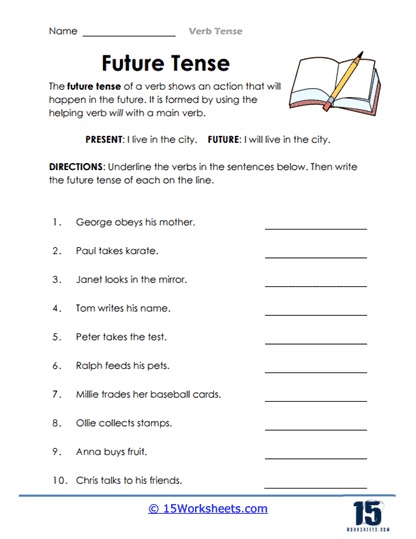
Future Tense
This worksheet zeroes in on verbs that describe future actions. Students complete sentences using will + verb. It’s straightforward and repetition-heavy. Great for solidifying the basics of future tense.
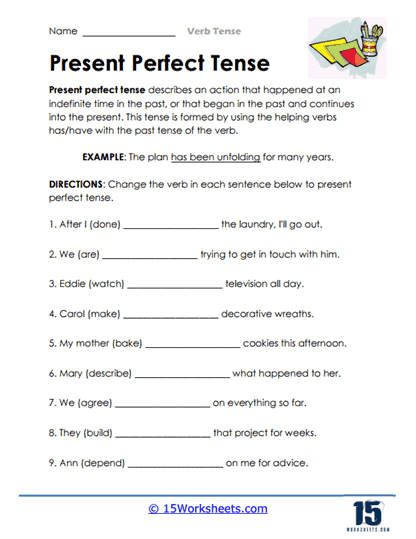
Present Perfect
Learners practice with the structure has/have + past participle. The activity shows how present perfect connects the past with the present. It emphasizes both form and meaning. A step toward more advanced grammar.
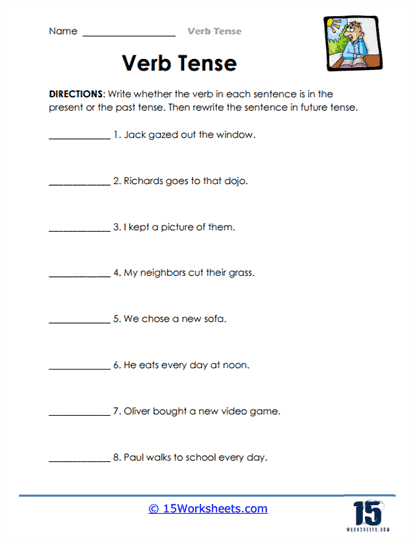
Past or Present
Students decide whether a verb in context is past or present. The side-by-side contrast builds understanding of time shifts. It strengthens both recognition and comprehension. A simple but effective drill.
Tense as Indicated
Students rewrite sentences in the tense requested by the directions. It’s a flexible activity that practices switching back and forth. Learners develop agility with verb forms. This builds editing and revision skills.
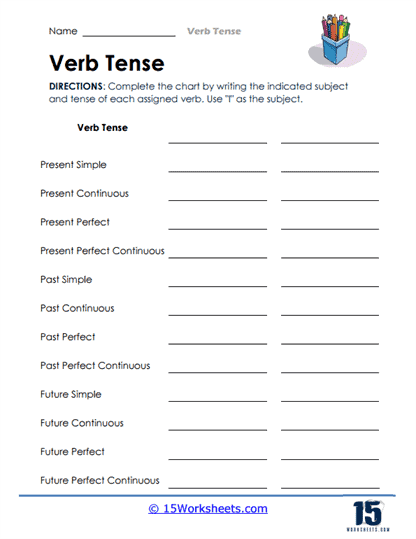
“I” as the Subject
This worksheet focuses on using I with correct verb tenses. It helps reinforce subject-verb agreement. Students see how personal pronouns affect verb forms. Great for reinforcing everyday grammar.
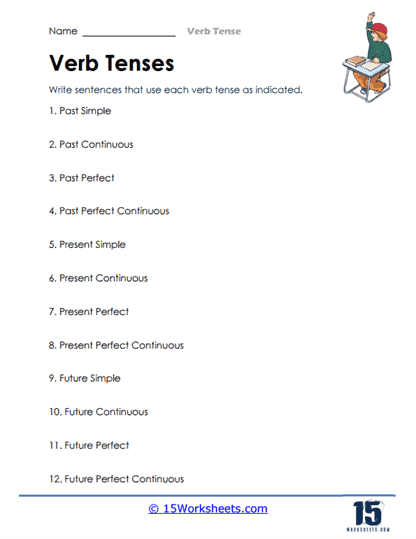
Demonstrate Tenses
Learners show their understanding by writing original sentences in different tenses. This is open-ended practice that encourages creativity. It demonstrates true mastery of the skill. A great capstone worksheet.
Tense Changer
Students take sentences and change them into a new tense. It’s like translating within English. This reinforces flexibility and accuracy. A fun editing-style activity.
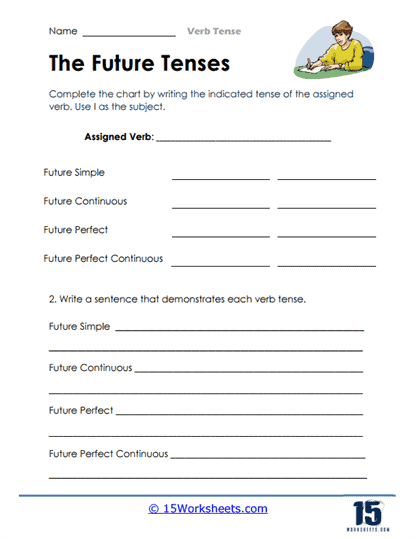
The Future Tenses
This worksheet expands on basic future tense to include variations like will vs. going to. It gives students a deeper look at future forms. The activity highlights meaning as well as structure. Perfect for advanced practice.
What Is Verb Tense?
Verb tense is the form of a verb that tells us when an action happens. For example, jumped is past tense, jump is present tense, and will jump is future tense. Without tense, we wouldn’t know the timing of events-it would feel like reading a story with the clock missing.
Verb tense matters because it keeps communication organized and meaningful. Imagine saying, “I eat breakfast” versus “I ate breakfast”-one means you’re doing it now, the other means it already happened. The small change in verb form completely changes the sentence.
These worksheets help students practice verb tenses until they become second nature. Through labeling, rewriting, and creating their own examples, learners get comfortable shifting verbs to fit any time frame. By the end, they’ll be able to tell stories, explain routines, and describe future plans with accuracy and confidence.
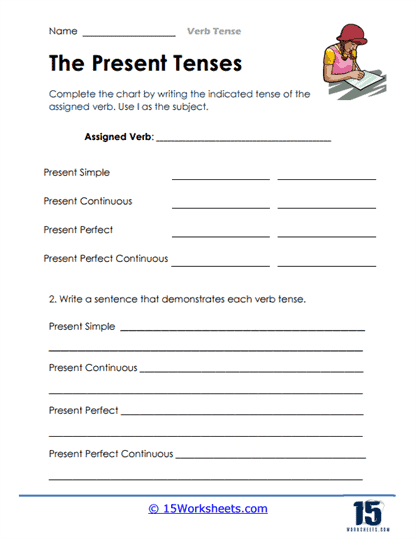
1. Present Tenses
Simple Present
Used for facts, habits, and general truths.
I eat breakfast every morning.
The sun rises in the east.
Present Continuous
Used for actions happening right now or around the present time.
I am reading a book.
She is cooking dinner.
Present Perfect
Used for actions that happened at an unspecified time in the past or that continue into the present.
I have visited Paris.
He has lived here for five years.
Present Perfect Continuous
Used for actions that began in the past and are still happening or were happening recently.
I have been studying English for two hours.
She has been working here since January.
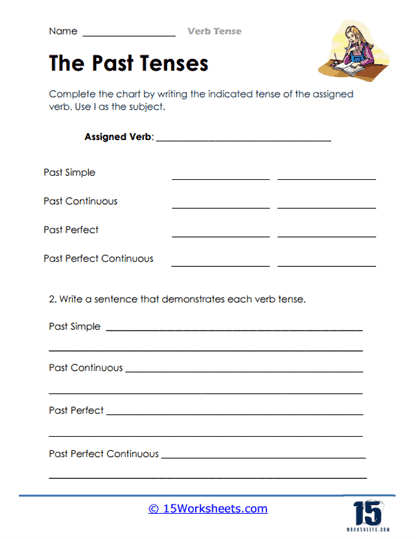
2. Past Tenses
Simple Past
Used for actions completed at a specific time in the past.
I watched a movie yesterday.
They played football last weekend.
Past Continuous
Used for actions that were ongoing in the past, often interrupted by another action.
I was cooking when the phone rang.
They were studying at 8 p.m. last night.
Past Perfect
Used for actions completed before another past action.
I had finished dinner before he arrived.
She had studied English before moving to London.
Past Perfect Continuous
Used for actions that were ongoing in the past up until another action.
I had been working all day before I went home.
They had been waiting for an hour when the bus came.
3. Future Tenses
Simple Future
Used for actions that will happen in the future.
I will call you tomorrow.
She will travel to Japan next year.
Future Continuous
Used for actions that will be ongoing at a specific time in the future.
I will be studying at 9 p.m. tonight.
They will be traveling during the holidays.
Future Perfect
Used for actions that will be completed before a certain future time.
I will have finished the report by tomorrow.
She will have graduated by next summer.
Future Perfect Continuous
Used for actions that will continue up until a specific future point.
By next week, I will have been working here for a year.
He will have been waiting for two hours by the time she arrives.