
There Is or There Are Worksheets
All About These 15 Worksheets
The phrases there is and there are may look simple, but they’re essential tools for describing the world around us. They help us point out what exists, whether it’s one object (There is a book on the table) or many (There are books on the table). This collection of worksheets gives students hands-on practice with these two forms, turning a basic grammar skill into a fun and practical learning experience.
Each worksheet in the set focuses on a slightly different angle-some offer fill-in-the-blank practice, others use pictures for visual prompts, while a few challenge students to correct mistakes or rewrite sentences in both singular and plural forms. This variety ensures that learners don’t just memorize rules but also apply them in real contexts. From circling answers to creating imaginative sentences, kids get both accuracy and creativity in their practice.
Most importantly, these worksheets connect directly to everyday communication. There is and there are show up constantly in descriptions, conversations, and writing. By practicing with animals, buildings, and imaginative scenes, students learn how to use these structures naturally. The collection builds both confidence and fluency, making learners comfortable with this simple but powerful grammar tool.
Have a Look Inside Each Worksheet
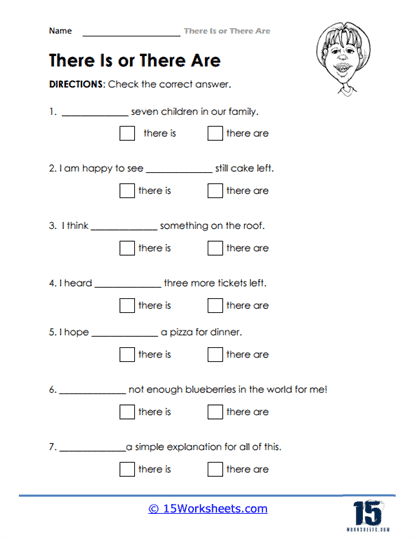
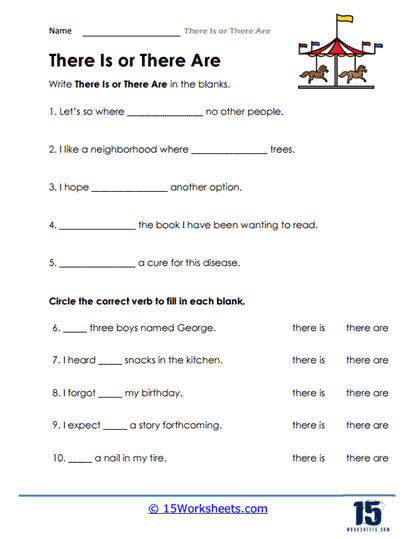
Mark Your Choice
Students decide whether to use there is or there are in each sentence. The activity strengthens recognition of singular versus plural agreement. It feels like a quick decision-making game. Learners get repeated practice with the most common patterns.
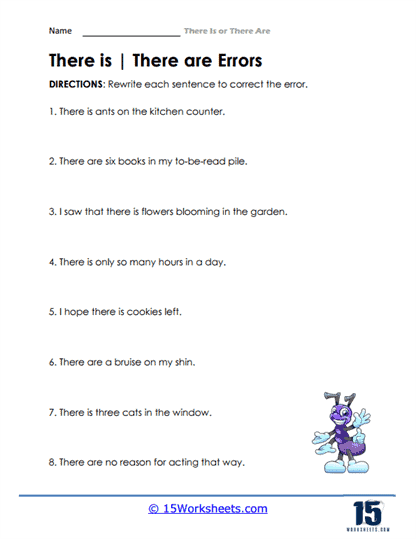
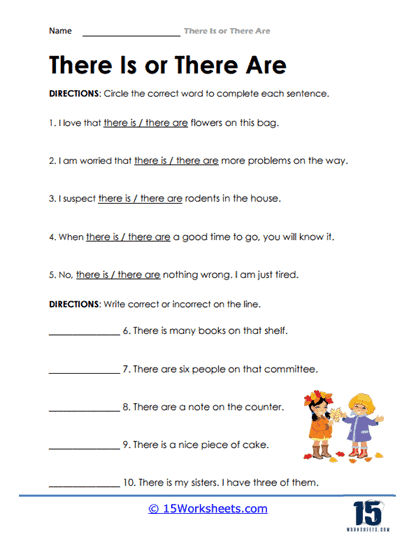
Rectify The Mistakes
Here, students correct sentences where there is and there are have been used incorrectly. The task builds editing skills alongside grammar knowledge. It teaches attention to detail in sentence construction. Learners see how small changes fix big errors.
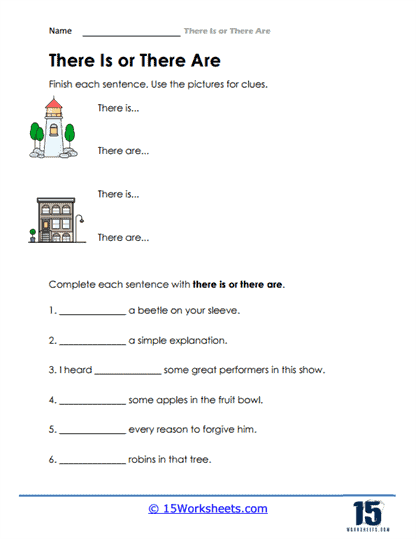
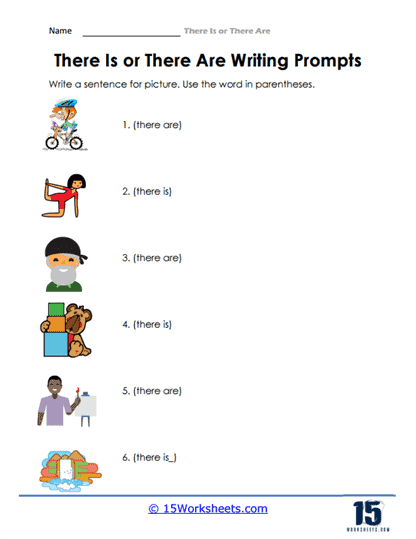
Picture Clues
Students look at images and write sentences using there is or there are. The visuals make grammar practice more engaging. It’s perfect for younger learners who benefit from picture-based prompts. The activity connects language to real-life scenes.
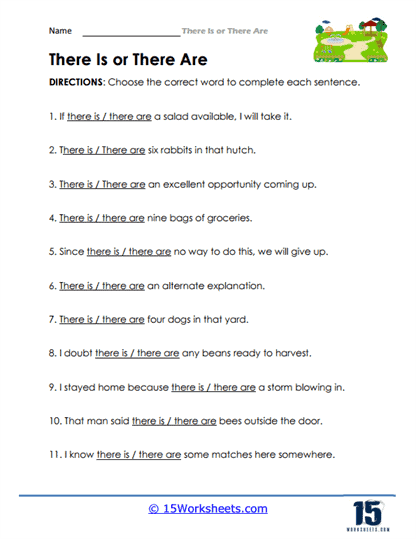
Agreement Challenge
This worksheet gives trickier examples that test agreement skills. Students choose the correct form based on context. It challenges learners to think carefully instead of guessing. The activity helps solidify mastery of singular and plural usage.
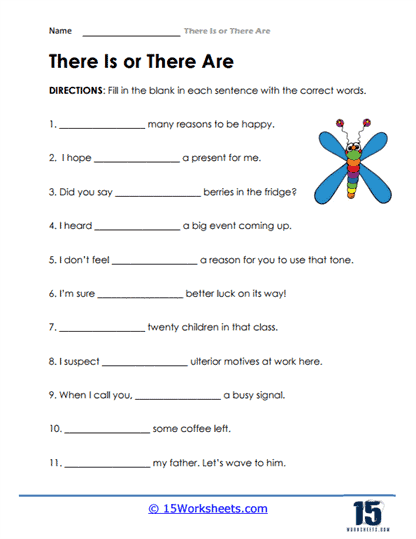
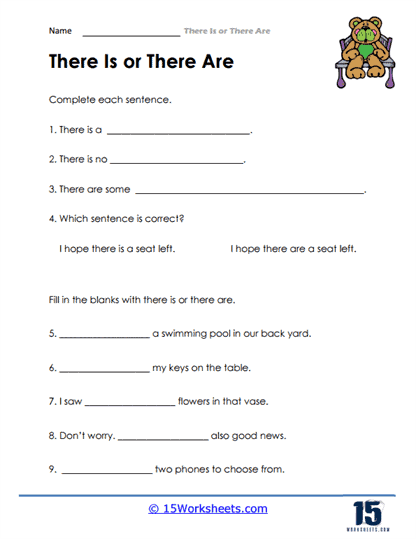
Write On The Gaps
Students complete sentences by filling in blanks with there is or there are. The repetition makes patterns clear. It’s a straightforward exercise for building fluency. Learners gain confidence through simple, focused practice.
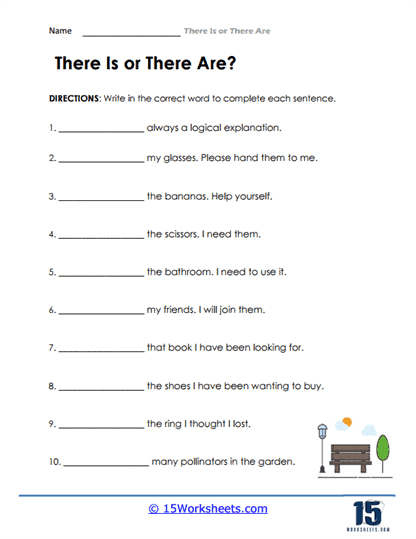
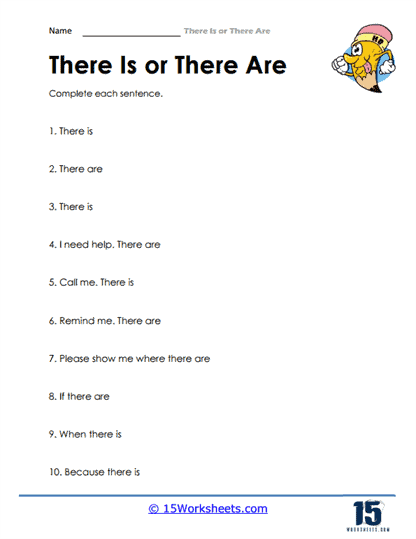
Start It Off
This worksheet encourages students to begin sentences with there is or there are. It highlights how these structures introduce ideas in writing. The task blends grammar with composition. Learners see how to start thoughts clearly and correctly.
Animals Around You
Students describe pictures of animals using there is and there are. The activity blends observation with grammar practice. It makes the lesson fun and relatable. Kids connect language to the world around them.
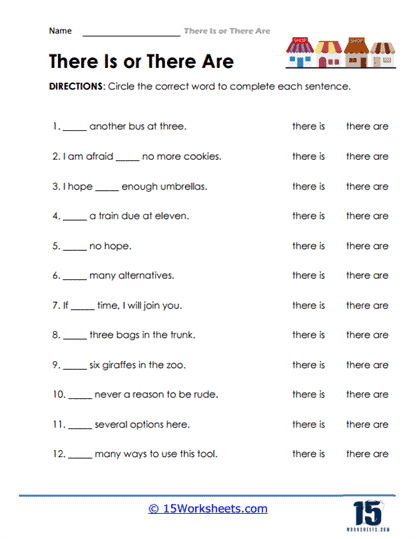
Circle The Perfect Fit
Here, students circle the correct option in each sentence. The worksheet reinforces accuracy in a game-like format. It’s simple but effective for practice and review. Learners quickly recognize which form “fits” the sentence.
Two-Way Practice
Students rewrite sentences in both singular and plural forms. The activity shows how switching between there is and there are changes meaning. It encourages flexibility with grammar. Learners strengthen their ability to move between forms.
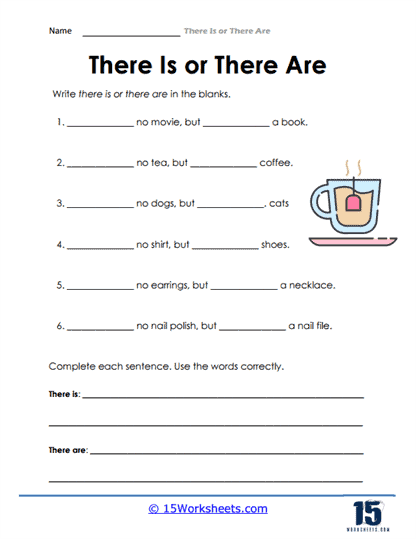
Two Blanks And Two Sentences
This worksheet provides pairs of sentences with blanks for there is and there are. Students fill them in for side-by-side comparison. The format reinforces contrasts directly. It’s a handy tool for spotting differences in usage.
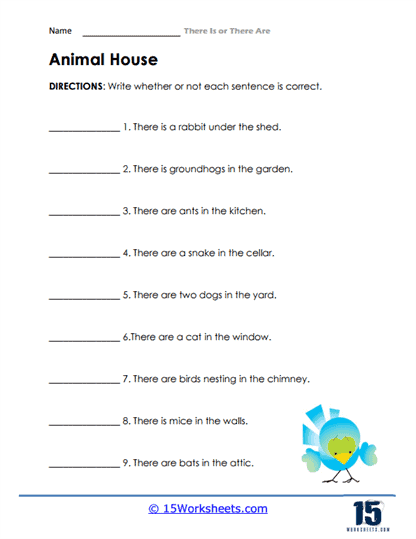
Discerning Eyes
Students read through sentences and identify whether the correct form was used. The task sharpens grammar awareness and careful reading. It makes learners slow down and analyze structure. They leave with keener editing instincts.
Phrase Showcase
This worksheet highlights phrases that commonly follow there is or there are. Students practice using them in context. It expands vocabulary alongside grammar skills. Learners see how these phrases naturally flow in sentences.
Verbal Imagination
Students write imaginative sentences beginning with there is or there are. The activity blends creativity with grammar practice. It shows that grammar can be playful and expressive. Learners practice accuracy while having fun writing.
Complete The Thought
This worksheet asks students to finish sentences that begin with there is or there are. The task reinforces structure while encouraging original ideas. It blends recognition with creation. Learners see how these sentence starters frame communication.
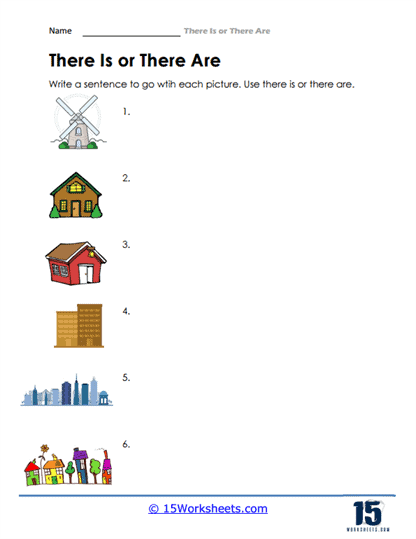
Describing Buildings
Students describe pictures of buildings using there is and there are. The visual prompts tie grammar to real-world observation. It makes practice feel meaningful and practical. Learners connect language with descriptive writing.
When To Use: There Is vs. There Are
“There is” and “there are” are phrases used in English grammar to indicate the existence or presence of something. The key difference between the two phrases is that “there is” is used for singular nouns, while “there are” is used for plural nouns.
Examples of “there is” in use
There is a dog in the park.
There is a book on the table.
There is a pencil in my bag.
Examples of “there are” in use:
There are two cats in the garden.
There are three apples on the table.
There are many books on the shelf.
It’s important to note that the verb after “there is” or “there are” should match the number of the noun that follows it. For example, “there is” is followed by a singular noun and a singular verb, while “there are” is followed by a plural noun and a plural verb. Below are some example sentences that show correct verb usage:
There is a pen on the desk. (singular verb “is” after singular noun “pen”)
There are pens on the desk. (plural verb “are” after plural noun “pens”)
These worksheets give learners plenty of chances to master there is and there are. By filling gaps, circling correct answers, writing original sentences, and even describing pictures, students build accuracy and confidence. With enough practice, using there is and there are will become automatic, helping kids describe the world around them with ease.