
Compound Pronouns Worksheets
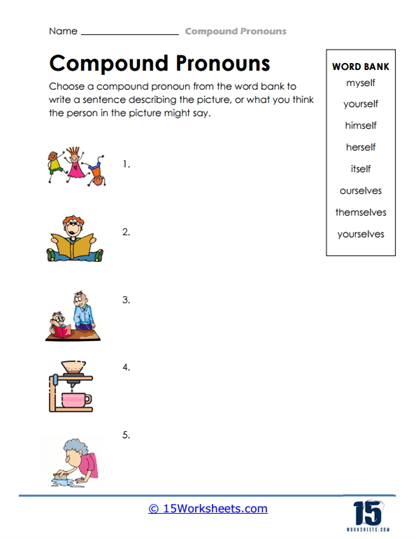
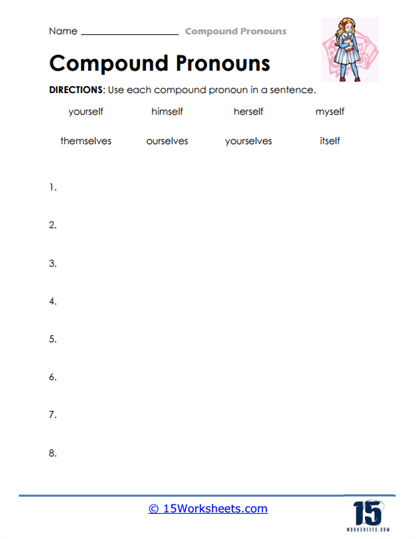
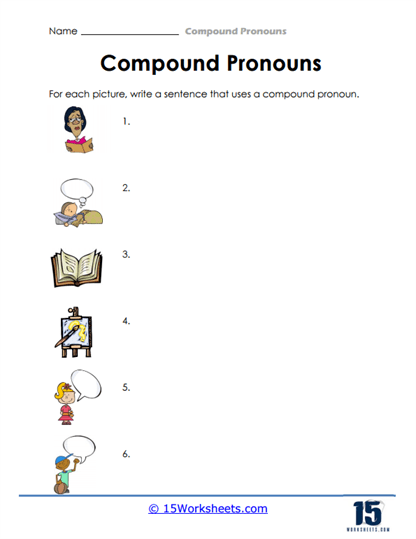
About These 15 Worksheets
Compound pronouns might sound complicated, but these worksheets make them approachable and fun. With activities like matching, swapping, and puzzle-solving, students practice using words like myself, yourself, and themselves in meaningful ways. Each worksheet is designed to show how these pronouns connect back to the subject, giving kids both clarity and confidence. It’s grammar made hands-on, with plenty of variety to keep practice fresh.
The collection mixes drills, editing tasks, and playful challenges. Students might be fixing sentences one moment and solving a pronoun puzzle the next. This balance keeps learning from feeling repetitive while reinforcing the same key concept. Over time, learners will begin to spot mistakes, understand why they’re wrong, and make corrections naturally. The goal is not just recognition, but comfortable use in real writing.
These worksheets also support broader language skills like proofreading, sentence fluency, and clear communication. By seeing how compound pronouns work in context, students understand why grammar matters in everyday writing. The engaging themes and formats make sure the rules stick. By the end, learners will feel confident using compound pronouns correctly in both speaking and writing.
Have a Look Inside Each Worksheet
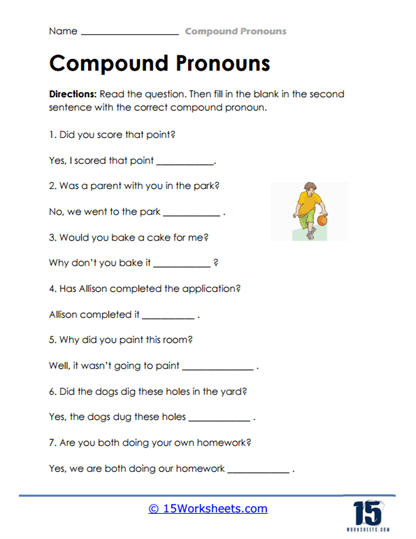
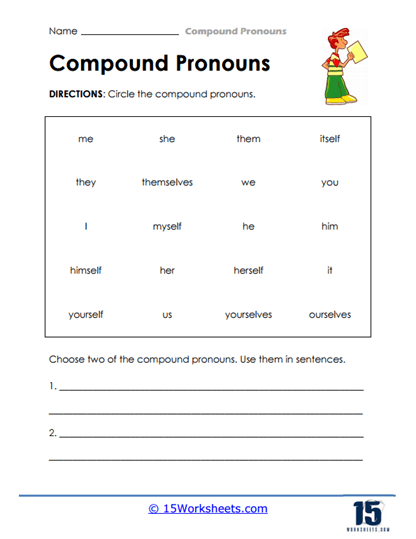
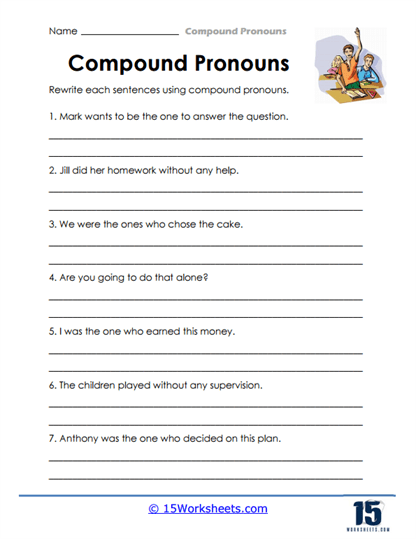
Grammar Booster
Students practice spotting and using compound pronouns in sentences. The worksheet gives quick drills that reinforce recognition. It’s like a workout for pronouns, strengthening accuracy and confidence. A great warm-up for grammar lessons.
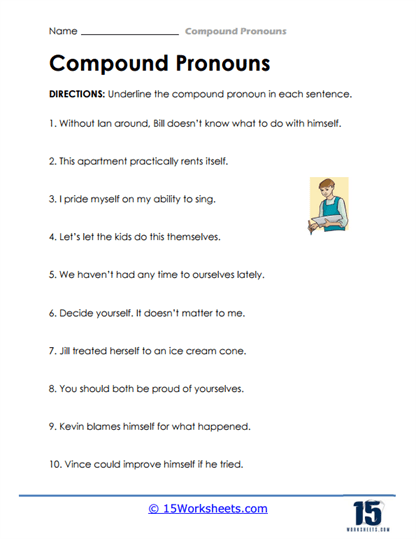
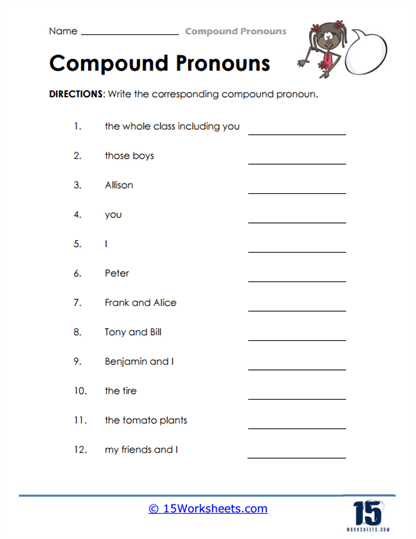
Grammar Pair
Learners match pronouns to form correct compound pronouns. This helps them see how words combine to create meaning. The activity feels like solving a simple language puzzle. Perfect for visualizing how compound pronouns work.
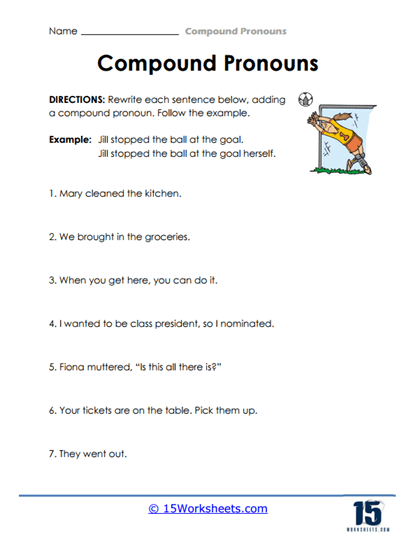
Word Swap
Here, kids replace regular pronouns with compound forms in sentences. The swap highlights how meaning changes with different word choices. It’s interactive and keeps students thinking critically. A fun way to make grammar more flexible.
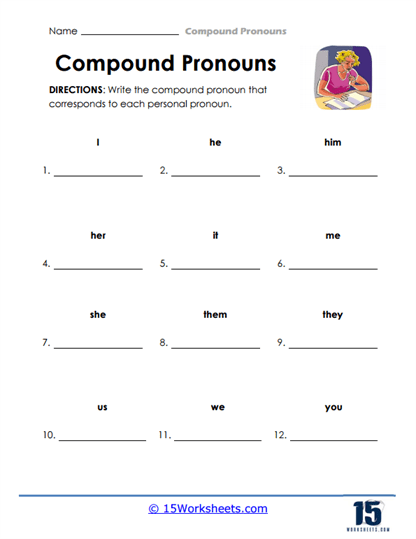
Pronoun Pairing
Students pair words to create correct compound pronouns. The activity reinforces spelling and usage at the same time. It’s like building blocks with grammar. Learners see how small parts combine into bigger language tools.
Self Connect
This worksheet focuses on reflexive-style compound pronouns. Students practice connecting actions back to the subject. It strengthens both grammar understanding and sentence sense. A neat way to highlight how pronouns reflect meaning.
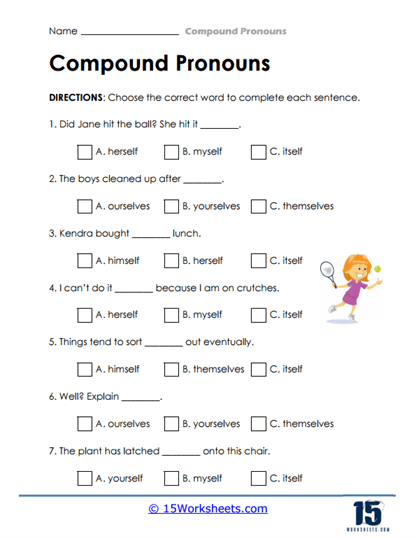
Self Study
Learners complete short exercises on using “myself,” “yourself,” and other self-forms correctly. It helps prevent common errors in everyday writing. The focus is practical and easy to grasp. Great for independent grammar practice.
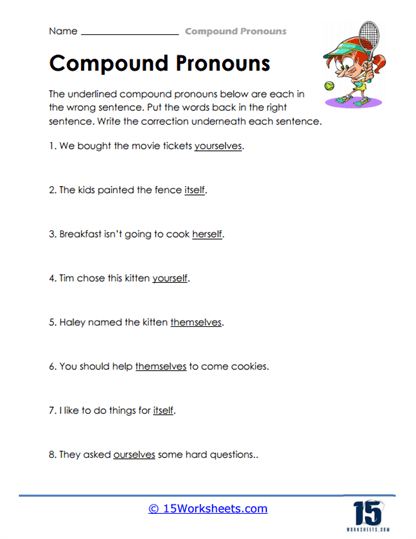
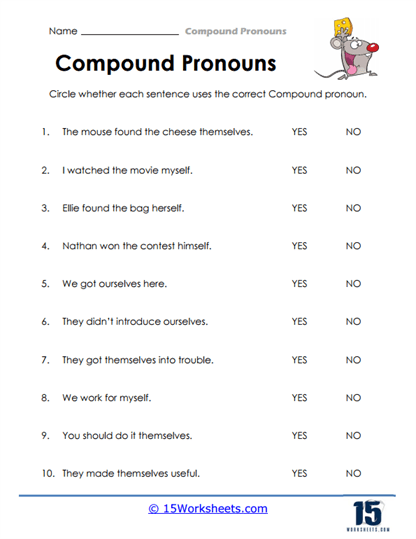
Sentence Fix
Students find and correct pronoun mistakes in sample sentences. The worksheet turns learners into little grammar editors. It’s hands-on problem solving with immediate results. Kids sharpen both grammar and proofreading skills.
Reflection Words
Here, students explore how compound pronouns reflect back on the subject. The exercises give clear examples of correct and incorrect use. It’s a thoughtful way to make pronouns less abstract. Learners gain confidence using them in real writing.
Sentence Link
This worksheet shows how compound pronouns link actions and subjects smoothly. Students practice building sentences that sound natural. The activity strengthens fluency in writing. It’s grammar practice that feels practical.
Pronoun Swap
Learners swap out incorrect pronouns for correct compound ones. The quick corrections help reinforce accuracy. It feels like a fast-paced grammar game. Great for building speed and confidence.
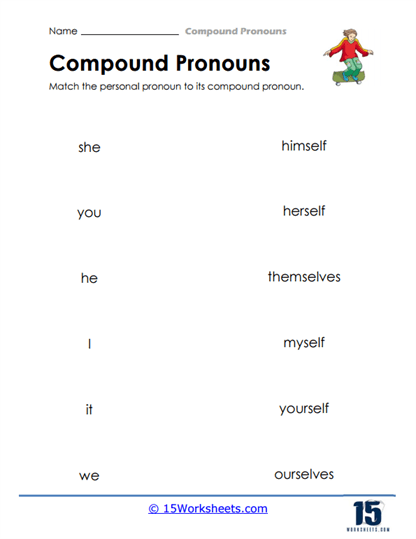
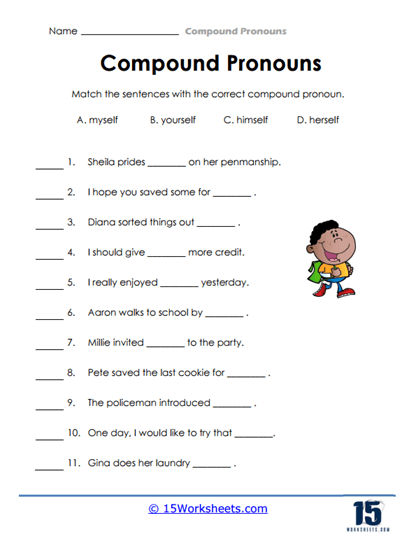
Word Pairing
Students match pronoun halves to complete full compound pronouns. The visual matching format makes the concept stick. It’s simple but effective reinforcement. Learners practice both recognition and spelling.
Word Bond
This worksheet highlights how pronouns “bond” to make compound forms. Students practice by combining and then using them in sentences. It’s like a grammar bonding exercise. A playful way to teach structure and usage.
Pronoun Puzzle
Kids solve puzzles where missing compound pronouns complete the sentence. The activity adds a problem-solving twist to grammar. It feels more like a game than a drill. Students enjoy the challenge while practicing accuracy.
Using Compound Pronouns Properly
Compound pronouns, also known as reflexive or emphatic pronouns, are used in sentences to either refer back to the subject of the sentence (reflexive use) or to emphasize the subject (emphatic use). Reflexive pronouns include words like “myself,” “yourself,” “himself,” “herself,” “itself,” “ourselves,” “yourselves,” and “themselves.” They are used when the subject and the object of the sentence are the same, meaning the action of the verb refers back to the doer. For example, in the sentence “She prepared herself for the meeting,” “herself” reflects back to “she,” indicating that the action of preparing was done by and for the same person. This usage clarifies that the subject is both the initiator and the receiver of the action.
Emphatic pronouns, on the other hand, are used to add emphasis to a noun or pronoun in the sentence. They are the same words as reflexive pronouns but serve a different purpose. For example, in the sentence “I did the homework myself,” the pronoun “myself” is used to emphasize that the speaker was the one who did the homework, possibly without help. The emphasis here is on the fact that the subject took the action independently. This usage is particularly useful in situations where you want to stress the importance of the subject’s involvement in the action.
In terms of grammatical placement, compound pronouns are usually placed after the verb or after the object of the verb, depending on whether they are used reflexively or emphatically. For instance, in “They saw themselves in the mirror,” “themselves” follows the verb “saw” because it reflects back on the subject “they.” In another example, “He fixed the car himself,” “himself” comes after the object “the car” to emphasize that “he” was the one who did the fixing without assistance. It’s important to note that compound pronouns should not be used in place of subject pronouns or object pronouns directly; for example, it would be incorrect to say “Myself went to the store” instead of “I went to the store.”
Compound pronouns are essential in situations where actions are done to the subject by the subject. For example, “She blames herself for the mistake” correctly uses “herself” because the subject “she” is both the doer and the receiver of the action. Without the compound pronoun, the sentence would lose clarity and could potentially alter the meaning. Thus, using these pronouns correctly is crucial for maintaining the intended meaning of the sentence and ensuring clarity in communication.