
Spelling Worksheets

All About Our Spelling Worksheets
These spelling worksheets are designed to build students’ spelling skills across grade levels, from simple phonics in early grades to more complex words, rules, and exceptions in higher grades. They include a wide range of activities: filling in blanks, correcting misspellings, finding patterns, applying rules, and using interactive or game-based formats. Over time, the variety helps students internalize spelling patterns, understand tricky exceptions, and feel more confident in writing.
Because they cover rules (like “i before e”), patterns (double letters, long e, etc.), and high-frequency/common words, students get both the repetitive practice that helps memory and the conceptual understanding that helps generalization. Game-style formats (battleship, maze, tic-tac-toe) and visual structures (pyramid, stair step) make practice more engaging and less monotonous. These worksheets help students become better readers as well because being able to spell a word helps with recognizing it in text, and improves clarity in their own writing.
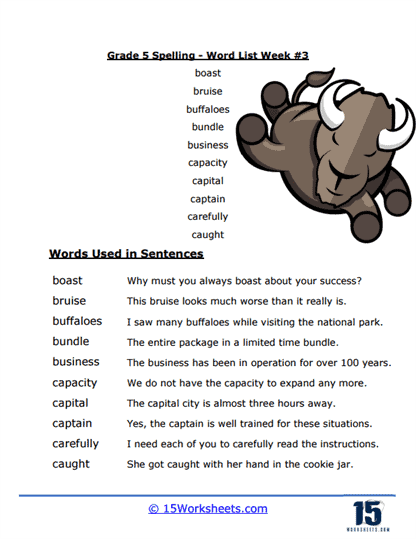
In this section we offer you a complete curriculum for grades 1 through 5. This includes 30 weeks of word lists for you to work off of with your students. The words that were chosen are based on the national standards. You will notice that we will putting an immense focus on adding more grade levels.
A Breakdown of Each Section:
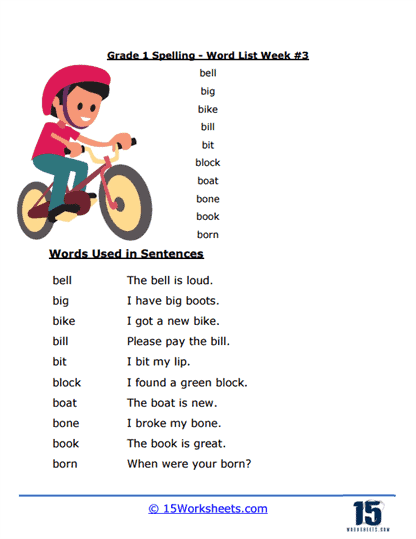
At this grade level students are most likely introduce to these terms through the use of phonics. The primary focus is to associate letters to the sounds that they make. We offer terms that loosely related to allow for an easier transition.
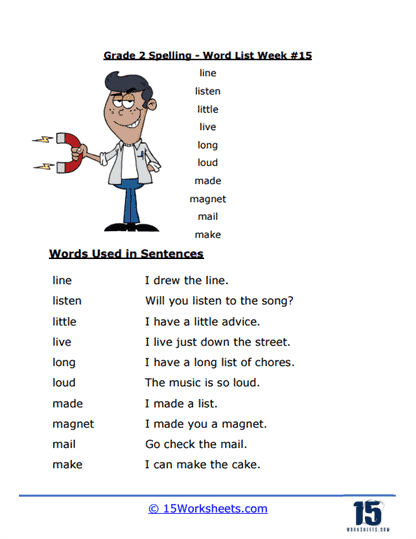
We expand on the use of sounds to help spell words correctly. Many of lists are built off of similar blends and diagraphs. We also help group word families together.
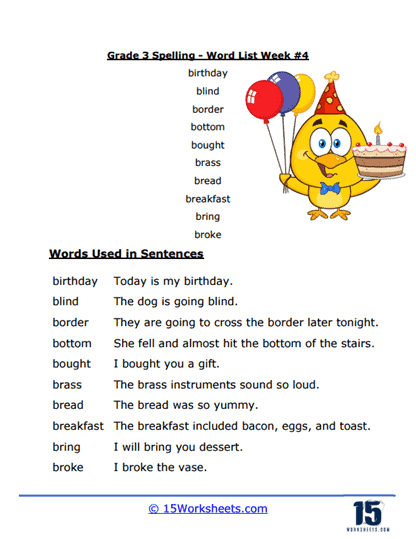
We begin to build on previous knowledge and help students learn to add new terms to their everyday vocabulary through the use of prefixes and suffixes.
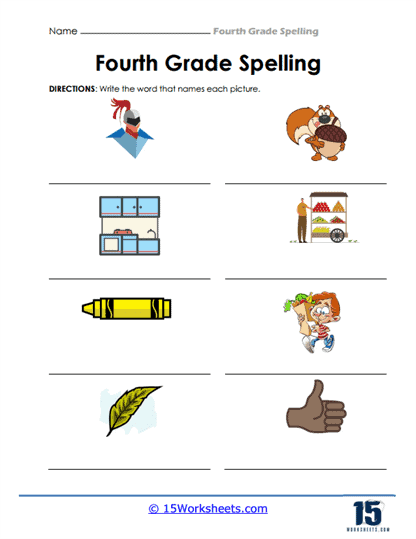
Students have a decent level of success with spelling at this level, so this is where the curriculum starts to confuse them a bit through the use of homographs and homophones.
This is usually the grade level where the curriculum begins to scale down or stop completing working on these skills. Students are expected to be significantly more accurate with complex terms at this level.
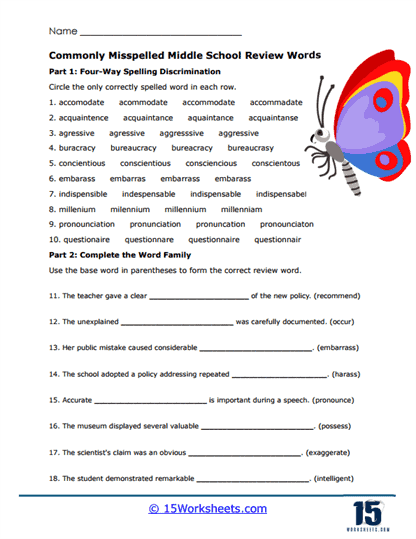
As students enter middle school, spelling expectations shift heavily toward academic vocabulary and subject-specific terms. These lists challenge students with silent letters, advanced prefixes, and multi-syllable words that appear frequently across their reading assignments.
At this level, spelling practice focuses on refining written clarity and precision. Students work with complex root structures, challenging vowel combinations, and vocabulary needed for formal essay writing and critical reading.
Serving as a bridge to high school expectations, these worksheets focus on sophisticated vocabulary and subtle spelling nuances. Practice here emphasizes word origin patterns, Greek and Latin roots, and advanced morphological structures.
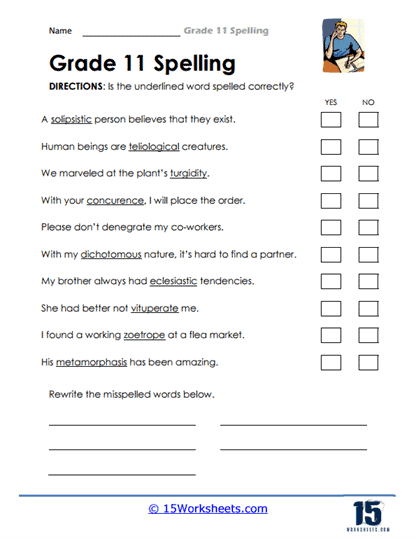
Freshmen face a significant step up in reading complexity and analytical writing. Worksheets in this collection target high-level literary terms, academic vocabulary, and frequently confused words to ensure written communication is clear and accurate.
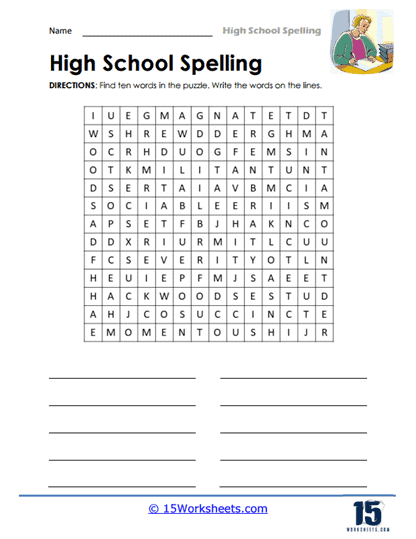
Designed to support high school research and critical analysis, this collection focuses on advanced vocabulary and complex structural rules. Mastery of these lists helps students write more fluidly without getting hung up on difficult word mechanics.
At this level students are expected to have a mastery of advanced vocabulary and root words. Students that have some background in Latin often have a high level of success at this level.
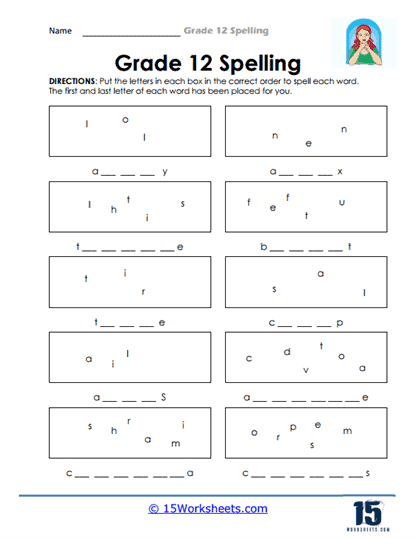
As students prepare for college and the associated admission exams, these worksheets can provide as a great review and reminder for them.
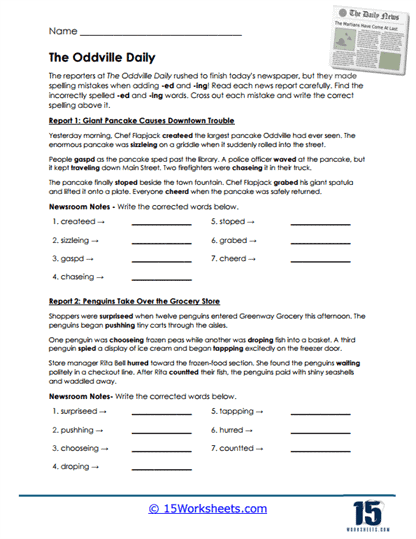
Adding inflected endings often requires specific spelling adjustments, such as doubling a final consonant or dropping a silent vowel. These worksheets help students master the mechanics of changing verb tenses accurately.
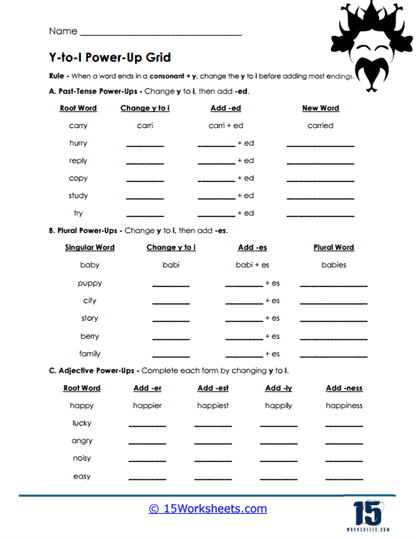
When adding suffixes to words ending in “y”, students must determine whether to keep the “y” or change it to an “i”. Practice in this section clarifies this common rule across various base words and suffix types.
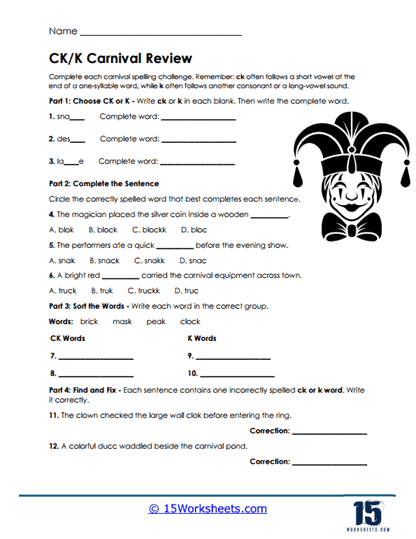
Choosing between “ck” and “k” at the end of a syllable or word can be tricky for developing spellers. These worksheets focus on the short-vowel phonetic rule that dictates when to use each spelling, reinforcing accurate decoding and encoding.
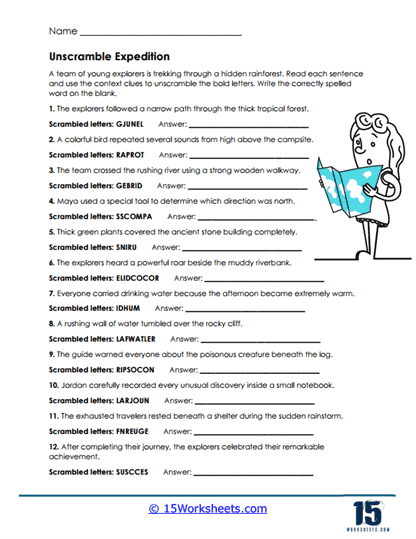
Certain words present persistent tripwires for writers of all ages. This section targets high-frequency trouble spots, helping students identify silent letters, irregular vowel patterns, and common structural traps to clean up their everyday writing.
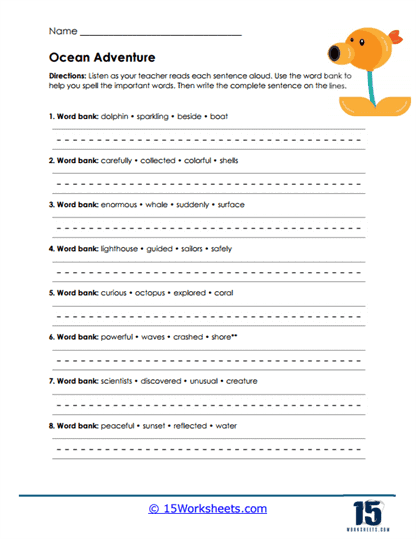
Listening to a sentence and writing it out requires students to apply spelling, capitalization, and punctuation rules in real time. These exercises help bridge the gap between practicing isolated word lists and applying spelling in open-ended writing.
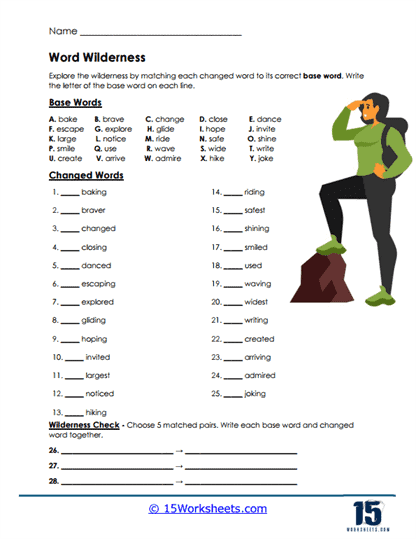
This collection focuses on the silent “e” rule when adding vowel suffixes (like -ing, -ed, or -able). Students practice recognizing when to drop the final “e” and when to keep it, preventing frequent writing errors.
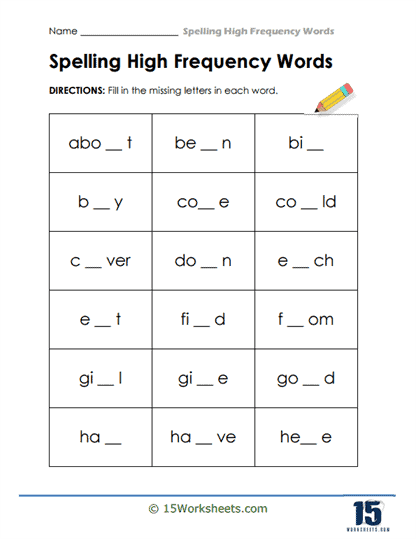
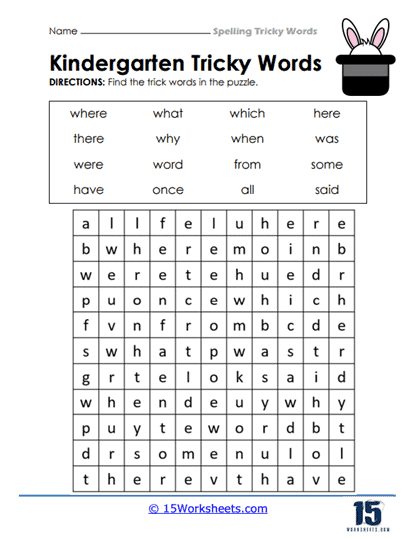
This worksheet focuses on words that appear often in reading and writing, so students can quickly recognize and spell common words. Frequent exposure helps with automaticity in reading and writing. Mastery of these helps reduce stumbling over easy, everyday words.
While this a skill often focused at the primary and elementary levels, we revisit this to help students master it and reduce their dependency on spelling tools.
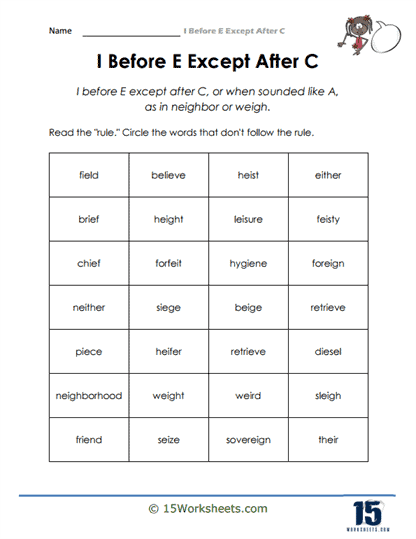
This foundational rule of spelling is often taught as early as 2nd grade. It is important to teach children that while this a good rule of thumb, it is not foolproof and there are several exceptions to it.
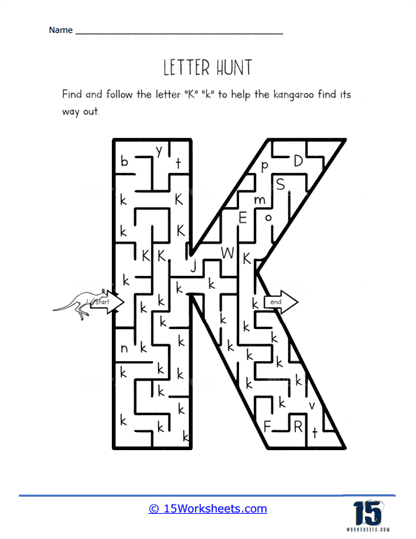
These are not only great to help students improve their letter recognition, but they are also very helpful for helping students learn the sequence of the alphabet.
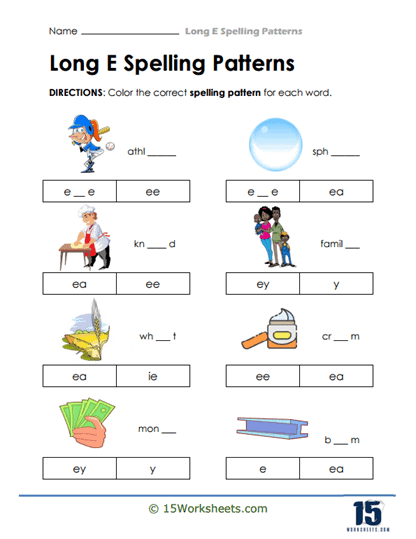
Students practice spelling words with long “e” sounds, learning different ways those sounds are represented (e.g., “ee”, “ea”, “ie”). They compare patterns and decide which spelling fits the pronunciation. This helps with decoding and reading fluency, as well as spelling consistency.
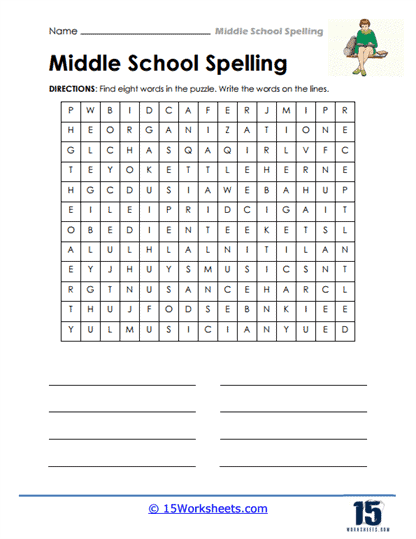
Improving middle school students’ spelling can be achieved through various strategies that focus on understanding the structure of words, building a robust vocabulary, and applying learned skills in a practical context.
This section of our site is grouped in with our reading section, but there are many important skills that will help students in this section.
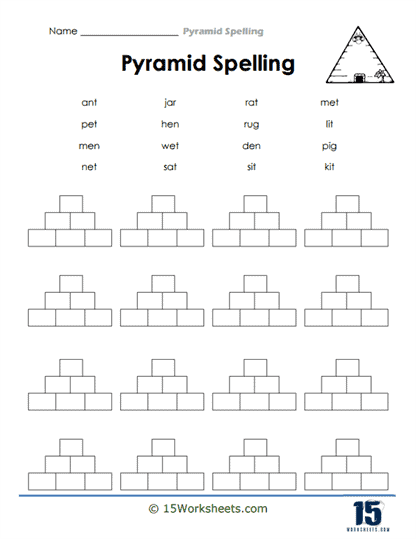
Here, words are spelled out letter by letter in a “pyramid” structure (e.g., A, AB, ABC …) to reinforce each succeeding letter’s memorization. The progressive build helps students see how words are constructed. It enhances retention of letter order and accurate spelling.
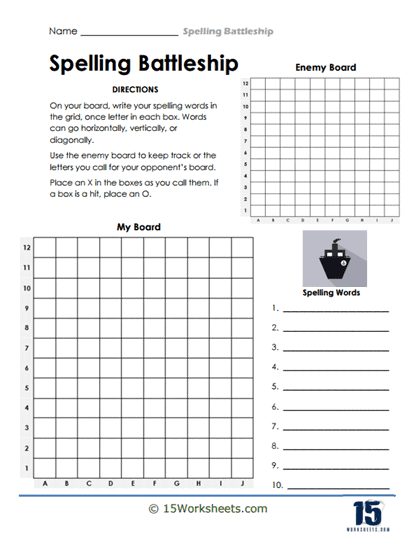
This worksheet uses a game-style grid or “battleship” format for spelling practice, making spelling fun and interactive. Students locate, write, or identify spelling words in a playful way. This format helps with motivation and reinforces correct spellings through repetition.
Learners focus on words with double letters (e.g. “tt”, “ll”, “ss”) to understand when to double consonants. They practice both identifying and writing these words correctly. It helps prevent common errors associated with double consonants.
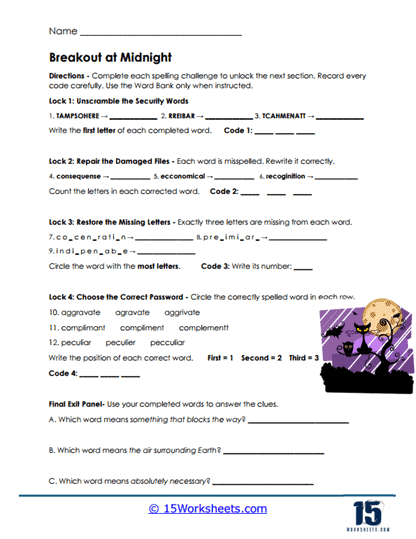
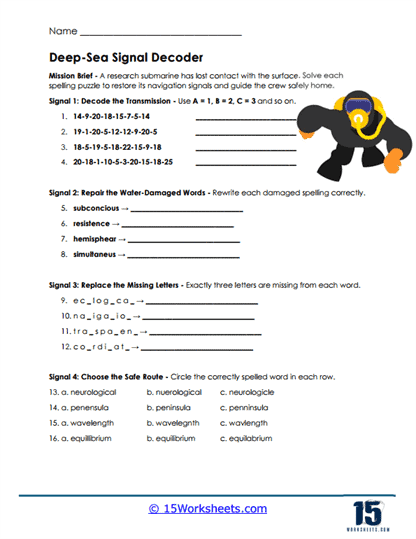
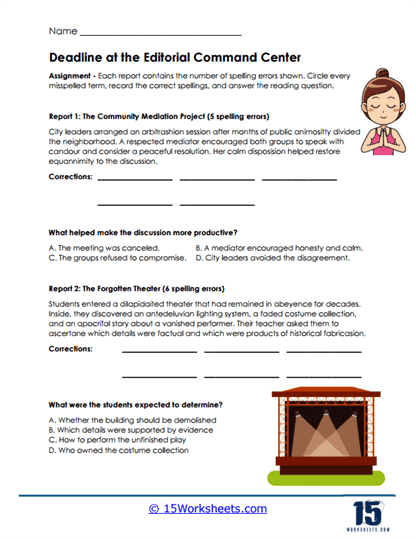
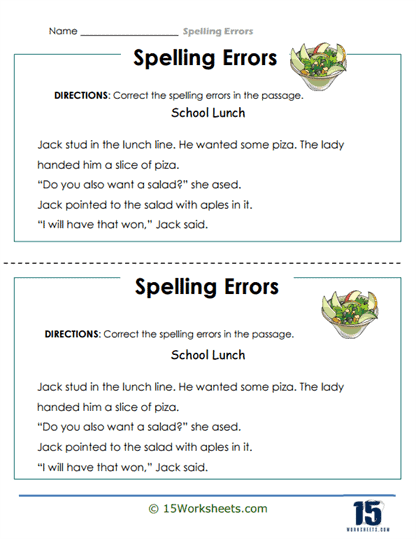
In this worksheet, students are presented with misspelled words and must correct them. They must pay attention to common error types like wrong vowel, missing letter, or wrong double letter. This helps develop proofreading skills and solidify correct spelling patterns.
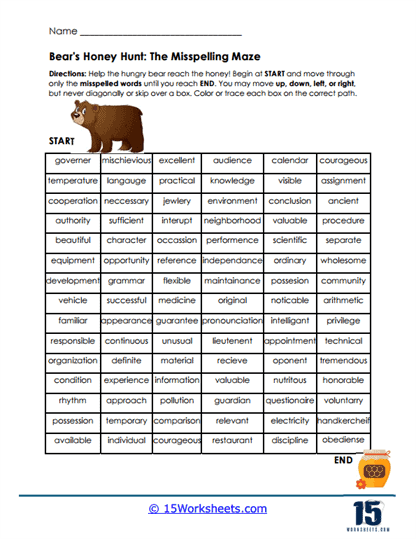
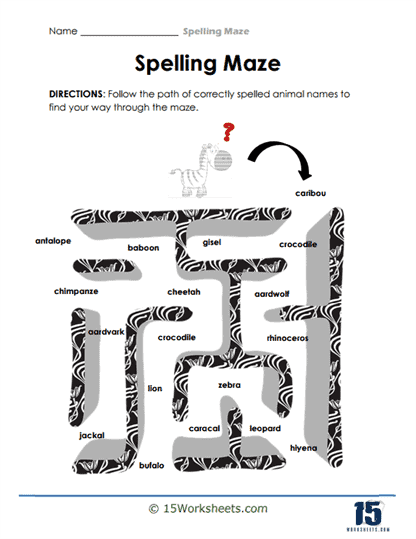
This one is a fun maze or path where students must choose the correctly spelled word at each step to make their way through. It combines puzzle solving with spelling practice. It encourages attention to detail and makes spelling feel less like drill and more like play.
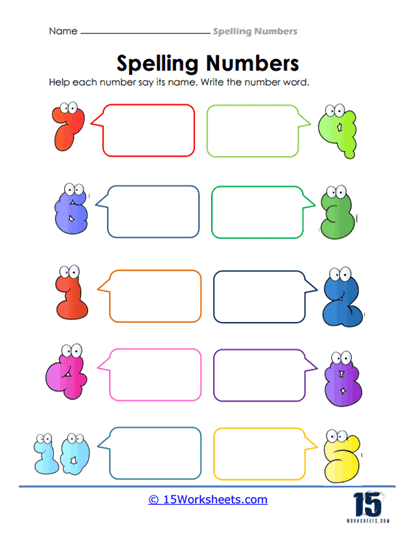
Here, students spell out numbers in word form (e.g. “twenty-three”) rather than using digits. They practice how number words are structured, including hyphens, compound words, etc. This links numeracy and spelling and improves clarity in written expression.
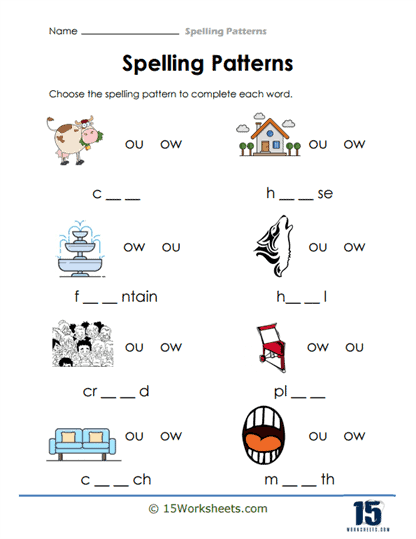
This worksheet groups words by shared spelling patterns (e.g. “-ight”, “-ack”, etc.) so students notice recurring letter sequences. They practice applying those patterns in writing and sometimes identifying which pattern a new word belongs to. This section really helps students improve their reading fluency and easy of use of new vocabulary.
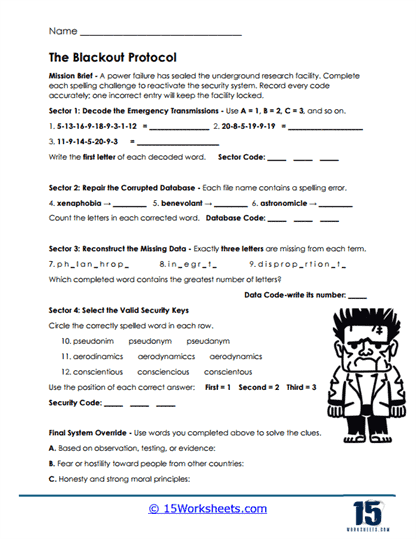
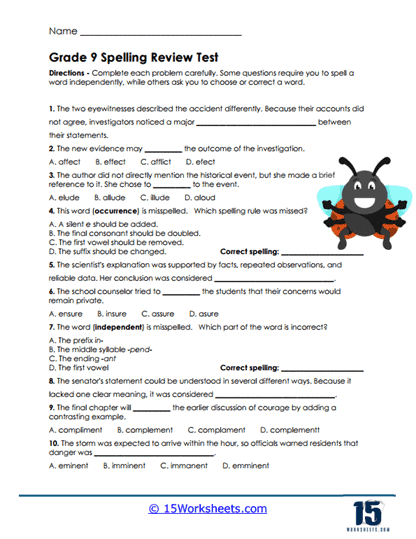
Designed to assess retention and check for mastery across multiple units or word families, these review pages offer structured self-checks. They help identify which spelling patterns are solid and which require targeted practice.
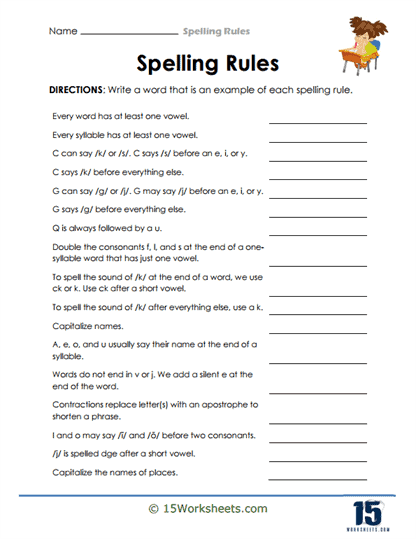
We help students explore common conventions of written language. We review things like doubling final consonants, when (y) is used as a vowel, and basic common letter combinations.
This worksheet focuses on words that don’t follow typical patterns or are exceptions (e.g. friend, said, busy). Students need extra exposure and practice on these to avoid habitual mistakes. Mastery of tricky words helps improve overall writing confidence.
Spelling is most effective when connected to meaning. These worksheets require students to select and spell the correct word within meaningful sentences, strengthening both spelling accuracy and vocabulary comprehension simultaneously.
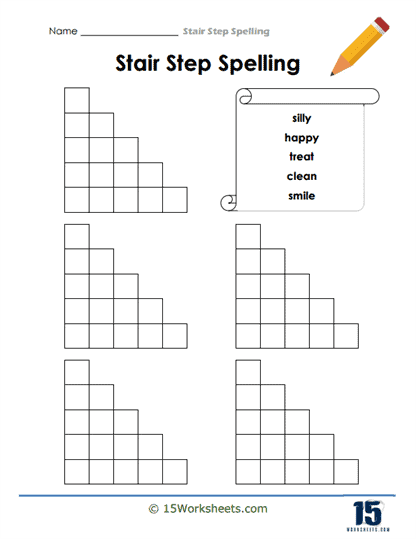
The idea is that each letter of a word is written on a new “step”, so that the word visually looks like it’s ascending or descending a staircase, hence the name.
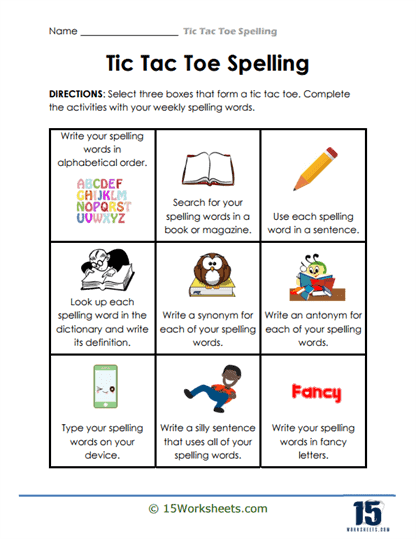
A tic-tac-toe style grid is used where students pick spelling tasks (write, trace, maybe even use the word in sentence) across rows or columns. This gives them choice and variety in how they practice spelling. The game-like format can increase motivation while reinforcing correct spelling.
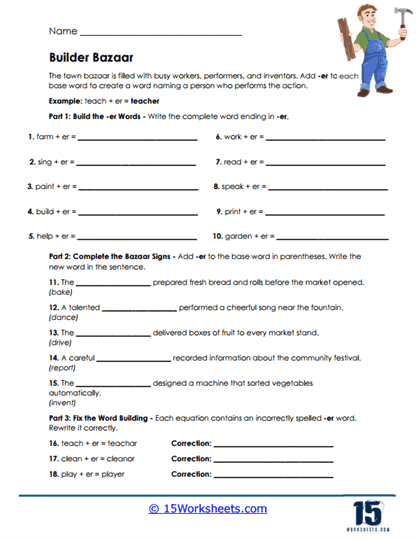
Words ending in the “/er/” sound can be spelled in various ways (such as -er, -or, or -ar), especially when forming comparative adjectives or agent nouns. Exercises here help students recognize recurring patterns and pick the correct suffix ending.