
Redundant Words Worksheets
About These 15 Worksheets
Good writing isn’t about using more words – it’s about using the right ones. This collection of redundant words worksheets helps students recognize when sentences are cluttered with unnecessary repetition. By trimming phrases like “each and every” or “true fact,” learners discover how concision makes writing cleaner and more powerful. The worksheets encourage both grammar awareness and stylistic improvement, making them useful for everything from classroom essays to everyday communication.
The activities come in all shapes and sizes. Some, like Redundancy Hunt and Search and Circle, make it feel like a word detective game, while others such as Sharp Substitutes and Concise Choices focus on replacing wordy phrases with stronger, single words. There are also creative twists like Trimmed Talk, which has students streamline dialogue, and Streamline Sentences, which emphasizes flow and rhythm. The variety ensures practice never feels repetitive – even though it’s all about eliminating repetition!
At their core, these worksheets build essential editing skills. Students learn not just how to identify redundant words, but also how to fix them and improve sentence quality. Over time, they’ll start to self-edit naturally, producing writing that’s sharper, more concise, and easier to read. It’s the kind of practice that benefits both academic writing and clear communication in the real world.
Have a Look Inside Each Worksheet
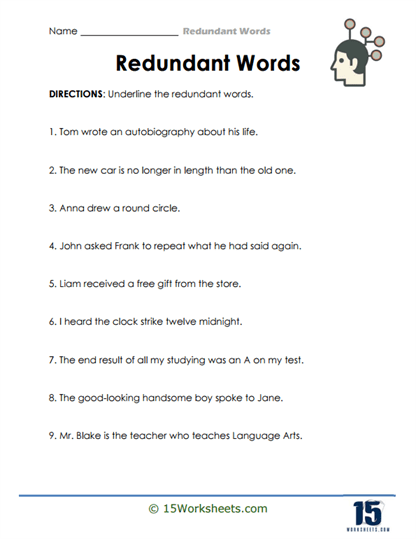
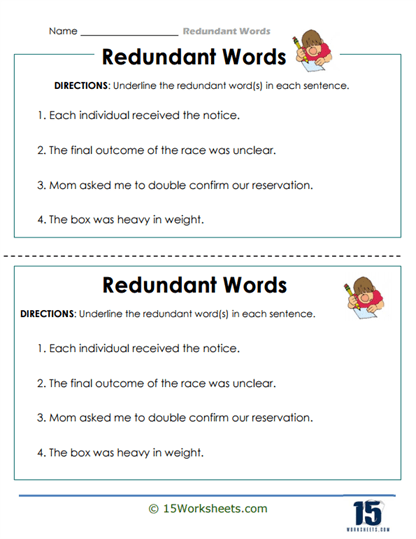
Redundancy Hunt
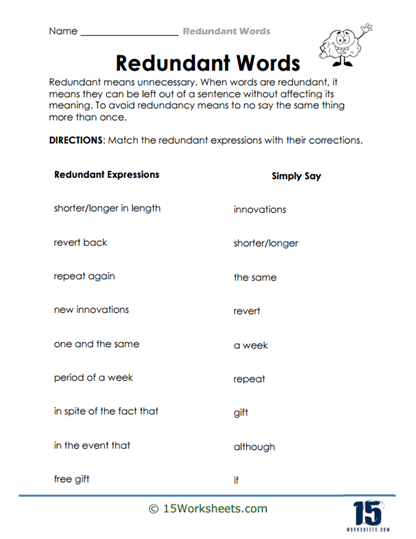
This worksheet turns grammar into a detective game where students hunt down unnecessary words. Learners practice spotting phrases like “free gift” or “past history” and rewriting them concisely. It builds strong editing habits while keeping the activity fun. By the end, kids see how cutting clutter makes writing clearer.
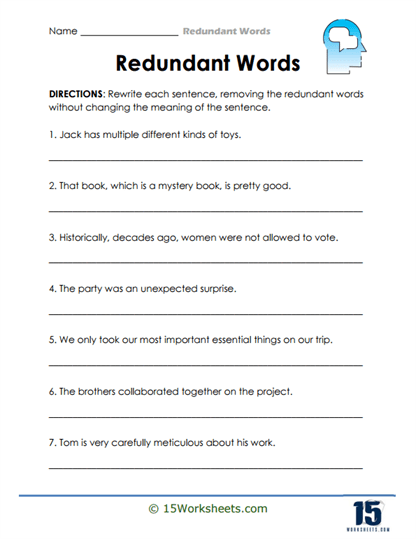
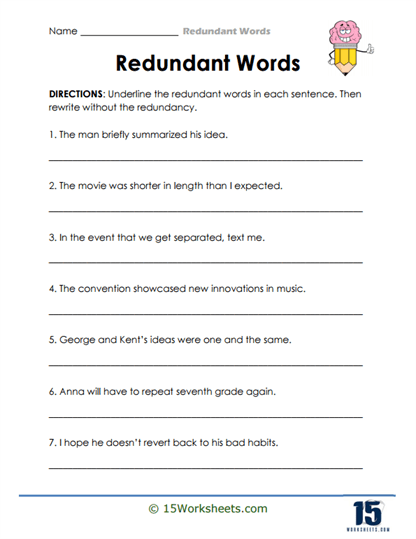
Trim Text
Students practice trimming down wordy sentences without losing meaning. The activity highlights how fewer words often create stronger writing. It teaches learners to value precision over repetition. Each example helps sharpen editing and revision skills.
Word Whittle
Here, students “whittle away” at extra words to carve out clean, polished sentences. The playful theme makes editing feel creative instead of tedious. They’ll learn to recognize and cut redundancy on their own. It’s a great way to build concise writing skills.
Concise Crafting
This worksheet guides learners in crafting concise sentences step by step. Students rework examples and then create their own shorter versions. The activity emphasizes clarity and efficiency. It’s ideal for building strong revision strategies.
Tighten Text
Students learn how to “tighten” sentences that are bloated with unnecessary words. The worksheet challenges them to cut excess while keeping meaning intact. It’s practical practice for both grammar and composition. Learners gain confidence in producing leaner, sharper writing.
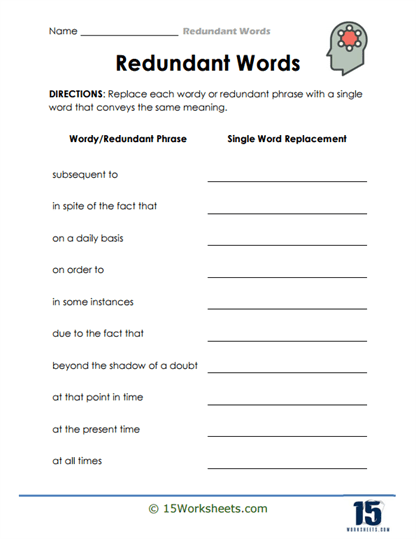
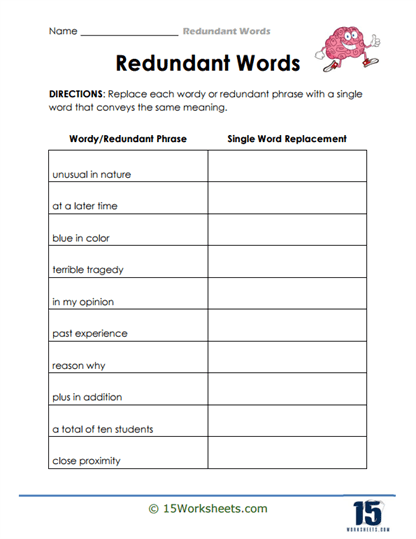
Sharp Substitutes
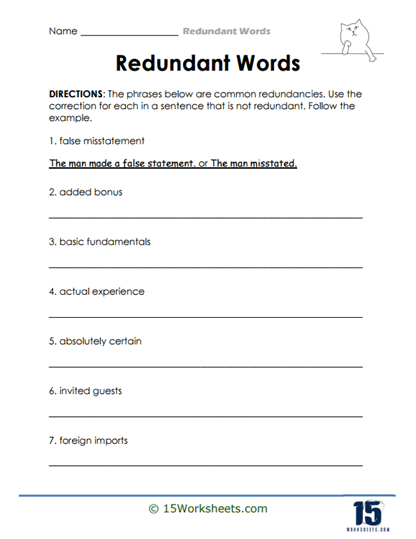
This activity encourages students to replace wordy phrases with single, stronger words. For example, swapping “at this point in time” for “now.” The exercise teaches vocabulary expansion alongside editing. It’s a double win for language growth and concision.
Word Trim
Here, learners take lengthy sentences and “trim” them into shorter, smoother forms. The repetition reinforces editing skills through multiple examples. Each practice set highlights how writing improves when clutter is cut. It’s a simple but powerful exercise.
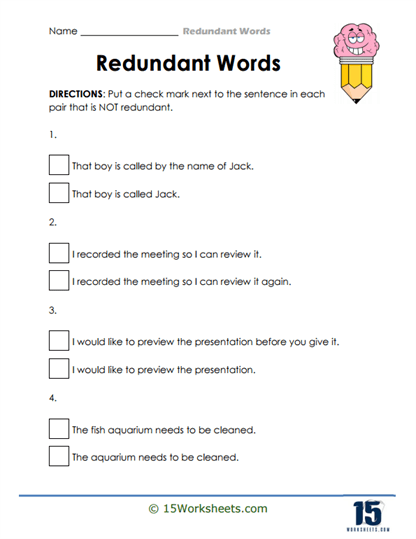
Clear Choices
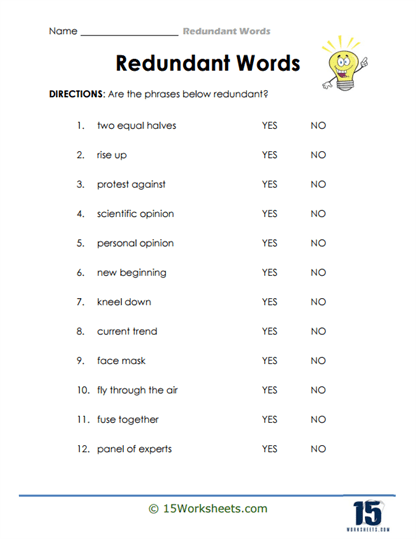
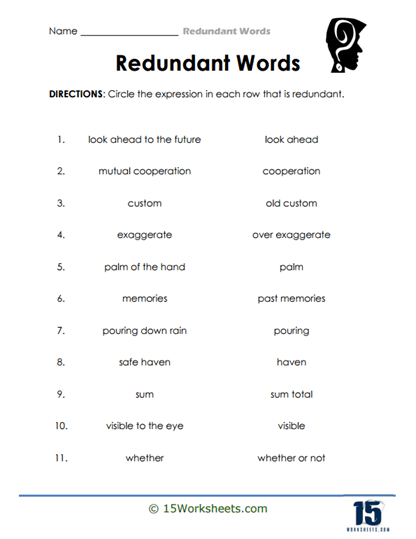
Students choose between two sentence options – one redundant, one concise. The comparison shows clearly why concision is better. It sharpens decision-making skills in writing. Learners walk away with a stronger sense of style.
Precise Phrases
This worksheet highlights how small word changes can create precision. Students edit phrases to remove redundancy and improve flow. It’s about more than cutting words – it’s about making the right word choices. The activity helps refine both grammar and writing voice.
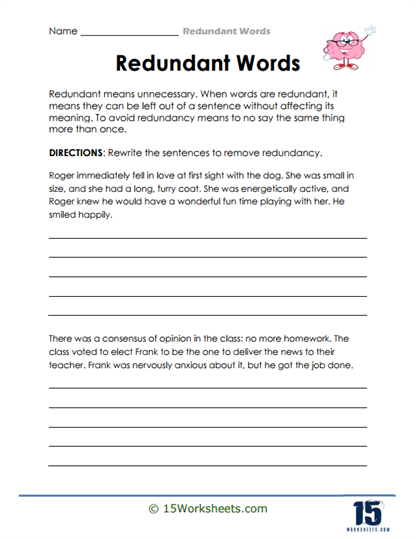
Clear Corrections
Students take sentences packed with extra words and “correct” them by rewriting concisely. The direct format reinforces editing strategies. It shows how to move from clunky to clear writing. This worksheet is especially useful for test prep and essay writing.
Efficient Expressions
This activity trains students to use efficient expressions instead of wordy ones. They’ll see side-by-side examples and make edits themselves. It highlights the balance between style and grammar. Learners build habits that strengthen every type of writing.
Concise Choices
Students practice picking the most concise way to phrase ideas from a list of options. The multiple-choice style keeps it fast-paced and engaging. It reinforces quick recognition of redundancy. It’s perfect for polishing editing speed and accuracy.
Trimmed Talk
This worksheet makes editing interactive by asking students to shorten dialogue lines. They’ll practice trimming realistic speech patterns while keeping meaning intact. It’s a great way to combine grammar with storytelling skills. Learners see how concise dialogue makes writing stronger.
Streamline Sentences
Students take long, wordy sentences and streamline them for better flow. The activity emphasizes rhythm and readability. It teaches how concision improves not just grammar, but style. Kids come away with a stronger sense of effective writing.
Lean Language
This worksheet encourages students to use “lean language” in all types of writing. They’ll practice revising sentences to be short, sharp, and meaningful. The theme makes concision feel like a challenge to strengthen their work. It’s excellent practice for polishing essays and creative writing alike.
What Are Redundant Words?
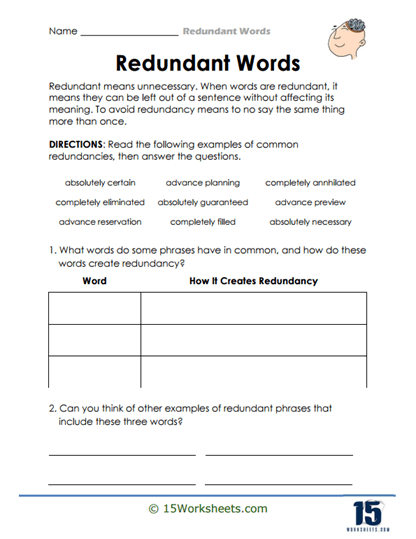
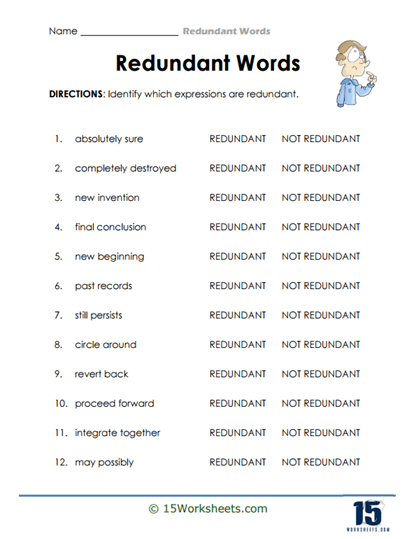
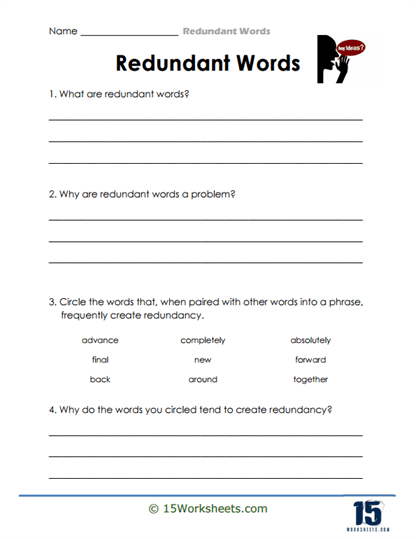
Redundant words in grammar refer to words or phrases in a sentence that are unnecessary because they repeat something that has already been said or implied. Redundancy occurs when a writer or speaker uses more words than needed to convey a message, which can make the writing or speech less clear, less direct, and more cumbersome. For instance, phrases like “free gift,” “advance planning,” or “close proximity” contain words that add no additional meaning because the primary word (“gift,” “planning,” “proximity”) already conveys the full idea.
In writing, redundant words can dilute the strength of an argument or narrative. By adding unnecessary words, the core message becomes less sharp, and the writing loses its punch. For example, saying “In my personal opinion, I believe” could be shortened to “I believe” without losing any meaning. The removal of redundancies helps to make writing more concise and focused, allowing the reader to grasp the essential points quickly. Concise writing is especially valued in academic and professional settings, where clarity and precision are key.
Redundancy often occurs unintentionally, as speakers or writers try to emphasize a point or ensure clarity. However, this well-meaning repetition can lead to verbosity, which may confuse or bore the audience. In some cases, redundancy can stem from a lack of confidence in the clarity of the initial expression, leading the speaker or writer to over-explain. This can be particularly common in early drafts of writing, where ideas are being explored and refined.
Identifying and eliminating redundant words is a crucial step in the editing process. The purpose of this practice is to refine the text, making it more efficient and impactful. By cutting out unnecessary words, the writer can strengthen their message and ensure that every word counts. This not only improves readability but also enhances the overall quality of the writing. In addition, learning to recognize redundancies can help writers develop a more disciplined and intentional approach to their craft.
These worksheets give students hands-on practice spotting and removing redundancy in different contexts. Whether they’re correcting sentences, rewriting dialogue, or choosing between concise options, learners sharpen both their grammar and editing skills. By the end, they’ll know how to tighten their writing – and avoid those wordy traps we all fall into sometimes.