
Jumbled Sentences Worksheets
About These 15 Worksheets
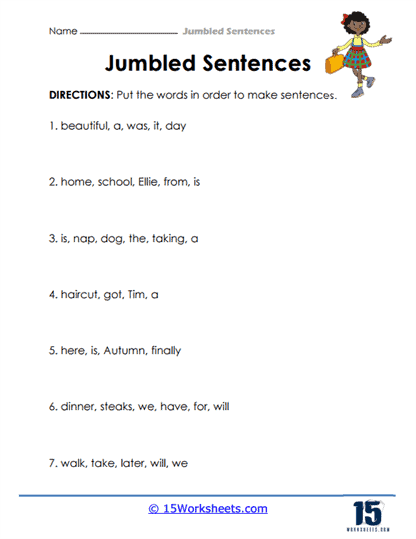
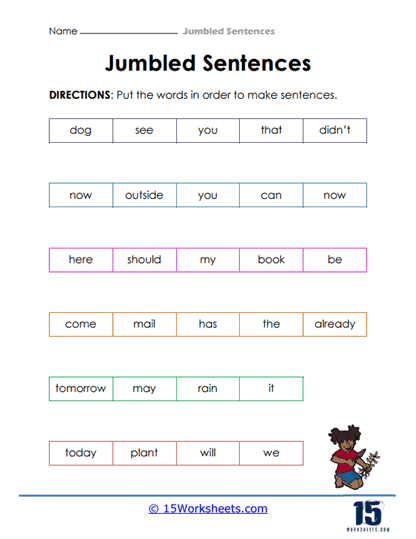
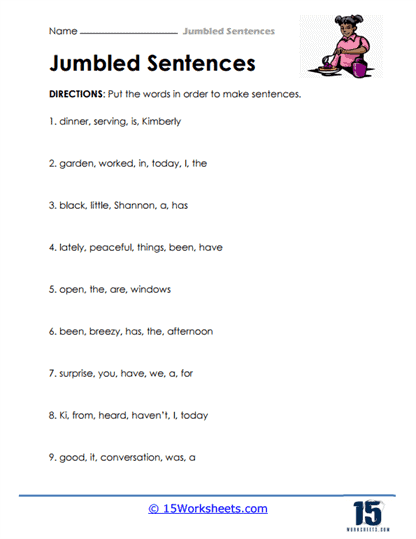
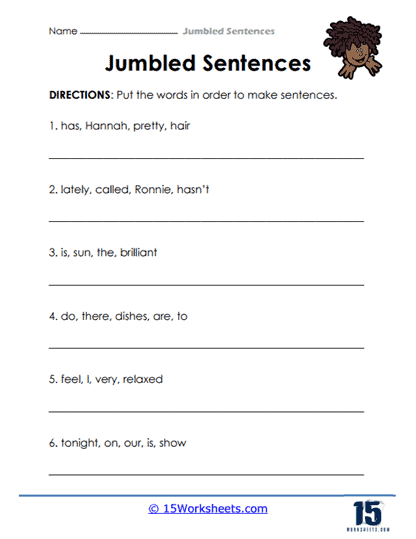
Sometimes the best way to understand how sentences work is to take them apart and put them back together again. That’s exactly what this collection of jumbled sentence worksheets does – it hands kids scrambled words and asks them to reorganize them into clear, meaningful sentences. The process feels like a puzzle game, but behind the fun, students are learning about word order, grammar rules, and sentence structure. Each activity makes the invisible “rules” of English much more visible (and memorable).
The worksheets cover everything from simple four-word sentences to longer, more challenging ones with punctuation. Some even focus on special skills like forming questions or using visual prompts to guide sentence building. By varying the style, students stay engaged while still getting plenty of practice with the same important skill: organizing words into sense-making patterns. The playful approach means kids won’t feel like they’re stuck doing endless drills.
Working with jumbled sentences builds more than grammar knowledge – it strengthens reading comprehension and logical thinking too. Students learn to look for clues in word forms, punctuation, and context to solve each “sentence puzzle.” That kind of analytical thinking transfers to all areas of language learning, from reading stories to writing essays. In short, these worksheets give learners the building blocks for stronger, more confident communication.
Have a Look Inside Each Worksheet
Doing Things
This worksheet gives students jumbled word sets they must rearrange into meaningful action sentences. Kids get practice with sequencing while reinforcing subject-verb agreement. The activity feels like solving a fun puzzle where every piece must fit just right. It’s a hands-on way to build sentence fluency and confidence.
Placing Words Carefully
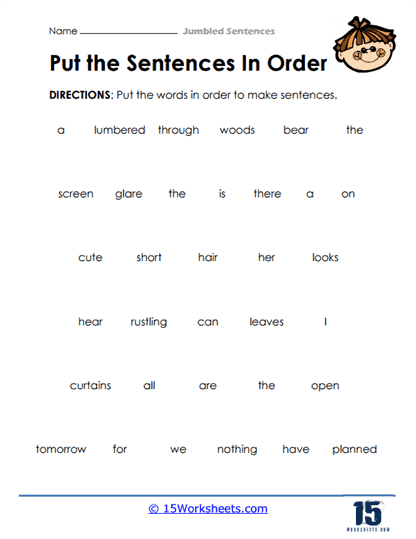
Students learn that where you place a word can completely change a sentence. This worksheet provides mixed-up words that need careful arranging to make sense. Learners sharpen their grammar and logical thinking as they test out different orders. The challenge builds stronger awareness of sentence structure.
4 or 5 Words
Here, students get short, manageable word jumbles made of just four or five words. They’ll practice unscrambling them into complete thoughts without feeling overwhelmed. The smaller sets encourage success and boost confidence. It’s a great starter activity for early writers.
Shaping Sentences
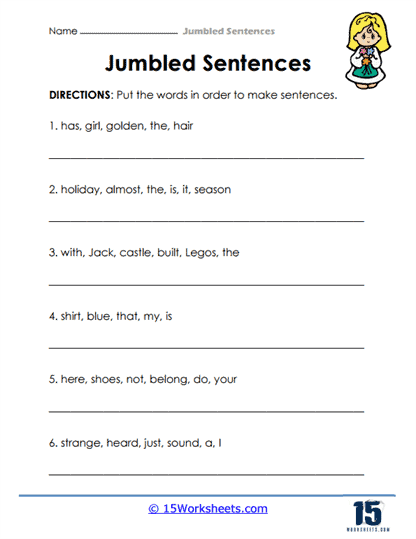
This worksheet emphasizes how the order of words shapes clear meaning. Students must rearrange scrambled words into polished, well-formed sentences. The activity helps them see the “blueprint” behind sentence construction. They’ll leave with a stronger sense of grammar rules in action.
Where to Punctuate
Learners not only put words in order but also figure out where punctuation belongs. The exercise blends unscrambling with mechanics practice. It shows how capitalization and punctuation help guide meaning. Students build double skills in sentence order and proper writing conventions.
Making the Best Sense
This worksheet challenges students to create sentences that make the most sense from the jumbled words. They’ll explore different possible orders but choose the clearest one. The task highlights how clarity matters in communication. It’s a thoughtful twist on a classic unscrambling exercise.
Learn Your Lines
Here, students unscramble sentences that feel like short scripts or dialogue lines. They practice ordering words to create natural speech patterns. The fun roleplay style keeps them engaged while building writing fluency. It’s especially useful for encouraging expressive language.
Making Sense
Students take scrambled words and rebuild them into logical, clear sentences. The activity helps them recognize proper word order in English. It’s simple but powerful practice for both reading and writing. Kids see firsthand how word placement creates meaning.
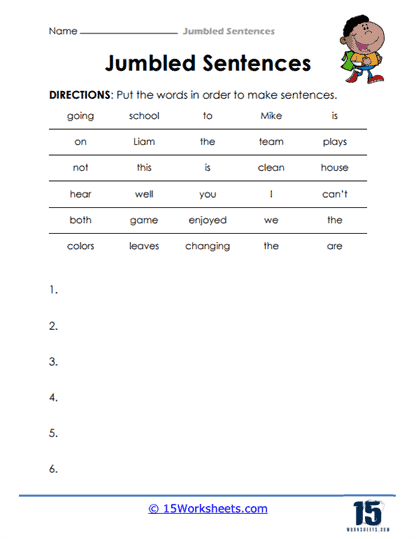
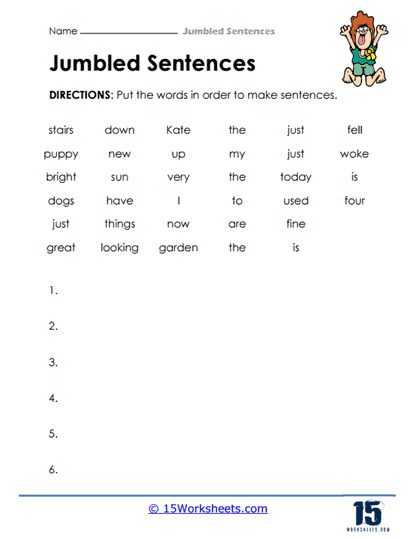
Make Sentences
This worksheet gives multiple jumbled word groups, and students must turn each into a proper sentence. It’s an active way to practice grammar and word arrangement. The straightforward format makes it easy for learners to follow. By the end, kids gain confidence in sentence creation.
Put the Words In
Students are given partial jumbled sentences and must slot words into the correct place. The puzzle-like design keeps them thinking critically. It highlights the importance of word position in making a sentence flow. Learners get repeated exposure to sentence mechanics in a fun way.
Words in Order
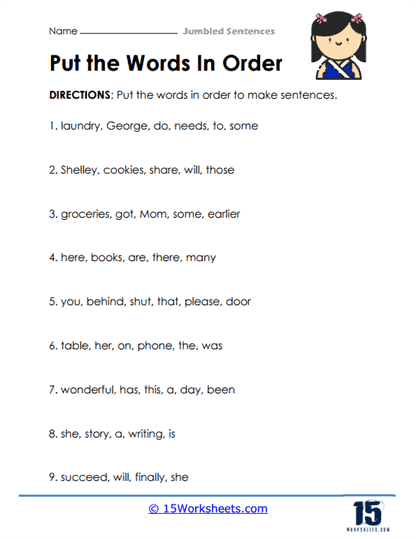
This worksheet provides scrambled sentences that must be rearranged into proper word order. Students test their understanding of subject, verb, and object placement. The task feels like solving a code or riddle. Each success reinforces solid grammar knowledge.
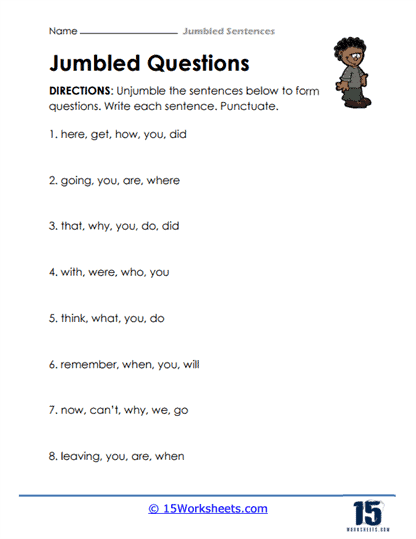
Jumbled Questions
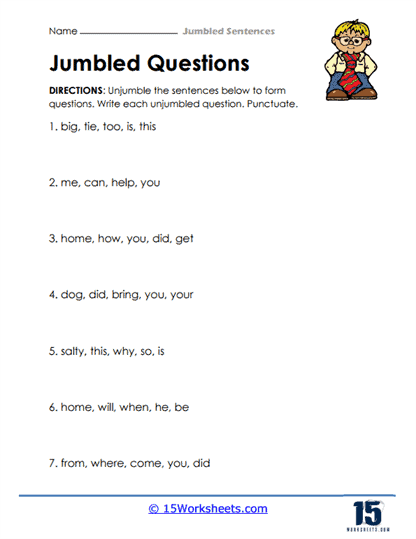
Students unscramble words to form proper questions. The activity helps them understand how English question structure works. It’s a great way to practice auxiliary verbs and subject-verb inversion. By the end, kids feel more confident asking clear questions.
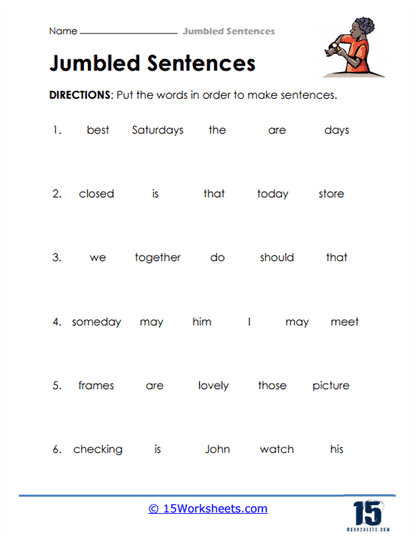
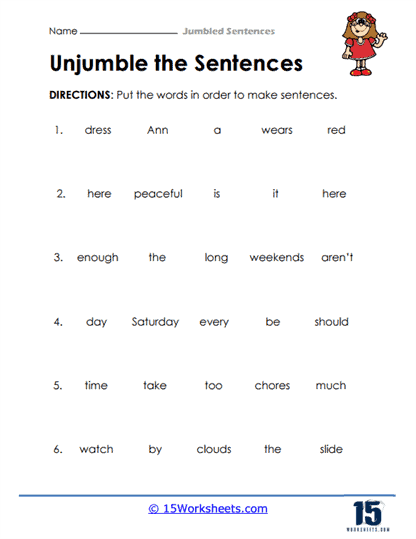
Unjumble the Sentence
This classic worksheet offers a mix of scrambled sentences for learners to fix. Each one builds skills in sequencing, grammar, and reading comprehension. The variety keeps the practice fresh and engaging. It’s a reliable exercise for strengthening sentence-building skills.
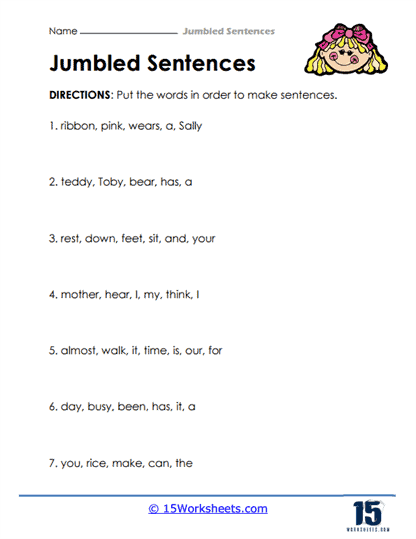
Put Words in Order
Here, students repeatedly arrange scrambled words into proper sentences. The repetitive style builds fluency through consistent practice. Each sentence reinforces word placement rules. It’s perfect for learners who benefit from structured, step-by-step drills.
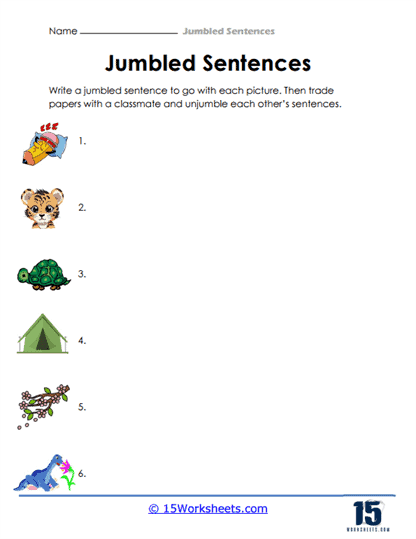
Go With the Pictures
Students use picture prompts along with jumbled words to form meaningful sentences. The visuals help them connect language with context. It’s especially supportive for visual learners and English language learners. The combination of images and word play makes grammar feel interactive and fun.
What Are Jumbled Sentences?
Jumbled sentences are groups of words mixed up into the wrong order. The challenge is for students to rearrange the words so they form a proper, meaningful sentence. For example, “dog the chased cat the” quickly becomes “the dog chased the cat.” It’s a simple but powerful way to show that word order matters in English.
Why are they important? English depends heavily on word order to convey meaning, so practicing with jumbled sentences helps kids understand the rules in action. Students learn where subjects, verbs, and objects belong, and they see how punctuation and capitalization play a role too. The activity is also interactive, giving kids the satisfaction of solving a mini puzzle each time they unscramble a sentence.
That’s why jumbled sentence worksheets are such effective learning tools. They combine grammar, comprehension, and critical thinking into one playful package. By the time students finish the set, they not only recognize correct sentence patterns but also feel more confident creating their own. It’s grammar practice that sneaks in as a puzzle game – the best kind of learning.