
Picture Sentences Worksheets










About These 15 Worksheets
Picture sentences are one of those teaching tools that look simple but offer big learning value. By combining an image with a sentence, they help kids connect what they see with what they read. Activities that involve matching words and pictures give young learners helpful clues, making it easier to understand how sentences work. It’s like giving kids training wheels for reading comprehension-and the pictures make it even more fun.
This collection of worksheets mixes it up in all the right ways. Some pages ask kids to match a sentence to the right picture, others challenge them to spot a sentence that doesn’t belong, and still others prompt them to write their own description. The variety means children aren’t just repeating the same task over and over-they’re flexing different parts of their literacy muscles each time. It’s the kind of “sneaky learning” that feels like play but builds strong reading and writing foundations.
Beyond classroom skills, these worksheets also help kids connect language to real-world situations. A sentence about walking a dog, eating food, or working in the garden makes language feel useful and familiar. Kids start to see that sentences aren’t just things we write in school-they’re how we tell stories, share ideas, and describe what’s happening around us. That connection makes their writing more meaningful, their reading more confident, and their learning more enjoyable.
Have a Look Inside Each Worksheet
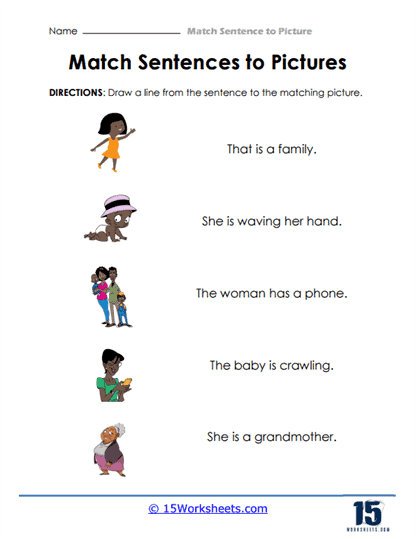
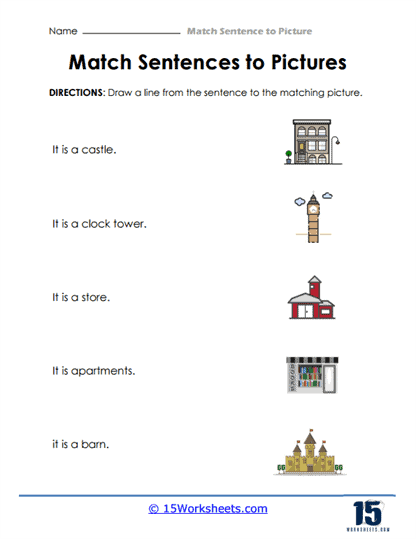
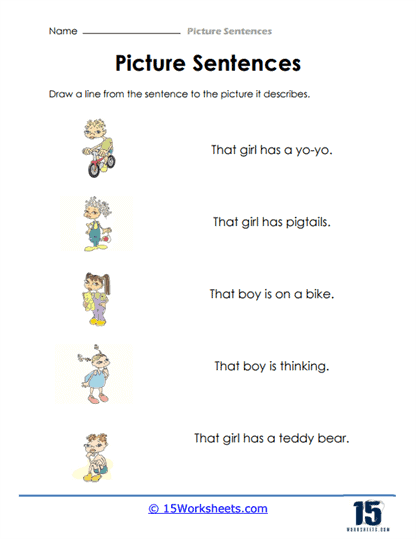
Drawing the Line
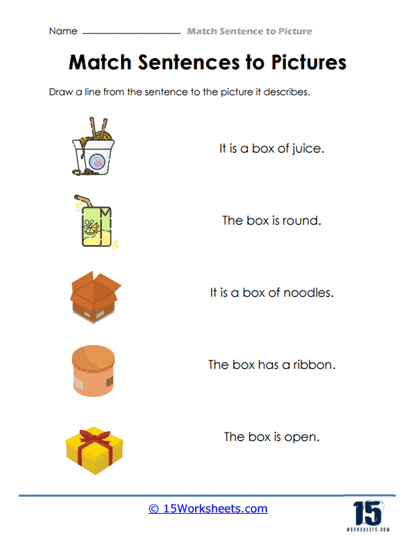
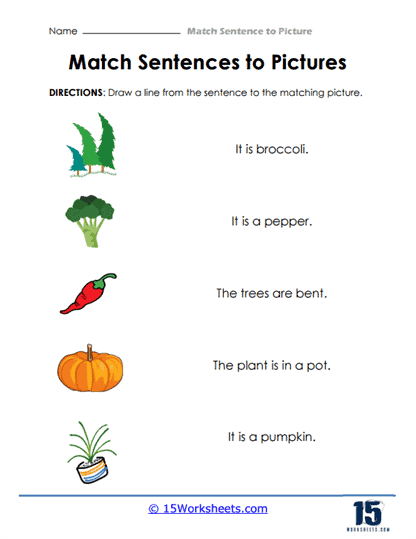
Kids trace a line from a picture to a matching sentence-or vice versa. It’s a smooth way to build connections between visuals and words. Helps with fine motor skills and visual comprehension. Also teaches that pictures mean something.
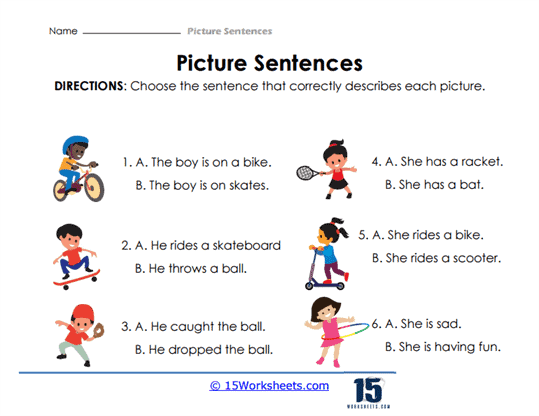
1 of 2 Sentences
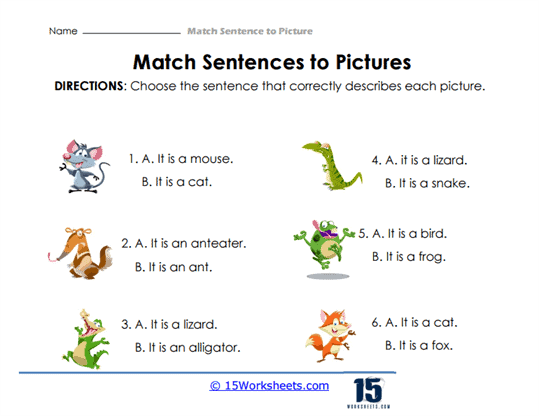
Students choose which of two sentences matches a given image. It’s a fun “which one fits?” puzzle. Encourages reading attention and comprehension. Great for boosting confidence as they see the match pop!
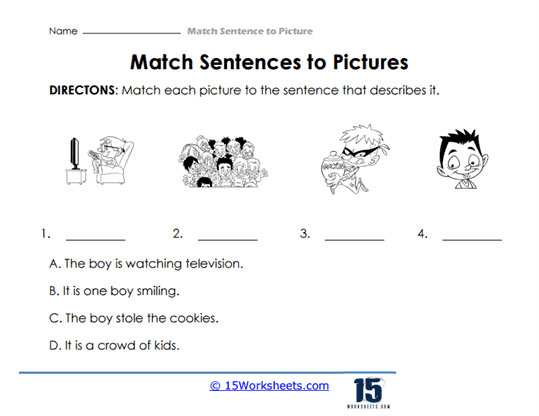
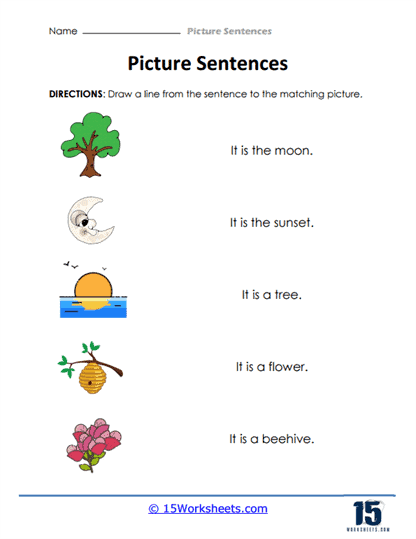
Matching Pictures
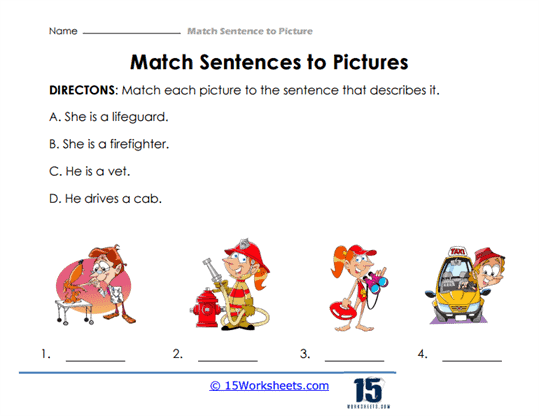
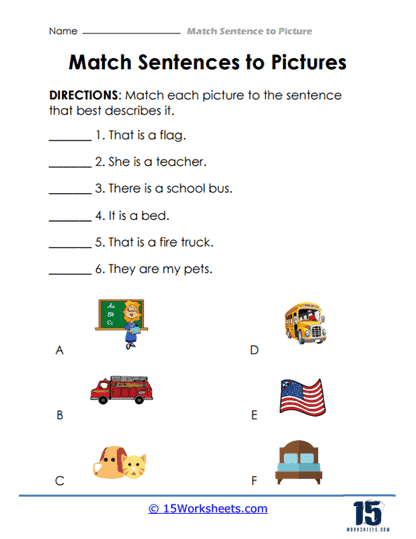
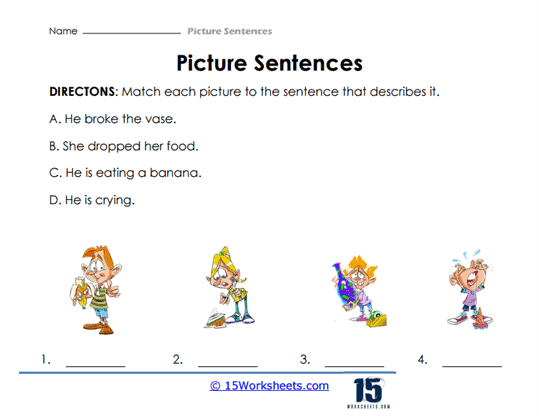
Learners match pictures to their corresponding sentences (or the other way around). This supports making visual-text associations. It strengthens early reading comprehension skills. A simple yet powerful practice.
Describing Actions
Children view an image and write a sentence describing what’s happening. It’s all about noticing action! This encourages using verbs and detailed observation. Builds expressive language skills in a fun way.
Best Describes It
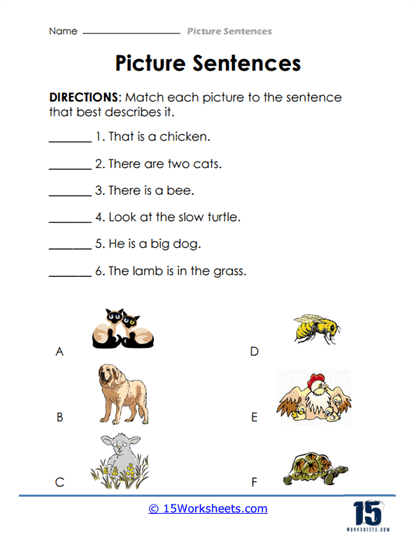
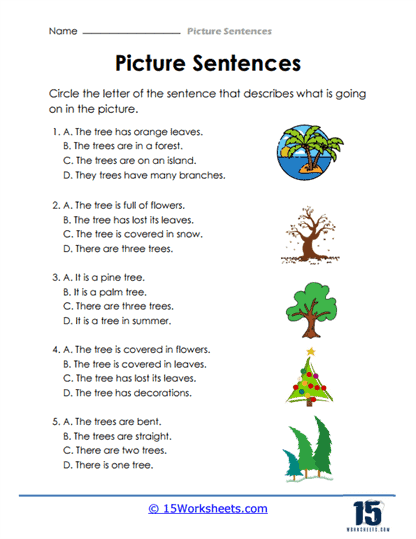
Students pick the sentence that best fits the picture. A mini-matching game that sharpens decision‑making. Reinforces reading comprehension and vocabulary. Helps kids learn subtle differences between similar sentences.
Groundhog Sentences
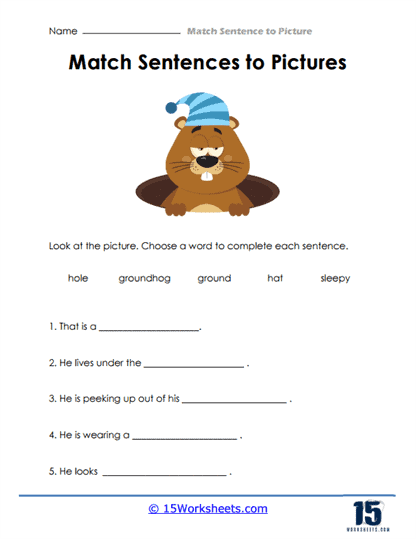
Likely themed around groundhogs-students craft or match sentences based on related images. Seasonal and engaging! Perfect for vocabulary tied to nature or holidays. Adds context and fun to sentence-building.
Dog Leash
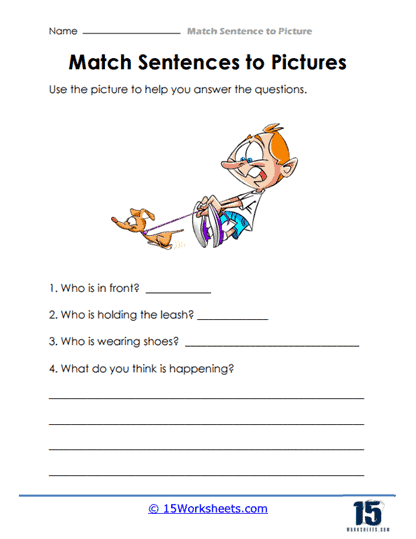
A picture prompt involving a dog and a leash-students form matching sentences. The scenario encourages action words like “walking” or “pulling.” It’s a relatable everyday scene. Helps build descriptive sentence fluency.
False Sentences
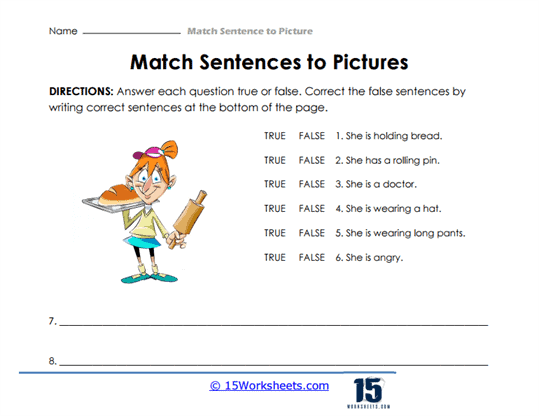
One sentence doesn’t accurately match the image-students identify the “false” one. This teaches critical thinking and comprehension. A playful logic twist on picture-sentence matching. Keeps learners alert and engaged.
The Object of Sentences
Focuses on identifying the direct object in relation to the picture. A grammar intro that pairs visuals with sentence parts. Helps kids put labels on parts of a sentence. Skill‑building with a visual twist.
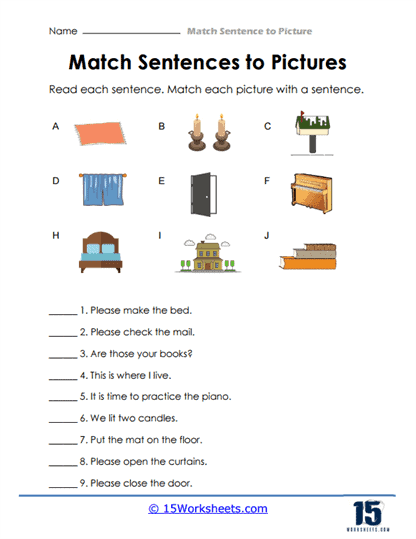
Match the Sentence
Similar to “Matching Pictures,” but reversed-students match sentences to the correct image. Reinforces comprehension in both directions. Great for practicing reading and visual interpretation. Simple, straightforward, productive.
On the Farm
Farm-themed images prompt kids to write or choose sentences. Encourages vocabulary tied to animals and rural life. Combines thematic interest with sentence structure. Makes learning rustic and relatable.
Matching Scenes
Learners match an entire scene (image) to an appropriate sentence description. Moves beyond single objects to full contexts. Excellent for developing narrative sense and comprehension. More complexity, more fun!
Describing Images
Students observe an image and write a descriptive sentence. Encourages rich details in writing. Supports vocabulary expansion, observation, and expressive language. A mini creative writing prompt.
Goings On
Pictures depict activity-students describe what’s going on. Promotes using action verbs and context cues. Builds storytelling skills in short bursts. Observational and expressive all in one go.
That Said It
Students match or write the sentence that “said it” for a picture-as if the picture could talk! Adds a fun twist of voice or dialogue. Encourages imaginative thinking. A great bridge to early conversational writing.
Lots to Do
Scenes brimming with activity-kids describe multiple actions or choose best-fit sentences. It’s a busy, thought-filled worksheet. Encourages complex sentence structure. A lively playground for language learners.
Action Kids
Children depicted in dynamic scenarios-students match or write action-focused sentences. Reinforces verbs and movement words. Fun theme that resonates with little energetic learners. Great for active scene description.
Nature and Nighttime
A scene set outside, perhaps at dusk-kids craft/match sentences accordingly. Encourages vocabulary around nature and time of day. Builds descriptive and environmental awareness. A calm yet stimulating prompt.
People Drama
Perhaps a humorous or dramatic scene-students use sentences to describe emotions or actions. Encourages reading emotional cues and matching language. Supports social-emotional understanding. A little theatrical, a lot educational.
Animal Sentences
Images featuring animals-students match or write sentences that describe them. Great for teaching animal names, actions, habitats. Fun and educational, especially for animal lovers. Nature meets literacy!
Home Sweet Home
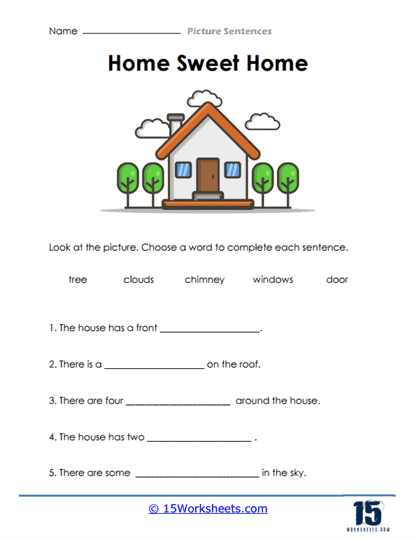
Home-themed pictures-kids create or match sentences about domestic scenes. Encourages vocabulary around daily life and environments. Makes sentence writing personal and relatable. A cozy learning moment.
In the Family
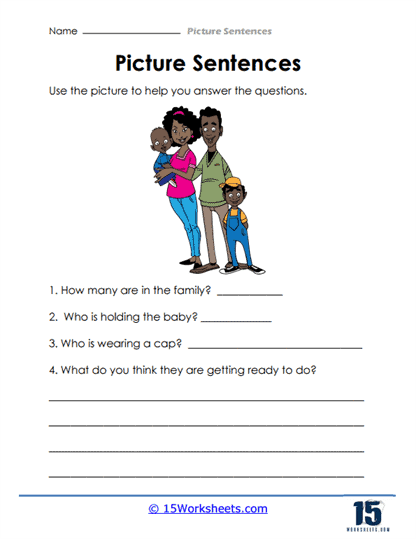
Family-related images-students describe relationships or interactions. Builds vocabulary around family roles. Supports writing about familiar, emotional contexts. Teacher-friendly and kid-relatable.
Walking the Dog
Image shows someone walking a dog-students craft/match sentences. Reinforces routines and action verbs. Encourages descriptive action writing. Another slice of real-life learning.
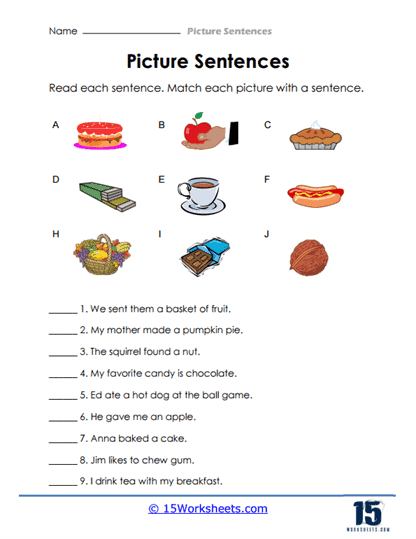
Food Sentences
Food-based images prompt sentence creation or matching. Teaches names, actions, and contexts around food. Supports vocabulary and descriptive writing. A tasty take on language learning.
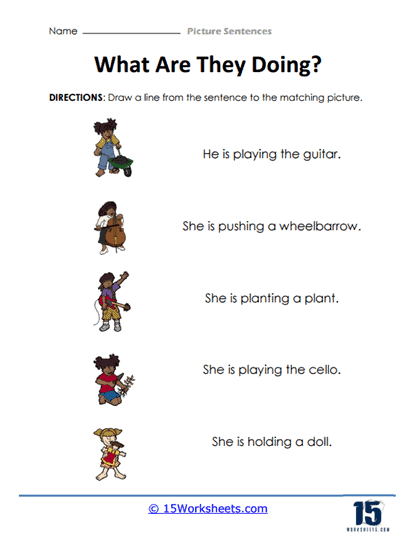
What Are They Doing?
Kids answer by writing or choosing sentences describing what’s happening. A straightforward, question-based prompt. Fosters observation and action description. Encourages full-sentence answers.
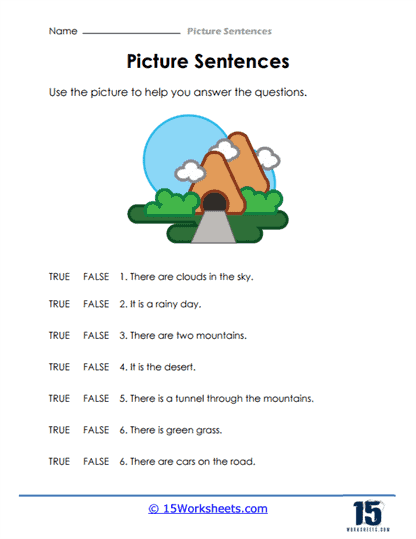
Cloudy Mountain Day
A scenic, nature-themed prompt-write sentences about a cloudy mountain scene. Supports descriptive language tied to weather and landscape. Encourages sensory and environmental observation. Calming and educational.
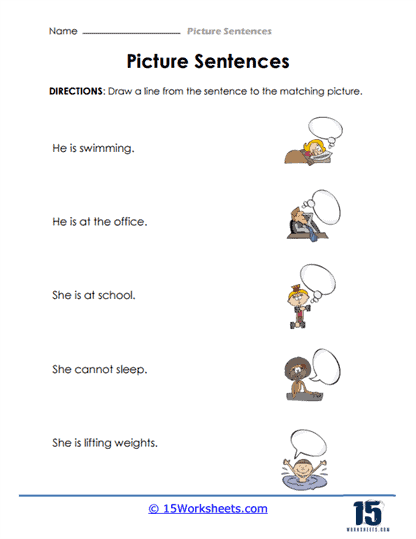
Thought Bubbles
Images may show characters with thought bubbles, and students write sentences that could fit inside them. This activity encourages perspective-taking and imaginative thinking while helping kids express ideas clearly. Using bubble writing styles can make the task even more fun, as students combine creative lettering with storytelling and simple dialogue.
Cats and Kitties
Adorable images of cats-students match or write sentences describing them. Animal-focused vocabulary and fun scene description. Great for engaging young learners through cute visuals. A purr‑fect writing prompt.
Nature Sentences
General nature scenes-students craft or match descriptive sentences. Encourages vocabulary around outdoor elements. Supports environmental awareness and expressive writing. A gentle, rich prompt.
Fun Things to Do
Scenes full of enjoyable activities-students describe or match with sentences. Encourages thinking about activities and environments. Supports expressive sentence structure. Happy, playful writing incentive.
Where Is Baby
Picture prompt asks students to describe or locate a baby in the scene. Supports prepositions and sentence structure. Combines visual focus with spatial language. A nurturing, language-rich exercise.
Is It True
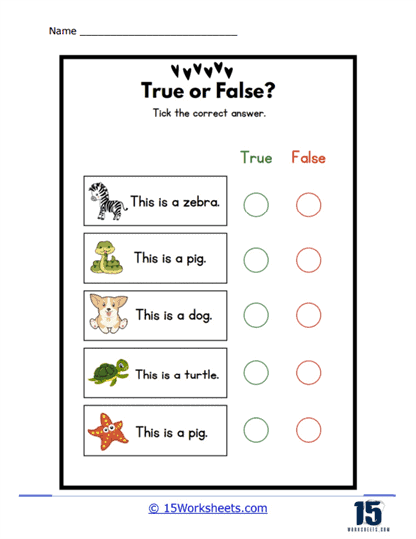
Students evaluate whether a sentence correctly describes the picture. Encourages critical thinking and comprehension. Like a little true/false quiz with a visual edge. Sharpens reasoning alongside literacy.
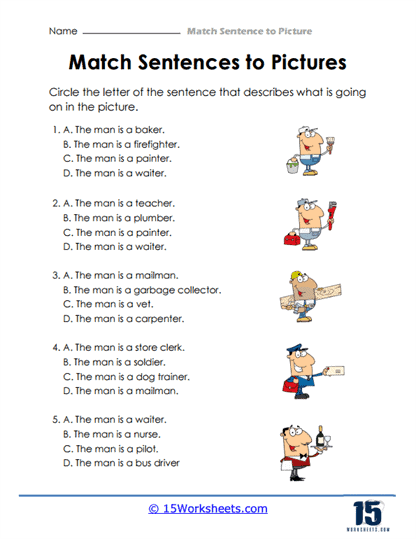
Read and Circle
Sentence(s) given-students circle correct image or word. Reinforces reading comprehension and recognition. Quick, focused matching exercise. Great for early reading practice.
Sentence Identification
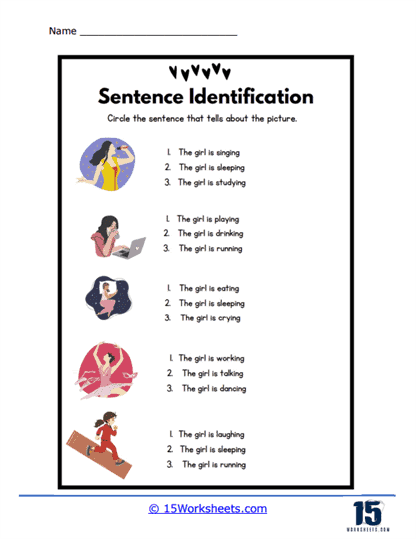
Students identify which sentence matches a picture-or what kind of sentence it is. Builds analytical reading skills. Encourages focus on structure and content. A literacy detective moment.
Identify Pictures
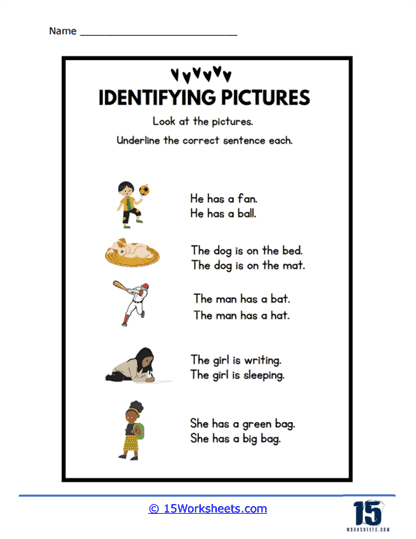
Given sentences, students pick or label the corresponding picture. Supports comprehension and visual-text matching. Reinforces vocabulary and reading accuracy. A dual skills exercise.
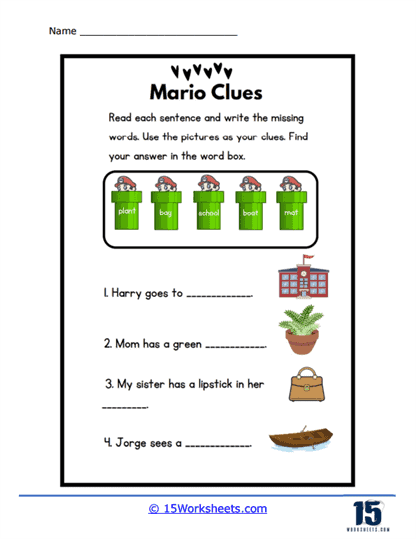
Mario Clues
Maybe themed with playful “Mario”-students use clues and images to write or match sentences. Encourages inference and reasoning. Adds gamelike or pop-culture interest. A fun twist on sentence practice.
Places In Town
Scenes of places like park, store, school-students describe or match with sentences. Builds vocabulary about common locations. Encourages contextual writing. Real-world relevance in classroom form.
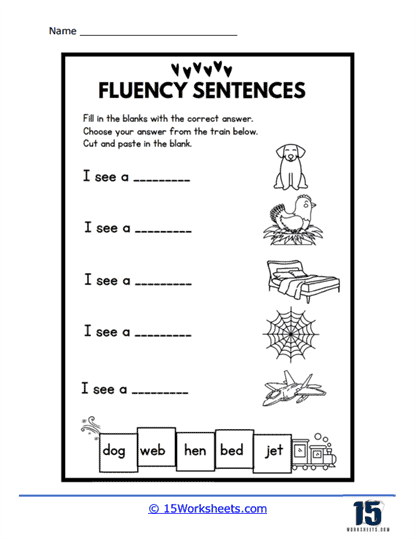
Fluency Sentences
Focus on sentences that are read aloud fluently-students match or write accordingly. Supports reading fluency and comprehension. Encourages rhythm, phrasing, and expression. A smooth literacy exercise.
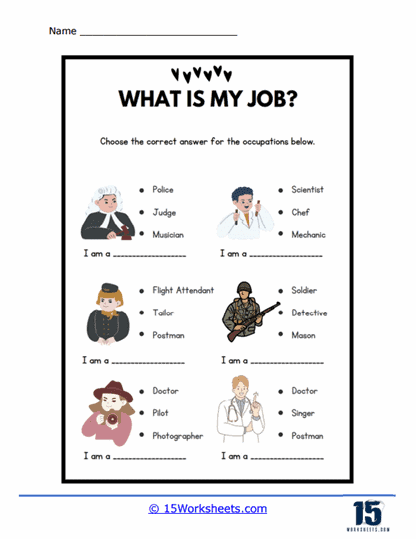
What Is My Job
Picture of someone working-students describe the job in a sentence. Encourages descriptive vocabulary and sentence structure. Supports occupational awareness. Career thinking with literacy practice.
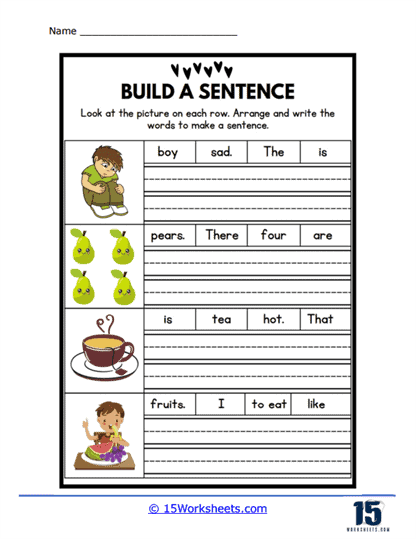
Build a Sentences
Students construct coherent sentences that match a picture. Teaches sentence assembly-ordering words meaningfully. Great for grammar and syntax. A building-block activity for writing.
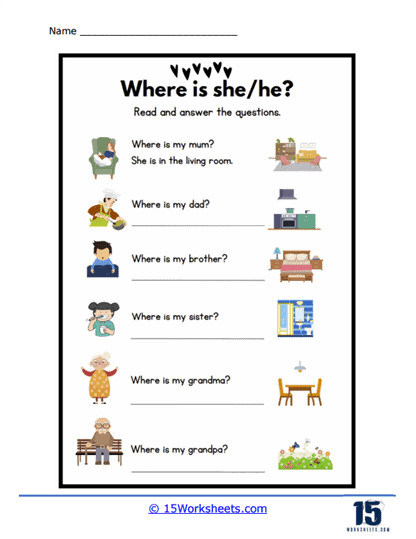
Where Is She/He
Image prompts students to identify location of a person and write about it. Supports preposition use and sentence framing. Encourages spatial and language skills. Contextual and useful.
Smart Goals
Likely features goal-setting scenes-students write about an aspiration or plan. Introduces early writing about actions and purpose. Supports reflective thinking and sentence planning. Learning meets life skills.
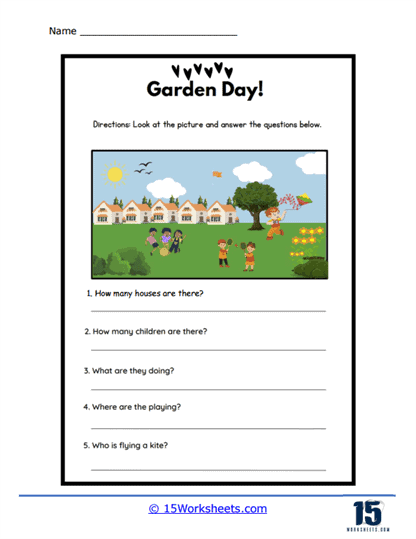
Garden Day
Garden-themed image-students describe the scene or action. Teaches nature and activity vocabulary. Encourages descriptive writing. A peaceful, educational prompt.
Arrange Words
Students arrange scrambled words into a proper sentence that matches an image. Teaches syntax, grammar, and sentence structure. A little puzzle with big learning rewards.
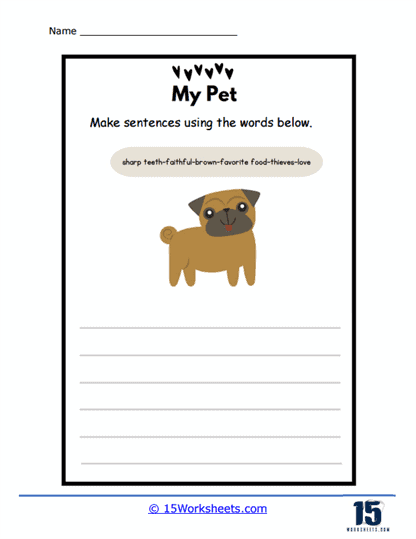
My Pet
Picture of a pet prompts sentence creation or matching. Supports vocabulary around animals, care, and presence. A personal, relatable topic. Sweet and educational.
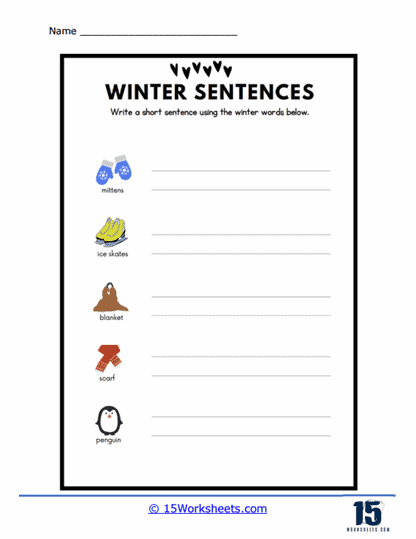
Winter Sentences
Winter-themed images-students write or match sentences. Encourages weather and seasonal vocabulary. Supports descriptive and thematic writing. Cozy and learning-rich.
6 Steps to Write a Sentence About an Image
Observe the Image Carefully – Look at all the details in the image, including the background, the main subjects, the expressions, the colors, and any particular details that stand out.
Identify the Main Subject – Determine what or who is the central focus of the image. This is usually what your sentence will be about.
Describe the Action – What is happening in the image? Is someone doing something, or is something happening to them? Use a verb to describe the action.
Use Adjectives – Describe the main subject using adjectives. How does the subject look? What kind of emotions does the subject evoke?
Consider the Context – What can you infer from the image about the situation or the environment? Is it a happy, sad, dangerous, or peaceful situation?
Write Your Sentence – Now, put it all together. Start with the main subject, add the action, and then any descriptive details or context.
An Example For You
Let’s take an example – Suppose you’re looking at an image of a child flying a colorful kite in a sunny park. A sentence about this image might be – “In the bright sunlight, a cheerful child is joyfully flying a colorful kite in the bustling park.”