
Who Am I? Worksheets
All About These 15 Worksheets
“Who Am I?” is part riddle, part mystery game, and part lightbulb moment waiting to happen. These worksheets take ordinary reading and transform it into detective work, making students eager to search for hidden clues and guess the secret identity. The mix of riddles, sketches, and clue-based activities helps kids flex their inference muscles while still keeping things playful and fun.
What’s great about this collection is that it doesn’t just stop at solving puzzles-students also get the chance to create their own. By designing riddles and sketching clues, they learn to think about language from the inside out, sharpening both vocabulary and creativity. That means kids aren’t only practicing comprehension, they’re learning how to communicate ideas in clever, structured ways.
Best of all, these worksheets bring real-world connections into the classroom. Whether kids are guessing community helpers, exploring different careers, or identifying animals, they’re getting a sneak peek at how language, observation, and reasoning tie directly into everyday life. It’s reading comprehension meets the real world, with a dash of mystery fun thrown in.
Have a Look Inside Each Worksheet
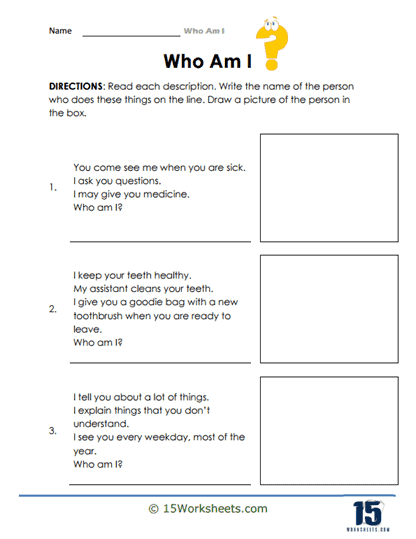
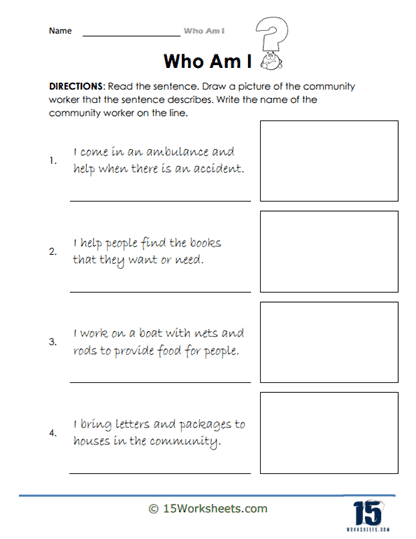
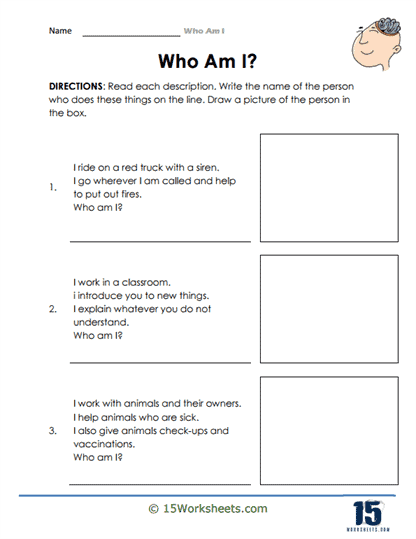
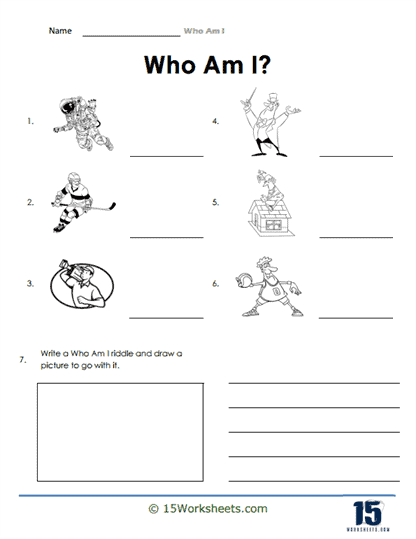
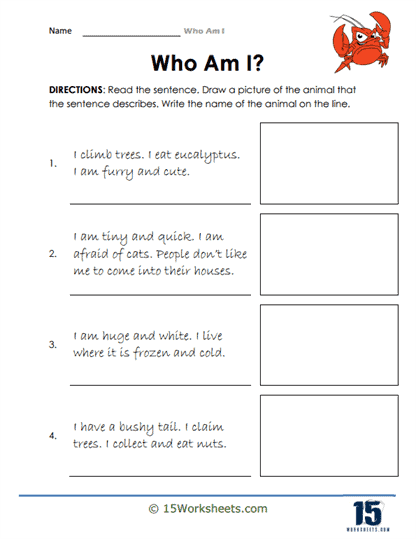
Identify And Draw
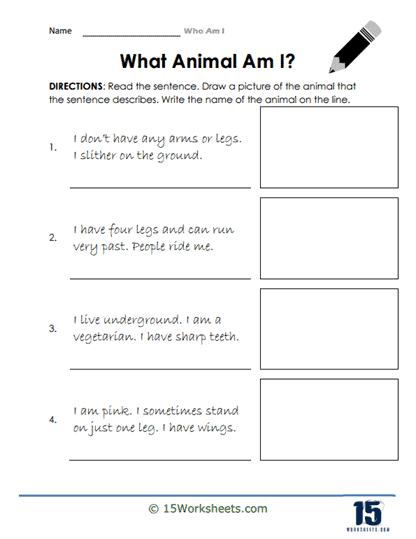
Students draw what they guess based on the clues-combining inference and creativity to reveal identities of people or animals. They practice comprehension alongside visual expression, making the activity both thoughtful and fun. This supports learning about descriptive language and details while engaging artistic skills. A playful way for kids to connect clues with creative representation.
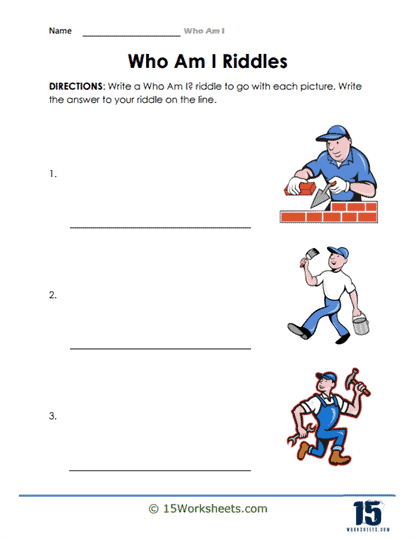
Riddle Me This
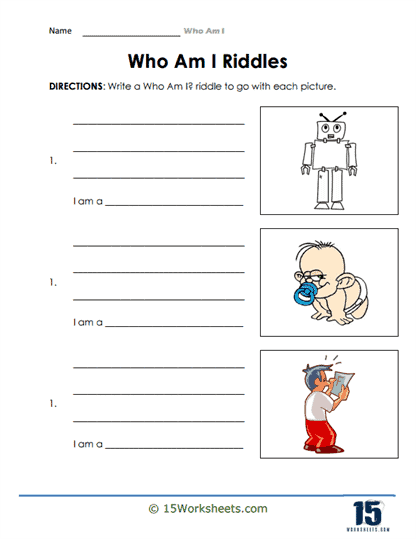
Classic riddles prompt students to read carefully and think critically to guess identities cleverly-like mini detective work. It sharpens inference and logical reasoning through wordplay and subtle hints. This worksheet builds those “aha!” moments of discovery while challenging students in a friendly, mysterious format. A riddle-lovers’ dream for practicing critical reading!
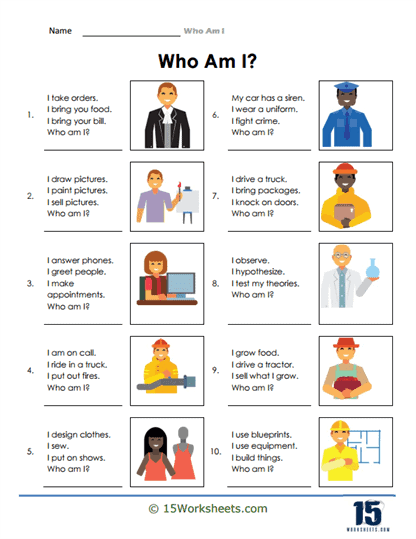
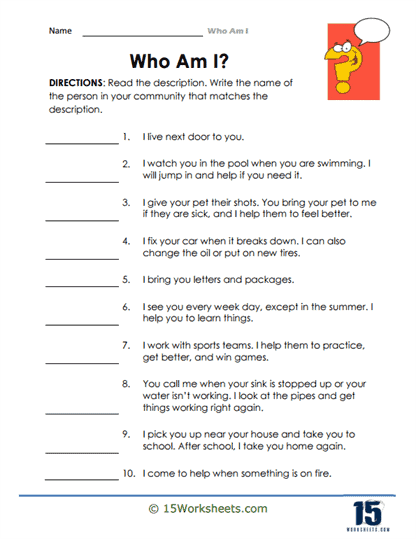
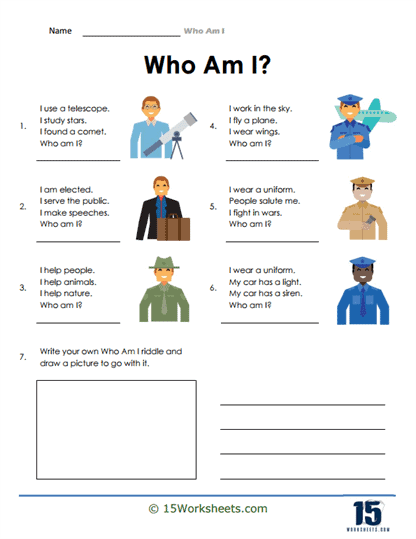
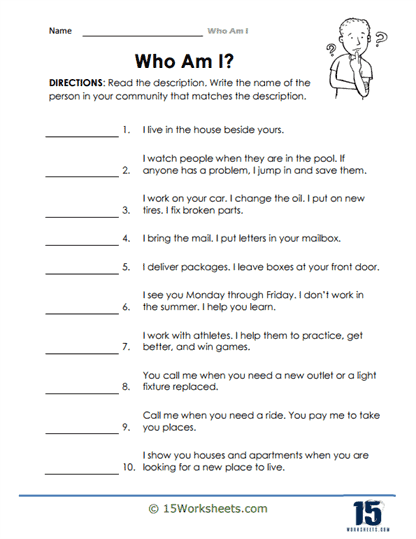
The World of Work
This one likely features clues about various careers or jobs for students to guess and draw or describe. It helps them connect roles people play in society with vocabulary and reasoning. Through identifying different professions, learners expand their awareness of the working world. A practical blend of civics and language skills fun.
Riddler’s Challenge
A tougher version where students interpret riddles with trickier hints, pushing them just beyond their comfort zone. It encourages perseverance and attention to nuance in language. Students flex their critical thinking muscles in a playful but challenging format. A confidence-booster when they crack the trickiest clues!
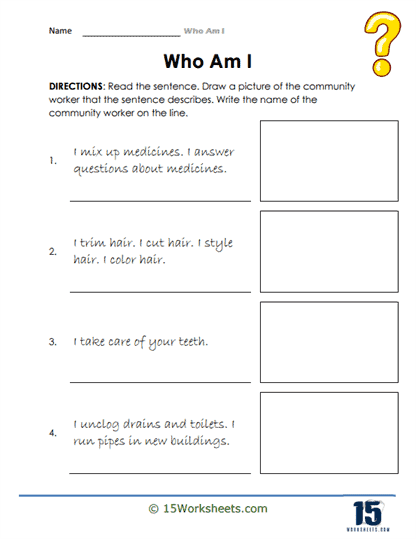
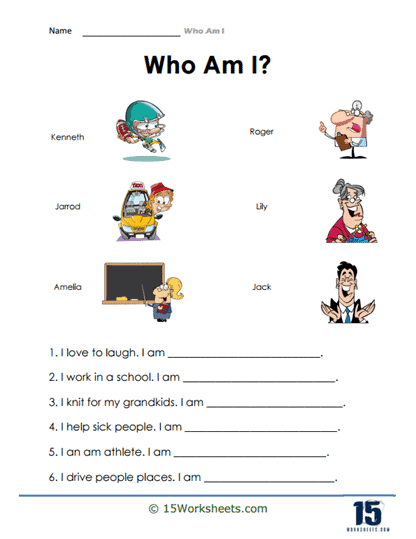
Community Worker Portraits
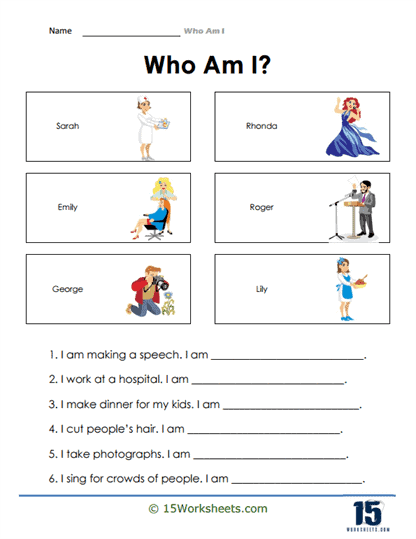
This one probably shows bits about helpers in the community, and students match or describe who they are. It combines social awareness with language: drawing on context to identify roles like nurse, teacher, firefighter, etc. Students practice vocabulary and community understanding, reinforcing social studies connections. A warm, inclusive way to learn about helpers around us.
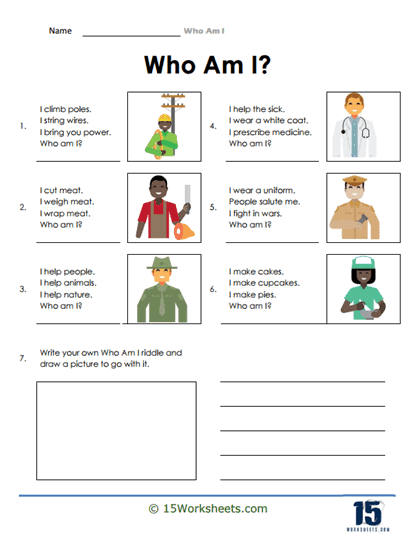
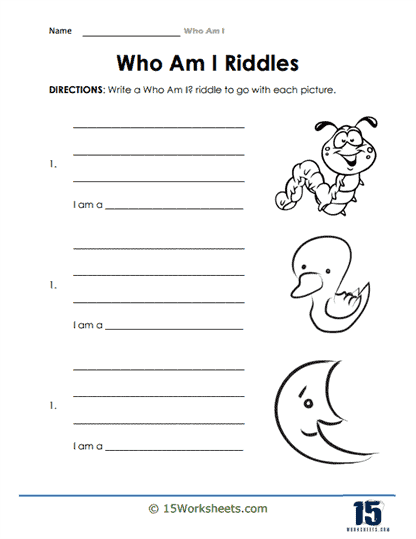
Creator’s Showcase
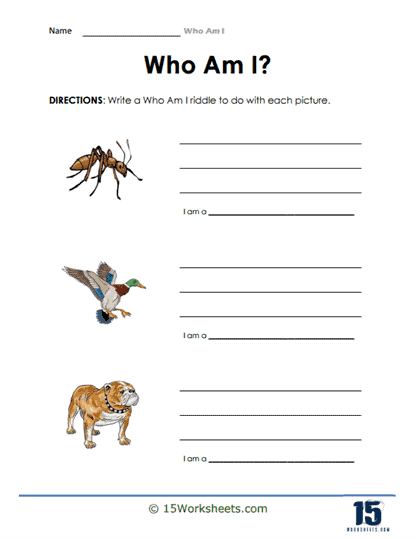
Learners might read a set of clues and then create their own “Who Am I?” puzzles-text or drawings. It gives them the chance to get creative with language and clues. This cultivates both reflective thinking and creative writing or art. A great way for students to become puzzle-makers instead of just puzzle-solvers.
The Person Next Door
This likely prompts students to use descriptive clues about a familiar person-maybe a classmate or family member. It builds observational, descriptive, and inference skills based on things they know personally. Through describing someone known, students practice empathy and detail-oriented language. A comfy, relatable twist on “guess-who” puzzles.
The Name Game
Students guess identities based on clues tied to names-like meanings or wordplay-fun with language and identity. It encourages thinking about names in new ways, linking them to characteristics. A fun blend of vocabulary, wordplay, and identity exploration. A lighthearted activity that also teaches linguistic nuance.
Wildlife Sleuths
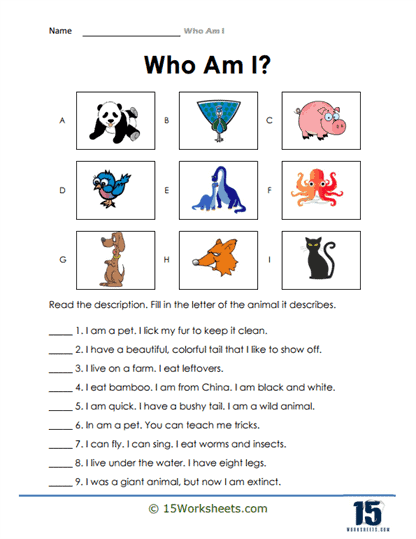
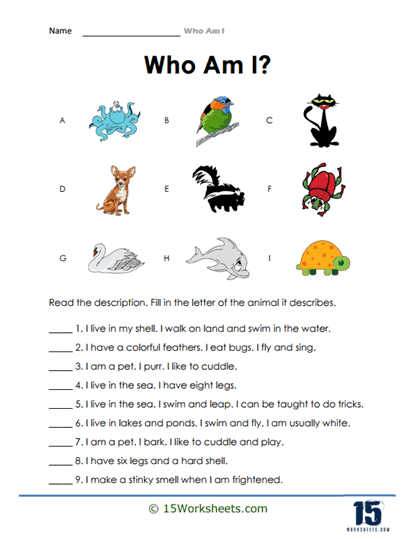
Riddles or clues about animals, where students guess (and perhaps draw) the animal being described. It combines zoology with reading comprehension. Students build vocabulary about animals and habitats alongside inference skills. A great cross-curricular tool for science and language learning.
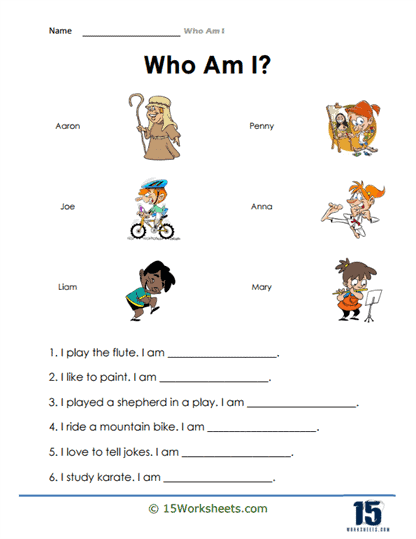
Who Is Doing What?
This likely shows clues or scenarios with roles, and students identify who is responsible-promotes understanding of roles/actions. It reinforces matching people or characters with their actions or jobs. Students practice both context clues and precise vocabulary. A useful activity for linking language and real-world logic.
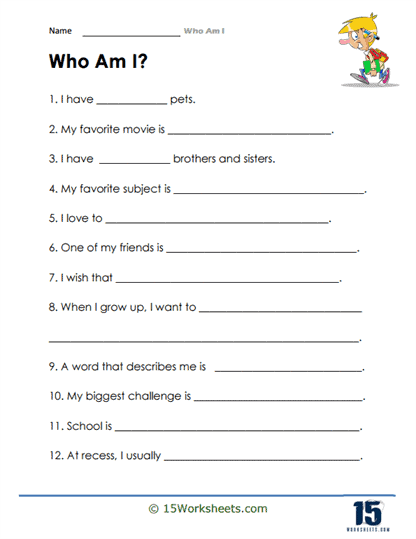
The Essence of Me
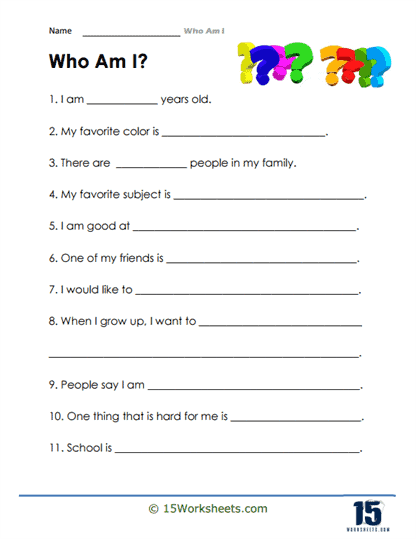
Prompts students to write or draw based on clues that reflect identity or character traits. It’s a reflective activity that fuses self-awareness with descriptive language. This supports emotional and linguistic development by exploring “who you are” more deeply. A thoughtful, introspective worksheet with a creative edge.
Naming Safari
Clues about animals or people where students guess and name them, like on a wild exploration. It encourages curiosity and connection between language and the natural world. Students enjoy adventure while building inference and naming skills. A playful twist on identity puzzles with wildlife flair.
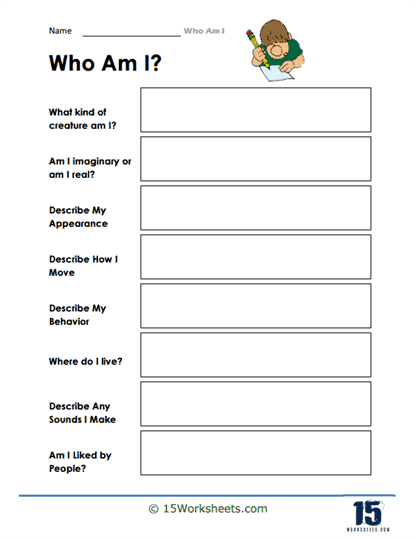
The Wildlife Journal
Students record clues and guesses about animals in a journal-style format-mixing writing, reflection, and science. This supports structured expression and observational skills. It also strengthens comprehension by encouraging students to document thinking. A journaling angle for deeper engagement with “Who Am I?” clues.
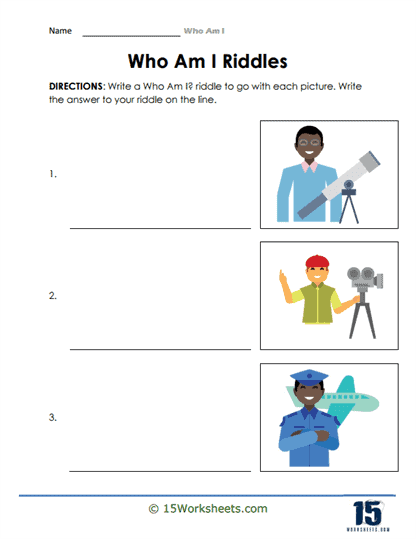
Crafting Enigmas
Students design their own enigmatic riddles or puzzles, maybe drawing or writing clues. It’s all about creativity, critical thinking, and playful challenge. Crafting clues helps kids think about language structure, perspective, and audience. A rewarding, brain-boosting activity that nurtures ownership.
Clue Creator
Similar to above-students generate clues about a person, animal, or object to challenge peers. It fosters creative writing and logical structuring of clues. They also practice vocabulary and inference in reverse (as creators). A great way to let students teach and test each other.
Career Clues
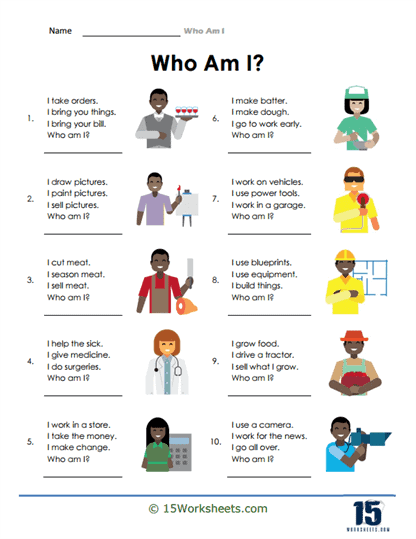
Clues describe a job, and students guess the career-like a “mystery profession” activity. Supports awareness of vocations along with vocabulary and inference. Builds connections between reading and real-life roles. A subtle but meaningful civics plus grammar workout.
Sketching Identities
Students sketch based on descriptive clues, visualizing who is being described. It nurtures spatial awareness, interpretation of language, and creativity. Links words to images in a fun identity puzzle format. Art meets grammar in a seamless way.
The Laborers
Clues hint at manual or labor-intensive roles, and students guess what job/person is described. It adds a social studies and vocabulary component. Students learn about less-highlighted professions and the words that describe them. A respect-building activity for everyday heroes.
Occupation Odyssey
Probably a series of clues guiding students through different careers in a story-like progression. It reinforces comprehension while expanding awareness of job variety. A creative way to teach both reading and community roles. An odyssey of learning through language.
Solve And Sketch
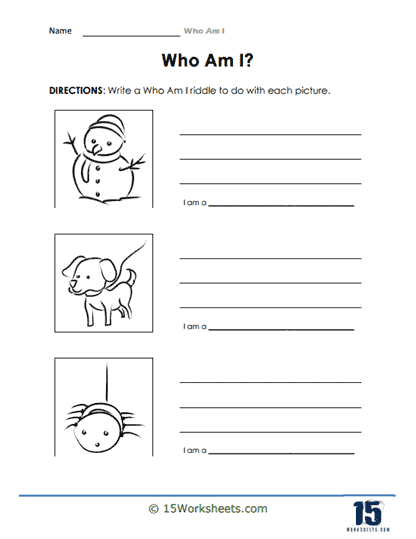
Students solve riddles and then sketch the answer-wrapping inference and art in one. It caters to visual learners and blends reasoning with drawing. A dynamic match of comprehension and creativity. A fun, holistic puzzle activity.
Unravel and Invent
Students unravel a given puzzle or riddle, then invent their own-a dual-mode of critical thinking and creativity. Strengthens reading and imaginative writing simultaneously. Encourages deeper engagement with the clue-making process. A puzzle fan’s dream worksheet.
In The Neighborhood
Clues about familiar roles or people in community, students guess based on context. Supports observation of surroundings and how language describes real life. Helps students connect reading with their local world. A grounded and socially meaningful activity.
Knowing Who’s Who
Students identify identities based on well-known clues or descriptions-like famous people or community figures. It builds inference skills and maybe general knowledge. A fun recognition tool that blends language with identity awareness. Great for confidence and curiosity.
Me And My Individuality
Prompts about personal traits, and students guess (or describe) themselves-deep, reflective, and expressive. It helps with self-understanding and descriptive writing. Encourages students to celebrate uniqueness through language. A meaningful wrap-up for identity exploration.
The Zoo Quest
Students tackle clues about zoo animals-guessing and perhaps drawing or naming them. Combines zoology, vocabulary, and inference in a thematic way. Great for thematic, cross-curricular learning. A safari of language discovery.
Creature Chronicles
Likely a collection of clues repeated in a storytelling format about creatures. Encourages narrative thinking plus inference and animal knowledge. Great for creative writing and biology. A dramatic telling through identity riddles.
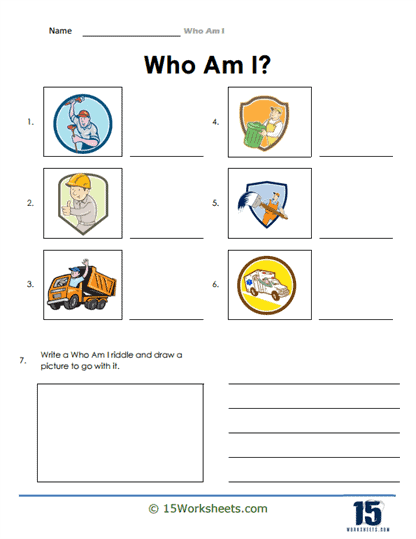
Picturesque Mysteries
Clues paired with images to solve identity puzzles-helps visual learners. Blends art interpretation with text-based reasoning. A fun, multimodal comprehension activity. Perfect for mixed learning styles.
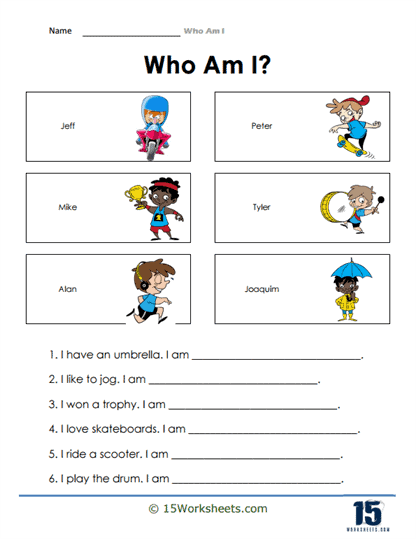
Make The Connection
Students connect clues, names, or pictures to identities-matching inference with logic. Helps with pattern recognition and vocabulary. A structured but engaging worksheet for critical thinking. A neat twist on identity matching.
The Wild Encounter
Clues describe a scenario or character (often animal-related), and students guess who it is-immersive and imaginative. Builds inference with narrative context. Encourages immersive thinking and story-based comprehension. A mystery walk into the wild!
Animal Riddles
Classic animal riddles students read and solve-bridging literacy and science. Sharpens vocabulary and inference, with animal fun. A familiar favorite for young detective readers. A riddle-and-roar favorite.
What Are “Who Am I?” Activities
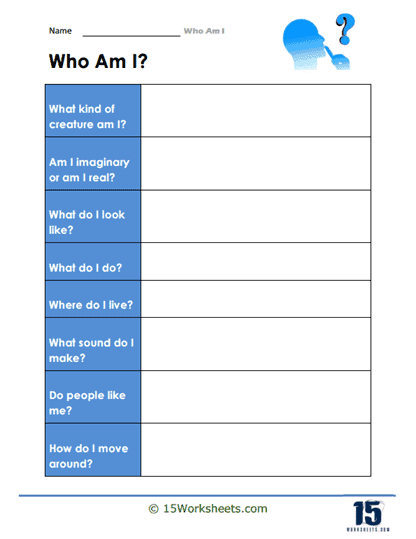
At its heart, “Who Am I?” is a guessing game powered by clues. Someone (or something) offers little hints about who they are, and players try to piece together the answer like mini-detectives. It’s a playful way of teaching inference, deduction, and comprehension all at once-without making it feel like “work.”
In real life, we use the same skills every day. Think about reading signs, figuring out someone’s mood by their tone, or guessing the subject of a conversation before all the details are shared. “Who Am I?” helps students sharpen those context-clue skills while also encouraging creativity, critical thinking, and even empathy.
These worksheets make the concept both structured and accessible. By practicing with puzzles about animals, careers, or people around us, students learn not just how to “guess right,” but also how to observe carefully, describe clearly, and celebrate the process of discovery. It’s the kind of skill set that builds confidence in both schoolwork and real-world situations.