
Nouns Worksheets
All About These 15 Worksheets
These worksheets offer a rich and varied journey into understanding nouns-words that name people, places, things, and ideas. Through interactive exercises like sorting, circling, coloring, and categorizing, students strengthen their recognition and classification of different noun types, including concrete vs. abstract, common vs. proper, singular vs. plural. The engaging formats-like “Word Jungle,” cut-and-paste tasks, and themed sorting-make grammar feel dynamic and memorable.
The collection scaffolds learners from basic identification to deeper classification. Early worksheets focus on simple recognition (Find and Circle, Underline the Nouns), and later ones challenge students to categorize (Concrete or Abstract?, Is It Common or Proper?), differentiate (Plural Palooza), and understand function through questioning formats (Who, Where, or What?). This progression ensures students build confidence and conceptual clarity step-by-step.
By blending visual appeal with strategic practice, these worksheets help learners internalize grammar rules while having fun. Coloring and cutting tasks engage visual and kinesthetic learners, while sorting and mapping activities foster critical thinking about language categories. It’s a balance of creativity, structure, and foundational grammar-all essential for building writing and communication skills.
Have a Look Inside Each Worksheet
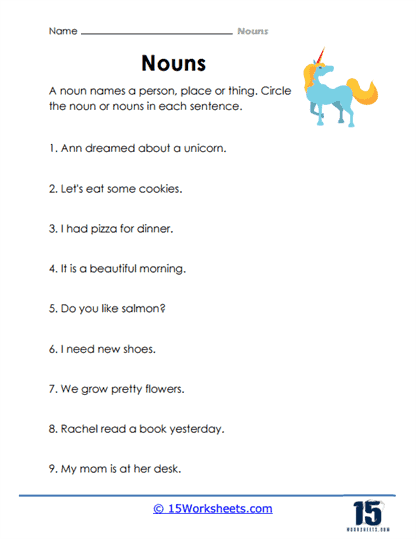
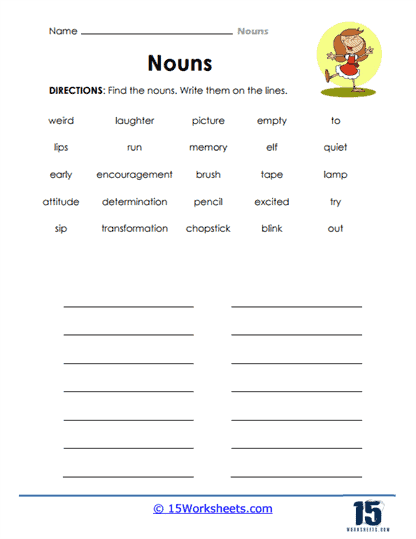
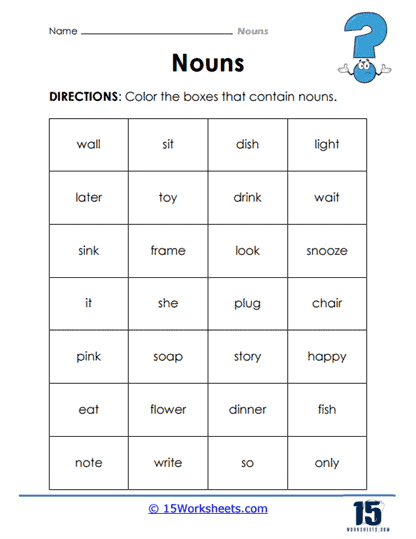
Find and Circle
Students search for and circle nouns within a sentence or list of words. This foundational activity reinforces their ability to spot naming words in context. It builds comfort with recognizing nouns visually.
Realm of Concepts
This worksheet invites learners to explore abstract ideas and categorize them under concept nouns. It encourages them to differentiate between tangible objects and intangible thoughts. This deepens understanding of how nouns can represent more than just physical things.
Making Connections
Students draw lines connecting nouns to their appropriate categories-such as people, places, things, or ideas. It helps reinforce noun classification and meaning recognition. The interactive format supports critical thinking about word usage.
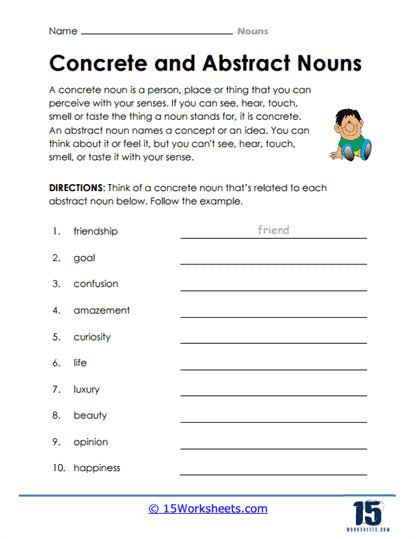
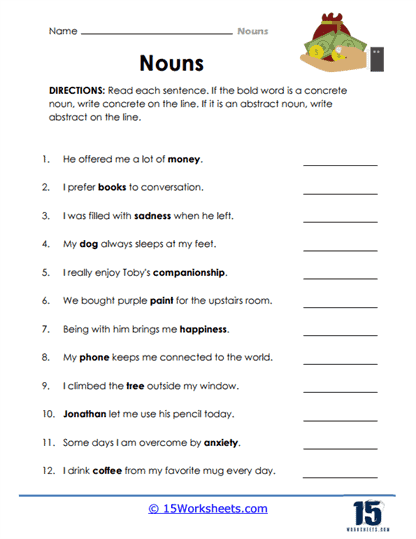
Concrete or Abstract?
This activity presents words that students sort into concrete or abstract noun groups. It challenges them to identify whether something is physically touchable or conceptual. This reinforces awareness of noun types in a clear way.
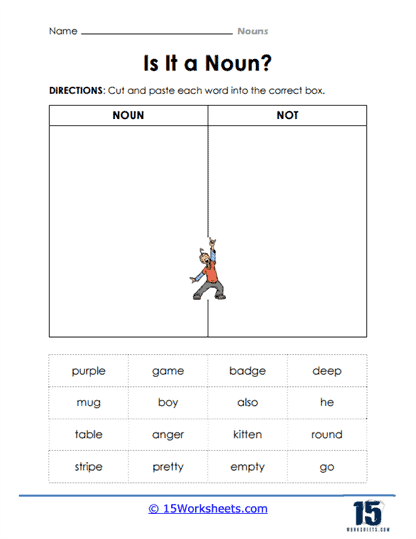
Cut and Paste Sorting
Learners physically cut and paste noun examples into defined categories-like person, place, or thing. The hands-on approach engages motor skills while reinforcing noun classification. It makes grammar tactile and memorable.
Word Jungle
A playful “jungle” of words challenges students to pick out nouns hidden among distractors. It reinforces selective recognition in a vibrant, engaging context. It’s a fun hunt for naming words.
Unveiling Solid Secrets
This worksheet encourages discovery of solid (concrete) nouns through hidden or coded clues. It feels like a mystery activity while reinforcing noun identification. The creative format keeps interest high.
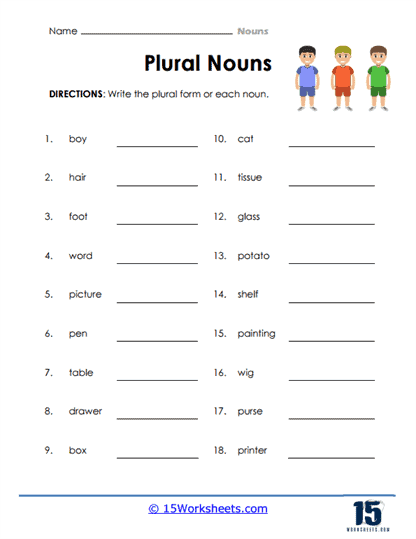
Plural Palooza
Students explore and sort plural noun forms like “cats,” “geese,” or “boxes” in a dynamic format. It emphasizes pluralization rules and patterns in a lively way. It helps learners internalize plural constructions through repetition.
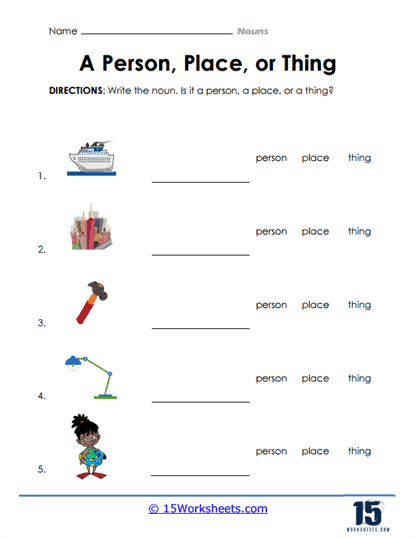
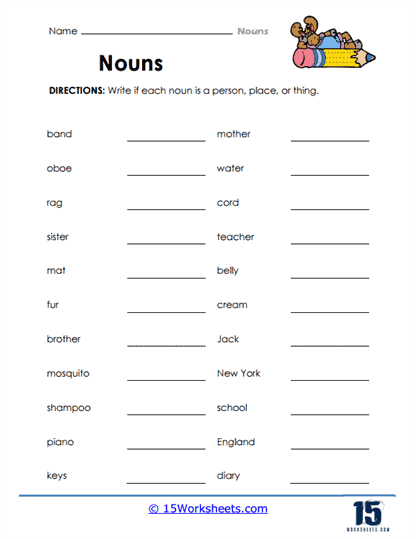
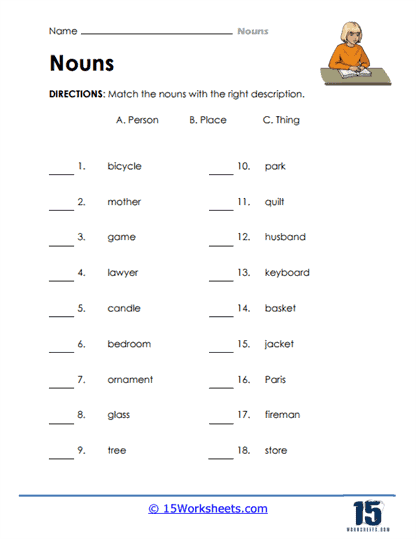
Exploring People, Places, and Things
Students sort nouns into the “people,” “places,” and “things” categories. It reinforces basic noun functions with clarity and structure. This organizer helps learners think systematically.
Who, Where, or What?
This worksheet prompts students to identify nouns by asking-Who is this? Where is this? What is this? It connects questioning strategies to noun identification. It teaches that nouns answer key “wh‑” questions in language.
Color Craze
A vibrant activity where students color-code different noun types-like concrete vs. abstract or singular vs. plural. The color dimension adds visual memory hooks. It makes classification both creative and educational.
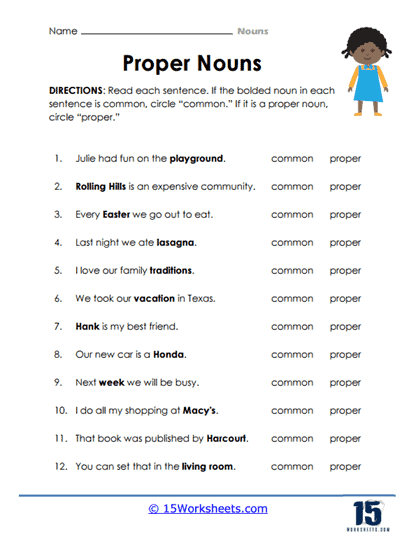
Is It Common or Proper?
This worksheet encourages kids to distinguish between common and proper nouns, such as “city” versus “New York.” It sharpens capitalization awareness and noun specificity. It reinforces the importance of naming specifics correctly.
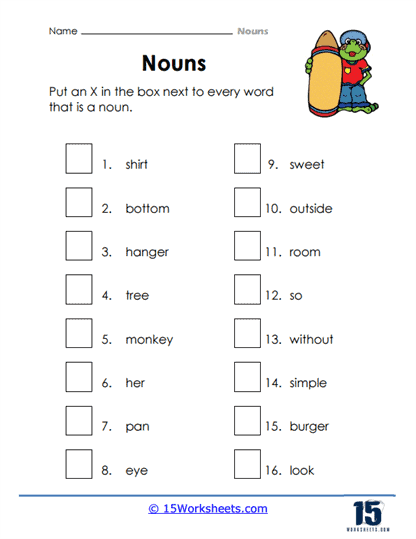
X Marks The Noun!
Students place an “X” over nouns hidden in sentences or passages. It’s a quick, focused recognition drill to strengthen noun detection. Simple, effective, and fun.
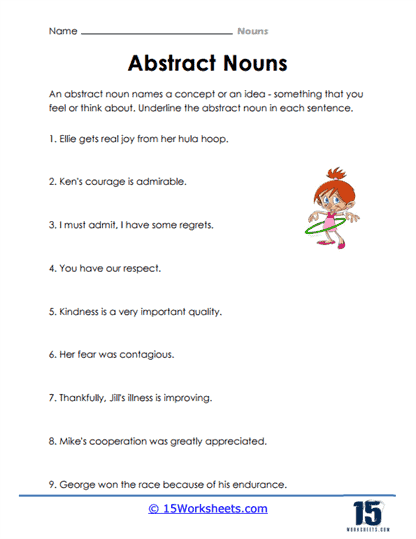
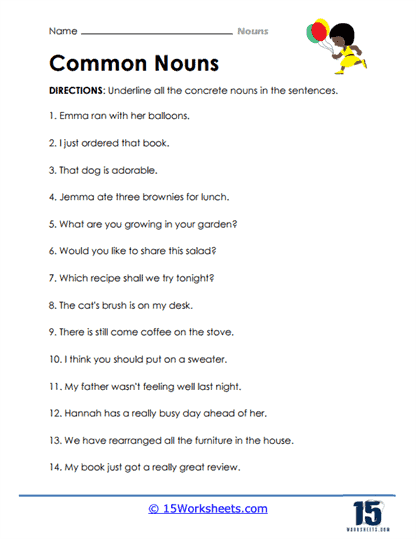
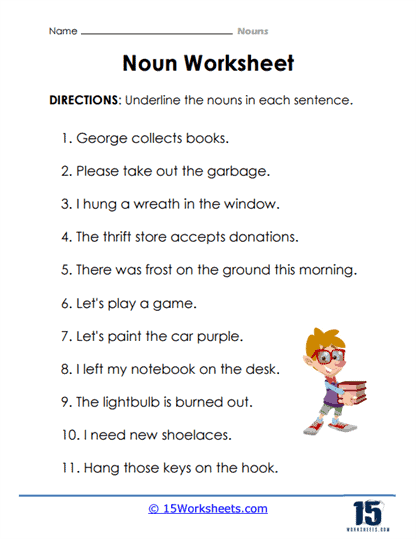
Underline The Nouns
This exercise asks learners to underline all nouns in a given text. It reinforces close-reading and grammar recognition skills. It makes studying nouns feel active rather than passive.
Connecting Words and Categories
Students connect noun examples to broader categories like “emotion,” “object,” or “place.” It deepens understanding of how nouns function and relate in grammar. This mapping supports vocabulary building and conceptual clarity.
What are Nouns and Why Do They Matter?
Nouns are words that name people (like “teacher”), places (“park”), things (“book”), or ideas (“freedom”). They’re the building blocks of sentences, serving as subjects, objects, or complements in grammar. Recognizing and understanding nouns enables students to anchor meaning in both speech and writing.
Nouns come in different types, each with its own usage nuances:
Common vs. Proper: “dog” vs. “Fido.”
Concrete vs. Abstract: “rock” vs. “justice.”
Singular vs. Plural: “cat” vs. “cats.”
Mastery of these distinctions helps students use language with accuracy and clarity.
Learning about nouns is fundamental because they form the core of meaning in communication. Whether reading a story, constructing a sentence, or expressing ideas, knowing how to identify and use nouns correctly enhances both comprehension and expression. These worksheets provide the structure and practice students need to confidently navigate and use language in expressive and precise ways.