
Irregular Past Tense Verbs Worksheets
About These 15 Worksheets
Irregular past tense verbs are the rule-breakers of English-they don’t follow the simple “add -ed” pattern. These worksheets give students the practice they need to master these tricky forms through fun, structured activities. From fill-in-the-blank drills to picture-matching games, kids get to work with irregular verbs in lots of different ways. The variety keeps practice fresh while building a strong foundation in grammar.
The collection is designed to move from recognition to application. At first, learners sort, circle, and recall past tense forms. Then, they step up to rewriting sentences, filling in charts, and even writing their own examples. This progression ensures students don’t just memorize irregular forms but also use them naturally in context.
These worksheets also make learning interactive. With activities like sorting columns, describing pictures, or creating new sentences, kids stay engaged while practicing grammar. By the end of the collection, students will feel confident using irregular past tense verbs in their speaking, reading, and writing-an essential step in mastering English.
Have a Look Inside Each Worksheet
Missing Words
Students complete sentences by filling in missing irregular past tense verbs. The activity encourages careful reading and word recall. It feels like solving a mini puzzle with grammar. This builds fluency with tricky verb forms.
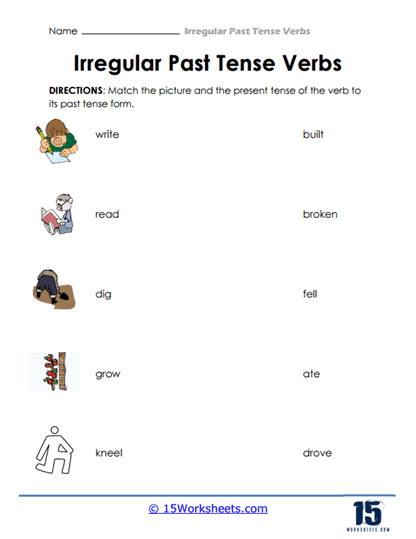
Picture Matches
Here learners match pictures with the correct past tense verb. Visual prompts make grammar feel playful. Kids connect words like ate or ran to clear actions. It strengthens recognition through imagery.
Change the Tense
This worksheet asks students to rewrite verbs from present tense into irregular past tense. It’s direct, focused practice. Learners see how verb forms shift in different contexts. This helps lock in memorization of irregulars.
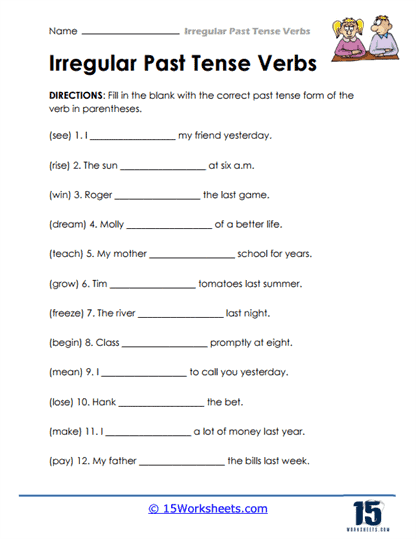
Fill in the Blank
Students choose the right past tense verb to complete each sentence. It’s a fast-paced review that reinforces accuracy. The repetition builds speed and confidence. Learners practice using irregular forms in context.
Being Present
This activity contrasts present tense with irregular past tense verbs. Students practice switching back and forth. It highlights how verb forms change over time. It develops flexibility with grammar.
Sentence Rewrite
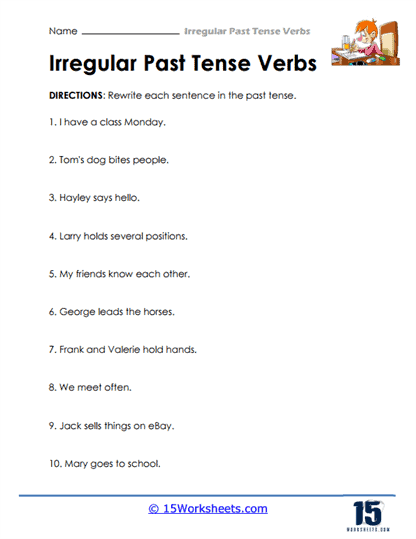
Learners rewrite whole sentences by changing verbs into past tense. This shows how tense affects meaning across an entire idea. It strengthens editing and writing skills. Students see grammar rules in action.
What Are You Doing?
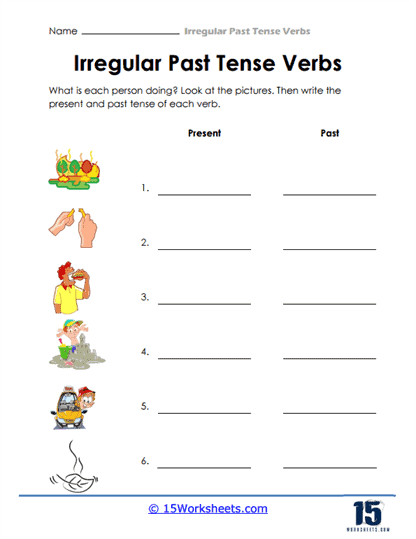
This worksheet asks kids to describe actions in both present and past tense. It blends creativity with grammar rules. Students practice describing events and then shifting them into past tense. It makes verb practice engaging and real-world.
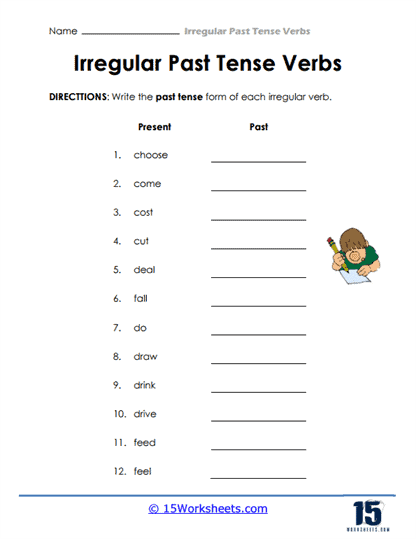
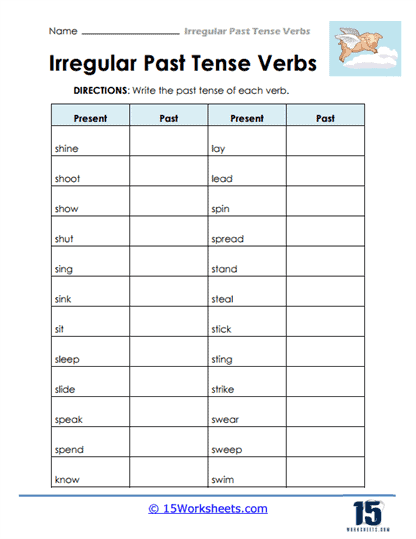
Form the Past
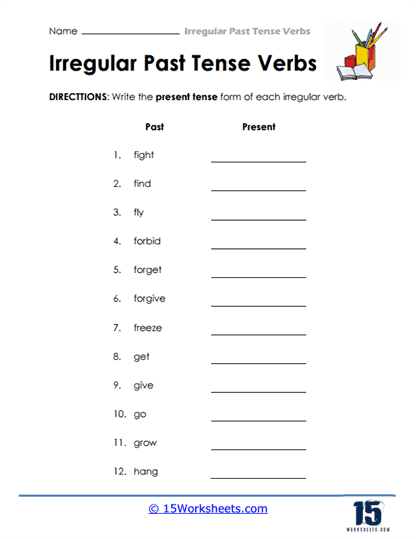
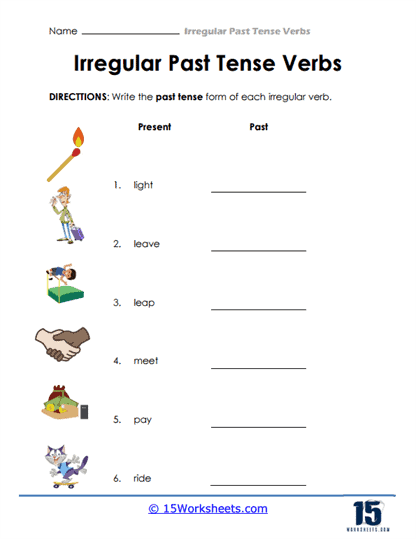
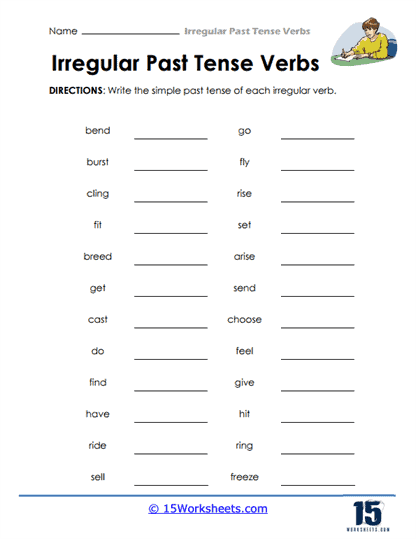
Students are guided to form past tense versions of given irregular verbs. It’s straightforward drill practice. The focus is on memorizing the less predictable forms. This worksheet is perfect for reinforcement.
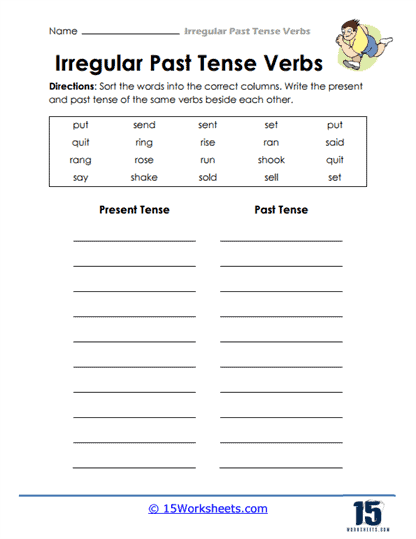
Column Sort
Learners sort verbs into columns of present tense and past tense. The activity is visual and organized. It helps kids see patterns among irregular verbs. Sorting makes learning more interactive.
Present to Past
This worksheet gives students present tense verbs and asks for their past tense equivalents. It’s a quick test of recall. The task builds accuracy under pressure. It reinforces memorization through practice.
Past Tense Form
Here students write past tense forms of a verb list. It’s designed to build vocabulary and fluency. The repetition makes irregular forms more automatic. It’s solid foundational practice.
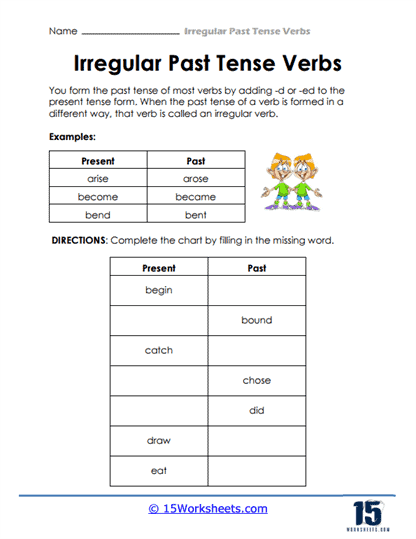
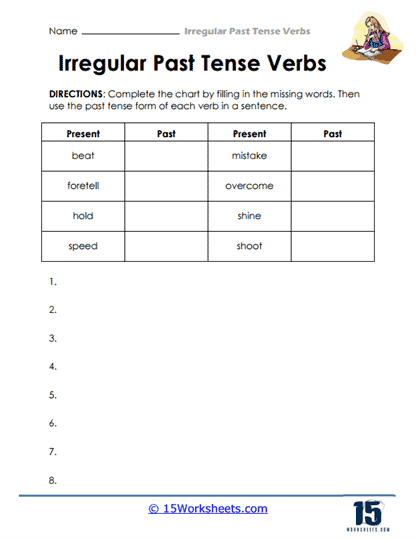
Complete the Chart
Students fill in a chart with present tense and irregular past tense verb pairs. The structured format makes patterns clearer. It’s an effective way to review many verbs at once. This worksheet encourages neat, organized learning.
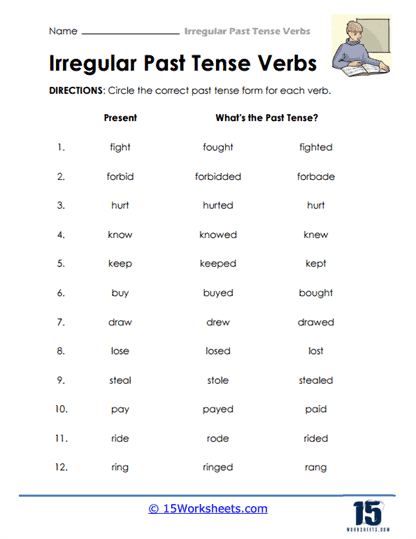
Circle Irregular Past Tense
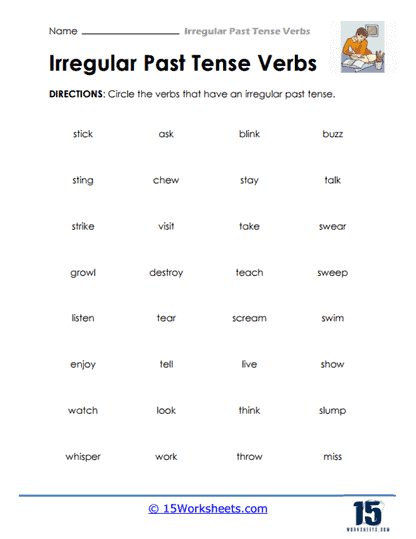
Kids identify irregular past tense verbs in sentences by circling them. The activity sharpens recognition skills. It also reinforces context, since verbs are surrounded by real sentences. This helps students notice irregulars in everyday reading.
Circle and Use In a Sentence
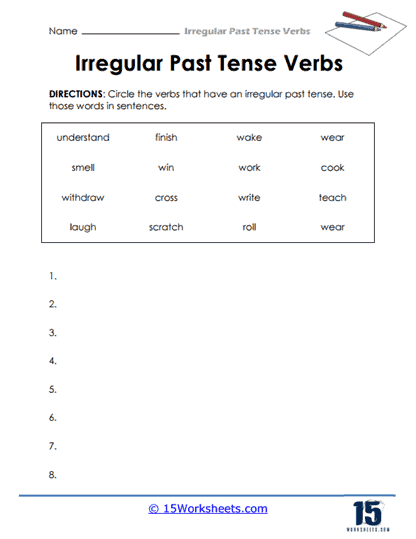
Learners circle irregular verbs and then create their own sentences with them. This blends recognition with application. It gives kids ownership of their grammar learning. It makes memorization more meaningful.
Simple Past Tense
This worksheet reviews the basics of using irregular verbs in the simple past tense. Students practice completing sentences and writing their own. It ties together everything they’ve learned in the set. It’s a comprehensive wrap-up activity.
What Are Irregular Past Tense Verbs?
Irregular past tense verbs are verbs that don’t follow the regular “add -ed” rule to show the past. For example, instead of saying runned, we say ran. Instead of eated, we say ate. These verbs need to be memorized because their forms can’t always be predicted.
They matter because irregular verbs are everywhere in English. Common words like go, have, say, do, and see all change in unique ways when used in the past tense. Without knowing them, it would be hard to talk about what already happened. That’s why learning irregular past tense verbs is such an important early grammar skill.
To make it clearer, here are some side-by-side examples of regular vs. irregular verbs:
- Walk → Walked (regular) vs. Go → Went (irregular)
- Jump → Jumped (regular) vs. Eat → Ate (irregular)
- Play → Played (regular) vs. Run → Ran (irregular)
- Talk → Talked (regular) vs. See → Saw (irregular)
- Call → Called (regular) vs. Have → Had (irregular)
These worksheets help students practice spotting, recalling, and applying these verbs. By moving from drills to real-sentence writing, learners get comfortable using irregular verbs in everyday communication. Once mastered, students can focus on storytelling and expression without stumbling over grammar rules.