
Subject and Predicate Worksheets

About These 15 Worksheets
Subjects and predicates are the two halves that make every sentence work-the “who/what” part and the “what they’re doing” part. Without both, a sentence feels unfinished, like saying “The dog…” and leaving the listener hanging. This collection of worksheets helps students recognize, separate, and build these parts of sentences in fun and approachable ways. From underlining exercises to mix-and-match challenges, kids get to see just how important both roles are.
The activities move step by step from simple recognition to creation. Some worksheets ask students to circle or underline the subject and predicate, while others challenge them to fill in missing pieces or write full sentences from scratch. By working through different formats, learners practice not only identifying sentence parts but also using them in their own writing. The mix of structure, creativity, and even a little silliness keeps students engaged while they’re building essential grammar skills.
Most importantly, these worksheets show how subjects and predicates connect to real-world communication. Once learners understand the balance between the two, they can write with more clarity, build longer and more complex sentences, and even have fun experimenting with structure. By the end of this collection, subjects and predicates won’t just feel like abstract grammar terms-they’ll feel like the natural building blocks of confident writing.
Have a Look Inside Each Worksheet
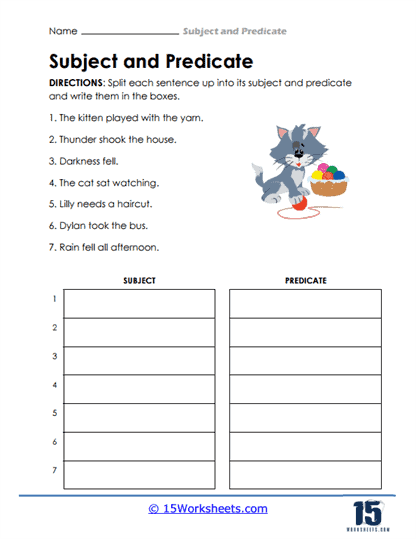
Split It Up
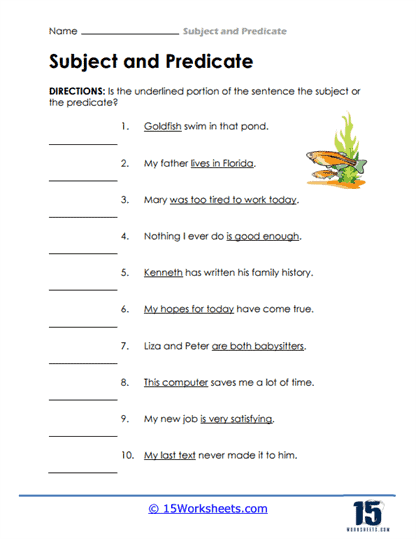
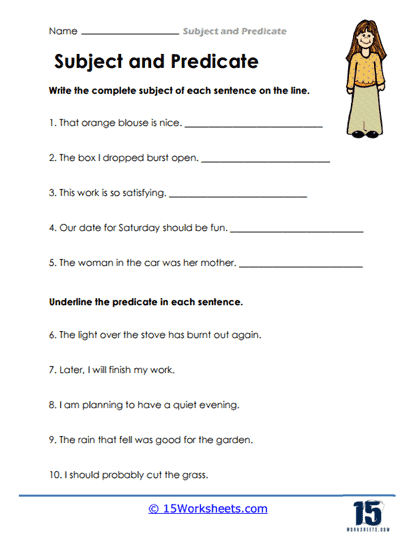
This worksheet asks students to separate subjects from predicates in sample sentences. It’s a straightforward way to practice sentence structure. Learners see how both parts are needed for a complete thought. The activity builds a solid grammar foundation step by step.
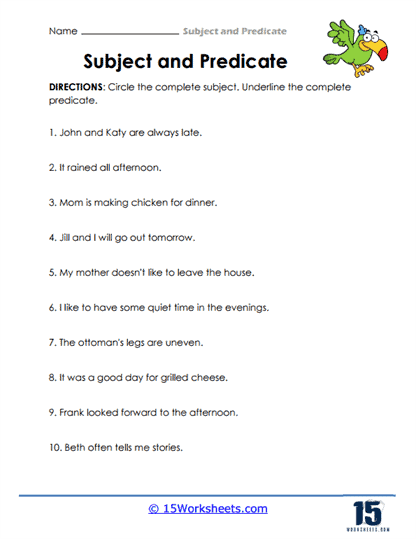
Circle And Underline
Students underline subjects and circle predicates in given sentences. The task reinforces recognition through repetition. It feels a bit like a grammar treasure hunt. By the end, learners can quickly spot both sentence parts with ease.
Deconstruct Them
Here, students break sentences into subjects and predicates for analysis. The activity teaches how to “take apart” grammar to see how it works. It sharpens critical thinking and sentence awareness. Learners gain confidence in deconstructing language.
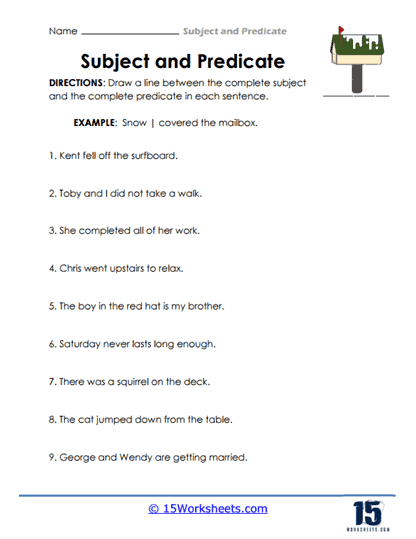
The Divide
This worksheet focuses on drawing a clear line between subject and predicate. Students literally divide sentences into two parts. The task is simple but powerful for reinforcing structure. It makes the concept highly visual and easy to grasp.
Subject-Predicate Showdown
Students test their knowledge in a fun, competitive-style exercise. They sort examples into subject or predicate categories. The activity feels like a quick-fire challenge. It makes grammar practice lively and engaging.
The Missing Subjects
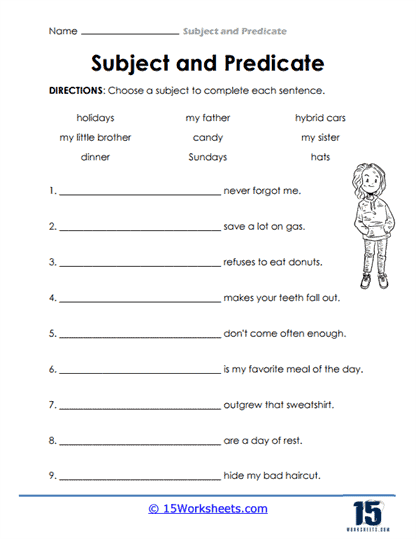
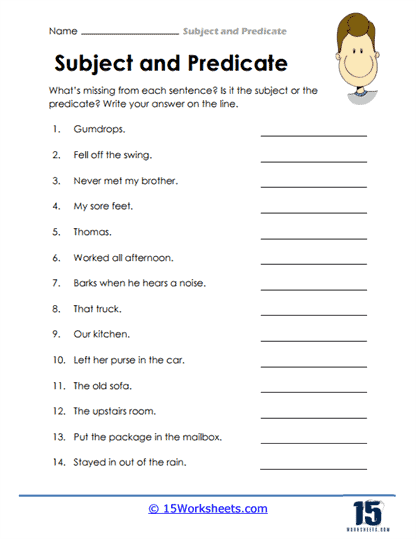
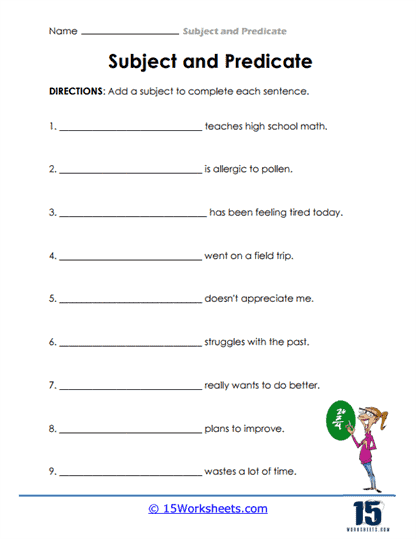
This worksheet gives sentences missing their subjects. Students must fill in the blanks with appropriate subjects. It shows how incomplete sentences become complete with the missing piece. Learners see why both halves matter.
The Lost Part
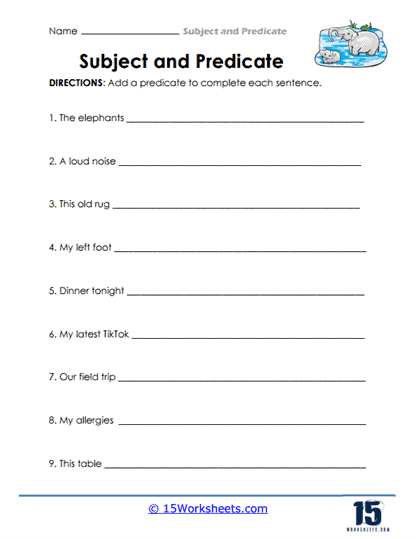
Students work with sentences missing predicates this time. They add verbs and phrases to finish the thought. The activity highlights the role of predicates in making ideas clear. It’s a perfect follow-up to “The Missing Subjects.”
Cracking The Combos
This worksheet shows how subjects and predicates combine to form meaningful sentences. Students practice matching sentence halves together. It feels like putting puzzle pieces in place. Learners see how different combinations change meaning.
Joining Forces
Here, learners practice combining subjects and predicates into full sentences. The activity shifts focus from recognition to creation. It encourages students to be sentence-builders. They learn how grammar rules power clear communication.
Mission Possible
Students complete a “mission” by identifying subjects and predicates in increasingly tricky examples. The task feels like a grammar adventure. It builds accuracy and stamina for longer sentences. Learners leave with sharper analysis skills.
Complete The Thought
This worksheet asks students to finish incomplete sentences by adding the missing subject or predicate. It reinforces how both pieces are needed for clarity. The task feels practical and hands-on. Learners become more confident constructing full thoughts.
Adding Clarity
Students practice revising sentences to make subject-predicate relationships clearer. The activity focuses on clarity and readability. It teaches that good writing isn’t just correct-it’s also easy to understand. Learners strengthen both grammar and style.
Sentence Composition Challenge
This worksheet challenges students to compose original sentences with strong subjects and predicates. It blends creativity with structure. The activity gives learners room to show off their writing skills. It’s a fun way to apply grammar rules in real communication.
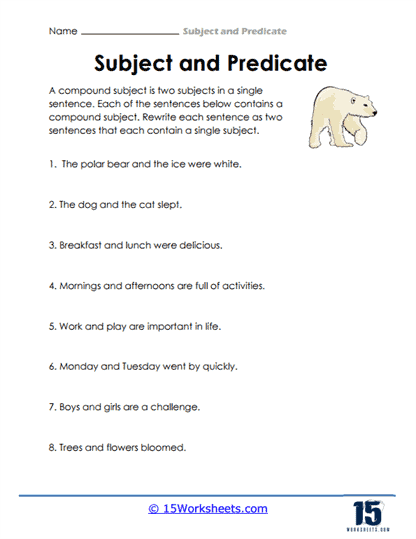
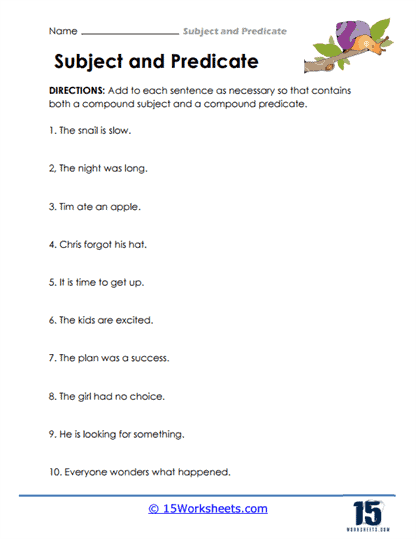
Incorporating Compounds
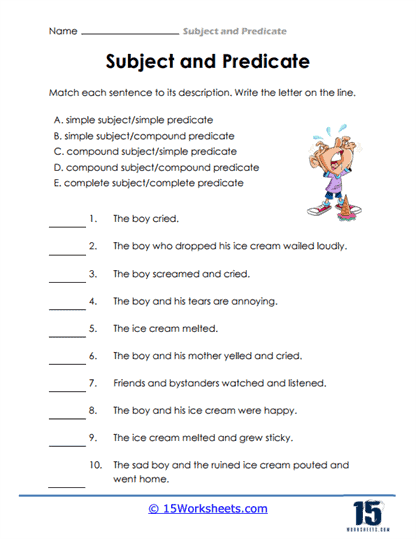
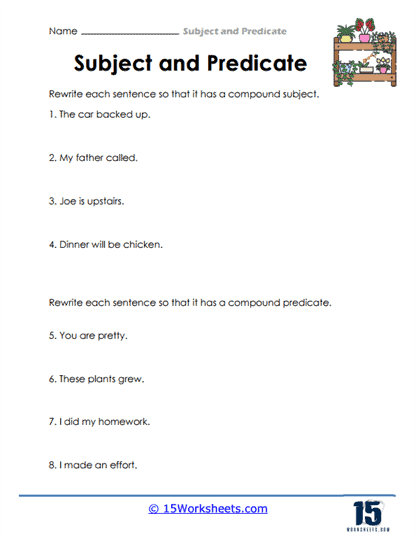
Students explore compound subjects and predicates in this worksheet. They see how adding more than one subject or action can expand a sentence. The activity builds a deeper understanding of variety in sentence structure. It encourages flexible and expressive writing.
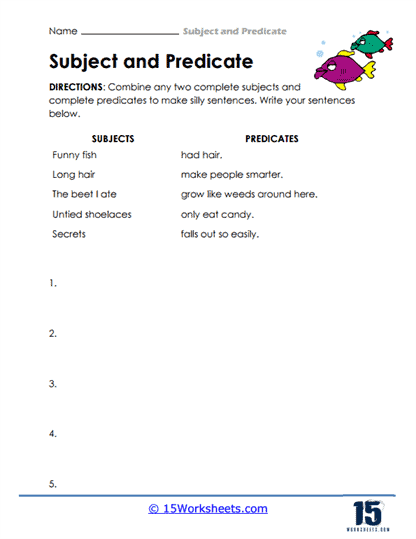
Silly Mashups
This worksheet makes grammar playful by having students mix and match subjects and predicates into silly sentences. The activity shows that grammar can be both fun and meaningful. Learners laugh while still reinforcing the structure of sentences. It’s a lighthearted way to practice a serious skill.
What Are Subjects and Predicates?
Every complete sentence needs two parts: a subject and a predicate. The subject tells us who or what the sentence is about, while the predicate tells us what that person or thing is doing. For example, in “The cat sleeps,” cat is the subject and sleeps is the predicate. Together, they form a complete thought.
We use subjects and predicates constantly in everyday communication. Even short sentences like “I ran” or “Birds fly” follow the same pattern. Understanding these parts helps learners see how language works and makes it easier to build longer, more detailed sentences. Without both, writing can sound incomplete or confusing.
These worksheets give students hands-on practice with subjects and predicates in a variety of ways. Whether they’re underlining, completing sentences, or creating their own silly mashups, learners will see how the two parts work together. With repeated practice, they’ll become more confident sentence-builders who can write clearly, creatively, and effectively.
How Do You Identify the Subject and Predicate in a Sentence?
The subject is the noun or pronoun that performs the action or is being described, and the predicate is the verb or verb phrase that provides information about the subject. Remember that the subject and predicate can vary in length and complexity, depending on the sentence structure and additional elements present.
Here are five examples along with their subjects and predicates identified:
The cat is sleeping.
Subject: The cat
Predicate: is sleeping
Maria and John went to the park.
Subject: Maria and John
Predicate: went to the park
The book on the shelf belongs to Sarah.
Subject: The book on the shelf
Predicate: belongs to Sarah
They have been studying for the exam all night.
Subject: They
Predicate: have been studying for the exam all night
My sister enjoys playing the piano.
Subject: My sister
Predicate: enjoys playing the piano