
Concrete Nouns Worksheets
All About These 15 Worksheets
Concrete nouns may sound like a fancy grammar term, but really, they’re the everyday words kids already use for things they can see, hear, touch, smell, or taste. These worksheets make learning about them simple and engaging, turning grammar into a hands-on adventure. With activities like coloring, cutting and pasting, and matching, students aren’t just memorizing-they’re actively working with words. It’s grammar practice disguised as playtime.
The collection covers everything from spotting concrete nouns in sentences to comparing them with abstract nouns. Each activity encourages learners to pay closer attention to the words around them. By working through examples that connect to real life, students start recognizing concrete nouns in their stories, conversations, and even the world around them. This makes learning both fun and meaningful.
And it’s not just about grammar rules-these worksheets also strengthen reading, writing, and categorization skills. Kids practice handwriting, learn to classify people/places/things, and develop sharper observation skills. With colorful, interactive themes like fishing or scavenger hunts, grammar feels less like a chore and more like a game. By the end, students will be able to spot concrete nouns with ease and use them confidently in their own writing.
Have a Look Inside Each Worksheet
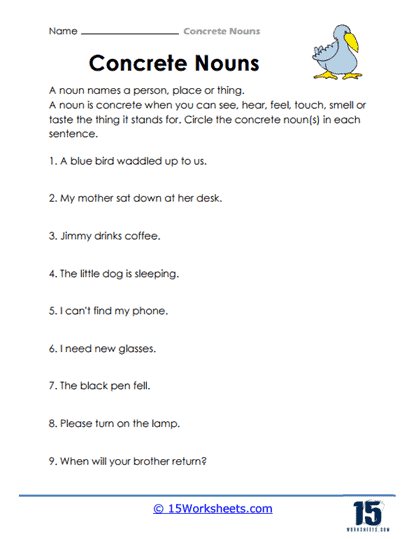
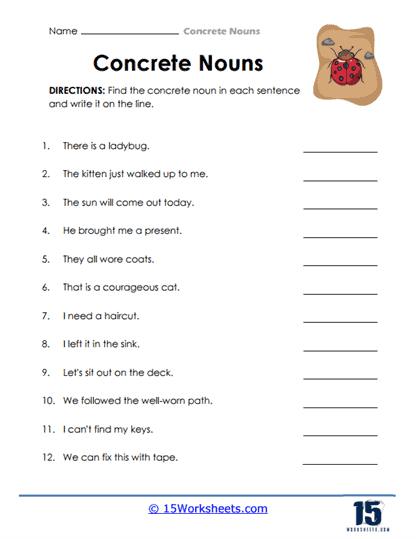
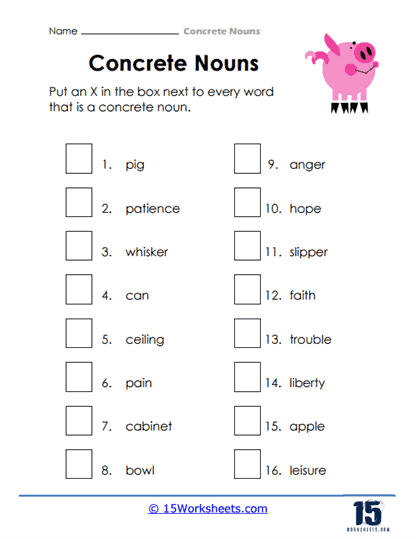
Spotting Nouns You Can Touch!
Students identify nouns that represent things you can see or touch. The activity helps them distinguish concrete nouns from other words. It feels like a scavenger hunt through language. A simple, hands-on way to reinforce the basics.
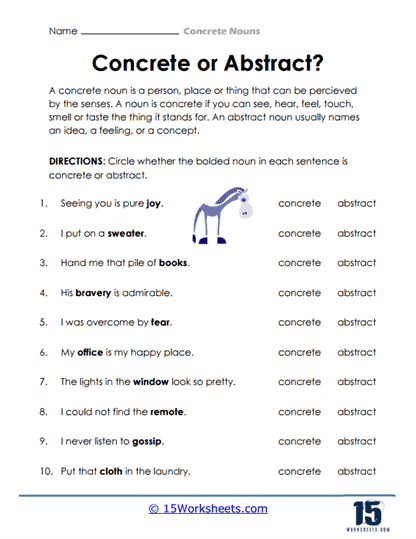
Concrete Vs. Abstract
Learners compare concrete nouns with abstract ones in side-by-side examples. This strengthens understanding of how tangible objects differ from ideas. It’s like sorting the visible from the invisible. Kids get clarity by working with clear contrasts.
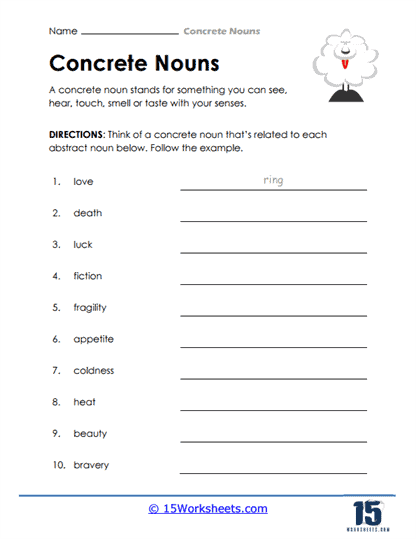
Tangible Ties
This worksheet connects concrete nouns to real-life examples. Students match words with images or scenarios they know. It makes grammar feel practical and relatable. A fun way to show how nouns appear in everyday life.
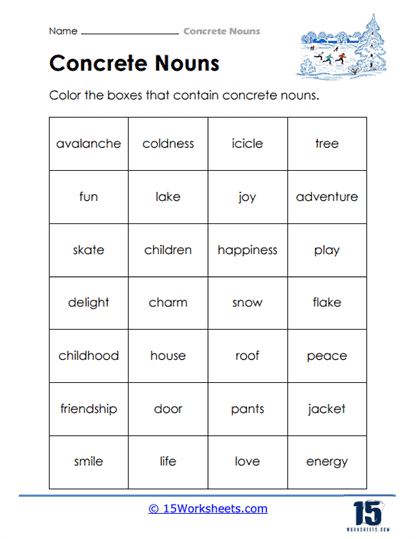
Color Me Concrete
Children color objects that represent concrete nouns. It’s an artistic twist on a grammar lesson. The coloring keeps them engaged while reinforcing recognition. Perfect for young learners who enjoy creative activities.
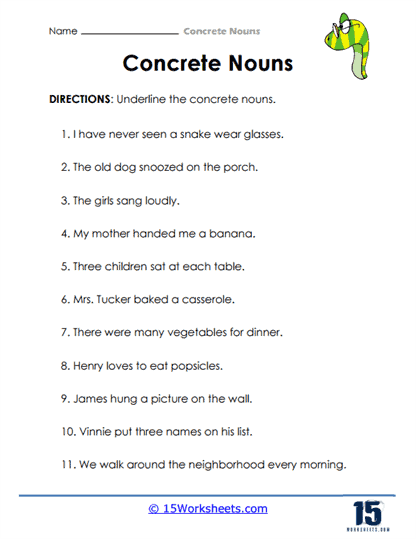
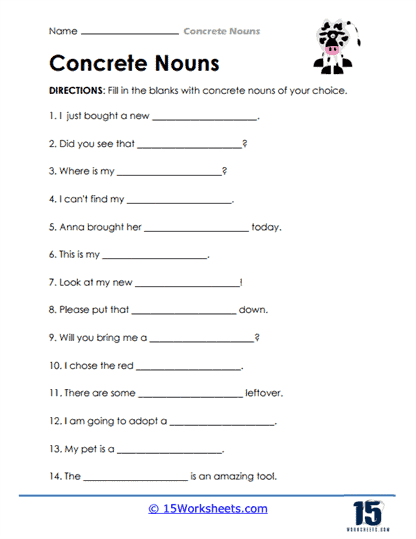
Spot It and Write It
Students circle concrete nouns in short sentences and then write their own examples. The activity blends recognition with production. It feels interactive and personalized. Great practice for bridging identification and writing skills.
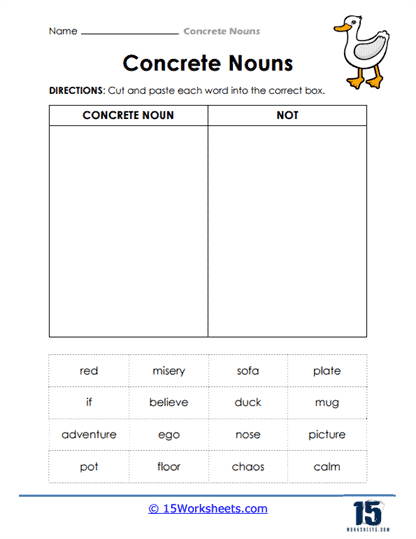
Cut, Paste, and Categorize
Learners cut out words or pictures and sort them into groups of concrete nouns. The hands-on format turns grammar into a puzzle. It’s tactile, visual, and fun. Kids reinforce concepts while keeping busy with scissors and glue.
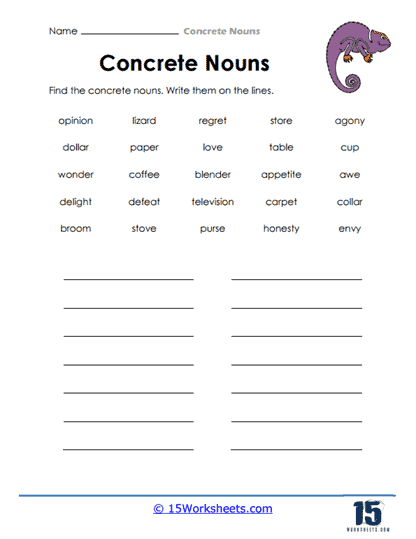
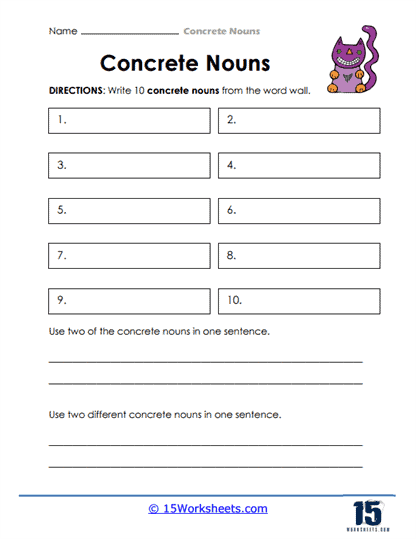
Seek It and Pen It Down
This worksheet challenges students to find concrete nouns and write them neatly. It emphasizes both observation and handwriting. The activity keeps learners focused and detail-oriented. A neat way to combine grammar with penmanship.
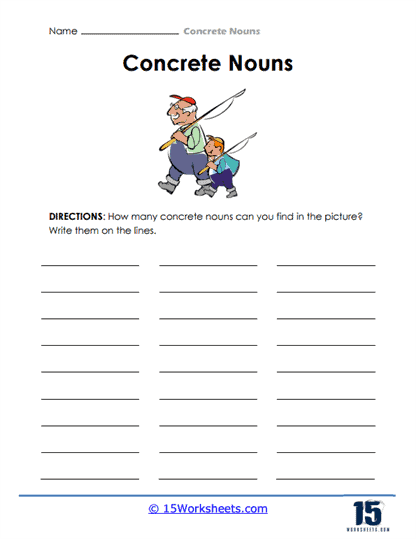
Fishing For Concrete Nouns
Kids “fish” for nouns by spotting and selecting only the concrete ones. The theme makes the task playful and memorable. It feels like a grammar game instead of a worksheet. Students stay hooked while learning.
Picture Match
Learners match words to corresponding pictures of concrete nouns. This visual approach makes learning more intuitive. It’s especially helpful for younger or visual learners. A straightforward way to link words and meaning.
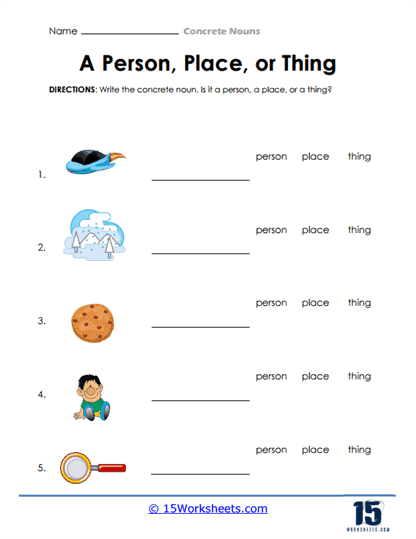
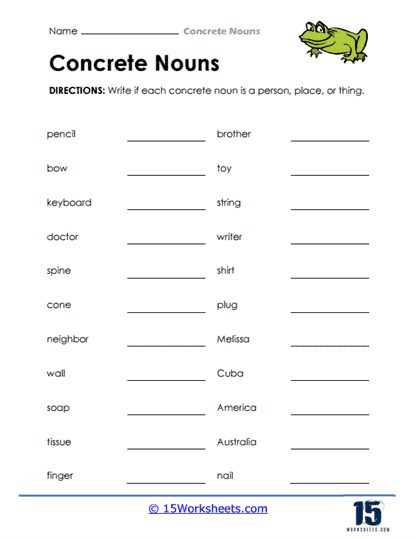
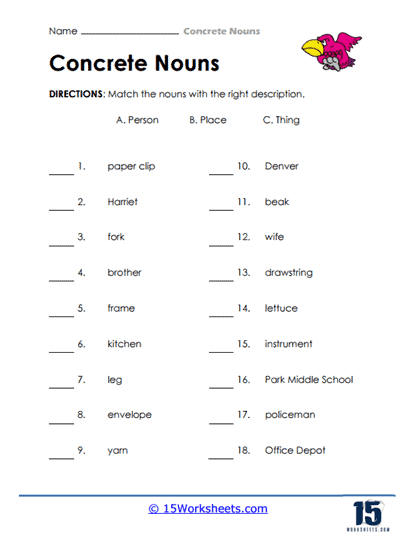
Person, Place, or Thing?
Students categorize concrete nouns into people, places, or things. It strengthens their ability to classify language. The activity makes abstract grammar rules feel logical and easy. A clear step toward mastering parts of speech.
What Are Concrete Nouns?
Concrete nouns are words that refer to physical objects or things that can be perceived by one or more of the five senses: sight, sound, touch, taste, or smell. They are nouns that can be experienced in a tangible or physical way, and they are usually specific and easy to identify.
Examples of concrete nouns include objects such as “table,” “book,” “flower,” “car,” and “dog,” as well as things that can be perceived through the senses, such as “music,” “perfume,” “chocolate,” “rain,” and “laughter.”
Concrete nouns are important in English language as they make language more vivid and descriptive. They can be used to add specificity and detail to writing and to communicate more effectively by painting a picture with words. Concrete nouns can be used in everyday conversations, stories, poems, and essays.
Understanding and using concrete nouns correctly is an essential part of English grammar, and learners of English should practice identifying and using them in sentences and paragraphs to improve their English language proficiency.