
I vs. Me Worksheets
All About These 15 Worksheets
Choosing between I and me can be one of those grammar rules that trip up even strong writers. These worksheets break the concept down into manageable, engaging activities that help students master when to use each pronoun. From quick fill-ins and circle-the-answer drills to themed writing prompts and dialogues, the collection offers both structured practice and creative application.
The set moves from simple recognition to more advanced use. Early worksheets have students circle or fill in the correct word, while later ones encourage rewriting sentences, editing mistakes, and even creating their own examples. The addition of visuals, conversation models, and themes like books makes the activities more fun and relatable. Each page reinforces the subject vs. object rule until it feels second nature.
By working through these worksheets, learners sharpen both their writing and speaking skills. They’ll gain confidence in grammar accuracy, but also in everyday communication where I and me show up constantly. By the end, kids won’t just know the rule-they’ll use it fluently without second-guessing.
Have a Look Inside Each Worksheet
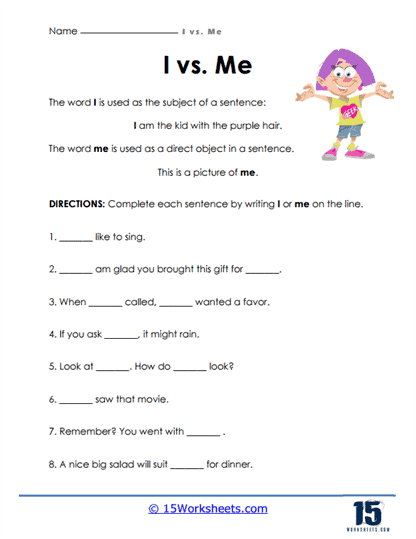
Pronoun Practice
Students review sentences and decide whether I or me is the correct choice. The worksheet reinforces the subject vs. object difference. It’s straightforward and builds foundational confidence. Kids get a clear grasp on proper pronoun use.
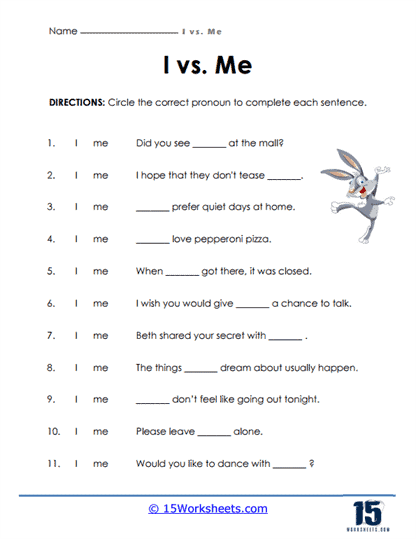
Circle The Right Fit
Learners circle either I or me to complete each sentence correctly. The activity is quick and visual. It encourages accuracy through repetition. This helps learners sharpen instinct for pronoun choice.
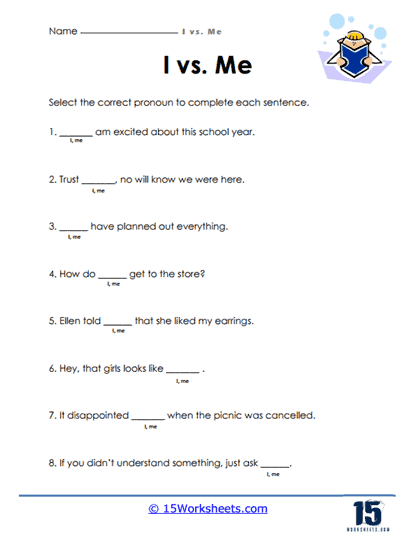
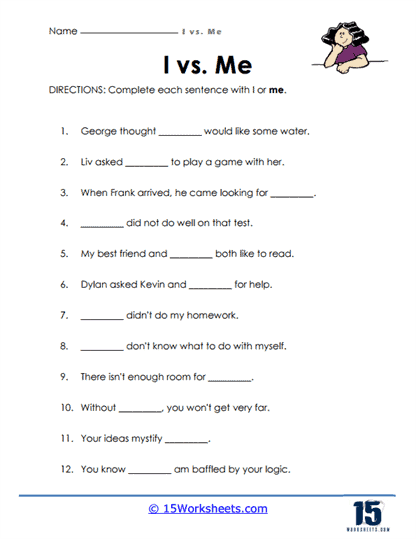
Filling The Gaps
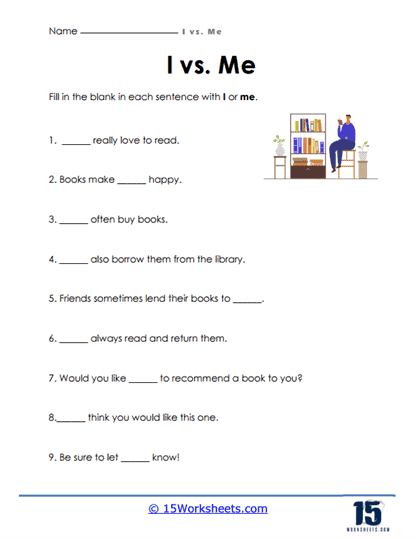
Students fill in blanks with the correct pronoun. It’s a simple drill that emphasizes grammar consistency. The activity strengthens attention to subject position. Learners build fluency with frequent practice.
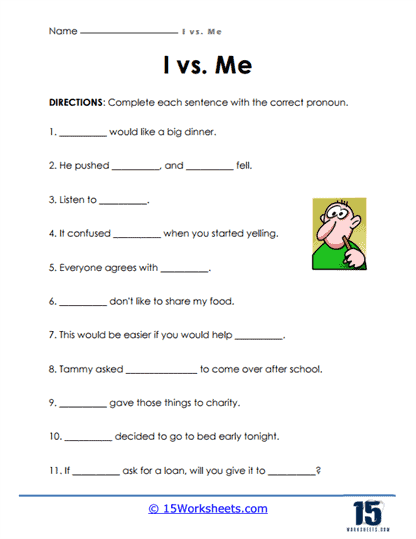
Complete With Confidence
Here kids rewrite sentences with the right pronoun form. The activity blends editing with writing practice. It encourages careful thinking about grammar rules. Students see how changes improve clarity.
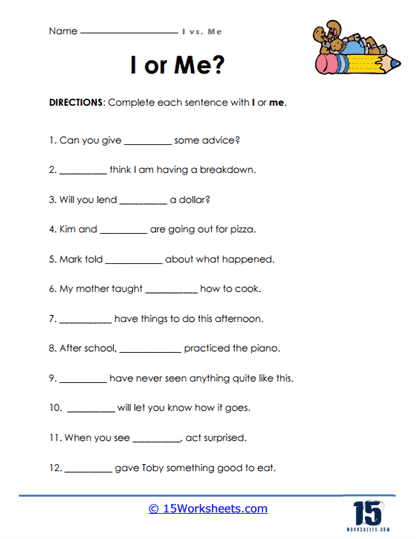
Sentence Completion
Learners finish sentences using either I or me. Prompts give them real-life contexts for practice. It builds both creativity and accuracy. This worksheet makes pronoun learning practical.
Converse Clearly
This worksheet models short dialogues where students choose I or me. It reinforces spoken grammar and natural phrasing. The activity helps students practice communication skills. It makes grammar feel conversational and real.
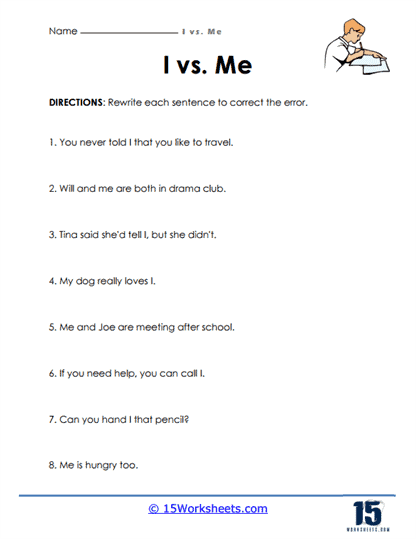
Polishing Pronouns
Students review sentences with pronoun errors and correct them. It strengthens proofreading and editing habits. The worksheet highlights common mistakes. It’s perfect for polishing writing.
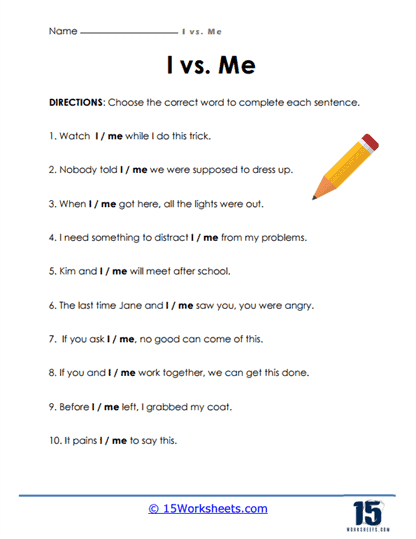
Choose Between I and Me
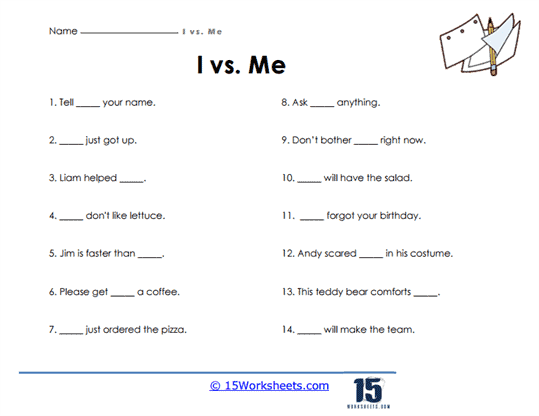
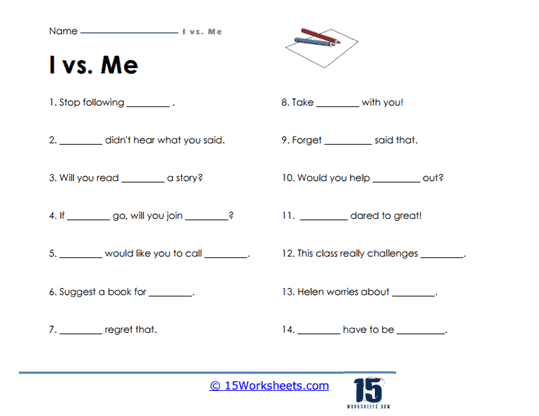
This worksheet gives direct practice in selecting the correct form. Learners choose based on sentence position and role. It sharpens their understanding of subjects vs. objects. It’s focused, practical practice.
Quick Fill-In
Kids complete short sentences with either I or me. The worksheet is designed for speed and review. It works well as a warm-up or practice drill. Learners gain accuracy with repetition.
Personal Pronouns Mastery
This worksheet gives a broader review of pronouns, with special focus on I and me. Students apply rules across multiple sentence types. It’s a more advanced practice page. It connects pronouns to larger grammar skills.
Subject or Object?
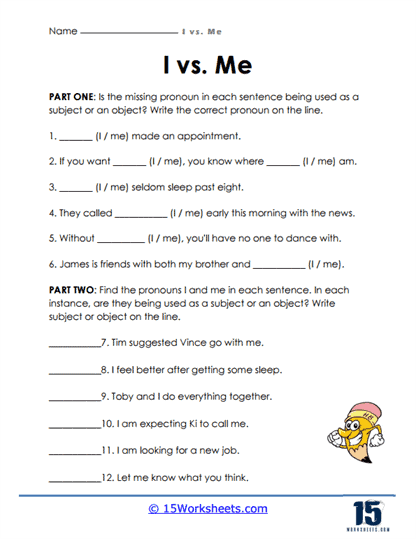
Students decide if the blank requires a subject (I) or an object (me). The activity reinforces grammar roles clearly. It’s analytical and logical. Learners build decision-making skills in grammar.
Using Visual Clues
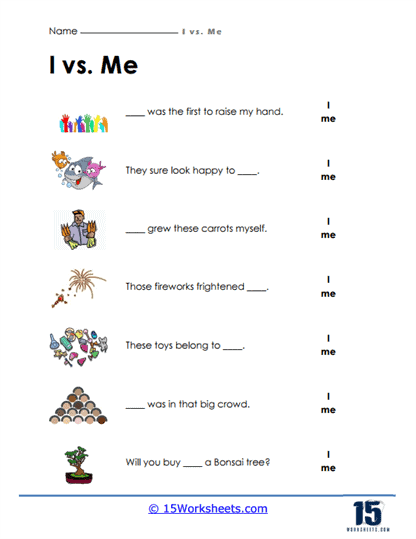
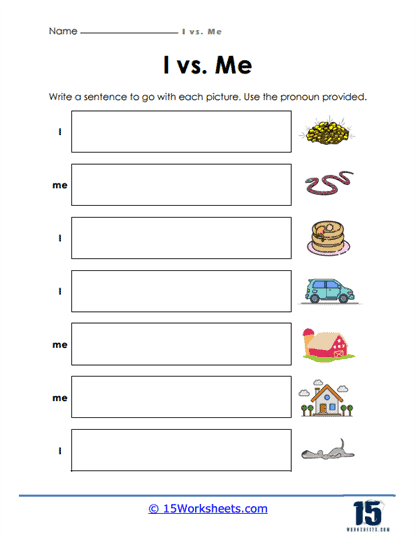
This worksheet provides visual prompts alongside sentences. Kids use pictures to decide if I or me is correct. The activity connects grammar to real-life situations. It’s great for visual learners.
All About Books
Students write sentences about reading and books using I or me. The theme adds fun context to grammar practice. It combines creativity with structure. Learners see pronouns in meaningful writing.
Expressing With Visuals
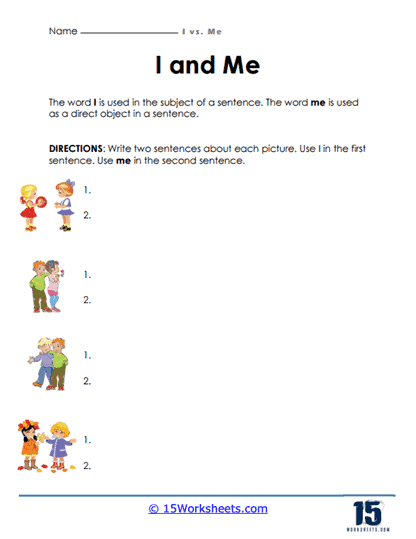
This worksheet uses images as prompts for pronoun practice. Students describe what’s happening with correct pronouns. It makes grammar active and engaging. It encourages expressive language.
Two Perspectives
Here kids rewrite sentences from different points of view, choosing I or me. The activity highlights how perspective affects pronoun use. It deepens understanding of grammar roles. Learners see pronouns as flexible storytelling tools.
When To Use “I” or “me” In Sentences
The pronouns “I” and “me” are personal pronouns in English that are used to refer to oneself. “I” is used as the subject of a sentence, while “me” is used as an object of a verb or preposition.
“I” is used to refer to oneself as the subject of a sentence, and is always capitalized. It is often used to describe what one is doing or what one believes. For example:
- I am going to the store.
- I think it’s going to rain.
- I am studying for a test.
“Me” is used to refer to oneself as the object of a verb or preposition. It is also used in compound subjects and objects. For example:
- John gave me the book.
- She asked me to help her.
- He and me are going to the party.
Note that “I” is never used as an object of a verb or preposition. It is always “me.” Below are some examples to show the difference between “I” and “me” in context.
- Incorrect: Me and him went to the store.
- Correct: He and I went to the store.
- Incorrect: She gave the book to I.
- Correct: She gave the book to me.
In summary, “I” is used as the subject of a sentence, while “me” is used as the object of a verb or preposition. Knowing when to use each pronoun correctly is an essential part of English grammar.