
Have, Has, Had Worksheets
All About These 15 Worksheets
When it comes to grammar, “have,” “has,” and “had” are tiny words that do a ton of heavy lifting. They may look simple, but they’re the gears that keep English sentences running smoothly. This collection of worksheets takes all the mystery out of these tricky helpers and lets kids practice them in clear, fun, and meaningful ways. Think of it as grammar practice without the boring drills-students are solving puzzles, fixing sentences, and even playing with time as they learn.
By working through these activities, learners start to see patterns and build confidence in choosing the right form of “have.” Instead of guessing, they’ll recognize how subject-verb agreement works and why tense matters. Each worksheet is designed to gently nudge them toward mastery, whether it’s circling the correct form, rewriting a clunky sentence, or spotting errors like a grammar detective. The best part? The repetition builds fluency without ever feeling repetitive.
Beyond just grammar, these worksheets connect to real-world reading and writing. Students will notice how authors use these words in stories, how speakers use them in conversation, and how they themselves use them in everyday life. That connection between practice and reality makes the learning stick. So, not only do these worksheets sharpen grammar skills, but they also boost overall communication confidence.
Have a Look Inside Each Worksheet
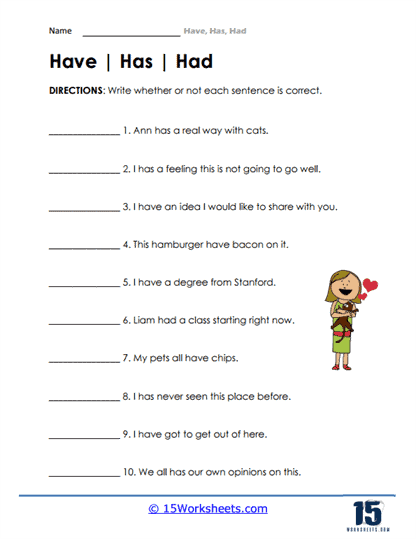
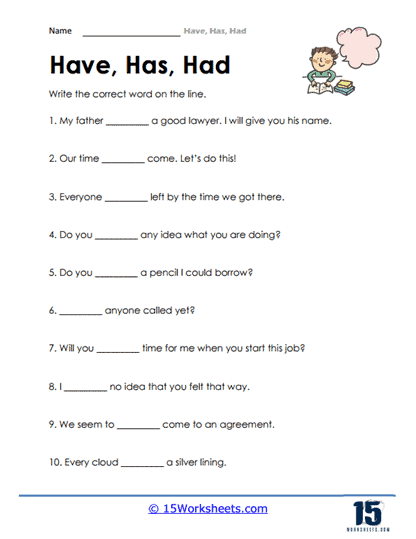
Write The Missing Word
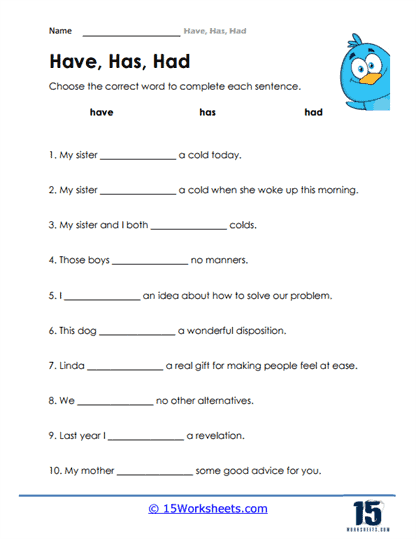
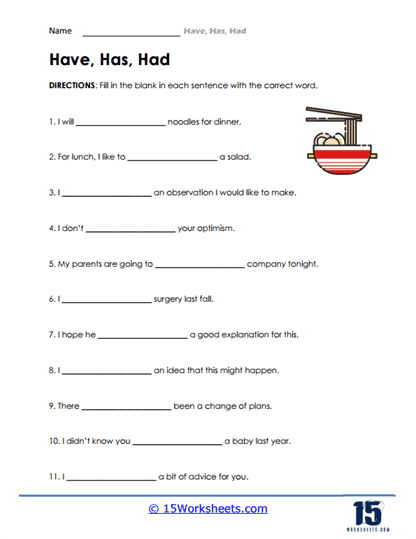
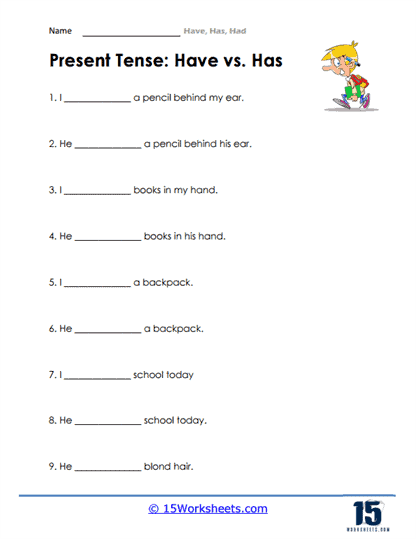
Students fill in sentences with the correct form of “have,” “has,” or “had.” This activity strengthens their ability to recognize verb tense and subject agreement. It’s like solving a little grammar puzzle with each blank space. Perfect for reinforcing the basics of using these tricky helpers in real writing.
Which Verb Tense?
Learners decide whether to use present, past, or perfect tense in short sentences. This worksheet helps kids link time frames to the correct helping verb. It’s a fun way to see how changing one word can totally shift meaning. They’ll gain confidence in matching the right tense to everyday situations.
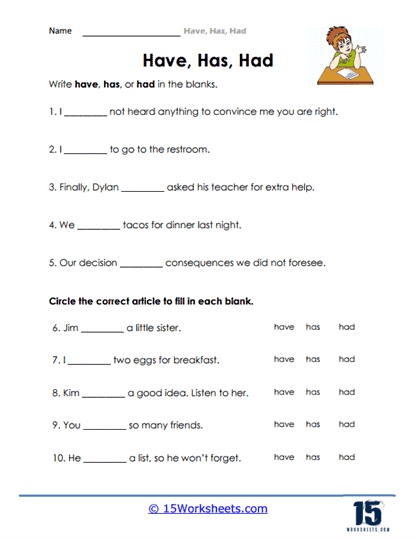
Sentence Completion
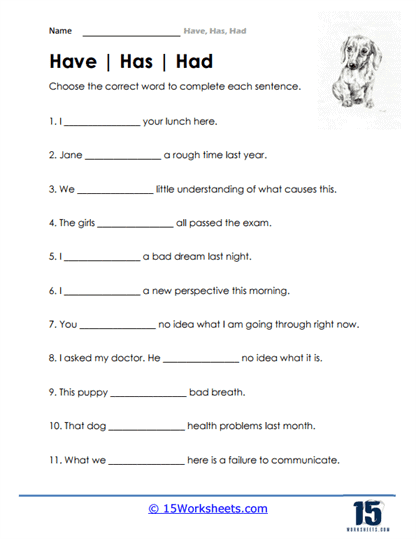
Here, students finish sentences by choosing the correct form of “have,” “has,” or “had.” Each example shows how important the right verb is for making a sentence complete. The activity feels like building a story piece by piece. It’s a simple yet effective way to practice grammar in context.
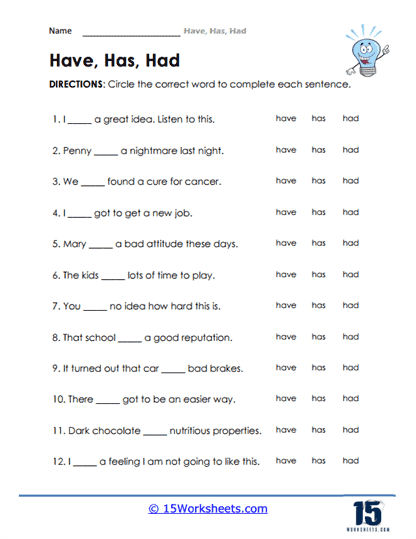
Circle The Correct Form
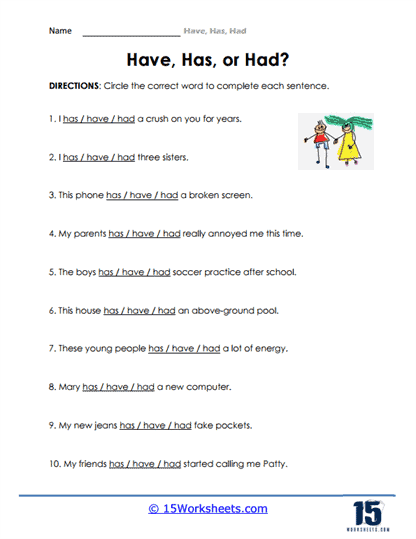
Kids are given sentences with multiple-choice verb options, and they must circle the correct one. This helps train the eye to notice subject-verb agreement quickly. It turns grammar practice into a fast-paced decision game. Students strengthen accuracy and speed in spotting correct verb usage.
Sentence Checker
Learners review sentences to find and fix mistakes in verb use. This worksheet makes them little grammar detectives on the hunt for errors. They’ll practice editing while reinforcing the rules of “have,” “has,” and “had.” It’s a hands-on way to learn proofreading skills alongside grammar.
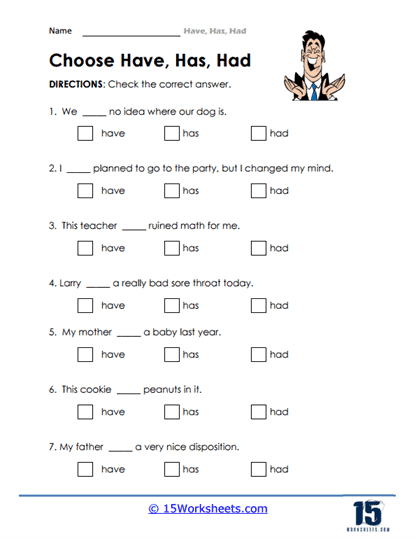
Check The Right Choice
Students choose between two verb forms to complete a sentence correctly. It’s straightforward but keeps them alert to subtle differences. The quick choices keep the activity engaging and manageable. Kids walk away better prepared to use the right form automatically in their writing.
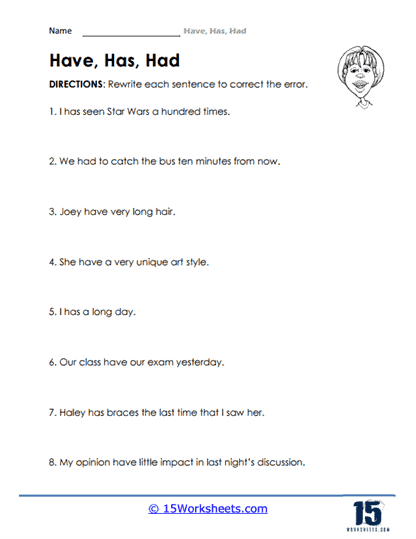
Fix and Rewrite
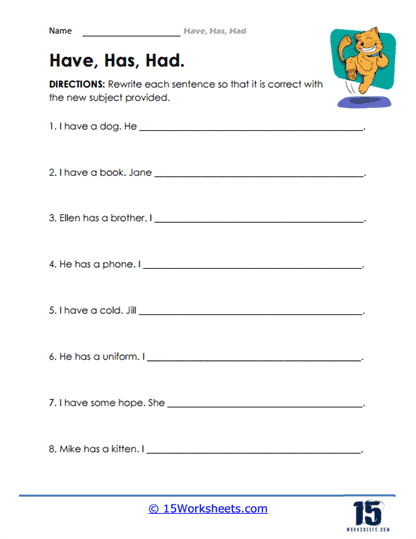
Here, students take incorrect sentences and rewrite them with the correct verb form. This activity builds both editing and rewriting skills. It’s like giving sentences a makeover until they shine. Learners see firsthand how much clarity improves with proper grammar.
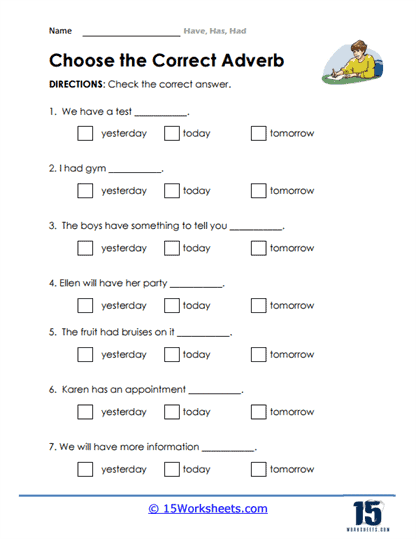
Time Warp Challenge
This worksheet asks kids to match verb forms to events happening in the past or present. The playful “time warp” theme makes grammar feel like an adventure. It’s a creative way to see how verb choice ties directly to time. Students practice recognizing tense in a memorable, interactive format.
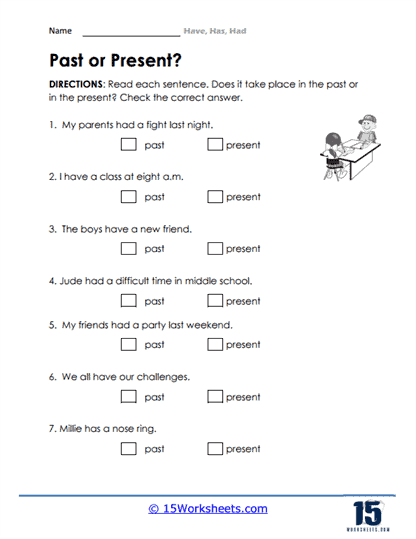
Past or Present
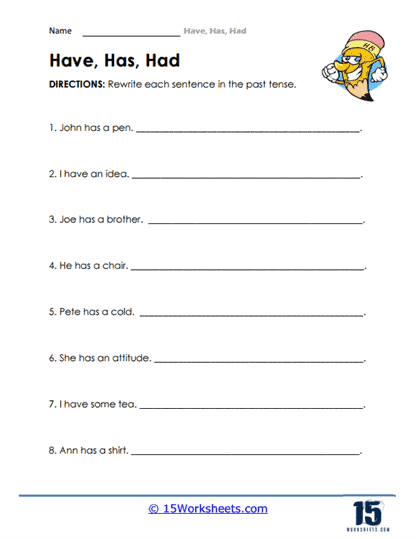
Students must decide if a sentence belongs in the past or present tense and adjust the verb accordingly. It’s a simple compare-and-contrast game with language. The worksheet helps them pay attention to context clues in sentences. Kids come away with sharper skills in matching tense to meaning.
Which Goes In The Blank?
Learners look at sentences with missing verbs and decide which form of “have,” “has,” or “had” belongs. It’s a guessing game that rewards careful reading. Each blank helps kids test their grammar intuition. They’ll get plenty of practice applying the rules in context.
Bridge The Gaps
This worksheet challenges students to connect ideas by filling in gaps with the correct verb forms. It feels like piecing together a bridge until the sentence flows smoothly. The activity encourages careful thought about how grammar holds language together. Kids practice fluency and accuracy while solving each “bridge.”
When To Use Have Has or Had
The foundation of speaking and writing English well is centered on our proper usage of grammar. One of the most common grammatical mistakes people make are with their usage of word tense. We use tenses to add an inflectional to our verbs. By inserting the inflectional we relate the timing of event or action that was to take place. Specific variations of verbs are used to pinpoint a time that this event takes place. One of the first instances that students run into this is when they need to place the use of (have, has, or had). In this series of worksheets, we will look at how to use the terms (have, has, or had) to properly align the grammar and context within the sentence.
We use these terms to suggest a form of ownership or accomplishment. The clear distinction between which of these tenses to use starts with determining if the sentence is referring to an event that is presently taking place (present) or has previously taken place (past). If the event is in the present tense, we then look to see if the subject is singular or plural. If it is present tense and singular, we use the term has. If it is present tense and plural, we use the term have. If it is past tense, we use the term had. It is that simple. Take a look at quick way to break the proper tense usage by asking yourself these questions:
1. Is this action or event taken place now or in the past?
If, it is in the past, we use the term (had). This applies to any point of view (first, second, or third person).
2. If it is in the present, is the subject singular or plural?
If it is singular, we use the term (has). Singular placements are often found with pronouns such as she or he.
If it is plural, we use the term (have). You spot plural placements when the subject contains plural terms such as: they, we, and us.
Do you ever get confused about when to use have has or had? Children who have only recently been introduced to grammar rules are likely to become confused with have has or had. However, adults also frequently make mistakes between these verbs. The best method to avoid confusion with have, has, or had is to learn their meanings and practice using them appropriately. Here is a detailed explanation of have has and had, along with examples of how to use them in your sentences.
Have
Have means to hold, own, or possess something. The present tense of the verb had is have. The statement’s context affects how to use “have” correctly in a sentence. The speaker must use have when using the pronouns we, you, they, and I in the second, first, third and second-person conjugations. Have is mostly used with plural nouns and pronouns. For example:
- I have the best mother.
- They have him in custody.
- They have delivered the package.
- You have a stain on your shirt.
- We have to meet at 1.
Has
Similar to the verb have, has also used in present However, the difference between the two is that has used for the third person singular. In simple words, has is used with she, it, or he. For example:
- He has to work.
- Ron has a fever.
- Sarah has a bubbly personality.
- She has to leave work early.
- Adam has to meet the deadline.
Had
Had is much more different than has or have as it refers to past tense. Moreover, had is used for singular nouns such as she, it, or he. For example:
- He had to leave early.
- I wish I had been there to see you get married.
- I had it in my hand.
- She had a son at an early age.
- She asked me what I had been up to.