
Gerunds Worksheets
All About These 15 Worksheets
Gerunds can be confusing at first glance-they look like verbs but act like nouns. This collection of worksheets breaks down the mystery step by step. Students get to practice spotting, underlining, and even creating their own gerunds in sentences. The activities range from simple recognition tasks to more advanced phrase analysis, so there’s something here for every level.
The variety of worksheets keeps things engaging. Some focus on gerunds after verbs or prepositions, while others highlight gerunds as sentence subjects. There are also creative tasks that ask students to expand gerunds into phrases or test whether they fit correctly into a sentence. With this mix of recognition and application, learners build a strong, flexible understanding of how gerunds work.
These worksheets also connect grammar directly to real-world communication. By practicing gerunds in everyday contexts, kids learn why these “verbs in disguise” matter for clear, fluent writing. The result is stronger grammar skills, more confident sentence building, and a deeper appreciation for the many roles words can play.
Have a Look Inside Each Worksheet
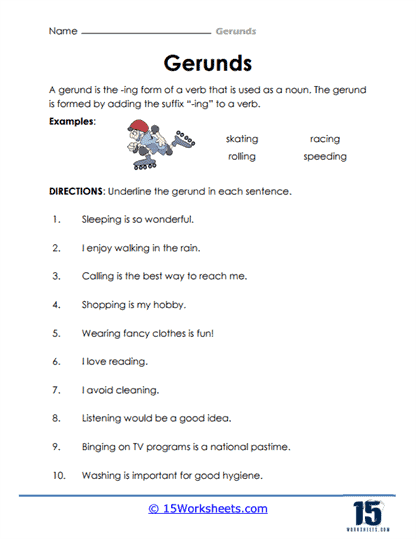
Hunting for Verbs in Disguise
This worksheet introduces gerunds as “verbs in disguise,” showing how -ing words can act as nouns. Students practice spotting them in sentences. The playful framing makes grammar feel like detective work. A fun way to uncover hidden grammar gems.
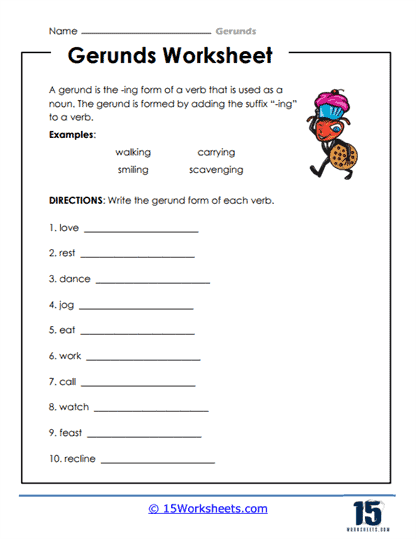
Verbs to Noun Wonders
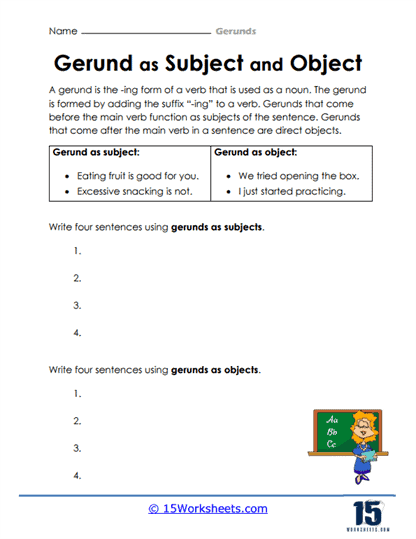
Here, learners transform verbs into gerunds to see how they function as nouns. It’s hands-on practice that highlights the shift in word roles. The activity strengthens vocabulary flexibility. Great for making grammar less abstract.
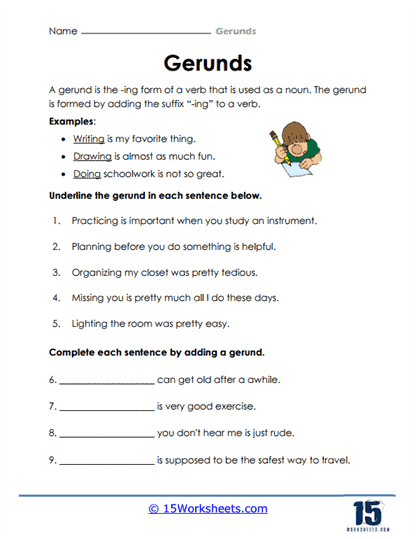
Identify and Expand
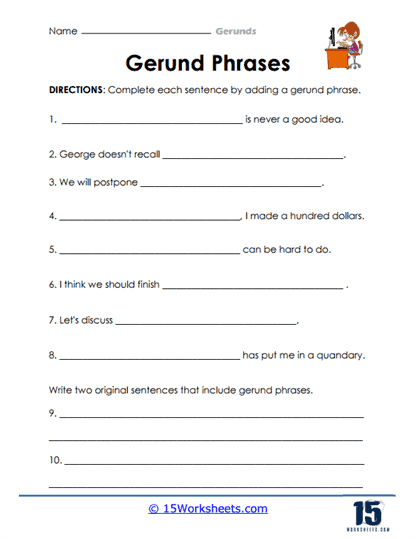
Students identify gerunds and expand them into longer phrases. This reinforces how gerunds work in real writing. The activity connects grammar rules to creative expression. Perfect for learners ready to go beyond the basics.
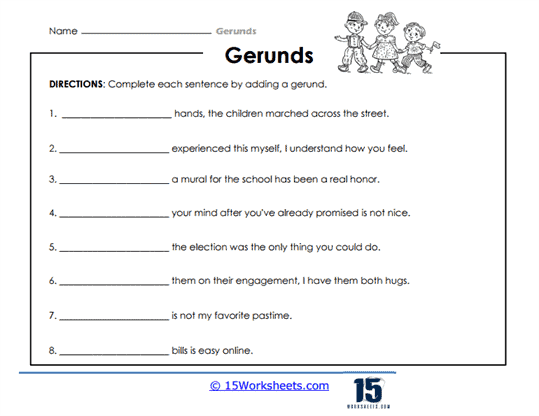
Gerunds in Action
This worksheet shows gerunds being used in everyday sentences. Students underline or highlight examples. It builds familiarity with real-world usage. A practical way to connect grammar learning to daily communication.
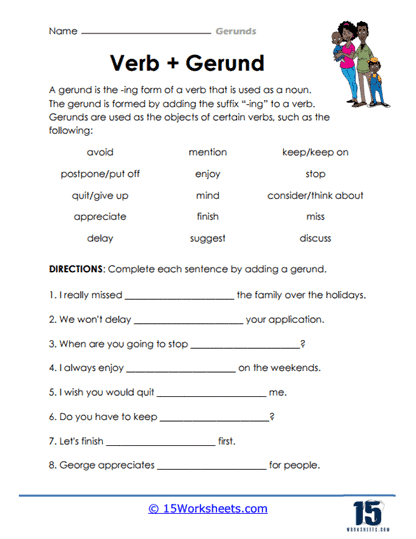
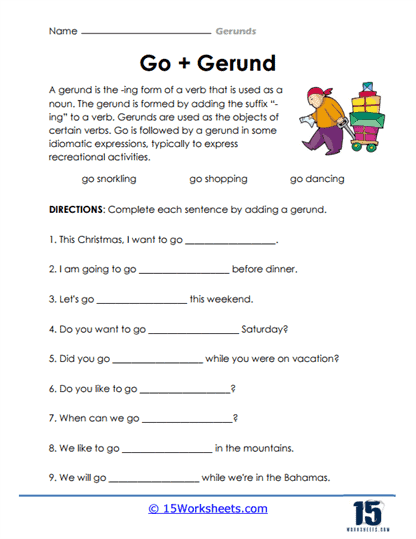
Let’s Go!
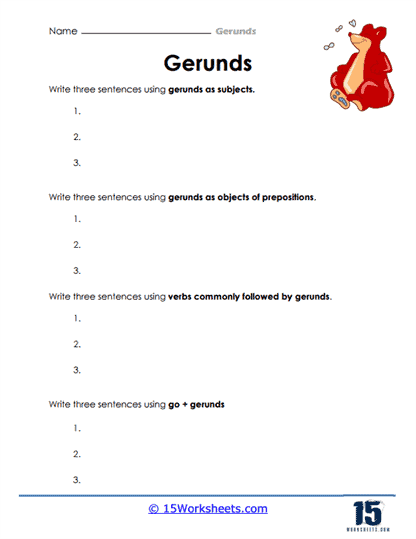
Here, kids practice using gerunds after specific verbs like “enjoy,” “like,” and “avoid.” It reinforces patterns in English grammar. The activity feels interactive and conversational. Great for ESL and younger learners.
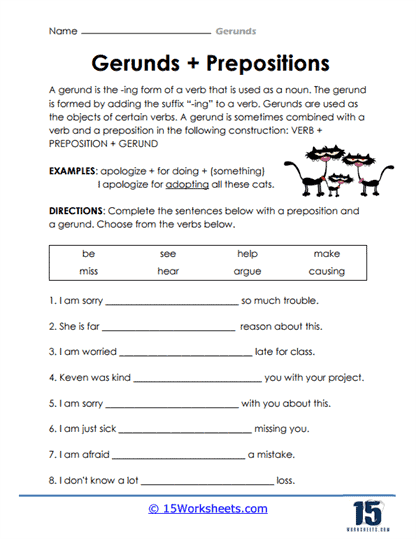
Preposition Combination
Students use gerunds after prepositions in sentence examples. This teaches one of the most common grammar rules involving gerunds. It’s structured practice with immediate application. A must-have worksheet for building fluency.
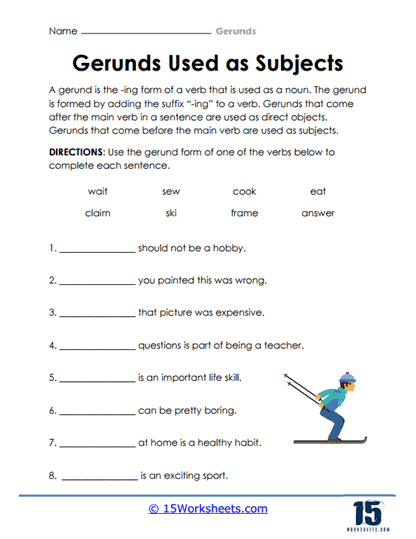
The Missing Subject
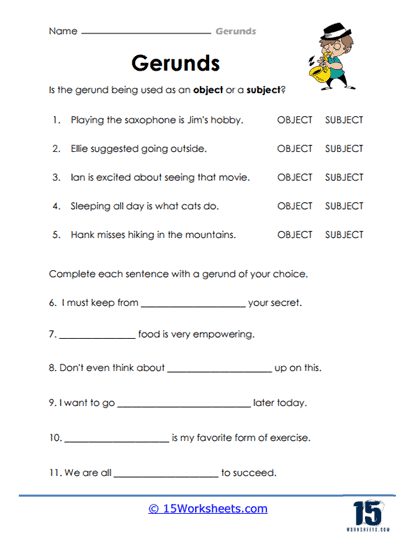
This worksheet focuses on gerunds as sentence subjects. Learners practice rewriting and analyzing examples. It strengthens sentence structure awareness. A strong foundation builder for understanding gerund roles.
The Perfect Fit
Students test whether gerunds or other word forms fit best in sentences. The activity builds decision-making skills in grammar usage. It’s almost like a grammar puzzle. A fun challenge for sharpening accuracy.
The Duality of Gerunds
This worksheet highlights how gerunds can look like verbs but act like nouns. Students explore this “duality” through examples. It builds deeper understanding of word function. Perfect for learners who enjoy wordplay.
Underline and Discover
Here, students underline gerunds in given passages. The activity trains them to quickly recognize gerund usage. It’s simple but effective repetition. Great for reinforcing the basics.
Gerund Phrases Explored
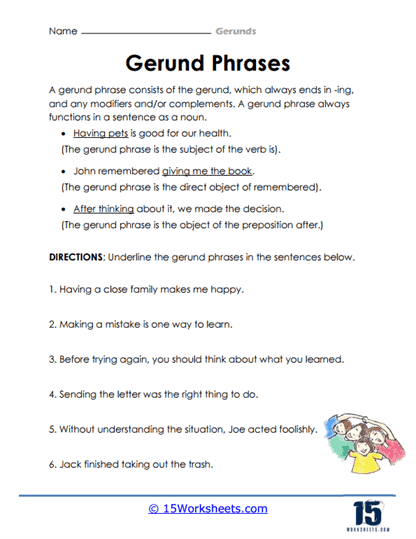
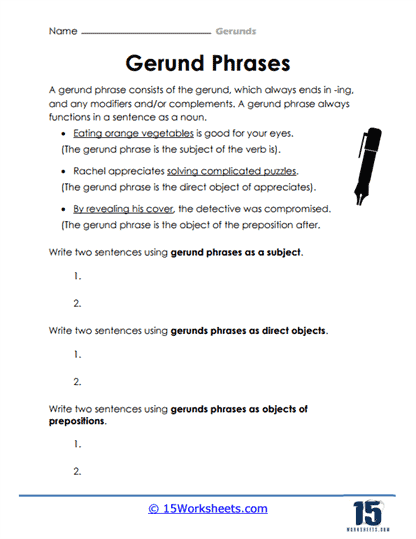
This worksheet dives into full gerund phrases instead of just single words. Students identify and analyze their roles in sentences. It’s a higher-level activity that connects grammar to writing fluency. Ideal for advanced practice.
What Are Gerunds & Why Do They Matter?
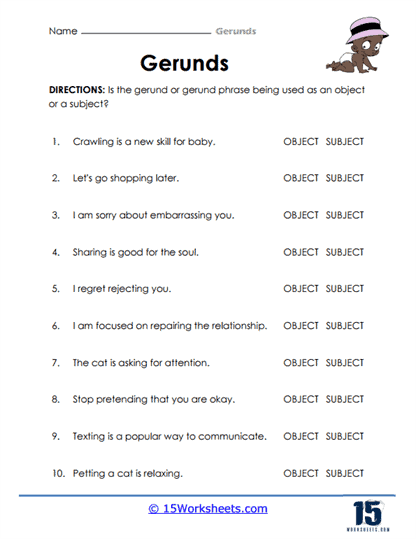
Gerunds are words that are formed by adding the “-ing” suffix to a verb, such as “running,” “swimming,” or “eating.” They function as nouns and can be used in various ways, including as the subject of a sentence, as the object of a verb or preposition, or as the object of a possessive pronoun. Below are some examples of gerunds.
Gerunds as subjects:
- Running is a great way to stay in shape.
- Singing is her passion.
- Dancing is a form of art.
- Cooking requires practice.
- Reading is essential for learning.
Gerunds as objects:
- She enjoys playing the guitar.
- I love watching movies.
- He dislikes doing homework.
- They suggested going to the beach.
- She finished writing the report.
Gerunds matter because they are a crucial part of English grammar, and they can be used in a variety of sentence structures. They are often used to add variety and detail to writing, and they can help writers create more complex sentence structures that convey meaning more effectively.
Gerunds are also important for students to understand because they are a common source of confusion. For example, some learners may struggle to differentiate between gerunds and present participles, which are formed in the same way but function differently in a sentence.