
Business English Worksheets
All About These 15 Worksheets
Business English is a whole different world from the everyday English most students are used to. It’s full of acronyms, idioms, and a tone that can make you sound polished or… well, not so polished. This collection of worksheets helps learners step confidently into that world. From decoding tricky acronyms to practicing negotiation vocabulary, each page builds the specific skills that real workplaces demand.
The worksheets take a layered approach, moving from understanding terms to actively using them in context. Learners start by defining and matching, then shift into role-plays, sentence revisions, and even preparing presentations. There’s a good balance of fun activities, like idiom decoding, and practical skills, like writing with impact. Every activity is designed to build fluency, confidence, and professionalism.
These worksheets don’t just teach language; they teach the culture of business communication. Office jargon, polite phrases, and presentation skills all reflect how professionals actually interact. By practicing with these sheets, students get to experience that culture in a safe and guided way. It’s like a rehearsal for the real stage of workplace communication, giving learners the tools to sound capable, confident, and credible.
Have a Look Inside Each Worksheet
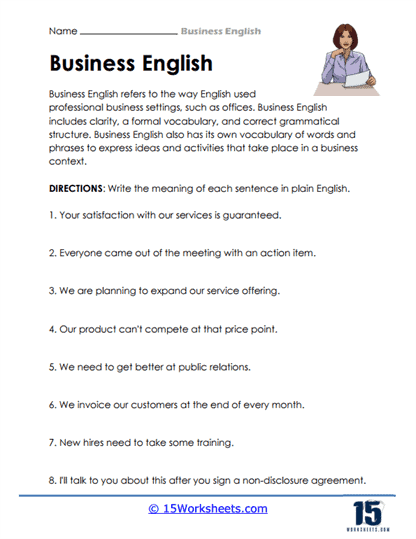
Decoding the Language of Commerce
Students explore common terms used in business communication. The activity helps them connect tricky jargon to everyday meaning. Learners practice decoding and rephrasing expressions for clarity. This worksheet builds confidence in understanding workplace language.
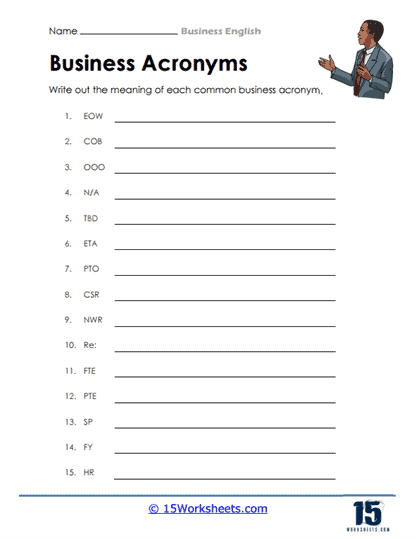
Deciphering Business Acronyms
Here, students tackle acronyms like ROI, CEO, and KPI. They match abbreviations to their full forms and meanings. The activity makes sense of alphabet soup that often confuses beginners. It’s a fun way to sharpen professional vocabulary.
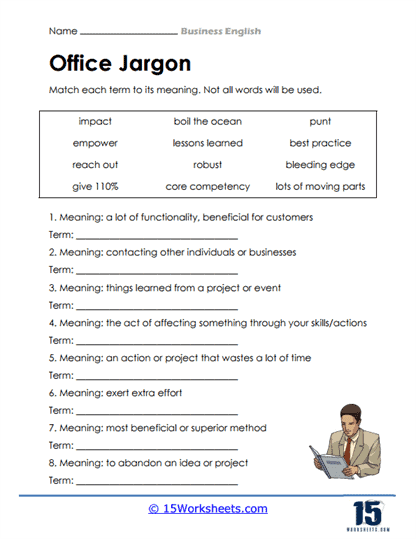
Office Jargon Dictionary
This worksheet collects buzzwords like “synergy” or “touch base” and explains them. Students learn to recognize when and how to use them. The task builds awareness of tone and context. It’s great for avoiding misunderstandings in real office talk.
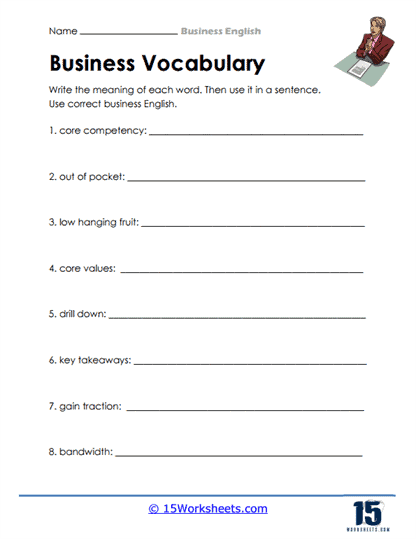
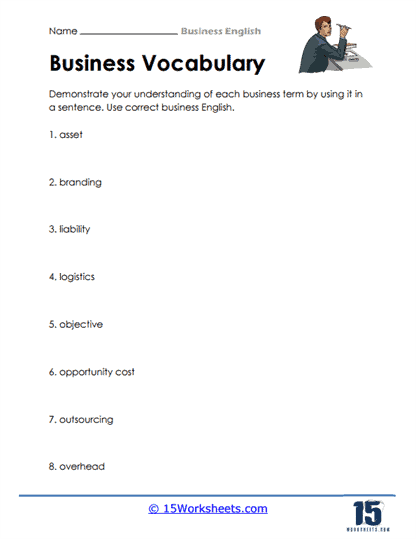
Defining and Using Key Terms
Learners define central business vocabulary and put it into sentences. The activity ties definition to application. It encourages learners to actively use professional language. This builds a bridge from theory to practical communication.
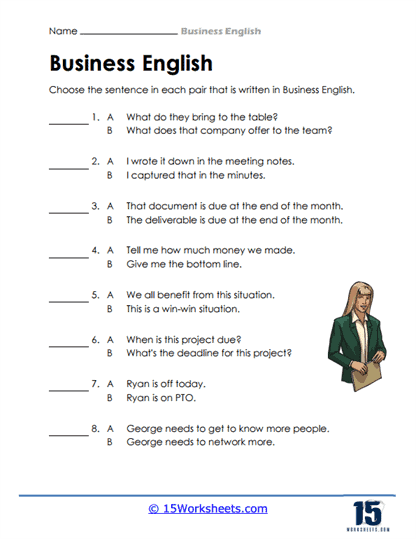
Sentence Showdown
Students choose between stronger or weaker versions of sentences. The focus is on clarity, tone, and professionalism. It’s a grammar-meets-style challenge. By the end, learners write more polished and confident business sentences.
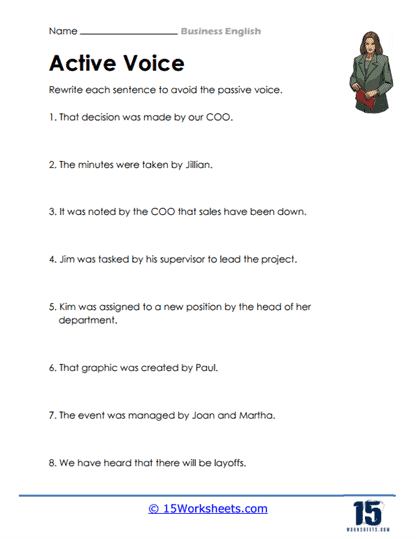
The Strength of Active Voice
This worksheet highlights the difference between active and passive voice. Students rewrite sentences to make them more direct and powerful. It shows how language can make communication clearer and more persuasive. The activity improves both writing skills and confidence.
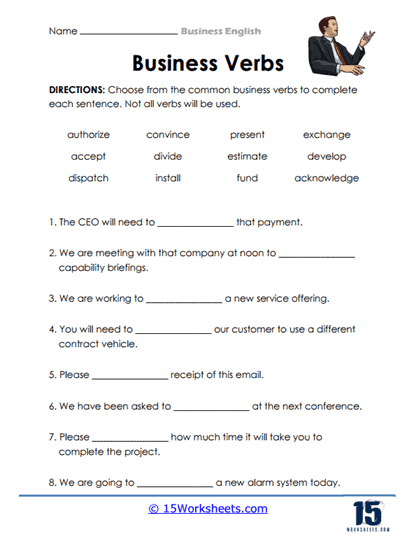
Business Verbs Selection
Learners practice choosing precise verbs for workplace contexts. Instead of weak words, they learn sharper choices like “implement” or “negotiate.” The activity polishes sentence style. Students come away with a stronger professional vocabulary.
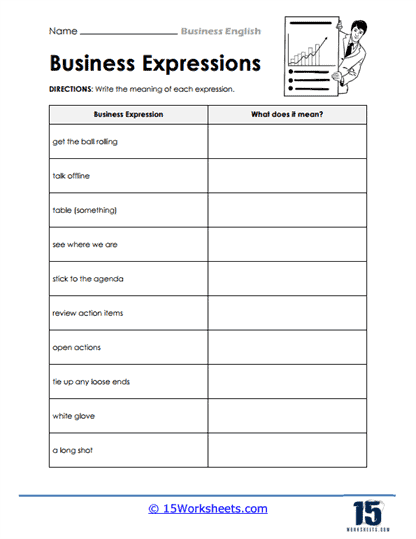
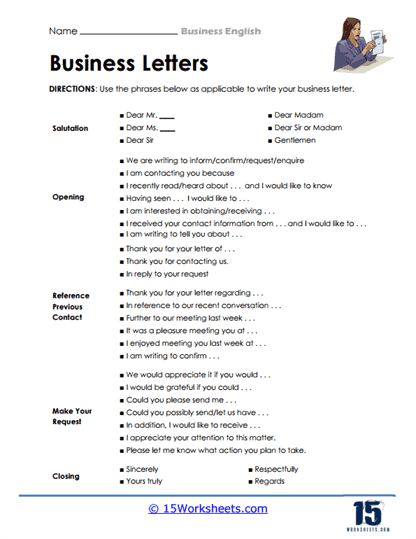
Essential Expressions for Professional Success
This worksheet introduces useful workplace expressions for meetings, emails, and calls. Students practice using them naturally in context. The task boosts fluency and confidence in professional exchanges. It’s practical and immediately applicable.
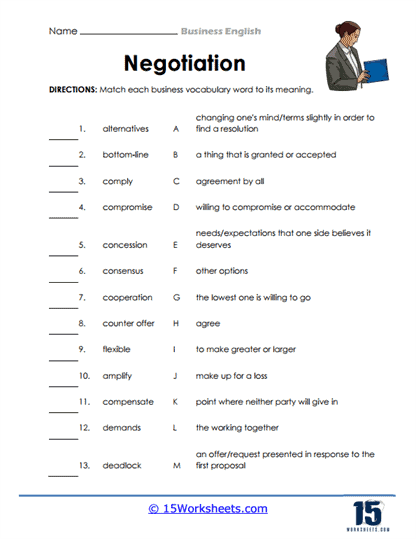
Negotiation Vocabulary
Students learn words and phrases used in negotiations, like “compromise” and “counteroffer.” They practice role-play style scenarios. The activity builds both vocabulary and confidence in real-world situations. It’s excellent preparation for business discussions.
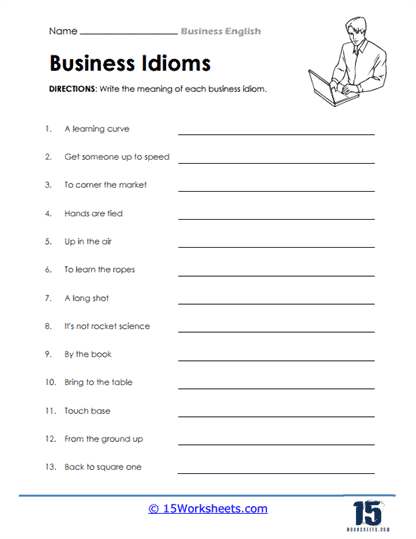
Business Idioms Decoded
Here, students discover idioms like “back to the drawing board” or “think outside the box.” The worksheet explains meanings and asks students to use them in context. It’s a lively way to enrich language. Learners enjoy seeing how figurative expressions add color to communication.
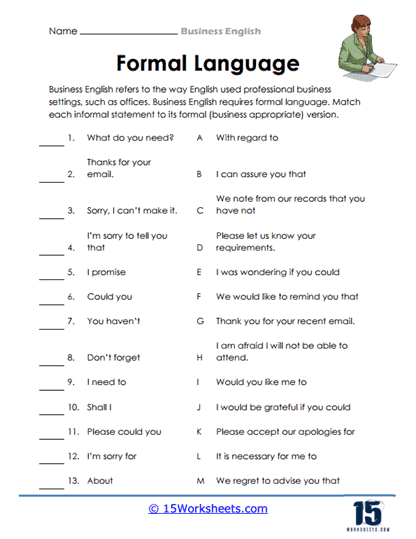
From Casual to Corporate
Students practice transforming casual phrases into professional language. They see how tone shifts with context. The activity sharpens awareness of formality in writing and speaking. It’s a must-have for anyone transitioning into workplace English.
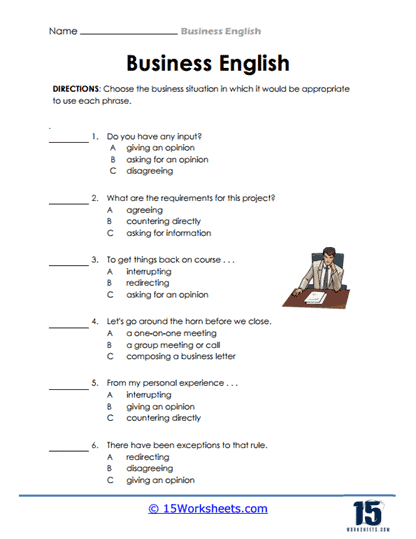
Scenario Selection
Learners read short business scenarios and choose the most appropriate responses. This tests both vocabulary and judgment. It feels interactive and real-world based. Students gain insight into professional communication strategies.
Writing with Impact
This worksheet teaches students how to craft sentences that persuade and impress. They practice revising bland statements into stronger ones. The activity builds skills in emphasis and style. It’s all about making writing stand out in a professional setting.
Language in Action
Students apply their new vocabulary and expressions to role-play or short writing tasks. It’s about moving from theory to practice. The worksheet encourages fluency through use. Learners get a taste of authentic business communication.
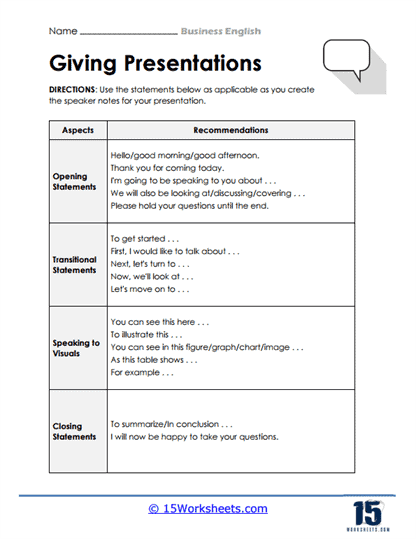
Effective Presentation Preparation
This worksheet walks students through language for preparing and delivering presentations. They practice phrases for introductions, transitions, and conclusions. The activity builds both structure and confidence. It’s ideal for learners who need to present ideas clearly and professionally.
What Is Business English?
Business English is the branch of English tailored for the professional world. It’s not about Shakespeare or poetry-it’s about writing emails, running meetings, closing deals, and giving presentations. It uses the same grammar as everyday English, but the vocabulary and tone are carefully chosen to sound clear, polite, and persuasive.
Why does it matter? Because the way we communicate at work can make or break opportunities. A strong command of Business English helps professionals negotiate better, write with impact, and build trust with colleagues and clients. It also prevents misunderstandings that can happen when casual expressions don’t fit formal situations. In short, Business English is the language of getting things done.
This worksheet collection helps learners go beyond memorizing terms-they practice using them in authentic ways. Whether it’s decoding office jargon, role-playing negotiations, or preparing for a presentation, each activity gives learners a chance to apply skills in real-world scenarios. Over time, students don’t just learn Business English; they become fluent in the rhythm and culture of professional communication.