
Prepositional Phrases Worksheets

All About These 15 Worksheets
Prepositional phrases might sound like something out of a grammar textbook, but really, they’re just word groups that help sentences feel complete and descriptive. This collection of worksheets helps students recognize, build, and use these phrases with confidence. From simple “find it” activities to creative writing exercises, the variety keeps practice fresh and engaging. Each worksheet is designed to show how small word groups can make a big difference in writing.
The set balances both recognition and application. Some worksheets focus on spotting prepositional phrases in sentences, while others ask kids to add them in to expand ideas. There are also activities that highlight how prepositional phrases work as modifiers or connect ideas. This mix helps learners see prepositional phrases not just as grammar trivia, but as tools that improve writing clarity and flow.
Best of all, these worksheets connect grammar learning to real-world skills. Knowing how to use prepositional phrases helps kids write richer sentences, understand what they read, and communicate more effectively. By the end of the collection, students will be able to identify these phrases quickly and use them naturally in their own writing.
Have a Look Inside Each Worksheet
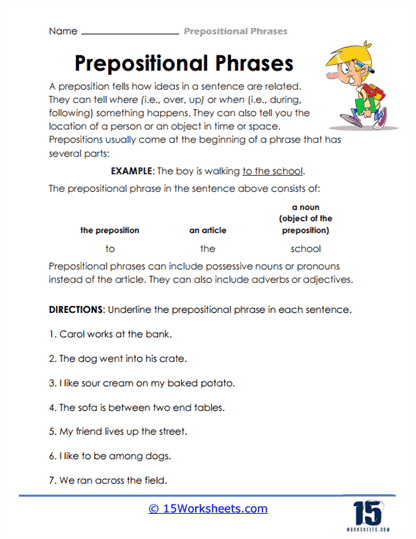
Prepositional Pursuit
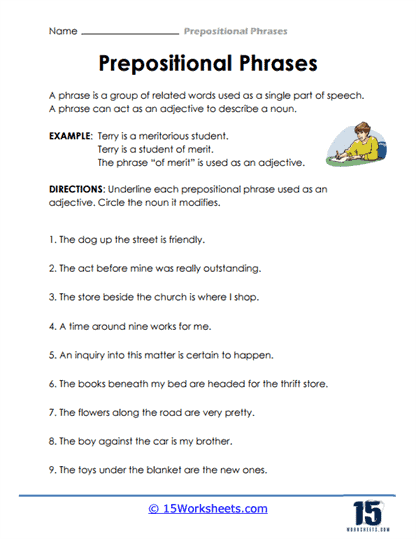
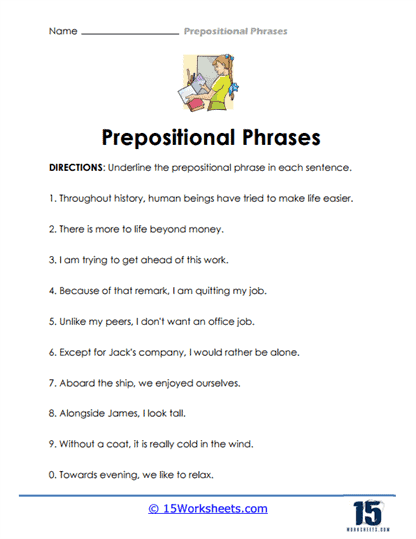
This worksheet turns identifying prepositional phrases into a game-like hunt. Students scan sentences and highlight or underline the phrases they find. It builds careful reading and grammar awareness. A fun way to practice without it feeling like plain drills.
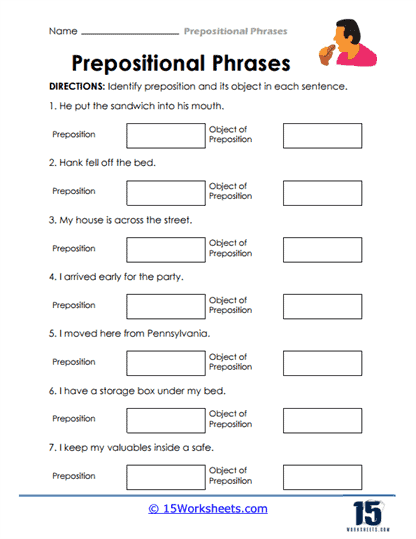
What’s My Object?
Here, learners focus on spotting the object of each prepositional phrase. It sharpens sentence analysis skills and shows how phrases add detail. The activity is like solving little grammar puzzles. Perfect for reinforcing the link between prepositions and their objects.
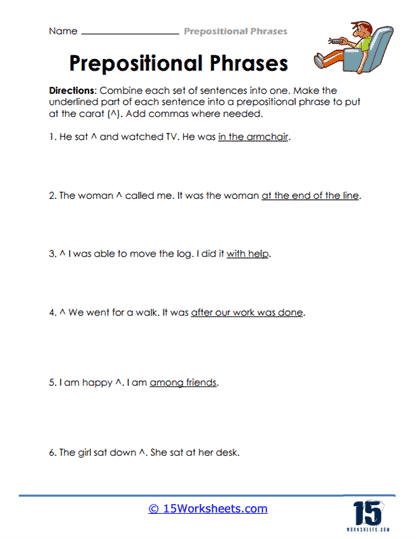
Sentence Synthesis
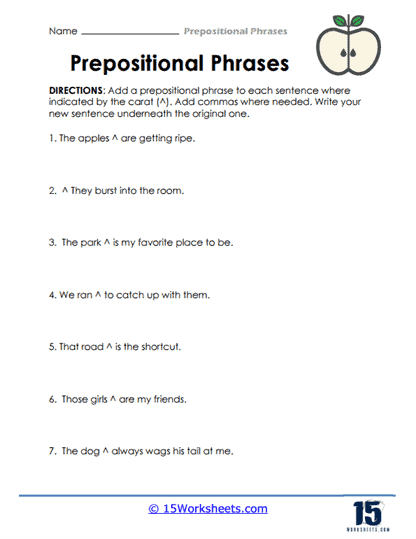
Students combine short sentences by adding prepositional phrases. It encourages creativity while strengthening writing fluency. The worksheet shows how phrases add depth and description. A great way to practice grammar in action.
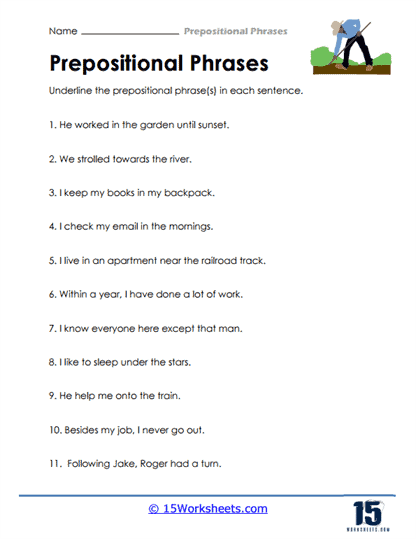
Find It
This worksheet asks students to locate prepositional phrases hidden in longer texts. It’s a “search and find” activity that makes grammar interactive. Learners sharpen their eye for detail. Great for building accuracy and confidence.
The Modifier Challenge
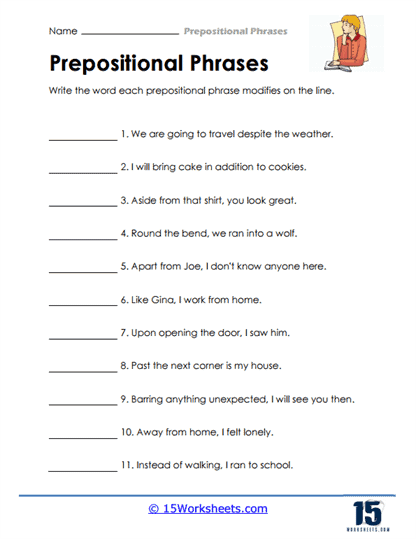
Students identify how prepositional phrases work as modifiers in sentences. It highlights how these phrases add description or detail. The activity makes kids think critically about sentence structure. A nice step up from basic identification practice.
The Phrase Hunt
This worksheet is like a treasure hunt for prepositional phrases. Learners comb through text to uncover hidden examples. It turns grammar into an engaging challenge. A playful way to keep practice lively.
Linguistic Connections
Students analyze how prepositional phrases connect ideas in writing. It builds understanding of how grammar creates flow between thoughts. The activity encourages deeper thinking about language use. Great for more advanced learners ready to go beyond basics.
Connected To Verbs
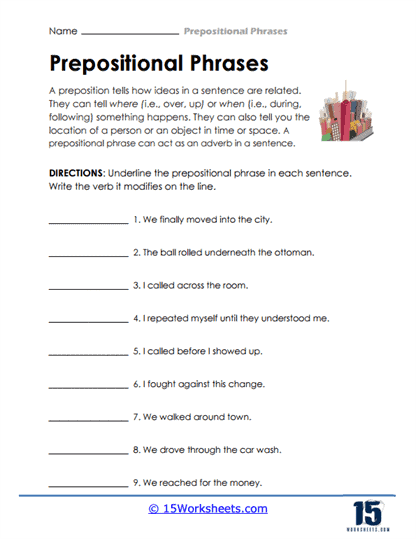
This worksheet focuses on prepositional phrases that link directly to verbs. It shows how phrases can complete or expand meaning in action words. Students practice identifying and explaining these connections. Perfect for tying grammar to sentence meaning.
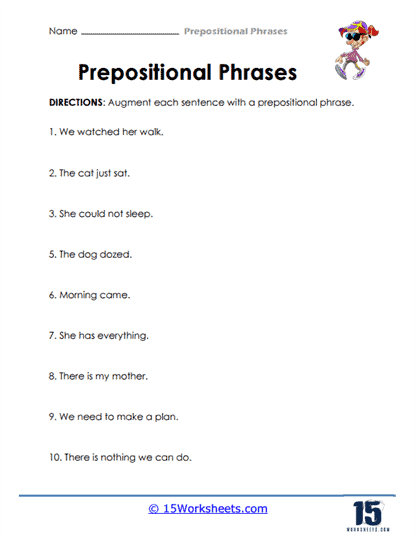
Add To Create Depth
Here, learners add prepositional phrases to simple sentences to expand them. It’s a hands-on way to see how phrases enrich writing. The activity sparks creativity while reinforcing grammar. Kids learn how even small phrases can make writing more interesting.
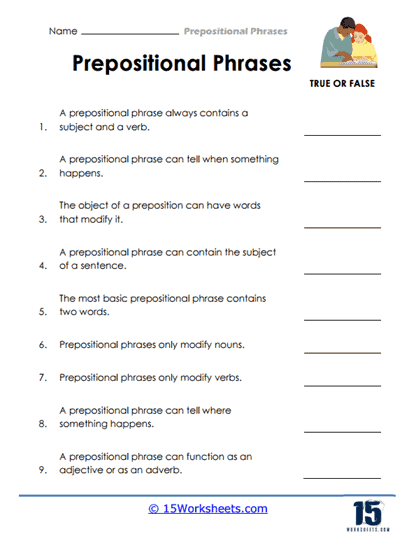
Is It True Or False?
Students decide whether given statements about prepositional phrases are true or false. It’s a quick review that doubles as a confidence check. The format makes grammar feel more like a quiz game. A simple but effective reinforcement tool.
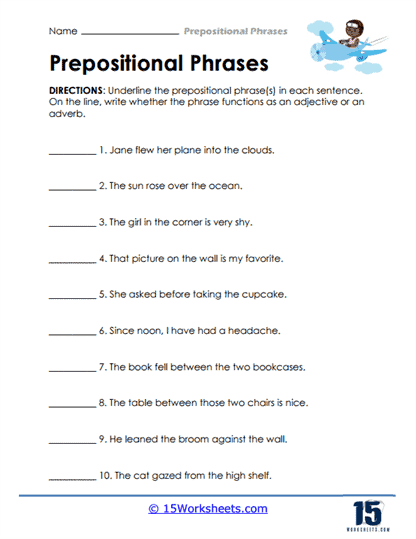
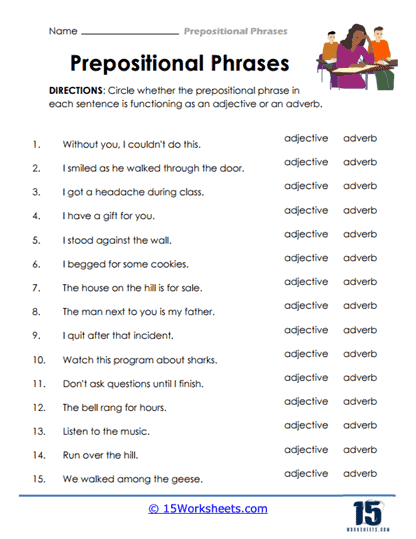
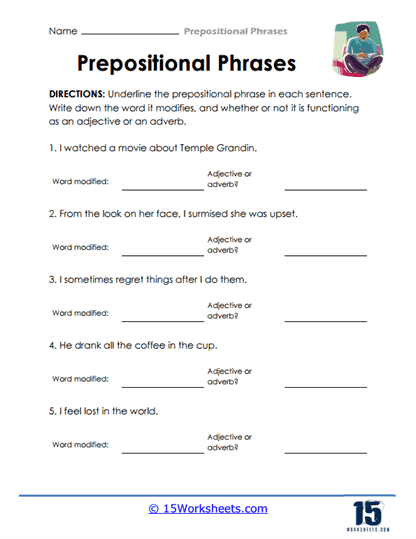
What’s My Role?
This worksheet asks learners to determine the function of prepositional phrases in sentences. They explore whether the phrase is acting as an adjective or adverb. It encourages critical thinking and sentence analysis. A strong exercise for building advanced grammar awareness.
What are Prepositional Phrases?
Prepositional phrases are groups of words that include a preposition, its object, and any modifiers of the object. The preposition shows the relationship between the object and another word in the sentence.
For example, in the sentence “The book is on the table,” the prepositional phrase is “on the table,” with the preposition “on” and the object “table.” This prepositional phrase shows the relationship between the book and the table.
Prepositional phrases matter because they can provide important information about time, location, direction, manner, and other aspects of a sentence. They can be used to add detail and complexity to sentences, and can help writers convey their meaning more clearly and effectively.
By understanding prepositional phrases, students can develop better reading comprehension skills and improve their ability to write detailed and effective sentences. Additionally, prepositional phrases are a fundamental part of English grammar and are commonly used in both written and spoken language, making them an essential concept for students to master.
How do Prepositional Phrases Function?
Prepositional phrases are an important aspect of English grammar that provide additional information about a sentence. They are composed of a preposition, its object, and any modifiers that further describe the object.
Prepositional phrases can provide information about a variety of elements in a sentence, including:
- Location – “The cat is on the roof.”
- Time – “She arrived after the movie started.”
- Manner – “He ate with his hands.”
- Direction – “The bird flew over the trees.”
- Purpose – “She went to the store for milk.”
- Cause – “He fell off the ladder because he lost his balance.”
Prepositional phrases can also modify other parts of speech in a sentence, such as verbs, adjectives, and adverbs. For example, “She ran with great speed” uses the prepositional phrase “with great speed” to modify the verb “ran.”
It’s important to note that prepositional phrases can also be used in a variety of sentence structures, including simple sentences, compound sentences, and complex sentences. By understanding how prepositional phrases function, students can develop a deeper understanding of the structure and meaning of sentences.