
Thesaurus Worksheets
All About These 15 Worksheets
A thesaurus is more than just a fancy wordbook – it’s a key to making writing pop. These worksheets are all about helping students see that choosing just the right word (not too bland, not too weird) can make their writing clearer, more interesting, and more “alive.”
What makes this collection especially good is that there’s a balance: some exercises are straightforward (find synonyms, pick replacements), others push students to think harder (gradations of meaning, context matters, rewriting). It’s not just “swap word A for word B” – it’s about why some words work better than others in different situations.
Using these worksheets lets students build up their vocabulary while also sharpening their judgment: recognizing when a word fits, when it doesn’t, and what tone or nuance it brings. Plus, when word choice improves, everything else gets better: descriptions, essays, creative writing. It gives students tools to express themselves more precisely and confidently.
Have a Look Inside Each Worksheet
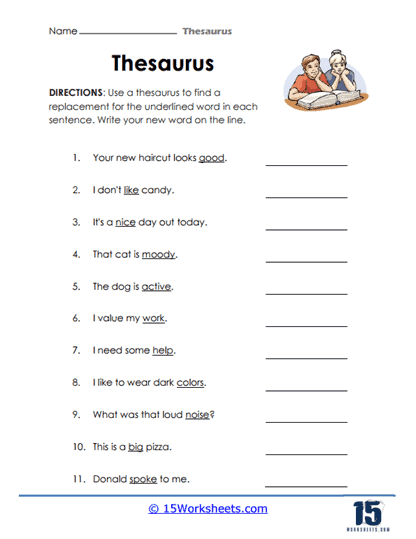
Finding Replacement Words
Students pick overused or generic words and replace them with better ones using a thesaurus. They practice choosing more vivid or precise options. Helps improve word choice and avoid repetition. Encourages thinking about shade of meaning.
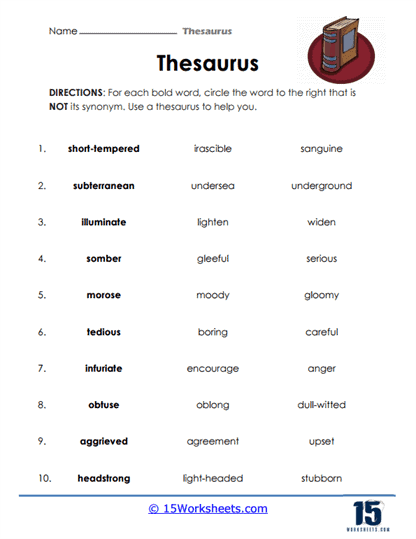
Not The Synonym
Students identify when pairs of words aren’t true synonyms (even if they seem similar) and maybe explain the difference. Builds awareness that words that look alike don’t always mean exactly the same thing. Helps with nuance. Great for avoiding awkward word use.
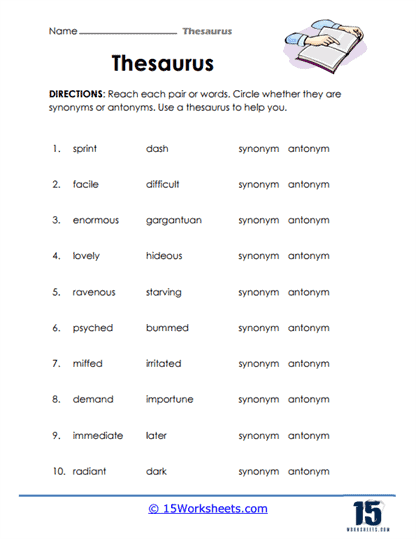
Synonyms Or Antonyms?
Students decide whether given word-pairs are synonyms or antonyms. Sharpens their understanding of opposites and similarities. Helps build vocabulary rigour. Encourages careful reading of word meanings.
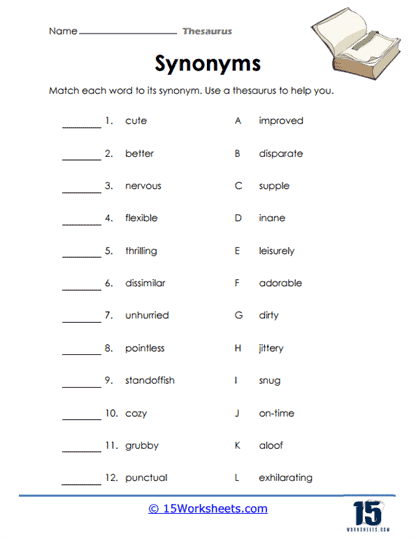
Matching Similar Words
Might present a list of words and students match those with similar meanings. Reinforces recognition of synonyms. Helps with vocabulary expansion. Good practice with cross-referencing meanings.
Wordhunt Challenge
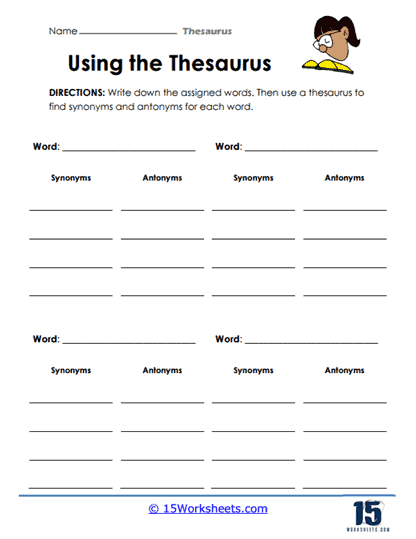
Probably a fun hunt or search activity: find words (perhaps in reading passages or lists) that are synonyms or antonyms of target words. Makes thesaurus work more engaging. Develops scanning and identifying skills. Adds variety and challenge.
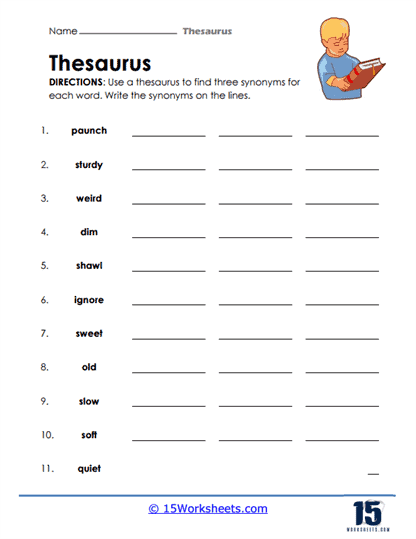
Find At Least Three
For given words, students find at least three synonyms each. Pushes for richer vocabulary. Encourages exploration beyond the obvious. Helps students see breadth in their word choices.
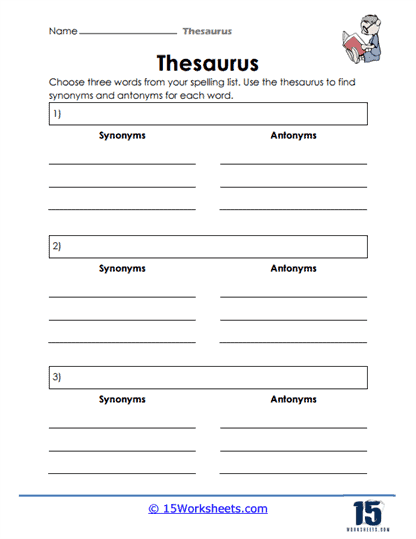
Spelling List
Maybe combining spelling with thesaurus work: less common synonyms with tricky spellings are introduced. Helps strengthen both spelling and vocabulary. Encourages attention to detail. Integrates writing and word knowledge.
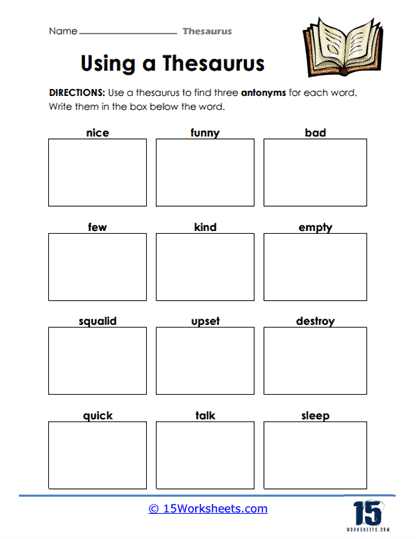
Antonyms In Boxes
Probably gives boxed spaces or grid with words; students match or write antonyms in boxes. Visual structure helps. Reinforces antonym knowledge. Adds a tactile or organized format.
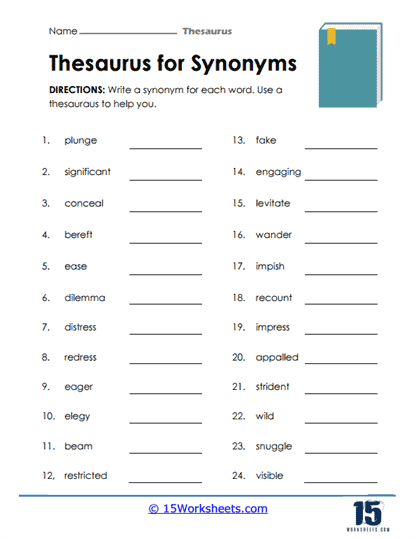
Thesaurus For Synonyms
Focused purely on choosing synonyms, perhaps in context (sentences). Helps students see how synonyms vary depending on the sentence. Encourages appropriate word selection. Builds sensitivity to tone and context.
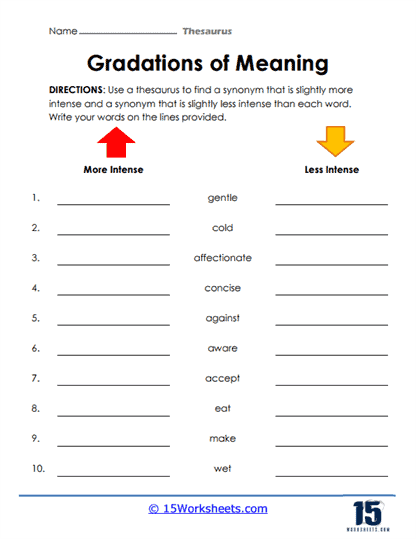
Gradations Of Meaning
Students look at similar words with different intensity (e.g. happy, joyful, ecstatic) and learn how meaning shifts. Helps with nuance and picking the right word for how strong you want it. Builds sophistication in word usage. Very useful for descriptive writing.
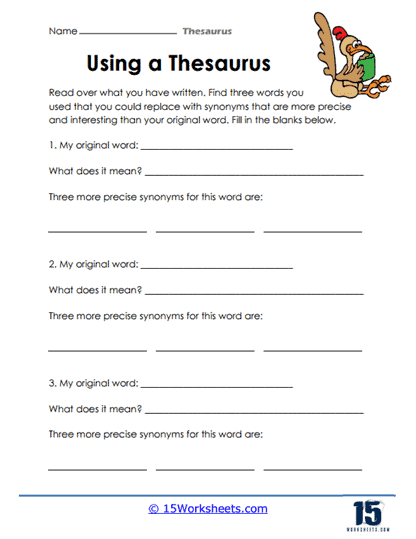
Being More Precise
Probably students take vague or generic sentences and replace weak words with more precise ones. Focus on clarity and precision. Encourages them to think, “Is there a better word for this?” Improves writing style. Teaches restraint (not over-doing adjectives, etc).
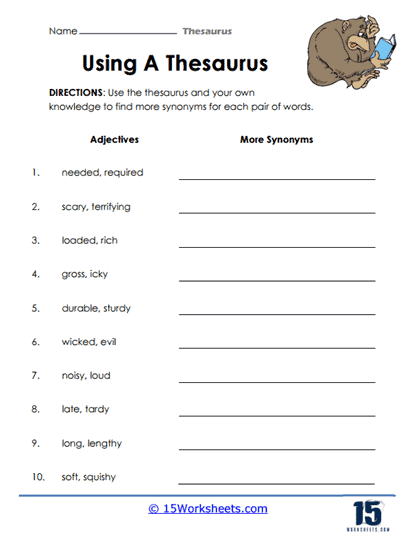
Look For More
Perhaps students look for additional synonyms/antonyms in texts, or expand a given list. Encourages exploring thesaurus beyond the first suggestion. Builds momentum and curiosity with words. Helps grow vocabulary over time.
Rewriting Sentences
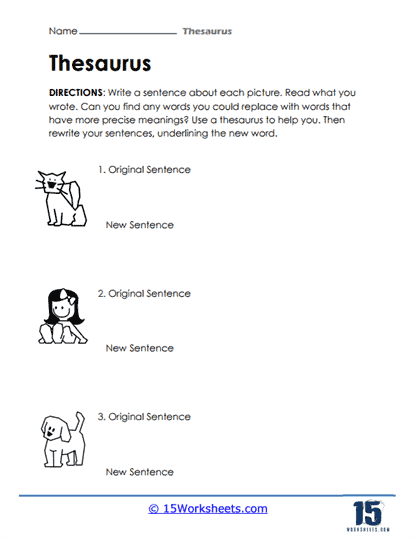
Students rewrite sentences replacing boring/overused words with more vivid synonyms. Helps with context and flow. Encourages rewriting and revision. Makes writing more engaging.
Scavenger Hunt
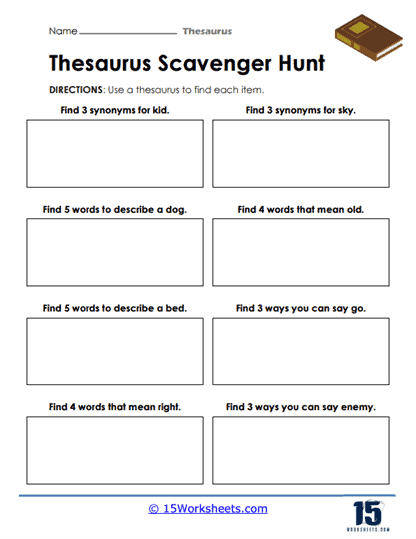
Similar to Wordhunt, but with maybe a list of target words to find in reading passages or environment, then find synonyms/antonyms. Adds game-like fun. Encourages independent searching. Good for motivating students.
Replacing Boring Words
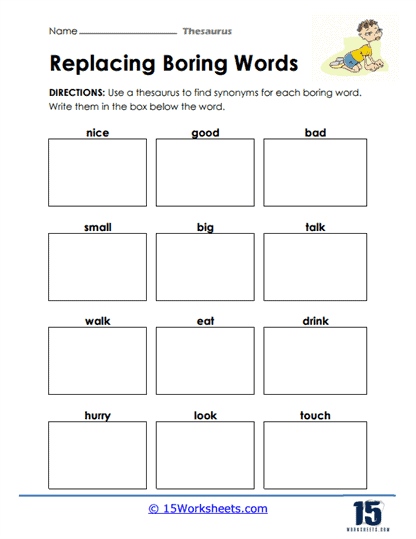
Students find “boring” (generic or overused) words in sentences or paragraphs and replace them with better words. Encourages creativity and sensitivity to tone. Helps writers avoid clichés or dull writing. Boosts expressiveness.
What is a Thesaurus?
A thesaurus is kind of like a treasure chest for words. Instead of gold coins, it’s packed with synonyms (words that mean almost the same thing) and antonyms (words that mean the opposite). It helps you avoid using the same old word again and again, and instead find a fresher, cooler option that really makes your writing sparkle.
But here’s the trick: not every synonym is a perfect swap. Some words are fancier, some are simpler, some sound more serious, and some are more playful. That’s why writers use the thesaurus along with their own brain power – picking the word that best fits the mood and meaning they want.
These worksheets give you practice with all of that. They help you test out new words, spot when a word doesn’t quite work, and expand your “word bank” so you’re never stuck repeating the same boring choices. Before you know it, you’ll have a whole collection of words you can call on whenever you write.
And guess what? You don’t even need a giant dusty book anymore – most kids today use the digital version! Online thesauruses and built-in tools like the ones in Google Docs or Microsoft Word make it easy to right-click a word and instantly see a list of alternatives. The worksheets here give you the skills to use those tools wisely, so you’re not just clicking randomly but actually picking the best word for your writing.