
Will vs. Going To Worksheets
All About These 15 Worksheets
Talking about the future in English can be a little tricky-should you use will or going to? These worksheets give students plenty of practice in figuring that out. By working through puzzles, sentence completions, and error corrections, learners discover how to use each form correctly. Instead of memorizing rules, they practice applying them in fun, real-world contexts.
This collection offers a mix of grammar drills and creative exercises. Some worksheets focus on quick decision-making, like gap fills or sentence smackdowns, while others encourage writing original sentences. Activities highlight the subtle but important differences between will (predictions, sudden decisions) and going to (plans, intentions). With repetition and variety, students become confident in choosing the right future form without hesitation.
Even better, these worksheets tie grammar to actual communication. Whether making a plan with a friend or predicting tomorrow’s weather, students see how will and going to shape meaning in everyday conversation. By practicing here, they gain not just grammar accuracy but also fluency and clarity when talking about the future.
Have a Look Inside Each Worksheet
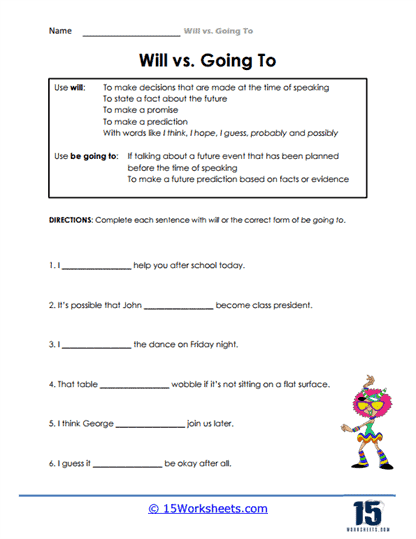
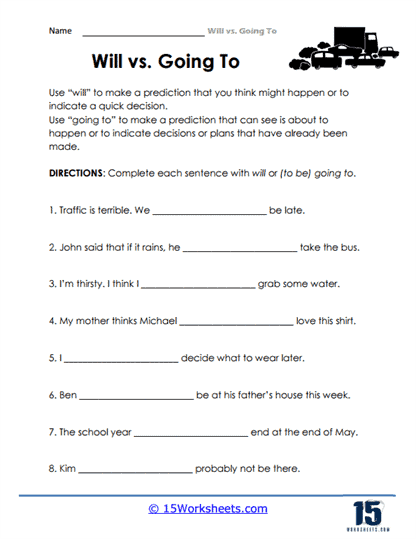
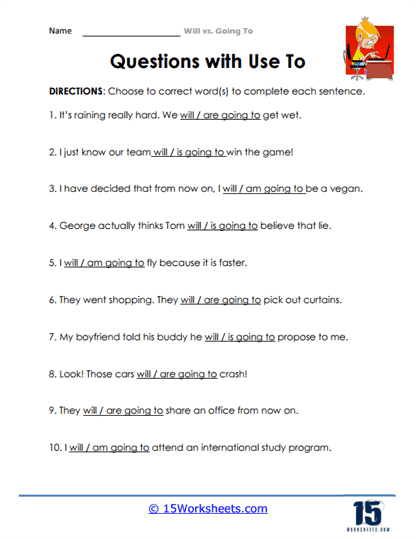
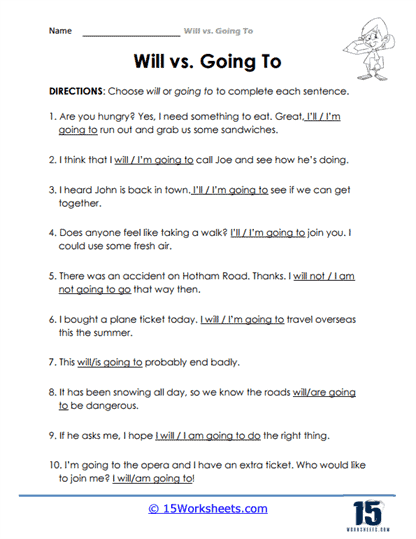
Filling In The Gaps
Students complete sentences by choosing between will and going to. The activity sharpens decision-making while practicing future tense. It feels like solving a grammar puzzle with missing pieces. Kids learn how context helps pick the right form.
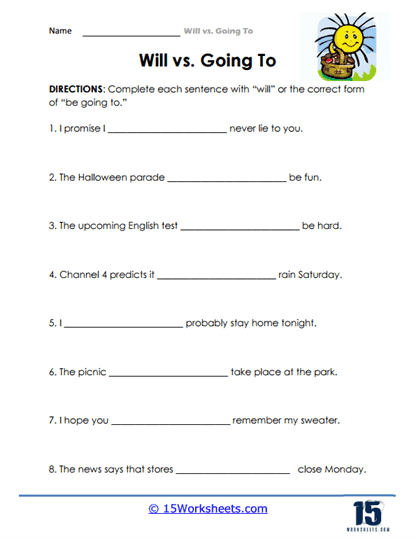
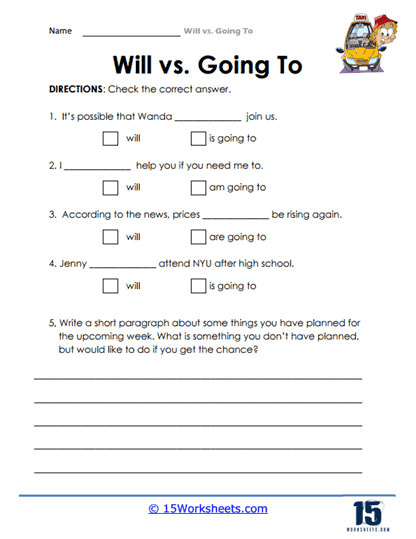
Completing Sentences
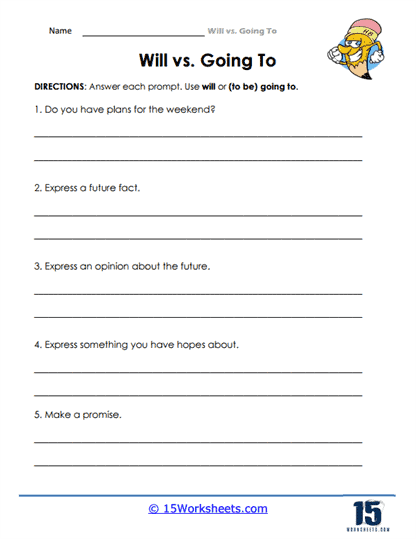
Learners finish prompts using the correct future construction. This reinforces writing skills while practicing tense usage. The worksheet encourages creativity with grammar accuracy. Students gain confidence applying will and going to naturally.
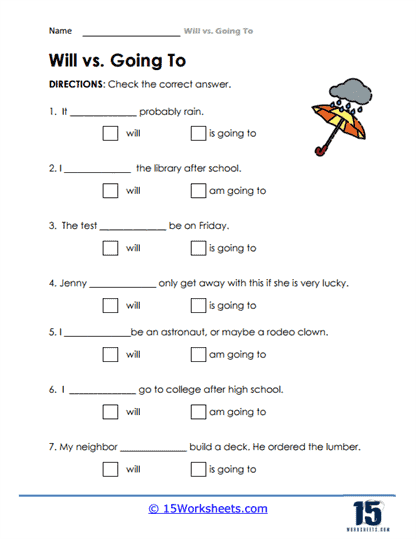
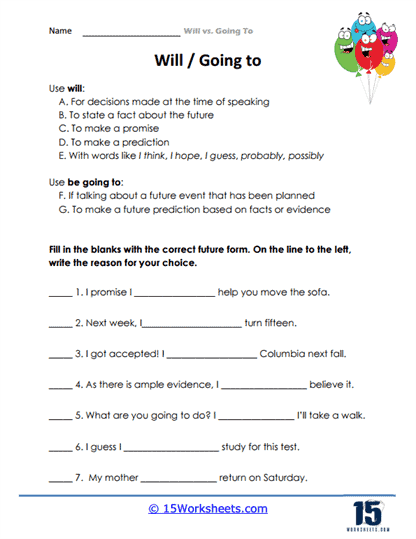
The Decision Dilemma
Students decide which form fits best based on context clues. It feels like solving little grammar riddles. The activity builds comprehension of how each future tense shows intention versus prediction. Learners practice choosing carefully, not guessing.
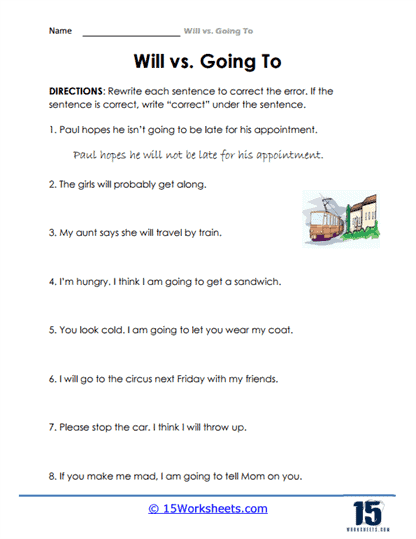
Grammar Detective
This worksheet turns students into “detectives” spotting errors in future tense sentences. They correct mistakes with will or going to. The activity builds editing and proofreading skills. Kids become more attentive to grammar rules in writing.
Decoding the Future
Learners analyze sentences to decide if the speaker is predicting or planning. The activity connects meaning to grammar choices. It makes future tense feel purposeful instead of random. Students strengthen both comprehension and expression.
The Verdict
Students give their “verdict” on which tense is correct in each case. It feels like passing judgment in a fun grammar trial. The activity encourages careful reading of clues. Kids gain mastery by justifying their choices.
Future Tense Express
This worksheet practices speed and fluency with will and going to. Students quickly complete sentences with the correct form. It feels like a rapid-fire grammar game. Learners strengthen automatic recall of tense rules.
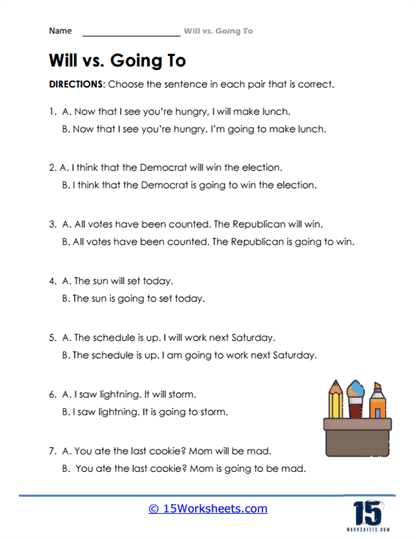
Sentence Smackdown
Learners choose between two competing sentence options. The activity feels like a playful grammar competition. It helps students compare correct and incorrect usage side by side. This makes rules clearer and more memorable.
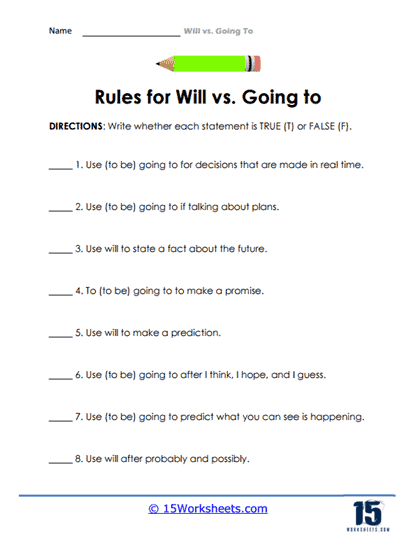
The Right Fit
Students match situations to the correct future tense form. It reinforces the difference between plans and predictions. The activity feels like pairing socks to the right outfit. Learners see how grammar choice fits meaning.
Make A Choice
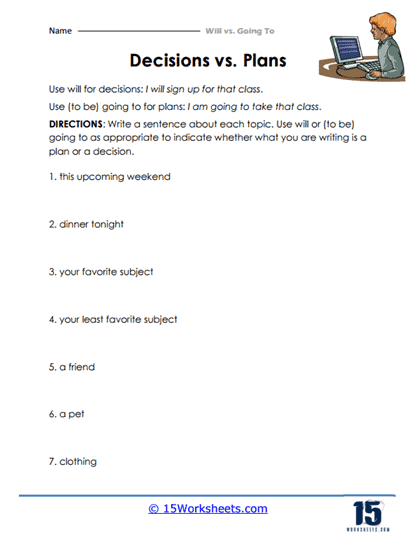
This worksheet pushes kids to pick between will and going to in open-ended sentences. It combines logic with writing practice. The activity is engaging because answers depend on understanding context. Students practice flexibility in tense usage.
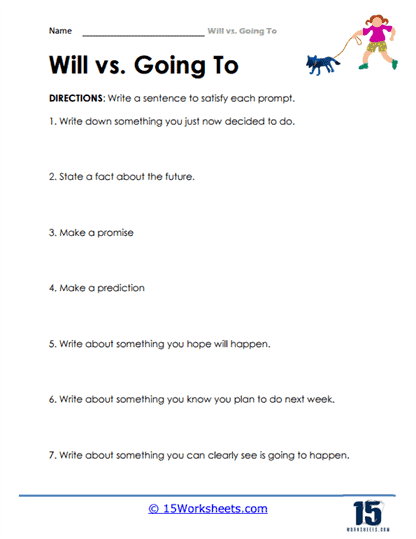
Writing What’s Beyond
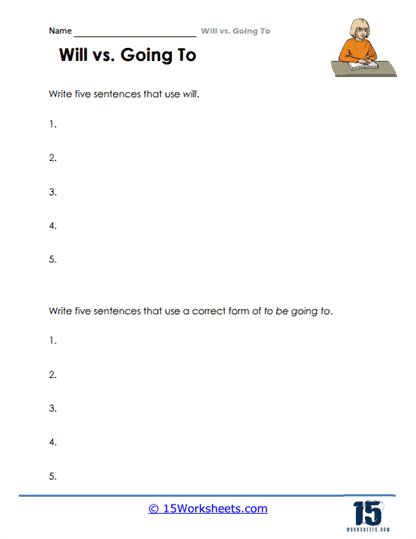
Students write their own sentences using both will and going to. It encourages creativity while applying rules. The activity moves learners from recognition to production. Kids finish with stronger skills in writing about the future.
How Are “Will” and “Going To” Used In Sentences?
“Will” and “going to” are two common ways to talk about future events in English. Although they can be used interchangeably in some cases, they often convey different meanings and intentions. Here are some examples and explanations of their usage:
Will
Used to make predictions or express future certainty based on the speaker’s belief or assumption. For example:
- I think it will rain tomorrow.
- She will be a great doctor one day.
Used to express spontaneous decisions or intentions made at the moment of speaking. For example:
- Oh, I forgot my umbrella. I’ll borrow yours.
- I’m hungry. I’ll make some popcorn.
Used to make promises or offers. For example:
- I’ll help you with your homework later.
- Don’t worry, I’ll pick you up from the airport.
Going to
Used to talk about plans, intentions or arrangements that have already been made. For example:
- We’re going to visit the Grand Canyon next month.
- They’re going to have a baby next year.
Used to talk about future events that are likely to happen based on present evidence or situation. For example:
- The sky looks cloudy. It’s going to rain soon.
- He’s been studying hard. He’s going to pass the exam.
Used to talk about predictions that are based on evidence or reasons. For example:
- Based on the statistics, I think the company is going to have a successful year.
- The traffic is heavy. We’re going to be late for the meeting.
It’s important to note that there are many exceptions and variations to the usage of “will” and “going to” in different contexts and situations. However, understanding their basic meanings and usage can help learners communicate more accurately and effectively in English.