
Regular and Irregular Verbs Worksheets
All About These 15 Worksheets
Verbs are the action heroes of every sentence, and these worksheets put them center stage. Whether it’s sorting, matching, or transforming verbs into their past tense forms, each page makes grammar hands-on and less intimidating. Students quickly notice the patterns in regular verbs while also memorizing those quirky irregular ones that never seem to follow the rules. By keeping activities interactive, these worksheets help learners practice repetition without it feeling like “drill and kill.”
The collection is carefully balanced to offer structure with creativity. Charts and tables give students an organized way to see patterns side by side, while games and quests add playful energy to the practice. This ensures that kids not only memorize but also understand the why behind conjugation. The variety also meets students where they are-those who love puzzles enjoy “Odd Ones Out,” while those who thrive on structure appreciate “Fill Out The Charts.”
Perhaps the biggest strength of these worksheets is their practicality. Mastering regular and irregular verbs directly improves writing, speaking, and reading comprehension. With consistent exposure, kids learn that regular verbs are predictable friends, while irregular verbs are those quirky ones you just have to know by heart. By the end, students are well-prepared to tackle everything from everyday conversations to formal essays with confidence.
Have a Look Inside Each Worksheet
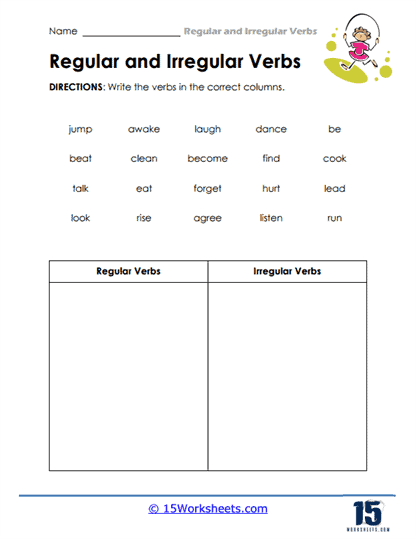
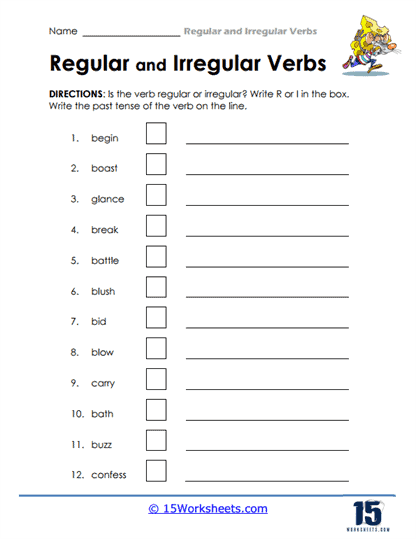
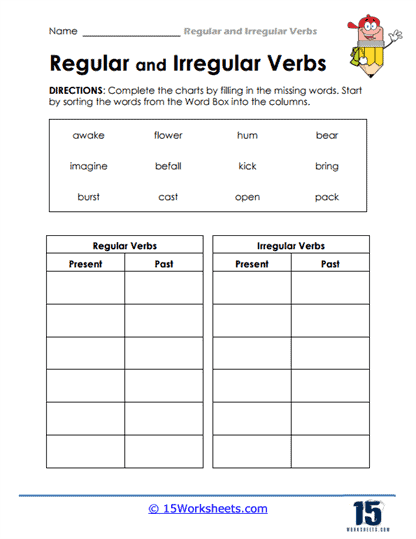
Sort Them Out
Students separate verbs into the correct categories-regular or irregular-based on their past tense forms. It feels like organizing a colorful collection into two neat groups. They sharpen their understanding of patterns versus exceptions in verb conjugation. This activity lays the groundwork for spotting irregularities while reinforcing regular verb rules.
Decoding Their Forms
Learners examine verbs and decode their correct past forms, whether adding “-ed” or applying an irregular pattern. It’s like cracking a secret code for verb transformations. The exercise strengthens pattern recognition and memorization. It’s a clever way to grasp the logic behind both regular and irregular conjugations.
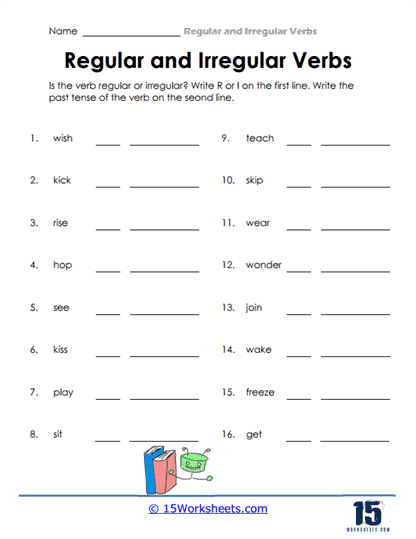
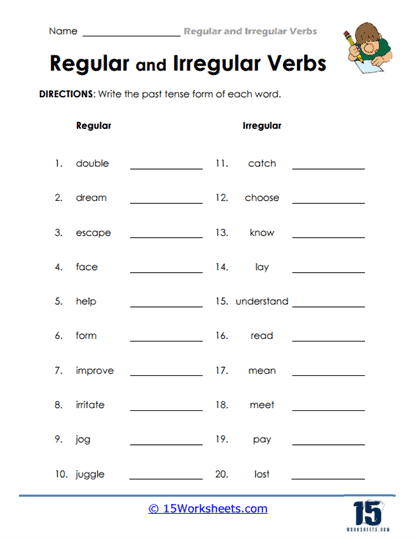
Past Tense Quest
Kids go on a “quest” to fill in the past tense forms of verbs, navigating through clues and examples. It turns conjugation into a treasure hunt of language. They gain confidence in recalling both regular and irregular forms. And they’re practicing accuracy in a fun, adventurous context.
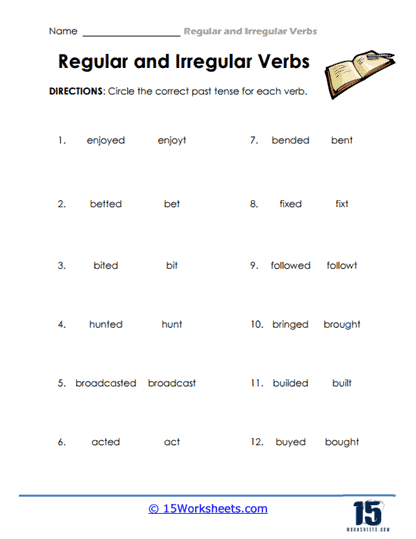
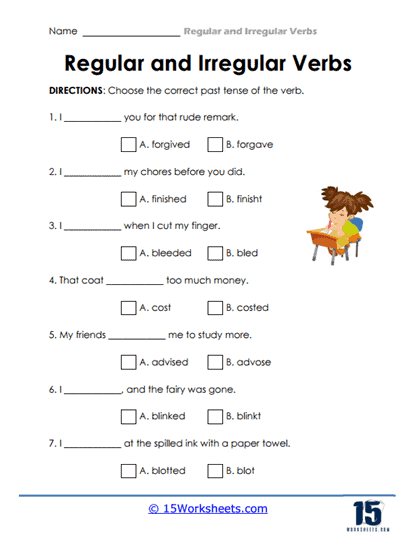
The Correct Form
Students choose the proper past tense version of a verb in sentences, deciding whether it follows a regular or irregular rule. It’s like choosing the right key for a lock. They engage in critical thinking while solidifying conjugation rules. This reinforces verb knowledge one sentence at a time.
Pick the Perfect Verb Endings
Learners select the right endings for verbs (like “-ed” for regular) or recognize their irregular forms. It’s a game of precision and pattern awareness. They learn to differentiate endings that work with regular verbs from unique irregular forms. It’s both fun and directly boosts grammatical accuracy.
Identify and Transform
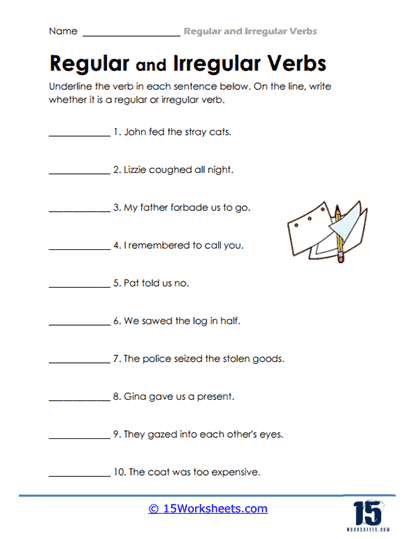
Students spot verbs in sentences and transform them into the correct past tense form. It’s two tasks in one: recognition and conversion. They build skills in identifying verb usage and applying conjugation rules. That means they get practice both decoding and encoding verb forms.
Word Transformers
This activity turns verbs into their past tense versions-like “transformers of words.” It encourages learners to shift from present to past forms, regular or irregular. The visual metaphor adds playful energy to grammar practice. It reinforces the difference between predictable and unique past tense patterns.
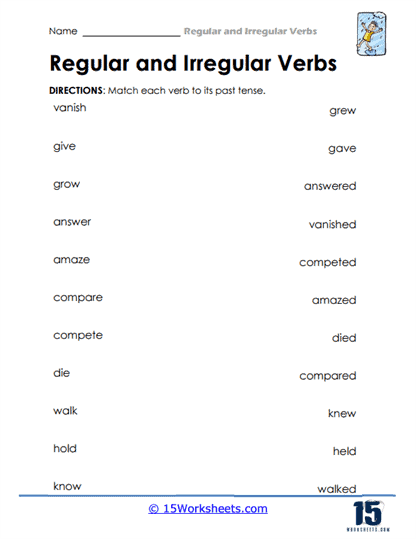
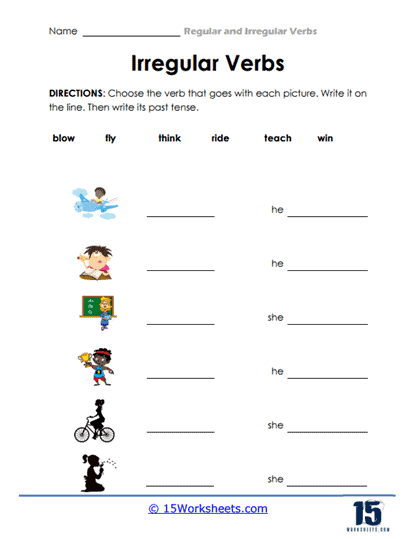
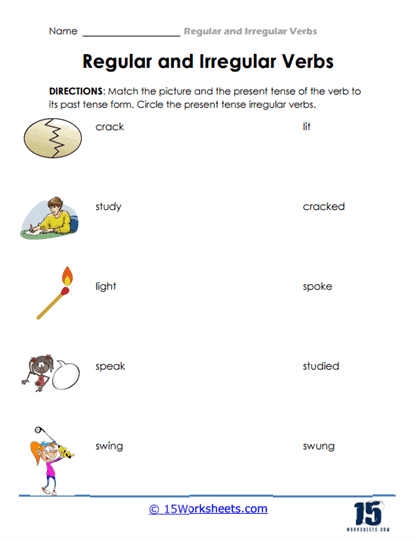
Match and Conjugate
Students match present tense verbs with their past forms, and conjugate where needed. It’s a memory match game for verbs. They reinforce recall and pairing skills, while strengthening their grasp of both regular “-ed” patterns and irregular forms.
Fill Out The Charts
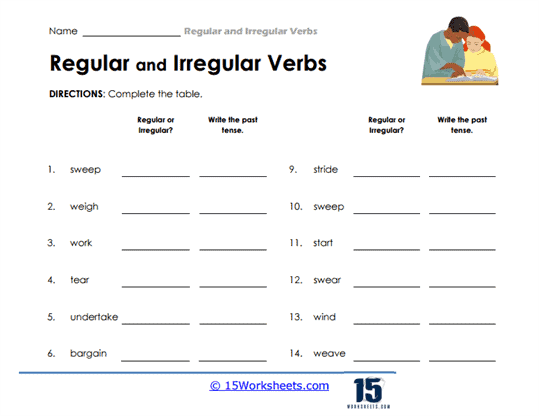
Learners complete tables with base, past tense, and sometimes past participle forms. It’s structured practice-like filling in a verb data sheet. They get organized repetition, which aids retention. It’s helpful for seeing patterns and exceptions side by side.
Tense Twist
This worksheet adds a twist to verb tense exercises-possibly through scenarios or rules that make learners think creatively. It challenges them to go beyond rote past tense forms. They interpret context clues and apply conjugation thoughtfully. Tense change becomes a dynamic and engaging task.
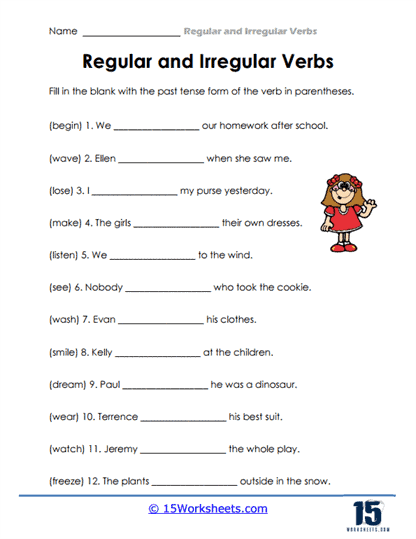
Sentence Completion
Students complete sentences by using the correct past tense verb form. It’s like filling in the missing piece of a story. They learn to use verbs in context, reinforcing meaning and grammar together. It supports comprehension as much as conjugation.
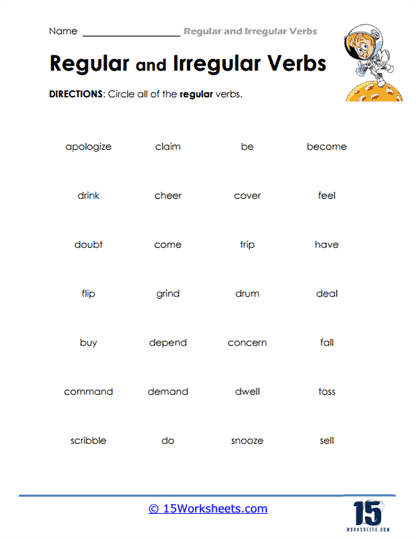
Spot the Regulars
Learners scan through lists or texts to pick out regular verbs. It’s a verb hunting game with a focus on pattern awareness. They reinforce recognition of “-ed” verb forms. Regulars pop out visually and grammatically.
Identifying Regularity
This activity deepens understanding of what makes a verb regular. Students look for clues in spelling and structure that signal regular patterns. That helps them internalize the rules of conjugation. It supports accurate use of regular past forms with clarity.
Odd Ones Out
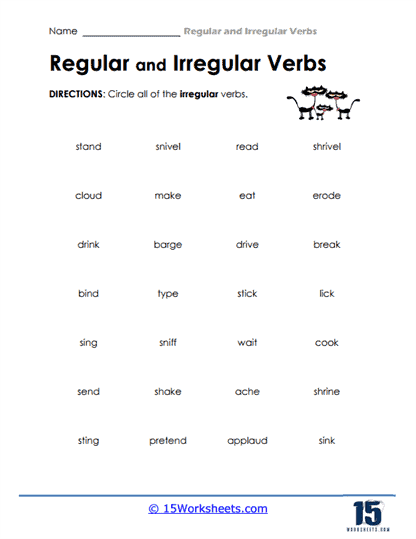
Students identify verbs that don’t fit-likely irregular verbs amidst regular ones, or vice versa. It’s like a language “odd one out” puzzle. They learn to isolate exceptions and notice regularity. This cultivates sharper editing and pattern-spotting skills.
Verb Virtuoso
This worksheet celebrates mastery of verb forms-students show off how well they can transform verbs correctly. It feels like a performance piece in language. They consolidate knowledge of both regular and irregular tenses. Success becomes satisfying and motivating.
Regular Verbs vs. Irregular verbs
Regular verbs and irregular verbs can be differentiated by their past tense forms. Regular verbs follow a predictable pattern when forming their past tense by adding “-ed” to the base form of the verb. For example, the base form of the verb “walk” becomes “walked” in the past tense.
Irregular verbs, on the other hand, do not follow this pattern and have their own unique past tense forms. For example, the base form of the verb “go” becomes “went” in the past tense, which is not formed by adding “-ed”.
To differentiate between regular and irregular verbs, it is helpful to have a list of common irregular verbs and their past tense forms, as well as an understanding of the rules for forming regular past tense verbs. This can help you recognize when a verb is irregular and needs to be conjugated differently in the past tense.
It’s also important to note that some verbs can be both regular and irregular, depending on their meaning and usage. For example, “learn” can be regular in the present tense (“learn”) but irregular in the past tense (“learned” or “learnt”).
Transforming verbs in the present to their past tense form
The rules for changing present tense to past tense depend on the type of verb. Here are the general rules for regular verbs:
Add “-ed” to the base form of the verb.
For example: “walk” becomes “walked,” “talk” becomes “talked,” “smile” becomes “smiled.”
For verbs ending in “e,” add only “-d.”
For example: “like” becomes “liked,” “love” becomes “loved,” “smile” becomes “smiled.”
For verbs ending in a consonant followed by “y,” change the “y” to “i” and add “-ed.”
For example: “carry” becomes “carried,” “study” becomes “studied,” “fly” becomes “flied.”
Irregular verbs have their own unique past tense forms, which often do not follow any specific rule. Here are some examples of common irregular verbs and their past tense forms:
- “go” becomes “went”
- “see” becomes “saw”
- “eat” becomes “ate”
- “do” becomes “did”
- “give” becomes “gave”
- “have” becomes “had”
It’s important to note that some verbs can be both regular and irregular, depending on their meaning and usage. For example, “learn” can be regular in the present tense (“learn”) but irregular in the past tense (“learned” or “learnt”).
In summary, by understanding these rules for changing present tense to past tense, you can improve your writing and communication skills and avoid common errors in verb tense usage.