
Comparative Adjectives Worksheets


All About These 15 Worksheets
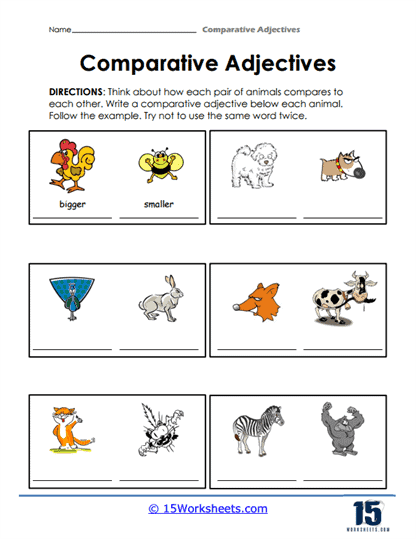
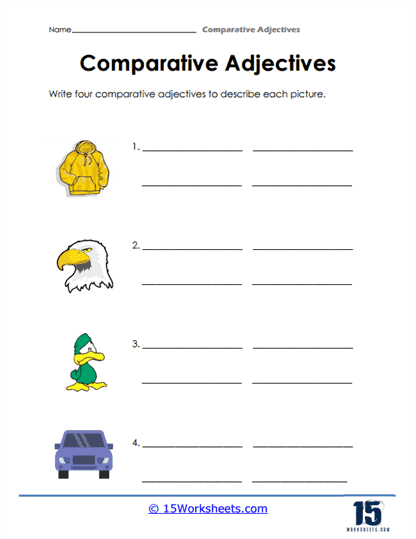
Comparative adjectives are those little words that make big differences-like turning “fast” into “faster” or “interesting” into “more interesting.” These worksheets give students plenty of practice using them correctly and naturally. Instead of just memorizing rules, kids get to spot, build, and create comparisons in fun, engaging ways. With puzzles, sentence construction, and creative writing tasks, grammar feels like a game rather than a chore.
The collection balances recognition with application. Some worksheets focus on identifying comparative adjectives, while others have students transform base words or build entire sentences around them. By approaching the concept from multiple angles, learners build both accuracy and confidence. They’ll not only know the rules but also see how comparisons make writing more vivid and precise.
Beyond grammar practice, these worksheets encourage stronger communication skills. Being able to compare things is essential in both writing and everyday conversation-whether kids are describing their favorite food, explaining a choice, or writing a story. With these worksheets, students practice making their writing more detailed and engaging, preparing them for both academic tasks and real-world communication.
Have a Look Inside Each Worksheet
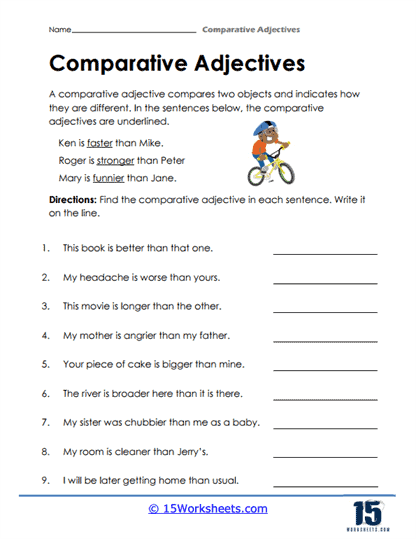
Spot the Comparative Adjective
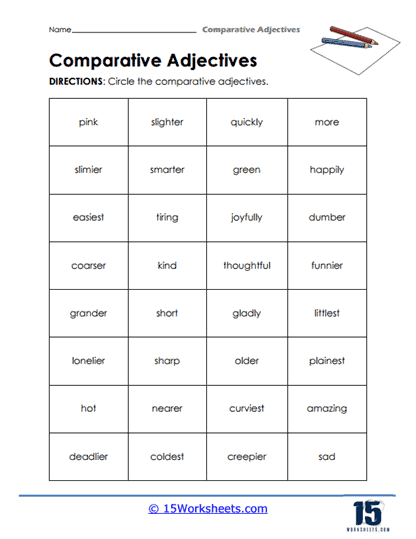
Students read sentences and identify the comparative adjectives. It’s a quick, eye-training activity that sharpens recognition. The task feels like a mini treasure hunt in grammar. Great for building confidence in spotting comparisons.
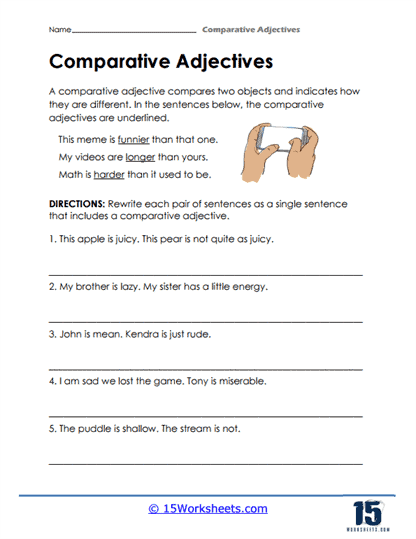
Sentence Synthesis
Learners combine given prompts into complete sentences using comparative adjectives. This teaches them how to weave comparisons naturally into writing. It’s like piecing together a puzzle with words. Perfect for moving from recognition to application.
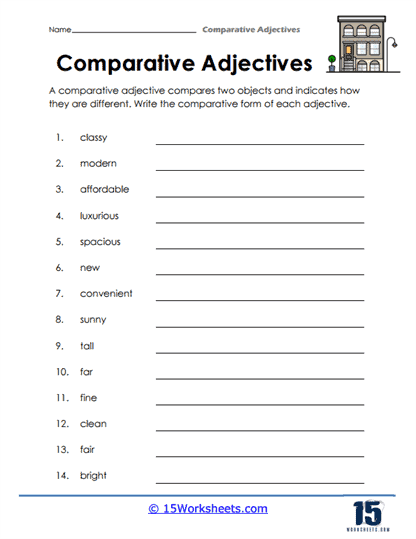
Creating Comparative Forms
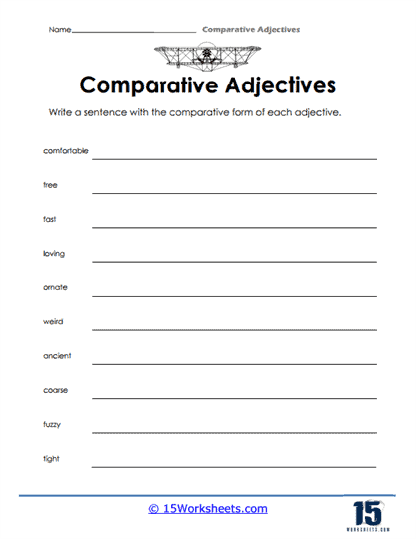
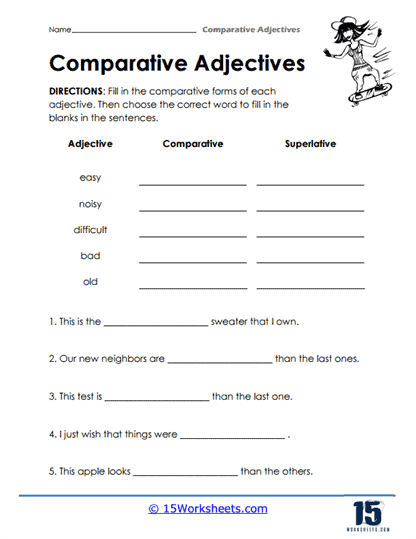
Students take base adjectives and change them into their comparative forms. They get practice with spelling changes and the rules of “-er” vs. “more.” It’s hands-on grammar construction. A solid drill for mastering forms.
What’s the Opposite?
This worksheet asks students to find antonyms and practice making comparisons with them. It encourages thinking about word relationships while using comparatives. The activity adds a layer of vocabulary building. Fun and practical in one.
Transforming Adjectives
Learners rewrite adjectives into their correct comparative versions in context. This strengthens both memory and usage skills. It feels like giving words a makeover. Great reinforcement of spelling rules and usage.
Comparison Word Search
Students search for comparative adjectives hidden in a puzzle grid. It blends play with grammar learning. The activity keeps engagement high while reinforcing recognition. A perfect break from traditional drills.
Find And Use
This worksheet asks learners to pick out adjectives and then rewrite sentences using their comparative forms. It pushes kids to apply rules actively. The task combines reading, writing, and thinking skills. A great way to deepen understanding.
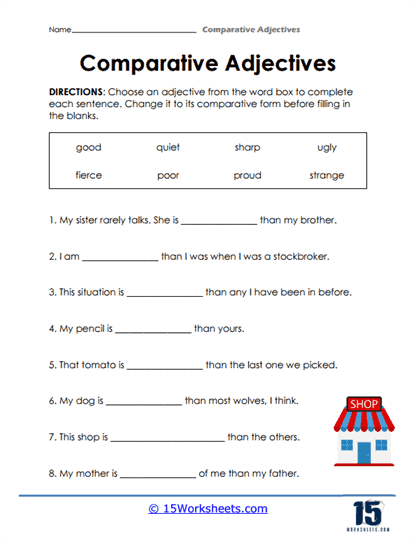
Adjective Fit
Students decide which comparative adjective best fits each sentence. It’s like choosing the right puzzle piece for clarity. The activity builds precision in word choice. Kids gain confidence in selecting the best option.
Constructing Sentences
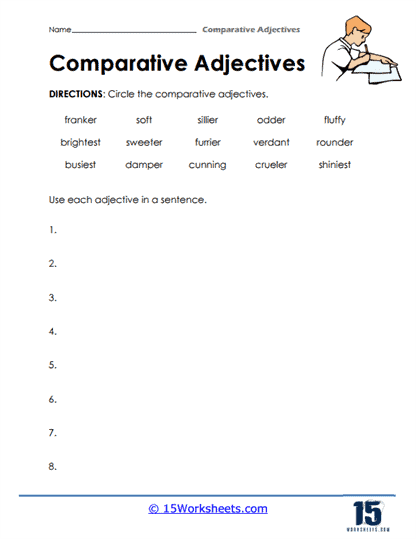
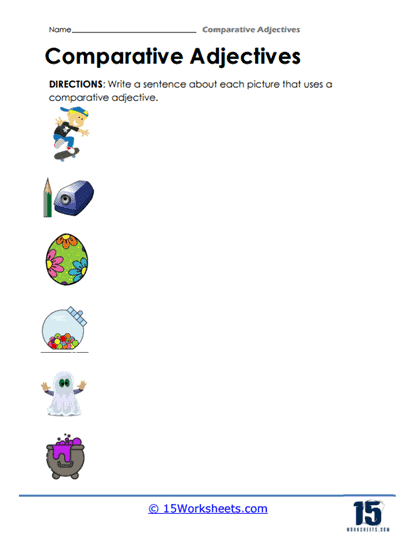
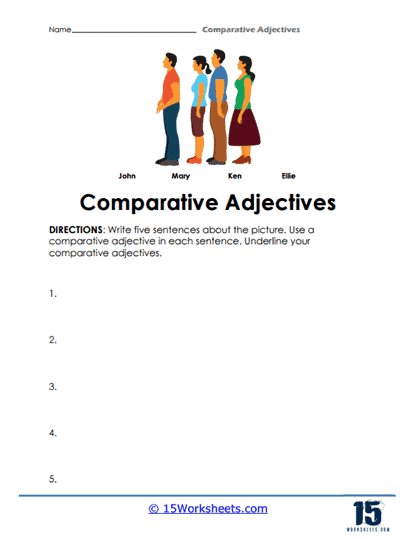
Learners write their own sentences using comparative adjectives. This open-ended activity encourages creativity alongside grammar practice. It’s a chance to see what students can do independently. A good step toward mastery.
Circle the Correct Form
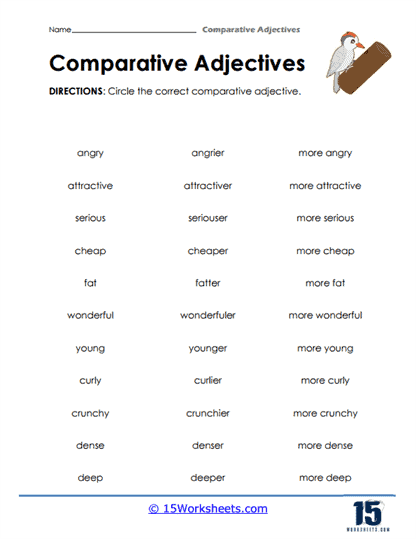
Students are given sentences with two comparative adjective options and must circle the correct one. This tests accuracy and attention to detail. It feels like a quick-fire grammar game. Perfect for review or practice.
Using Comparative and Superlative Forms
Here, kids practice both comparative and superlative adjectives in structured exercises. It reinforces the connection between the two forms. The activity strengthens flexibility in grammar use. A great way to round out comparative skills.
What are Comparative Adjectives?
Comparative adjectives are a type of adjective that is used to compare two nouns or pronouns. They are used to show the difference in degree or quality between two things, people, or ideas. In English grammar, comparative adjectives are formed by adding “-er” to the end of the adjective or by using the words “more” or “less” before the adjective.
For example:
- She is taller than her sister. (taller is the comparative form of the adjective “tall”)
- This book is more interesting than that one. (more interesting is the comparative form of the adjective “interesting”)
Comparative adjectives can also be used with “than” to indicate the noun or pronoun being compared. In this case, the noun or pronoun being compared is placed after “than.”
For example:
- He is smarter than his brother.
- This car is faster than that one.
It is important to note that some adjectives have irregular comparative forms, such as “good” (better) and “bad” (worse).
Comparative adjectives are commonly used in English to make comparisons between two things, people, or ideas. They are essential for effective communication and can help to make language more descriptive and precise.
Using Comparative Adjectives For Deeper Reader Impact
Using comparative adjectives in writing is a powerful stylistic tool that enhances the reader’s understanding and emotional engagement by establishing relationships between two or more elements. A comparative adjective describes the difference in degree between two things, typically ending in “-er” (e.g., smarter, braver, darker) or using “more” or “less” before adjectives that are longer or more complex (e.g., more effective, less interesting). When used thoughtfully, these comparisons help writers highlight contrasts, demonstrate progress, or express subtle shades of meaning, making descriptions and arguments more vivid and persuasive.
For instance, in narrative writing or storytelling, comparative adjectives can create tension or emphasize character development. Consider the sentence: “John was braver than he had ever been before.” This not only shows bravery but implies a past struggle or growth, making the character more compelling. In descriptive passages, saying “the night grew colder than the one before” invites readers to sense a deepening of the atmosphere, evoking emotion and setting a richer tone. The comparisons draw readers into a deeper engagement with the text, as they’re invited to visualize and weigh the differences being described.
In persuasive and analytical writing, comparative adjectives can sharpen arguments by clearly positioning one idea, object, or viewpoint against another. For example, writing that one solution is more efficient than another directly supports an argument and pushes readers to consider the reasoning behind that assertion. It allows for nuanced expression, showing degrees of difference rather than making absolute claims, which can sound overly simplistic or dogmatic. By layering your writing with such degrees, you make your points not only clearer but also more credible and resonant with readers who value balanced and thoughtful insights.