
Adjectives Worksheets

All About These 15 Worksheets
Adjectives might seem small, but they’re mighty little words that can transform plain sentences into something colorful and exciting. Think of them as the spices in language-without them, our sentences can feel bland and flavorless. These worksheets are designed to give kids a fun, structured way to explore how adjectives work and why they matter. With a mix of activities, from circling and underlining to creating sentences of their own, students gradually build comfort and confidence with descriptive language.
This collection of worksheets doesn’t just drill definitions-it gets students thinking about adjectives in context. By looking at pictures, playing detective with sentences, or flipping adverbs into adjectives, learners get to interact with words in multiple ways. That variety makes it easier for different kinds of learners to connect with the material. It’s all about practice that feels fresh instead of repetitive.
And here’s the bonus: learning adjectives isn’t just about grammar, it’s about communication. These worksheets show kids how adjectives connect to real-world conversation, storytelling, and even everyday choices (like “Do you want the big cookie or the small one?”). Practicing adjectives builds better reading comprehension and writing skills while also giving kids the tools to express themselves clearly. It’s grammar with a side of life skills.
Have a Look Inside Each Worksheet
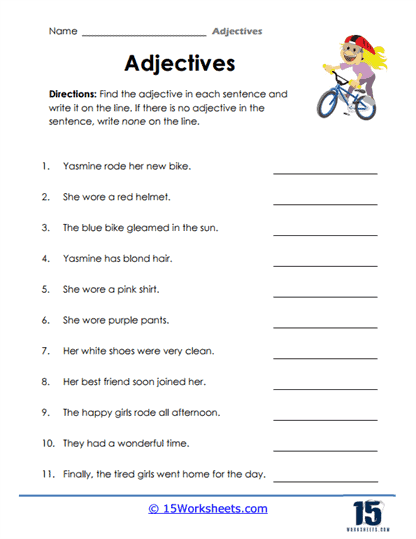
Is There an Adjective?
This worksheet asks students to scan sentences carefully to spot the describing word hiding inside. It’s a great way to sharpen their grammar radar while reinforcing what adjectives actually do. Kids get to decide whether each sentence has an adjective or not, which turns it into a mini detective game. Perfect practice for solidifying the role of adjectives in everyday writing.
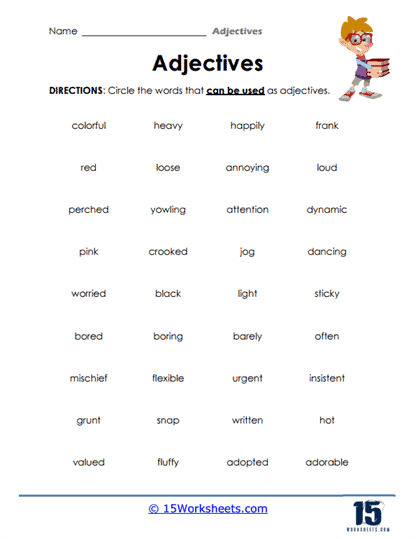
Can It Be Used as an Adjective?
Here, learners explore how certain words can act as adjectives depending on context. They’ll test their skills by deciding if a word is functioning as a describing word or not. This activity builds flexibility in thinking about word usage and sentence structure. It makes grammar feel less rigid and more like a puzzle to solve.
Adverbs to Adjectives
In this worksheet, students practice converting adverbs into adjectives. They’ll see how slight changes in word endings can completely change a word’s role in a sentence. The exercise helps with spelling patterns, grammar awareness, and vocabulary building. Kids will enjoy experimenting with words as if they’re playing with building blocks of language.
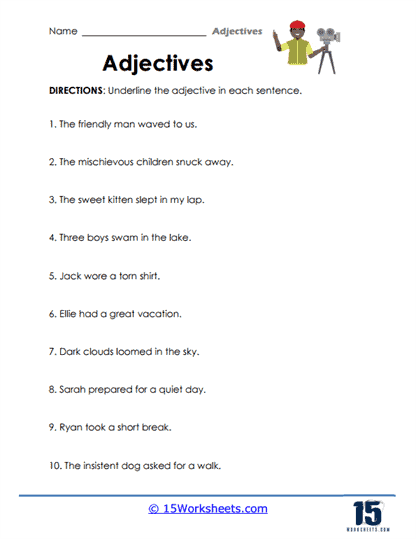
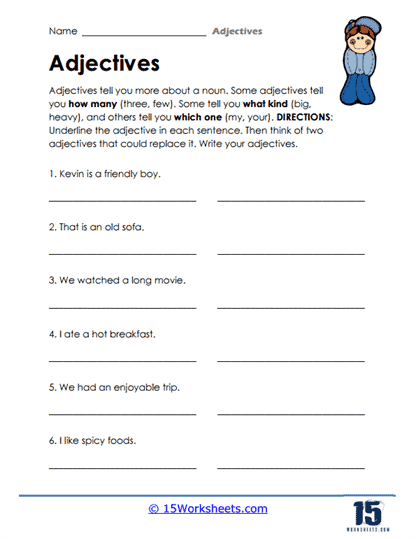
Underline the Adjective
Students read through sentences and underline the adjectives they find. This activity helps train the eye to quickly spot descriptive words in a sea of text. It’s simple, straightforward, and reinforces the idea that adjectives add detail and flavor. A great choice for boosting both grammar confidence and reading comprehension.
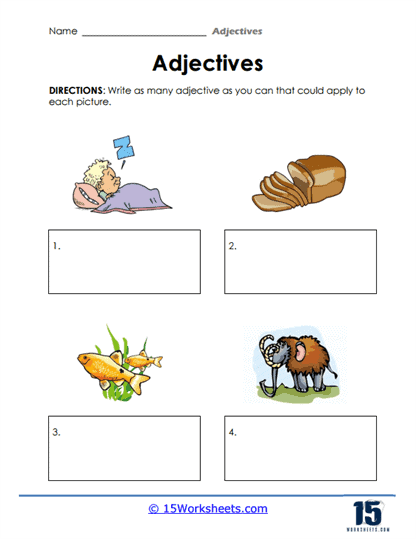
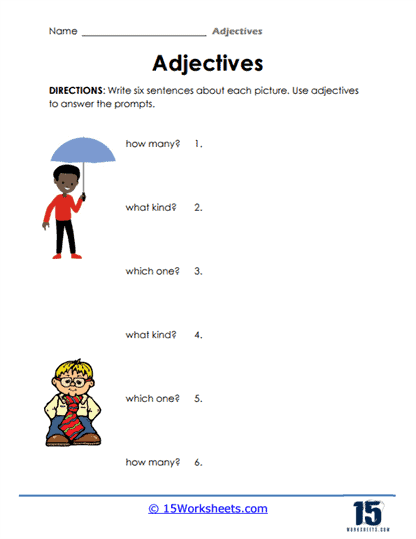
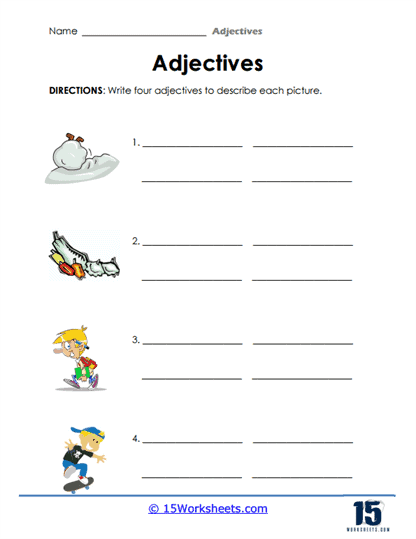
Describe the Pictures
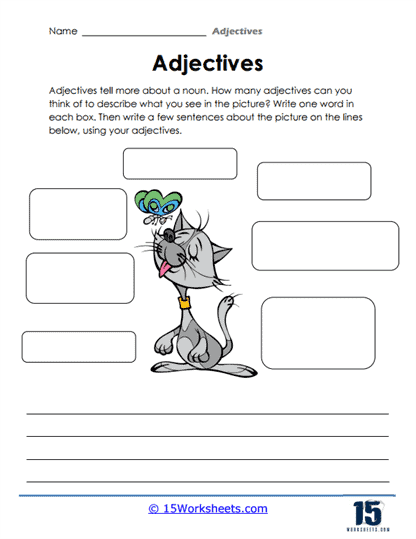
This worksheet invites kids to look at illustrations and come up with adjectives to describe them. It sparks creativity while tying vocabulary directly to visual cues. Learners practice expanding their word bank beyond “nice” or “big.” It’s a fun mix of art observation and descriptive language skills.
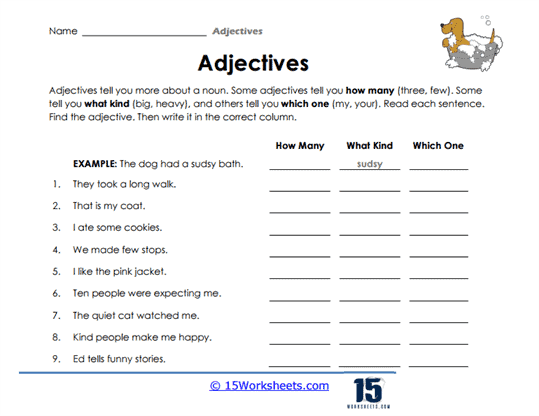
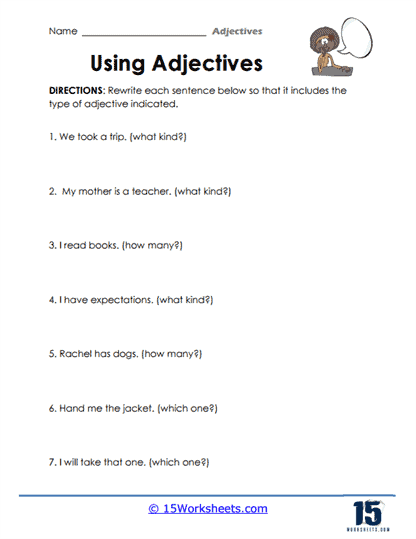
How, What, or Which
Students practice choosing the correct question word-“how,” “what,” or “which”-to pair with adjectives. This helps them understand how adjectives often work in questions about detail. It’s a neat way to blend grammar with logical thinking and everyday phrasing. Kids will get a kick out of solving these little grammar riddles.
Write Similar Adjectives
This worksheet encourages students to brainstorm adjectives that are similar in meaning. It builds word association skills and helps them expand their vocabulary set. The activity feels a bit like a word challenge or mini thesaurus hunt. It’s a creative way to make kids more confident writers.
Where is the Adjective?
Here, learners identify the position of adjectives in sentences. They’ll notice whether the describing word comes before a noun or after a linking verb. This trains their understanding of sentence structure and placement rules. It’s a detective-style task that sharpens both grammar and syntax awareness.
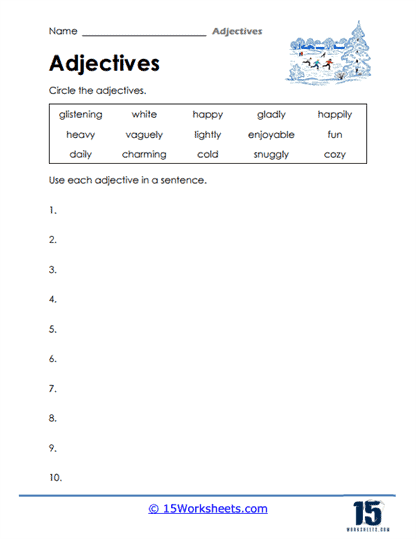
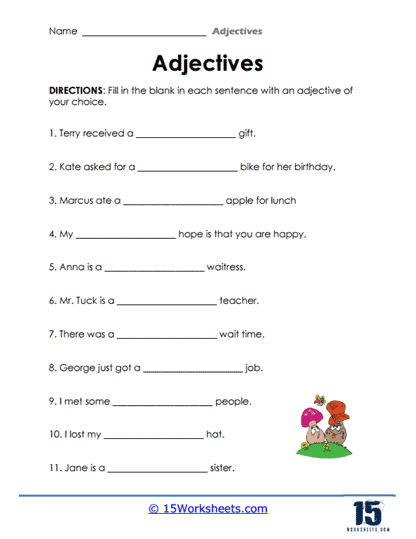
Use Adjectives in Sentences
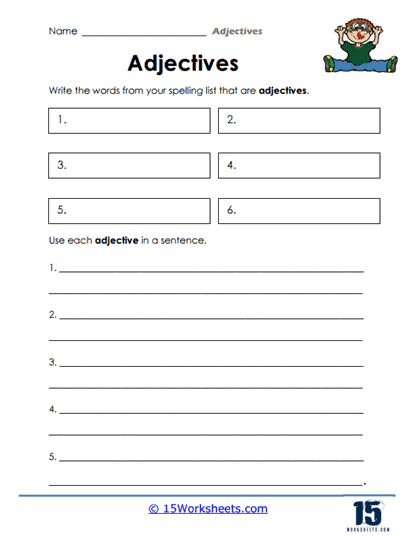
This worksheet asks students to create full sentences using given adjectives. It encourages them to think beyond single words and into full expression. Kids strengthen writing skills by practicing how adjectives make sentences more colorful. It’s hands-on and a great stepping stone toward stronger composition.
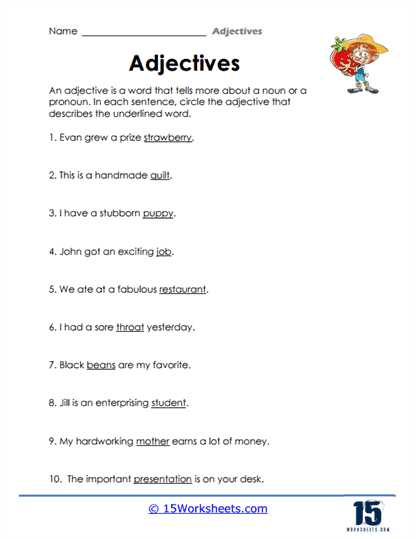
Circle and Write
In this one, students circle the adjectives in sentences and then use them in their own writing. The two-step process reinforces recognition and application. It’s a nice blend of reading and writing practice in one page. Learners get to see adjectives in action and then put them to work themselves.
What are Adjectives?
Adjectives are the words we use when we want to add a little sparkle to our sentences. Without them, we’d be stuck saying things like “the dog ran,” but with them, we can say “the fluffy, excited dog ran quickly.” Suddenly, the sentence has personality! Adjectives describe nouns, and they’re all about making language more detailed, specific, and fun.
They matter because adjectives help us paint pictures with words. If you’ve ever told someone your pizza was “cheesy,” “crispy,” or “delicious,” then congratulations-you’ve used adjectives in real life! We use them every day when we make choices, describe things to others, or share our thoughts in writing. They make language more interesting and also more precise.
These worksheets give students a hands-on way to understand and practice adjectives. Instead of just memorizing a definition, kids get to use adjectives in sentences, spot them in context, and even invent their own descriptive words. By the end, learners won’t just know what adjectives are-they’ll feel comfortable using them to make their writing (and speaking) more vivid and expressive.