
I Statements Worksheets
All About These 15 Worksheets
Learning how to use “I statements” is like unlocking a secret code to better communication. Instead of pointing fingers or placing blame, these worksheets show kids how to take ownership of their feelings and needs. By practicing through role-play, sentence starters, and real-life scenarios, students discover that words really do shape outcomes. The result? More respectful conversations, fewer conflicts, and stronger relationships.
This collection gives learners many ways to build confidence with “I statements.” Some worksheets focus on the structure itself, while others dive into everyday situations where it’s helpful to practice. By switching from “you” to “I,” students begin to see how much softer, clearer, and more constructive their words can be. The variety of activities-from fill-in-the-blanks to scenario practice-keeps things engaging and practical.
These worksheets don’t just stay in the classroom-they give kids tools they can use with friends, family, and beyond. Practicing “I statements” encourages empathy, listening, and cooperation. Over time, students develop skills that help them navigate challenges with maturity and kindness. It’s communication training that feels small in the moment but pays off in big ways.
Have a Look Inside Each Worksheet
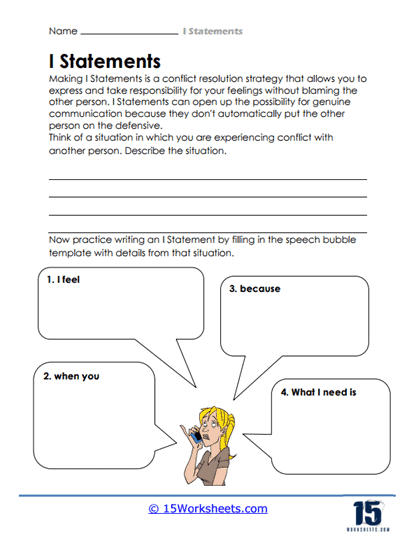
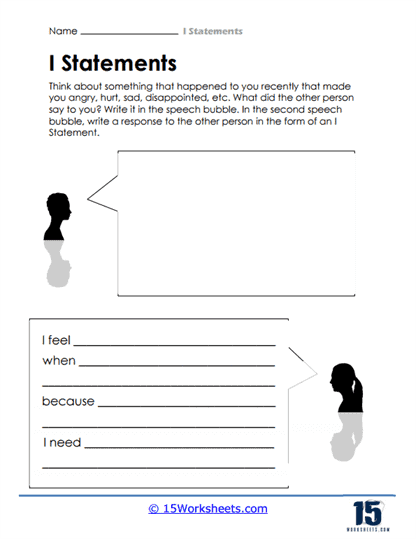
Speech Bubbles
Students practice filling in speech bubbles with “I statements,” making it a fun way to role-play real conversations. This activity helps learners see how their words can shift from blame to ownership while keeping things visual and interactive. Adding elements like bubble letter practice can make the exercise even more engaging, as students connect creative writing styles with clear communication.
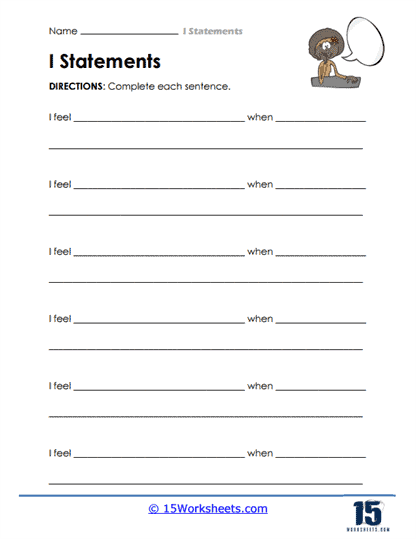
Different Feelings
Here, kids match feelings with situations and then form “I statements.” They learn to recognize and name emotions clearly. The activity helps build emotional vocabulary and self-expression. It supports empathy and healthy communication skills.
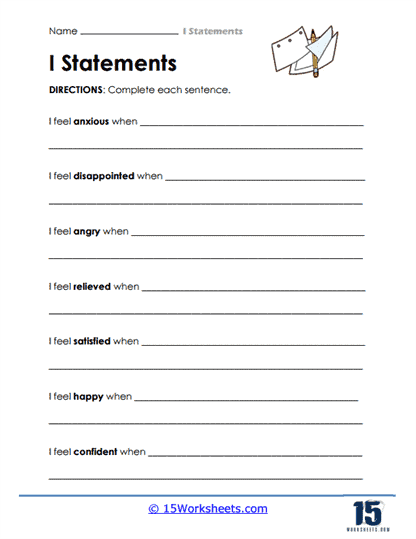
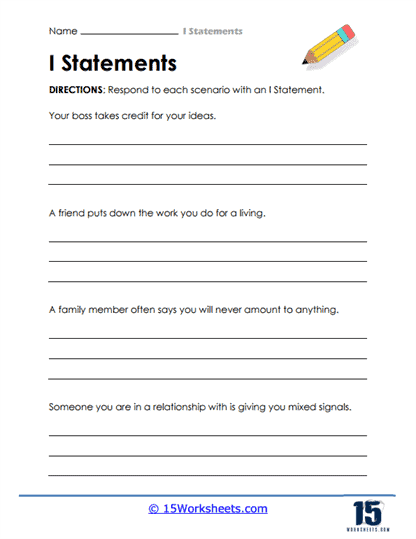
Express Your Emotions
Students take common situations and rewrite their responses as “I statements.” It’s all about turning reactions into constructive dialogue. The worksheet encourages kids to pause and reflect before speaking. This builds self-awareness and thoughtful communication.
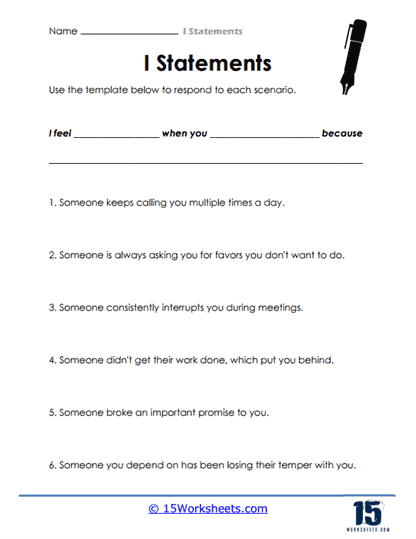
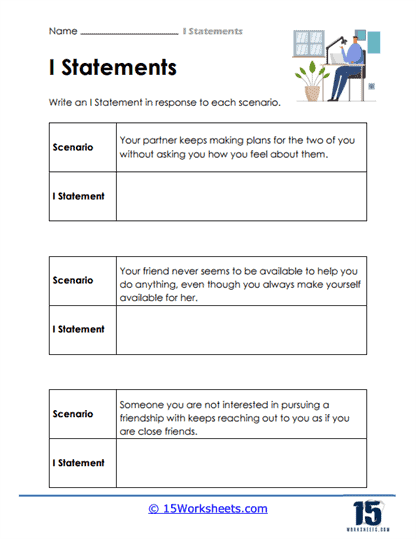
Interpersonal Situations
Learners explore everyday scenarios and apply “I statements” to them. It shows how this tool works in real relationships. The activity helps prevent blame and encourages respectful dialogue. Students practice conflict resolution in a safe, structured way.
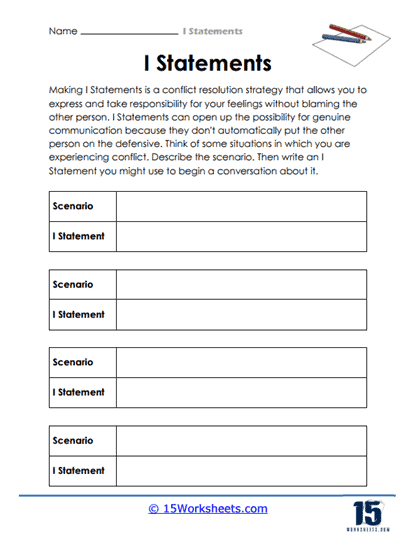
Begin A Conversation
This worksheet guides students on how to start tough talks with “I statements.” It provides sentence starters for smoother communication. Learners see how taking the first step can make a big difference. It supports courage and kindness in conversations.
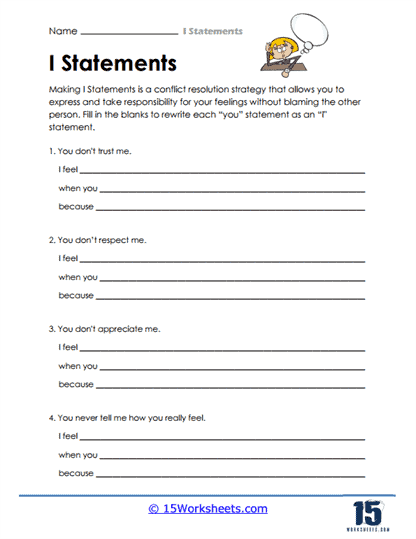
From “You” To “I”
Students transform blaming “you” statements into positive “I” statements. It’s a practical exercise that highlights the difference in tone. This helps them understand how small wording shifts change communication outcomes. It strengthens empathy and problem-solving skills.
Offering Solutions
Here, kids practice not just stating their feelings but suggesting solutions too. The worksheet promotes constructive problem-solving. It shows that “I statements” aren’t just about emotions, but also about finding ways forward. Students learn collaboration and compromise.
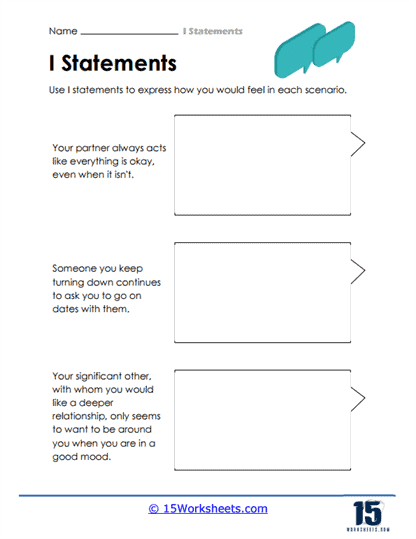
How Would You Feel?
Learners imagine how they’d feel in given situations and craft “I statements.” It’s a reflective activity that strengthens emotional awareness. Students get better at putting themselves in others’ shoes. The worksheet promotes empathy and perspective-taking.
Scenario Practice
This worksheet provides short stories where students apply “I statements.” It helps bridge theory with real-world use. Kids see how communication tools fit into daily life. It makes the learning both practical and memorable.
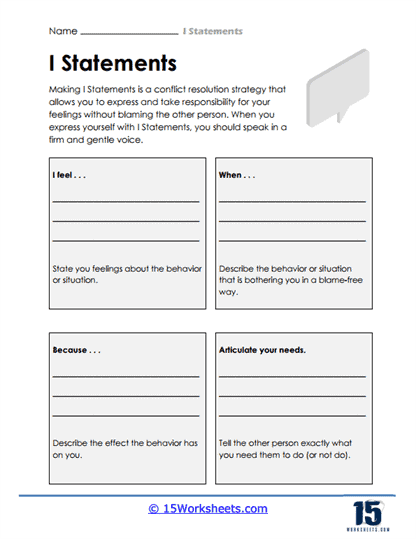
Articulate Your Needs
Students practice clearly stating what they need using “I statements.” It builds confidence in asking for support without guilt or blame. The activity reinforces positive assertiveness. It helps learners feel heard and respected.
Learn To Respond
Here, kids practice responding to others’ “I statements” in healthy ways. They see that communication is a two-way street. This worksheet strengthens listening skills and respectful dialogue. It prepares them for real conversations beyond the classroom.
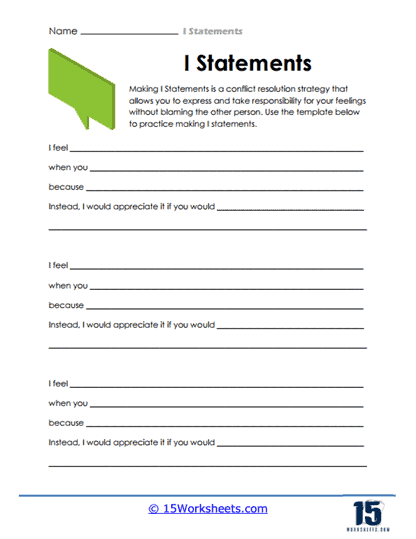
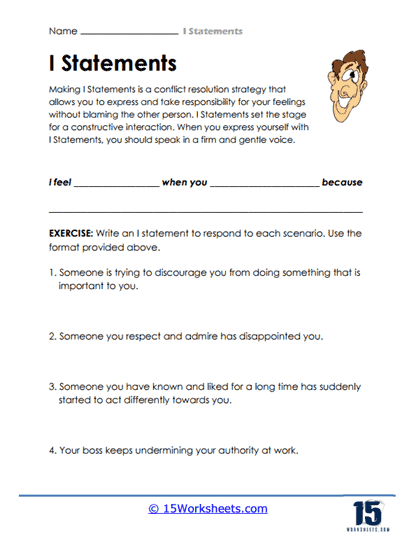
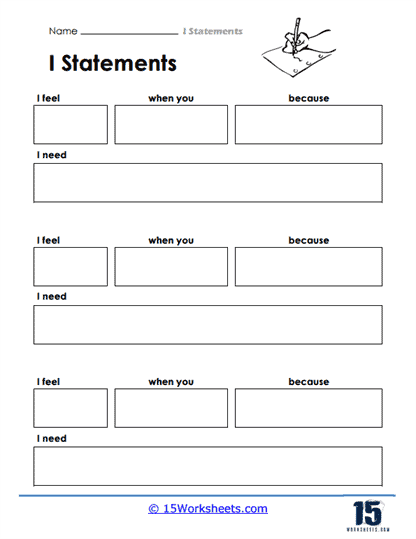
Follow The Formula
This activity teaches the step-by-step structure of an “I statement.” Students use a fill-in-the-blank formula to get it right. It’s a simple yet effective way to master the skill. The worksheet makes communication more approachable and less intimidating.
A Recent Happening
Learners reflect on a real event in their lives and rewrite it with “I statements.” This makes the activity personal and meaningful. It connects classroom practice with real experiences. The worksheet encourages honest self-reflection.
Effective Self-Expression
Students practice turning thoughts and emotions into clear, respectful statements. It builds confidence in sharing feelings. The activity reduces miscommunication and conflict. Kids learn to express themselves without fear.
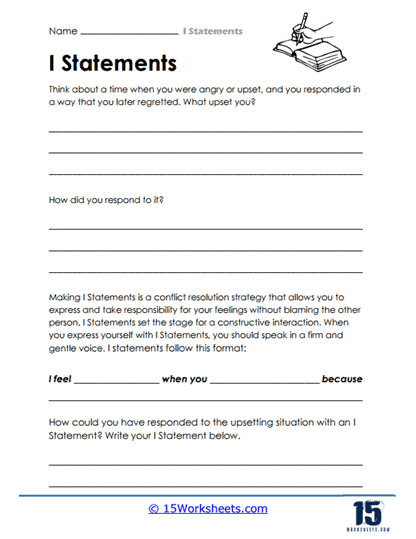
Rethink Your Reactions
This worksheet challenges kids to revisit how they typically react and rewrite it as an “I statement.” It helps break old habits of blaming or snapping. The activity encourages mindfulness in communication. Students discover how different words can lead to better outcomes.
What Are I Statements?
“I statements” or “I-messages” are a communication technique used to express one’s feelings, thoughts, or needs in a non-confrontational and assertive manner. They are often employed in conflict resolution and interpersonal communication to avoid placing blame or making accusations, and instead focus on one’s personal perspective and emotions. By using “I statements,” individuals can reduce defensiveness in the listener and foster a more open and productive dialogue.
An “I statement” typically includes three components:
1. Feeling or Emotion
Start by stating how you feel or what emotion you are experiencing in response to a particular situation. This allows the listener to understand your emotional perspective without feeling attacked or judged.
Example: “I feel…”
2. The Specific Event or Behavior
Describe the event or behavior that triggered your emotion, without making generalizations or assumptions about the other person’s intentions.
Example: “I feel… when you…”
3. The Impact or Effect
Explain the impact of the event or behavior on you, your needs, or your well-being. This can help the listener understand why the situation is important to you and what you need to resolve the issue.
Example: “I feel… when you… because…”
For example, instead of saying, “You never listen to me,” which may cause the listener to become defensive, you could use an “I statement” like, “I feel ignored when you look at your phone while I’m talking because it seems like my thoughts and feelings aren’t important to you.”
By using “I statements,” you can communicate more effectively, reduce tension in conflicts, and create a positive environment for resolving issues and building stronger relationships.