
Autobiographical Writing Worksheets





All About These 15 Worksheets
Autobiographical writing is one of those assignments where students don’t just practice writing skills-they get to tell their own story. These worksheets walk learners through the process step by step, from brainstorming a topic to organizing details and adding reflections. Along the way, kids discover that their own lives are full of powerful stories worth sharing. The process turns writing from something abstract into something deeply personal.
The variety in this collection keeps the work engaging. Some worksheets focus on planning and outlining, while others zoom in on descriptive details, emotions, or reflections. Students get practice in both the “nuts and bolts” of essay structure and the creative side of crafting vivid, meaningful narratives. Each sheet nudges them closer to producing a polished autobiographical essay without overwhelming them all at once.
And perhaps most importantly, these worksheets encourage self-reflection. Students don’t just write about what happened-they think about what it meant and how it shaped them. Teachers will appreciate the balance of technical skill-building and personal growth. Parents will love how it helps kids express themselves in a thoughtful, organized way.
Have a Look Inside Each Worksheet
The Most Important Thing
Students identify the one key moment or lesson from their life that means the most to them. It’s like choosing the “highlight” of a real-life story. This activity helps them zoom in on what really matters when telling their story. It supports clarity and emotional connection in autobiographical writing.
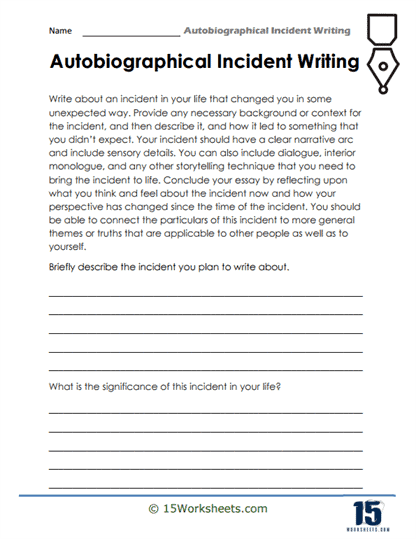
What Is It?
Here, students define or describe the event they’ll write about, helping turn fuzzy memories into clear ideas. It’s like answering “What even happened?” before diving into the details. This builds precision and focus in their writing plan. It supports intentional storytelling.
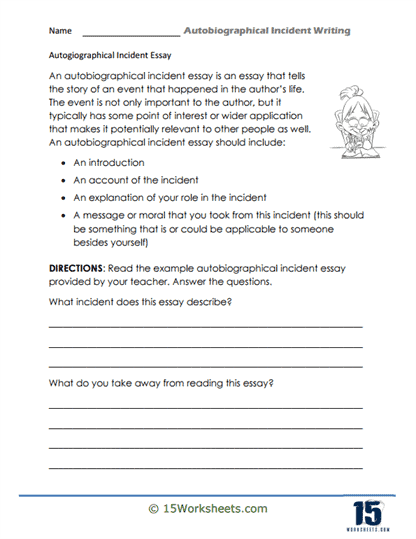
Read The Example
Students read a sample autobiographical excerpt to see structure, tone, and voice in action. It’s like watching a demo before trying something for yourself. They learn how real writing flows and what makes a story engaging. It supports modeling strong narrative craft.
Three Incidents
Students brainstorm or outline three possible life episodes they might write about. It’s like listing your top contenders before picking the winner. This expands options and creativity while focusing reflection. It supports choice and selection.
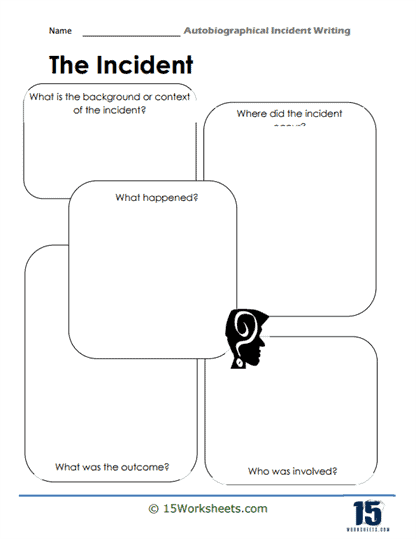
What Happened?
Here, students outline the sequence of a chosen incident-what happened, when, and to whom. It’s like sketching the action plan for your story. The activity builds narrative structure and clarity. It supports coherent storytelling.
Assess Your Role
Students reflect on their own part in the incident-what did they do, feel, or learn? It’s a moment of self-reflection embedded in the writing process. This deepens emotional insight and perspective. It supports authenticity in narrative voice.
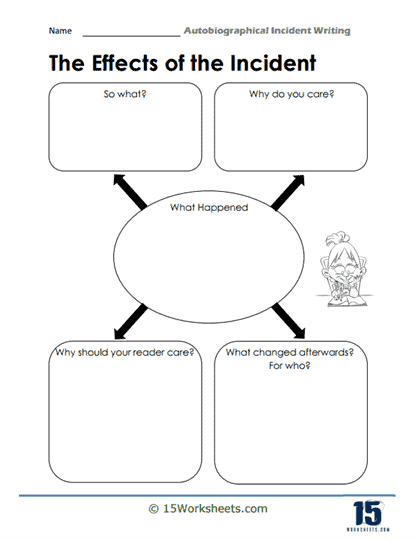
The Aftermath
Learners explore what changed afterward-how the incident affected them or others. It’s like writing the “so then what happened?” part of a story. The activity links experience to growth or lesson. It supports reflective closure and meaning-making.
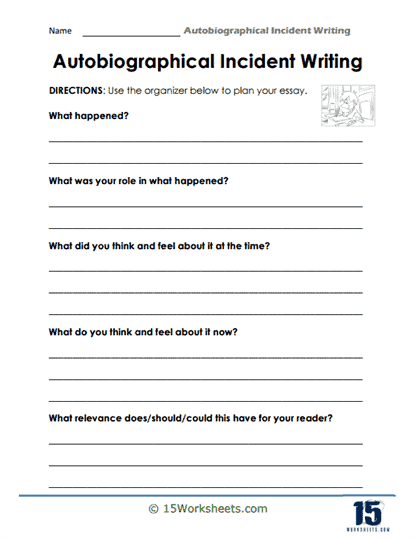
Plan Your Essay
Here, students map out their essay’s structure-intro, body, and conclusion-like a roadmap for their narrative. It’s a planning tool that turns ideas into organized writing. It strengthens planning habits and structure awareness. It supports intentional essay design.
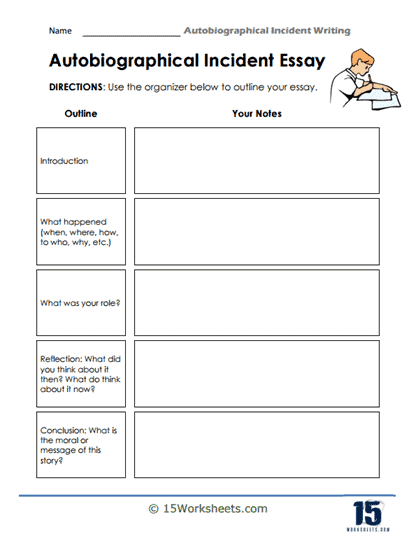
Outline Organizer
This worksheet offers a structured graphic organizer to flesh out the main parts of the autobiographical essay. It’s like a visual puzzle that pieces the narrative together. It boosts organization, clarity, and flow. It supports visual planning.
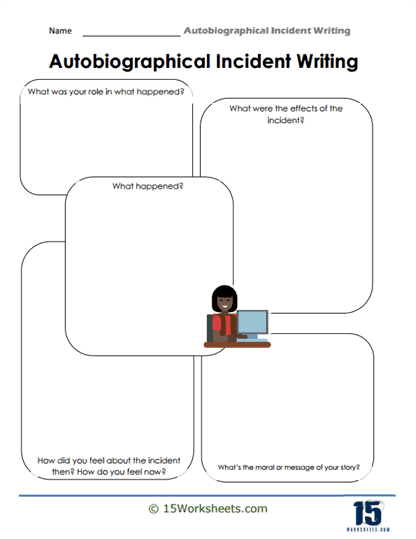
Five Squares
Students use a grid or “five squares” organizer, likely dividing the story into key parts or descriptive chunks. It’s a creative way to break stories into bite-sized pieces. It aids chunking and pacing in the narrative. It supports manageable storytelling steps.
Meeting The Criteria
Here, students check their work against key requirements for the essay-like including sensory details or reflection. It’s like self-checking your homework before turning it in. It builds awareness of expectations and completeness. It supports quality control.
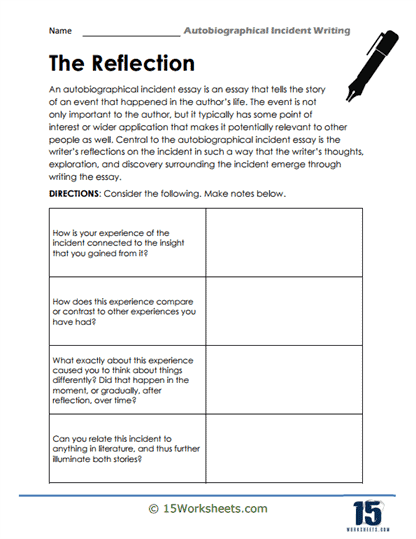
The Reflection
Students write a reflective paragraph-what the incident meant to them, lessons learned, or emotions felt. It’s the “why this matters” section of the personal story. This task deepens emotional depth and self-awareness. It supports reflective writing.
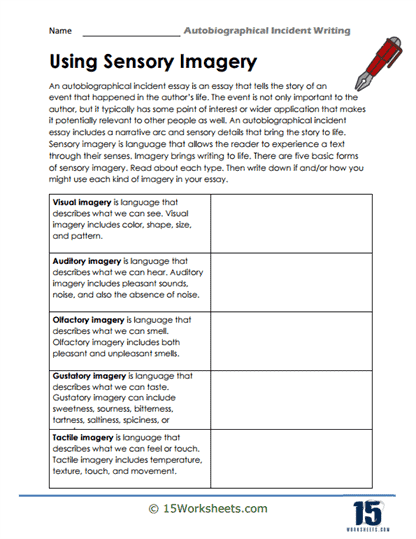
Using Sensory Imagery
Students practice adding sensory details (sight, sound, smell, touch, taste) to bring their stories alive. It’s like sprinkling magic dust on memories to make readers feel them. This builds vivid, immersive storytelling. It supports descriptive richness.
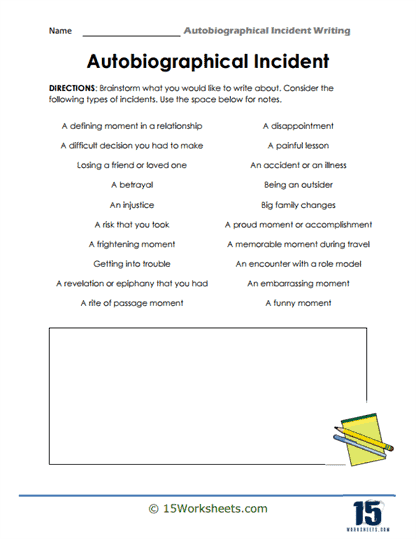
Brainstorm Your Topic
Here, students generate ideas for their autobiographical essay by brainstorming possible incidents or themes. It’s like opening the memory vault and dumping out all the ideas. This unlocks creativity and helps pick a strong topic. It supports idea generation.
Explaining The Significance
Students reflect on why their chosen story matters-perhaps asking “why does it matter?” or “what can others learn?” It’s like writing the moral of your story. This helps link personal narrative to universal meaning. It supports purposeful reflection and audience connection.
How to Compose an Autobiographical Incident Essay
An autobiographical incident essay is a type of narrative essay that is based on your personal experience. Unlike other types of essays, such as an argumentative essay, the purpose of an autobiographical incident essay is not to persuade or argue a point. Instead, its purpose is to give the reader a glimpse into your life and allow them to learn something about you.
The autobiographical incident essay is a popular assignment in high school and college courses. It asks students to recount a specific life experience and analyze how it shaped their worldview. But writing an autobiographical incident essay can be tricky – here are some tips to help you get started.
Brainstorm Important Events of Your Life
When writing an autobiographical incident essay, it is crucial to focus on a single event that had a significant impact on your life. This event can be something positive, such as overcoming a challenge, or something negative, such as dealing with a difficult situation. Either way, the key is to write about an event that has helped shape who you are today.
If you are having trouble deciding which event to write about, try brainstorming a list of significant moments in your life. Once you have narrowed down your choices, take some time to reflect on what made that particular event so impactful. What lessons did you learn? How did it change your perspective? By answering these questions, you will be able to identify the key elements you need to include in your essay.
Share a Personal Experience That Represents You
One of the best ways to write an autobiographical incident essay is to focus on a single, significant event that represents you. This could be something like a first kiss, a moment of success or failure, or a time when you faced a challenge.
By focusing on one particular event, you can avoid getting bogged down in too much detail. It’s also important to be honest and open when writing about your life. Don’t shy away from sharing your deepest emotions or most personal thoughts. Instead, let your essay be a true reflection of who you are as a person.
When done correctly, an autobiographical incident essay can be a powerful and moving expression of your life story.
Reflect on What You Have Learned from The Experience
When writing an autobiographical Incident Essay, try to reflect on your experiences. When we write about our own experiences, we can often see them in a new light. This also helps us to learn new things about ourselves that we never knew before.
In addition, by sharing our stories with others, we can help them understand our unique perspectives. In this way, an autobiographical incident essay can be both personally enlightening and helpful to others.
Provide Readers with Some Food for Thought
A well-written autobiographical incident essay will leave readers with something to think about long after they finish reading. Whether you want to share a personal experience that has shaped who you are, describe a significant event from your childhood, or simply give readers a glimpse into your life, it is essential to include enough detail to paint a complete picture.
However, you also want to leave some room for interpretation. Think about what you want your readers to take away from your essay, and use subtlety and ambiguity to leave them with more to think about than just the facts of your story. This way, you can create an autobiographical incident essay that is both memorable and thought-provoking.