
Technical Writing Worksheets
About Our Technical Writing Worksheets
Technical writing is all about communicating information clearly, accurately, and efficiently. Whether creating instructions, reports, manuals, research documents, or presentations, writers must organize information in a way that helps readers understand and use it effectively. Our Technical Writing Worksheets introduce students to the essential skills needed to create professional and purposeful documents. Through planning activities, research exercises, revision checklists, and organizational tools, students learn how strong technical writing combines clarity, structure, and audience awareness.
This collection explores every stage of the technical writing process. Students learn how to prepare for writing, conduct research, organize information, use headings, integrate graphics, write reports, evaluate sources, cite references, collaborate on projects, and revise their work. The worksheets also introduce important ethical considerations and professional standards that guide technical communication. By working through these activities, students gain a well-rounded understanding of how technical documents are planned, created, and refined.
Technical writing skills are valuable far beyond the classroom. Professionals in science, technology, business, healthcare, engineering, education, and countless other fields rely on technical communication every day. Learning how to present information clearly helps students become stronger communicators, better researchers, and more effective problem-solvers. These worksheets provide practical experience with the skills needed to create documents that are organized, useful, and easy for readers to understand.
About Each Worksheet
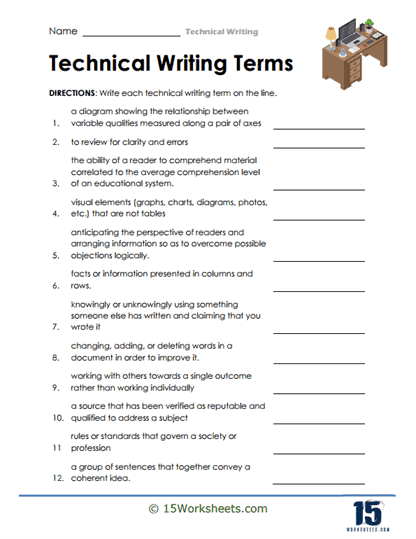
Technical Terms
Learning a new subject often starts with learning its vocabulary, and this worksheet helps students build a strong technical writing foundation. Matching terms to definitions gives learners a chance to become familiar with the language professionals use every day.
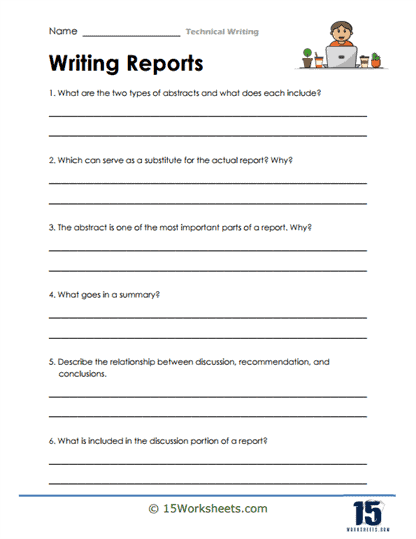
Writing Reports
Reports can seem intimidating until students understand how each section serves a purpose. This worksheet helps break down abstracts, summaries, conclusions, and recommendations into manageable pieces.
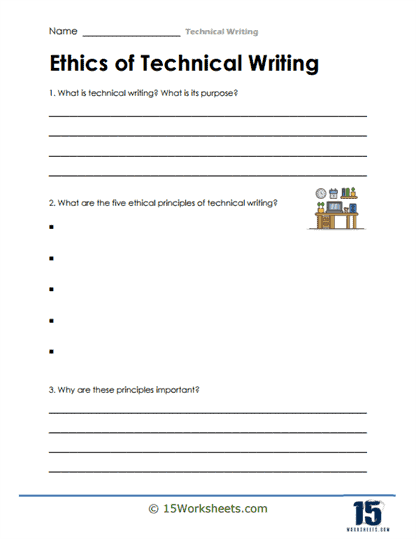
Ethics Of Technical Writing
Technical writing isn’t just about being clear-it’s also about being responsible. This activity encourages students to think about honesty, accuracy, and the ethical principles that guide professional communication.
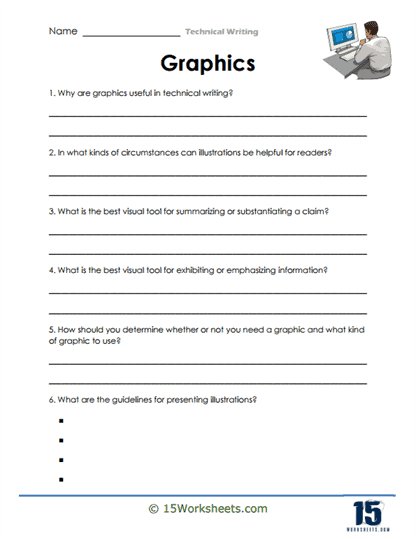
Inserting Graphics
A well-chosen visual can sometimes explain more than an entire paragraph. This worksheet helps students decide when graphics are helpful and how to select the best type for a specific purpose.
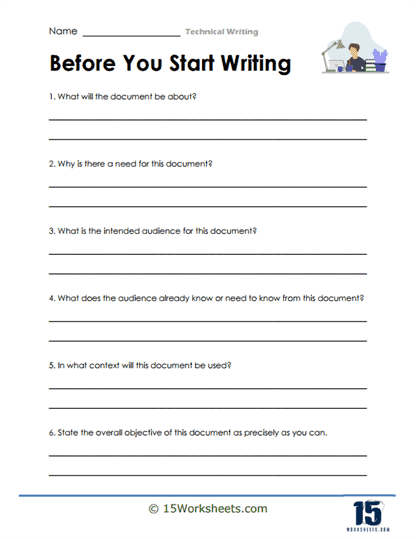
Before You Start Writing
Strong technical documents begin long before the first sentence is written. This planning activity encourages students to think carefully about audience, purpose, and goals before they begin drafting.
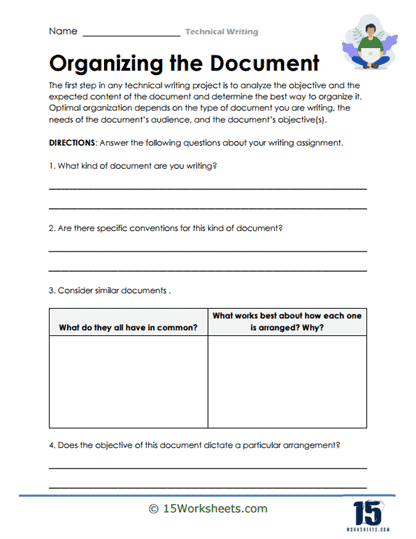
Organizing The Document
Every successful document needs a logical structure, and this worksheet focuses on building one. Students explore how organization choices can improve readability and make information easier to find.
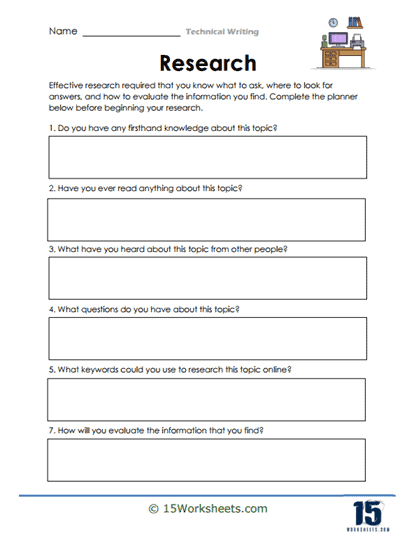
Effective Research
Good technical writing starts with good information, and this worksheet helps students develop thoughtful research habits. It encourages learners to evaluate sources carefully and plan their research strategically.
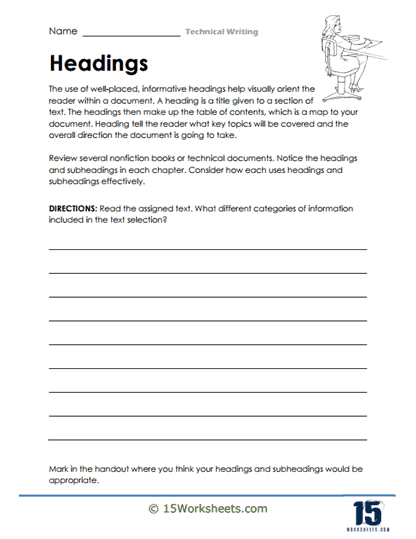
Headings
Headings act like signposts that guide readers through a document. This worksheet helps students recognize how headings improve organization and make complex information easier to navigate.
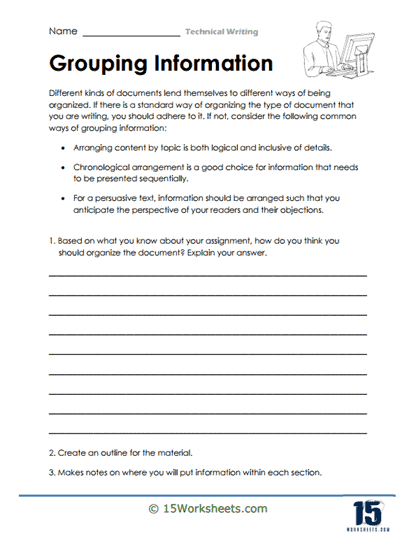
Grouping Information
Not all information belongs in the same place, and this activity helps students figure out where ideas fit best. Creating outlines and organizing sections teaches valuable planning and organizational skills.
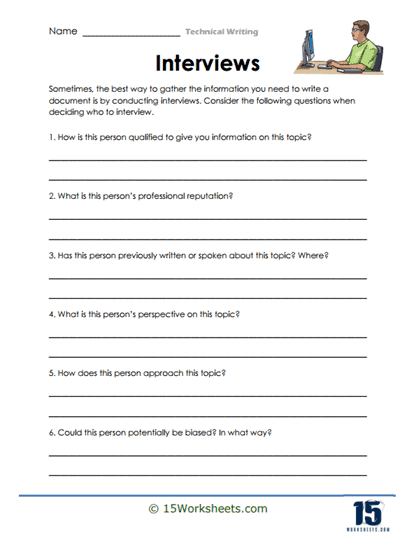
Interviews
Sometimes the best information comes directly from people with experience and expertise. This worksheet helps students evaluate potential interview sources and prepare for effective information gathering.
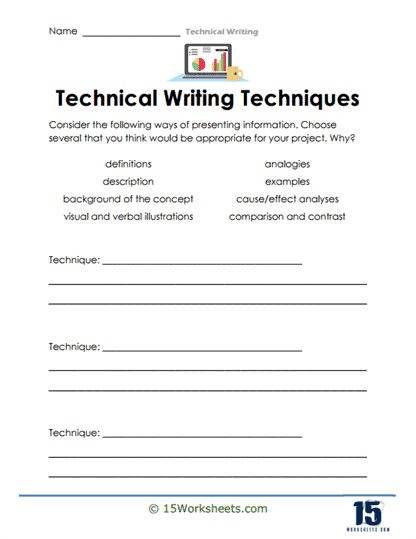
Technical Writing Techniques
There are many ways to explain an idea, and this worksheet introduces students to several useful approaches. From definitions to comparisons and examples, learners explore techniques that improve clarity and understanding.
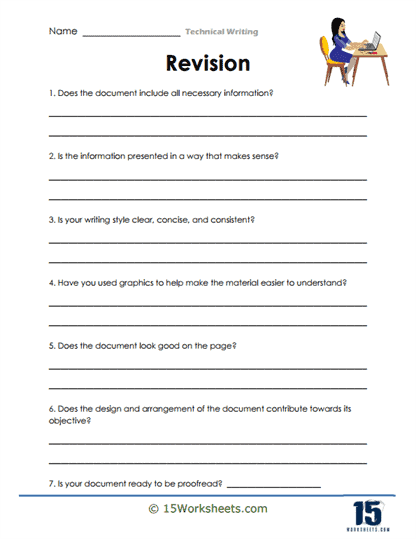
Revision
Writing is only part of the process; refining it is just as important. This worksheet provides a practical checklist that helps students strengthen their documents before final proofreading.
The Big Outline
Big writing projects become much more manageable when students have a clear plan. This worksheet helps learners think through audience, purpose, context, and structure before getting started.
Citing Technical Sources
Giving credit to sources is an important part of responsible writing. This worksheet helps students learn citation formats while reinforcing the importance of academic integrity.
Planning For Collaboration
Many technical documents are created by teams rather than individuals. This activity introduces students to project planning, delegation, scheduling, and the teamwork skills needed for successful collaboration.
What is Technical Writing?
Technical writing is a type of communication that focuses on explaining information clearly and accurately so readers can understand and use it. Unlike creative writing, which is often designed to entertain, technical writing is primarily intended to inform, instruct, or guide. It appears in manuals, reports, instructions, proposals, research documents, training materials, and many other forms of professional communication. The goal is always to make information as clear and useful as possible.
One of the most important features of technical writing is audience awareness. Technical writers must consider who will read the document, what readers already know, and what information they need. This influences everything from word choice and document organization to the use of graphics and examples. Effective technical writing removes confusion and helps readers complete tasks, solve problems, or understand complex information more easily.
Technical writing is used in nearly every industry and profession. Engineers write reports, healthcare professionals create instructional materials, businesses produce training guides, and researchers publish technical findings. Because clear communication is so important in these fields, technical writing remains one of the most valuable practical writing skills students can learn. Developing these abilities helps students become stronger communicators and prepares them for future academic and professional success.