
Thesis Statements Worksheets
All About These 15 Worksheets
A thesis statement is kind of like the “mission control” of an essay – it tells the reader what’s about to launch and sets the direction for everything that follows. Without one, essays can float all over the place, leaving readers unsure what the point really is. With one, though, the whole piece feels focused, organized, and (dare we say) impressive.
This collection of worksheets helps students practice every angle of thesis-building, from brainstorming ideas to refining the final sentence. Some activities are light and exploratory, like filling in prompts or comparing simple sentences with real thesis statements. Others dig deeper, encouraging kids to break down examples, add supporting points, or connect their thesis to a full introduction paragraph. It’s a mix of recognition, creativity, and step-by-step guidance – so no matter where a student is starting, they can find their way.
And it’s not just about writing for school. The ability to craft a clear thesis teaches kids how to take a position, defend it, and explain it to others – skills that matter in conversations, presentations, and even everyday debates about movies, pizza toppings, or the best vacation spot. These worksheets give them the tools to feel confident shaping their ideas into strong, clear statements that guide the rest of their writing.
Have a Look Inside Each Worksheet
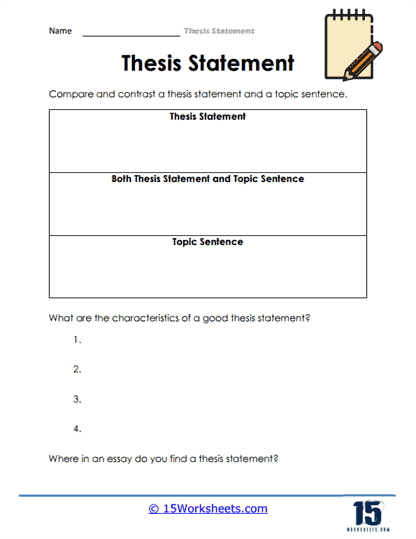
Compare And Contrast
Students probably write thesis statements that compare two things (objects, ideas, positions) or contrast them. They’ll practice making a thesis that handles both sides, or frames an argument around similarities/differences. Builds skill in balancing complexity and clarity. Helps sharpen analytical thinking and structuring essays.
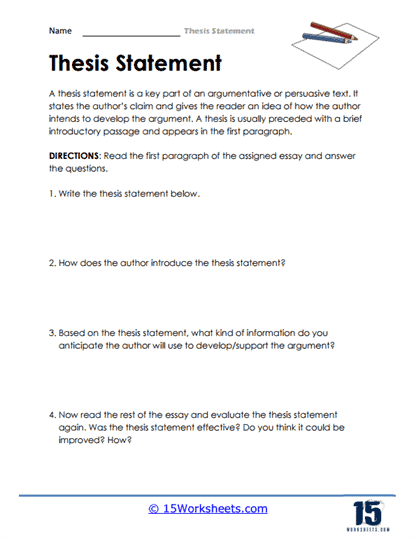
The First Paragraph
Likely focuses on writing or recognizing thesis statements as part of an introduction. Students may draft full first paragraphs or identify where the thesis fits. Reinforces how important the thesis is to set up the rest of the essay. Encourages coherence in opening parts.
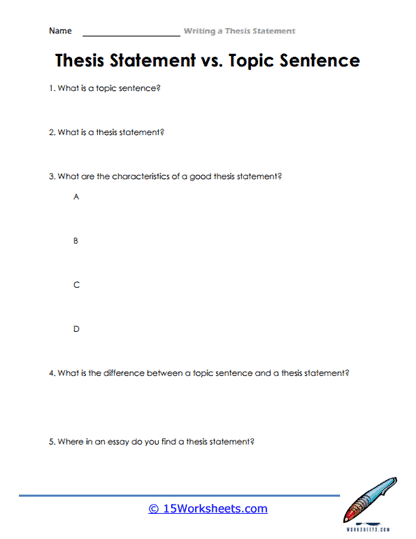
Statement Vs. Sentence
Probably distinguishing between a full thesis statement (opinion + reasons) and just a simple sentence (fact or general statement). Helps students understand what makes a thesis “work” versus being too vague. Builds precision in writing. Teaches them what elements (like argument, stance) are needed.
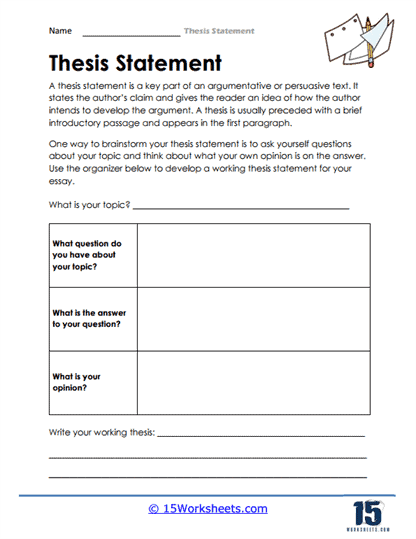
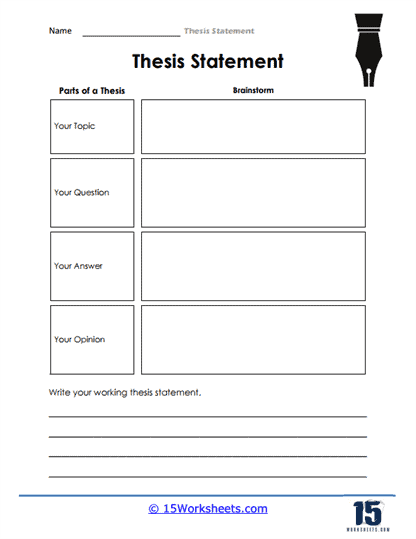
Brainstorming Process
Students may generate ideas, list arguments, consider their stance before crafting a thesis. Focuses on planning and thinking. Helps them avoid writing a weak, generic thesis. Encourages deeper thinking about what they believe and how to defend it.
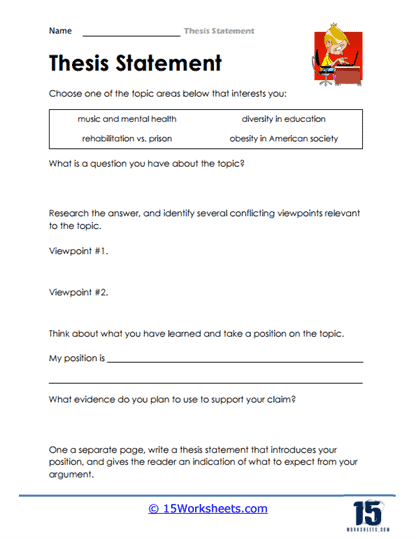
Interesting Topics
Perhaps students are given topics (or choose their own) and practice writing thesis statements for them. Could involve picking interesting angles. Helps students see how to twist a topic into an arguable position. Builds engagement and creativity.
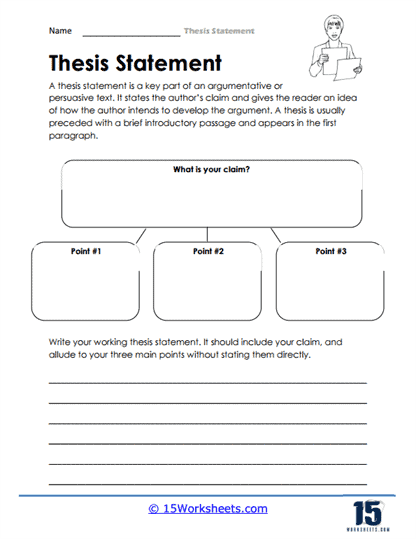
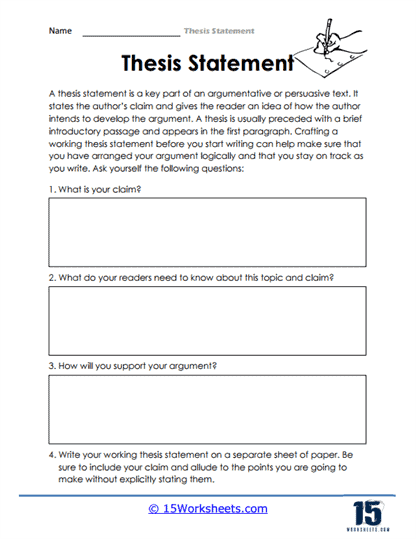
Claim And Points
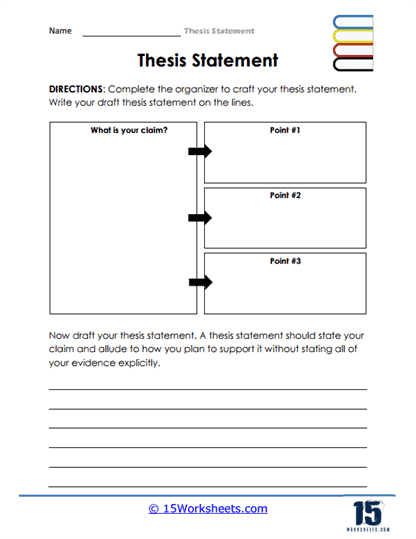
Probably about writing a thesis that includes a claim (main argument) plus supporting points. Maybe practice putting those points into the thesis or matching claims & points. Helps with structure: the thesis gives roadmap. Makes essays easier to organize.
Breaking It Down
Might take a weak thesis and break it into parts (claim, topic, supporting points, opposing view). Or decompose example theses. Builds awareness of what goes into a strong thesis. Helps students see mistakes and improve.
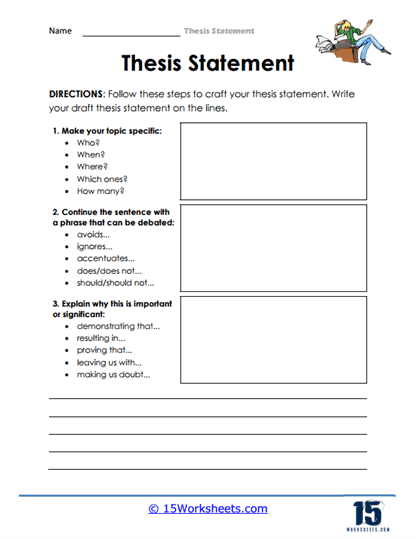
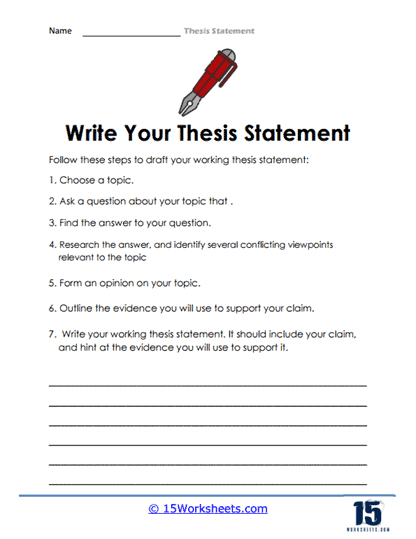
Follow The Steps
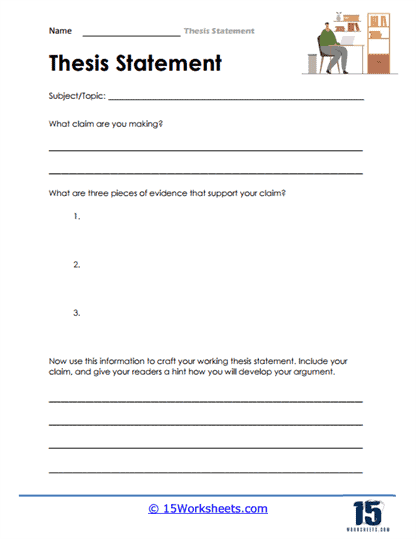
Sequential guide: students follow prompts or a checklist to write their thesis. Could be step-by-step scaffolding. Helps build confidence by giving structure. Good for learners who need support.
Craft The Key Part
Possibly focuses on the most important element of a thesis (like the claim, or the “why” part). Students may refine that key component. Helps in sharpening the thesis’s core. Encourages focus and removing fluff.
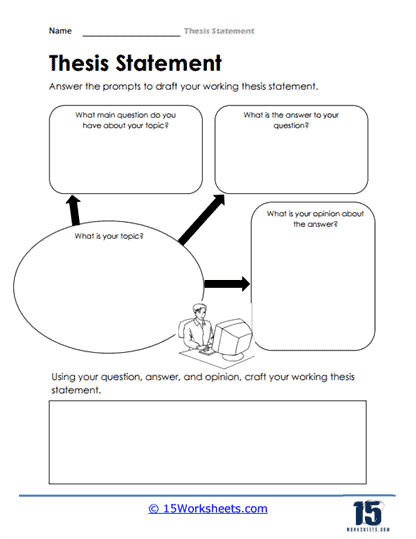
Answer The Prompts
Students are given writing prompts (questions, statements) and need to craft thesis statements responding to them. Helps with thinking in response to tasks or assignments. Builds flexibility and readiness for actual writing.
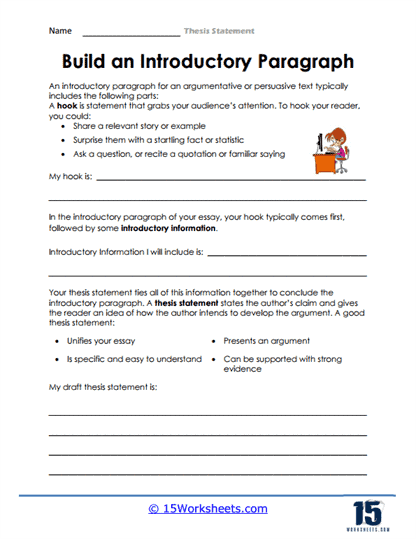
Build The Introductory
Probably more than just the thesis: students draft the introduction paragraph including thesis, maybe hooking sentences, background. Helps them see how the thesis fits into the intro. Builds coherence and flow.
Step-By-Step Guide
Similar to “Follow the Steps,” maybe more detailed process: brainstorm, draft, refine, revise. Helps with process writing, not just product. Encourages revision and reflection.
Complete The Organizer
Likely an organizer graphic or template (outlines, graphic organizer) to fill in ideas, arguments, counterpoints, then produce a thesis. Supports planning and clarity. Especially helpful for visual learners.
Your Interpretation
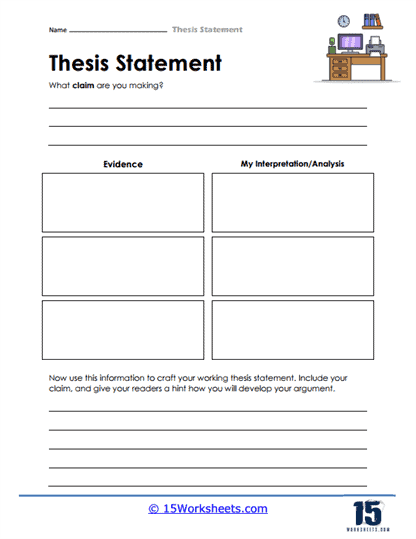
Maybe students read texts or prompts, interpret them, then write thesis statements reflecting their interpretation. Encourages comprehension plus opinion forming. Builds ability to respond to texts.
Give A Hint
Possibly gives partially written thesis statements or hints/clues and students complete or improve them. Helps with revising and recognizing strong vs weak thesis statements. Encourages critical thinking and editing.
How To Write A Thesis Statement
A thesis statement is very important for an essay. It summarizes your point or opinion on the subject in a single line. A thesis statement should be clear, concise, and strong, as all points in the essay will need to relate to it. Without a thesis statement, your essay will fall flat and lack information crucial to hook the reader. The thesis statement is also added at the end of the introduction and is a must-have if you want to persuade your reader.
Brainstorm Your Topic
The first step in writing a thesis statement is brainstorming. This step could vary depending on if the topic was already provided or not and the type of essay. Once the topic has been decided, ask questions, such as:
Why are you choosing this topic?
Is there relevant information available on the internet?
Can you target the topic to a particular audience?
At this point, your topic is just a title and not a statement. The more questions you ask, the more specified and coherent your thesis statement will be.
Take Your Stance
After finalizing the topic, pick your stance on it. What’s your opinion about the topic? Do you oppose the idea or support it? You can provide a tentative answer over here and research to solidify your position on the subject.
Provide Supporting Ideas
Whether you support or oppose the subject, you need to research and mention key points here. Give your reasons with facts and figures about why you support/oppose this subject. It’s best to provide 3 to 4 supporting ideas to persuade the audience.
Include an Opposing Viewpoint
This is not a must-have in every thesis statement, but acknowledging the opposing point of view can significantly impact the statement. Adding counterarguments or issues that people might have with your statement will help both types of readers relate to the topic, thus, widening your reach.
Now that you know how to write a thesis statement, let’s look at the qualities of a good thesis statement and some examples.
Qualities of a Good Thesis Statement
Strong Stance
A good thesis statement includes a strong stance. You need to decide your position on the matter and stick to it throughout the essay. Also, try to be specific with your position and target a particular audience.
Encourages Discussion
Your thesis statement needs to encourage discussions. It can’t be a simple fact everyone knows and can’t disagree with. It should have to support opposing views so readers can change their minds.
One Main Idea
Your thesis statement should be clear and coherent. It needs to display one main idea. Even though there will be many supporting points and reasons throughout the essay, they should all link back to the main statement.
Examples of Good Thesis Statements
“Because many children are unable to vaccinate as a result of illness, all healthy and able children should be vaccinated to start the development of herd immunity.”
Libraries serve as essential resources for various communities. As such, they should have better funding from local municipalities.