
Stranded on an Island Worksheets
About Our Stranded on an Island Worksheets
Few writing prompts capture students’ imaginations quite like being stranded on a deserted island. Our Stranded on an Island Worksheets combine creativity, critical thinking, problem-solving, and writing practice through a series of engaging survival scenarios. Students are challenged to make decisions, prioritize resources, plan for unexpected situations, and explain their reasoning along the way. Whether choosing supplies, creating routines, or imagining life on an island, these activities encourage learners to think carefully while having fun.
This collection explores survival from many different angles. Some worksheets ask students to decide which items they would bring, while others focus on daily routines, teamwork, visualization, entertainment, resource management, and adapting to unfamiliar environments. Students must consider what they truly need, how they would solve problems, and how they would make the best use of limited resources. The open-ended nature of the activities allows for creative responses while still promoting thoughtful decision-making.
Beyond the survival theme, these worksheets help students develop important life skills. Learners practice reasoning, planning, communication, organization, and reflective thinking as they work through each scenario. The activities encourage students to justify their choices, explain their strategies, and consider both practical and emotional aspects of being isolated. By blending imagination with problem-solving, these worksheets create engaging opportunities for meaningful learning.
About Each Worksheet
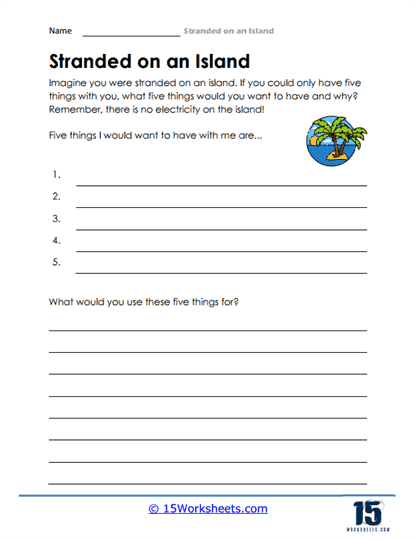
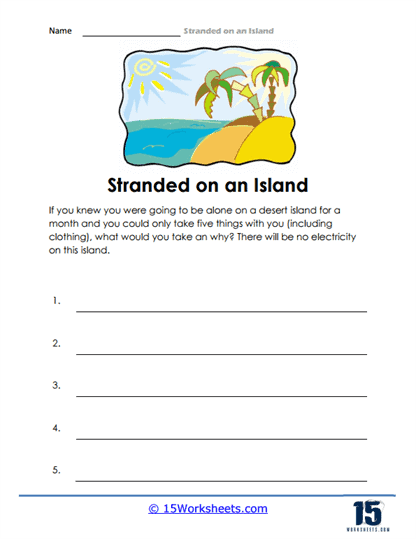
No Electricity!
Modern conveniences disappear quickly in this survival challenge. Students must carefully choose five items and explain how each one could help them thrive without relying on electricity.
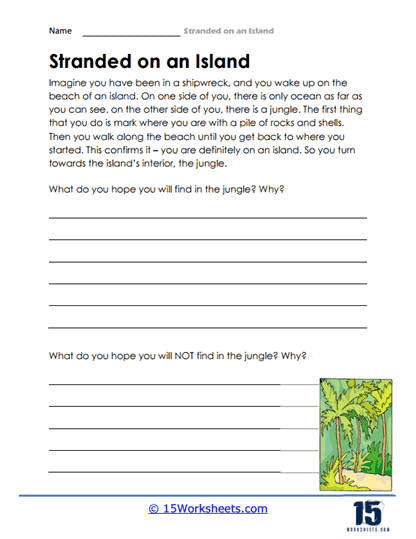
In The Jungle
The beach may be familiar, but the jungle holds both opportunities and dangers. This worksheet encourages students to think about what resources they hope to find and what surprises they would rather avoid.
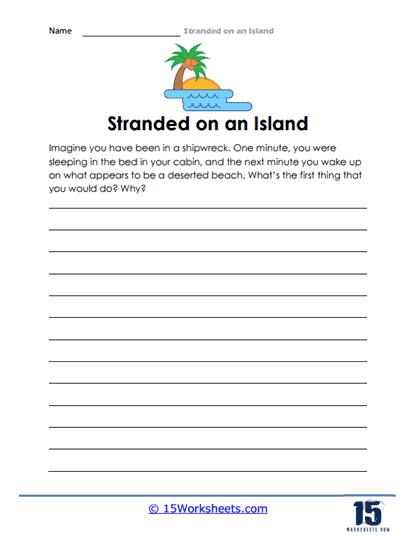
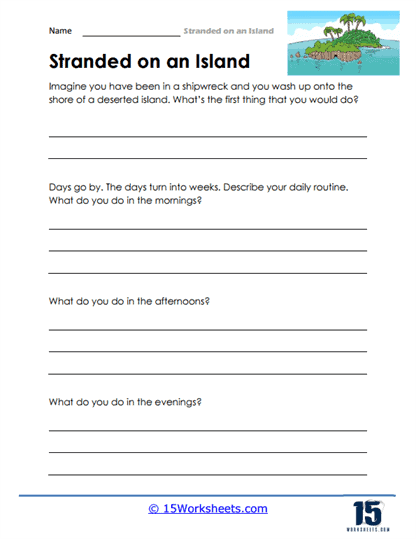
A Deserted Beach
The moment students wake up on a deserted island, they must make an important first decision. This activity focuses on prioritization as learners explain the very first action they would take and why.
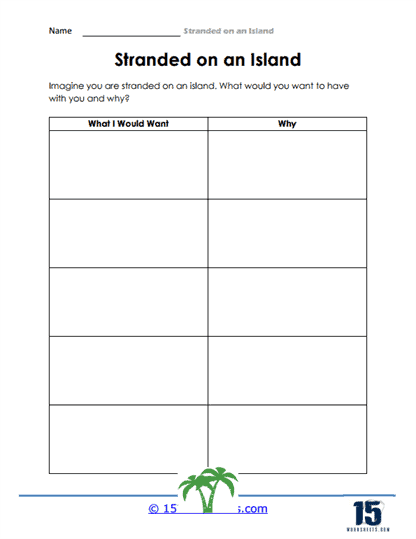
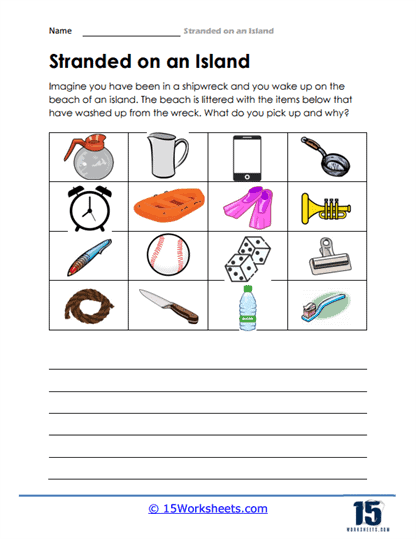
What And Why
Choosing survival items is only half the challenge. Students also need to explain the thinking behind their selections, making this worksheet a great exercise in reasoning and justification.
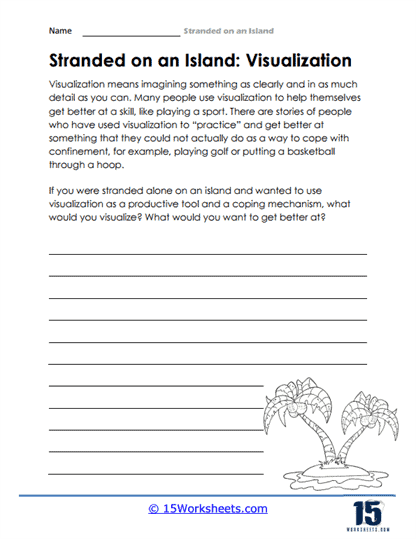
Visualization As A Tool
Survival isn’t always about physical resources-sometimes mindset matters just as much. This worksheet introduces students to the idea of mental practice and encourages them to think about how visualization could help them stay focused and motivated.
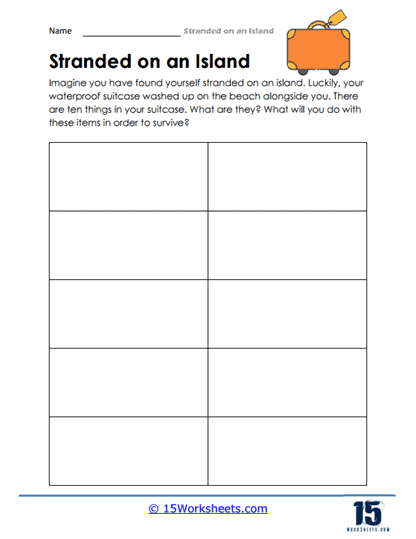
Waterproof Suitcase
Imagine opening a waterproof suitcase packed with ten carefully selected items. Students get to design their ultimate survival kit and explain how each item would fit into their overall plan.
Only The Important Things
A shipwreck has left useful objects scattered across the shore, but students can’t carry everything. This worksheet challenges them to evaluate which items are truly valuable and which ones can be left behind.
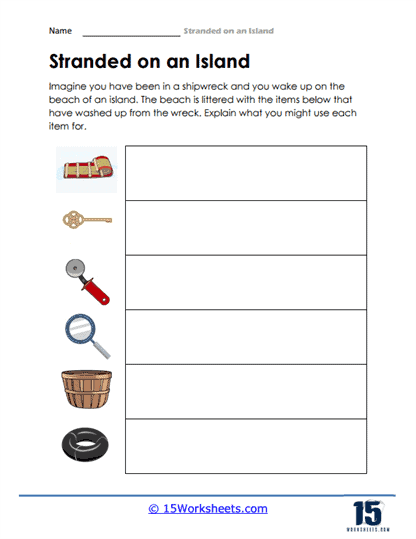
What To Use It For?
Creative thinking takes center stage as students invent practical uses for everyday objects found on the beach. The activity encourages resourcefulness and flexible problem-solving.
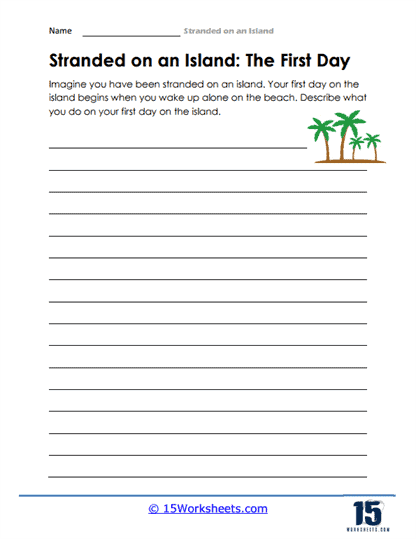
The First Day
The first twenty-four hours on a deserted island would likely be filled with difficult decisions and strong emotions. Students step into the role of survivor and create a narrative describing how they would spend that critical first day.
Morning Until Evening
Surviving for weeks requires more than luck-it requires routine. This worksheet asks students to design a daily schedule that balances survival tasks, organization, and personal well-being.
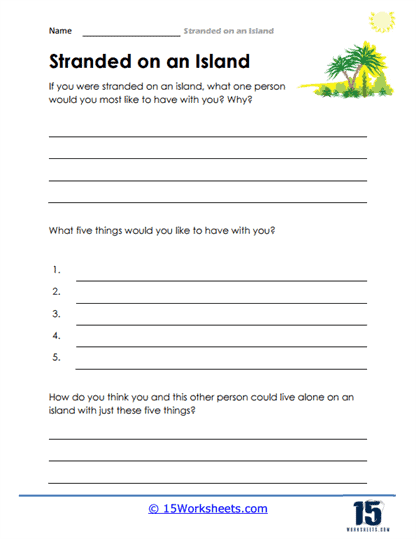
Stranded With Someone
Being stranded alone is one challenge, but sharing the experience introduces new possibilities. Students choose a companion, select supplies, and think about how teamwork could improve their chances of success.
Just Five Things
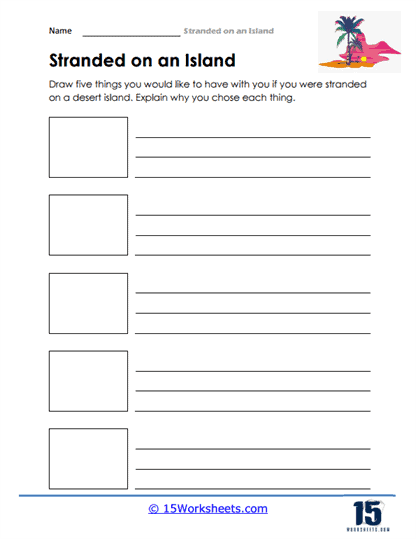
Limiting choices often makes decision-making more difficult. This worksheet challenges students to narrow their survival kit down to only five items and defend every selection.
Draw And Explain
Students combine creativity and critical thinking by illustrating the items they would bring to the island. The drawing component adds a fun visual element while encouraging thoughtful explanations.
Stranded Alone
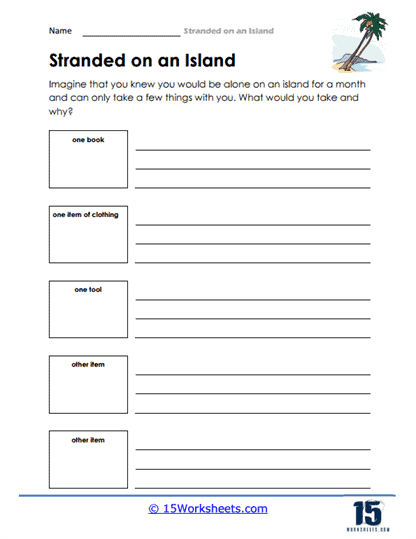
This activity adds specific categories to the survival challenge, requiring students to choose a book, clothing item, tool, and two additional items. The structured format encourages careful consideration of both practical and personal needs.
Entertainment Essentials
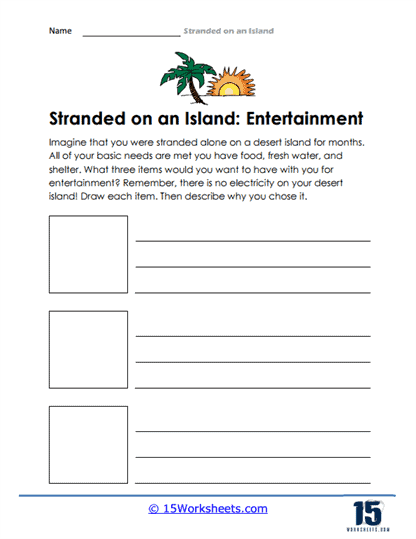
Once food, water, and shelter are covered, how would students stay entertained? This worksheet explores the importance of mental well-being and encourages learners to think about meaningful ways to occupy their time without electricity.
The Best Things to Do if You Were Stranded on an Island
If there’s something common among Robinson Crusoe, Gulliver, and Tom Hanks in Cast Away, it’s the fact that all 3 of them were stranded on islands and all 3 of them survived the ordeal. To make sure you live to tell your tale of survival, read this list of things you need to do if you ever get stranded on an island.
Find Water
You can stay alive for up to 2 weeks without food, but you’ll die a miserable death on the 3rd day if left without water. As soon as you get your bearings, look for a source of drinking water. You have a better chance of finding waterfalls and streams if you venture deep into the island. You can also collect rainwater into a container if you cannot find a freshwater source.
Build a Shade
Find a safe space to hide from the sun or rain. If you can’t find it, build one using leaves, bamboos, tree branches, or any other resources that you can find.
Start a Fire
Build a fire. It will serve a lot of purposes.
– The smoke signal will give you a chance to be discovered and rescued.
– You will also be able to boil water to drink and cook any food you find.
– The fire will keep you safe from animals and insects at night.
Call for Help
We have already established that a large enough fire can send off distress signals. You’re likely to get noticed by planes, boats, or ships in the area if a large fire suddenly starts burning in an uninhabited area.
Another sign of help can be made by gathering rocks or wooden pieces and assembling them in the shape of prominent and visible SOS or HELP ME if you have enough material. You might get discovered by a plane flying overhead and rescued soon.
Look for Food
The next item on the to-do list is to find food. On an island, your best bet would be fish. Catching them will be the tricky part, and we’ll come to it in a while. In addition to that, you need to be on the lookout for any edible roots, mushrooms, berries, and fruits you can satisfy your hunger with.
Fashion Tools and Weapons
Make a spear by using a long branch; sharpen one end, and use twine or a shoelace to attach stones to weigh it down. Practice throwing it around to stay safe from predators and catch fish for lunch and dinner. You can also make some knives using shorter branches. Sharpen one end to make them ready to use.
Wait for Rescuers
Modern technologies have shortened the discovery time by manifolds. The chances are that your disappearance has already started a search, and you’ll be discovered within days. Use this time to stay alert and hopeful, and don’t give up.
Final Thoughts
Going through a plane crash or a boat capsizing is traumatic in itself. And then you have the added problem of finding yourself all alone stranded on an island. Staying active and keeping yourself busy by checking items off your to-do list of survival will strengthen your chances of survival, and you’ll be back with your loved ones in no time.