
Argumentative Research Worksheets
About Our Argumentative Research Worksheets
Strong opinions are easy to find, but strong arguments require evidence. These Argumentative Research Worksheets help students move beyond simply stating what they believe and teach them how to support their ideas with facts, research, and logical reasoning. By exploring real-world topics that often have multiple viewpoints, students learn how to investigate issues carefully before forming conclusions. The activities encourage thoughtful discussion while helping students become more confident researchers and writers.
This collection covers a wide range of engaging topics, including education, technology, health, politics, social issues, economics, and scientific research. Students will gather evidence from credible sources, compare opposing viewpoints, evaluate claims, develop thesis statements, and organize their findings into persuasive arguments. Each worksheet guides learners through the research process while encouraging critical thinking and informed decision-making. Rather than accepting information at face value, students learn how to analyze evidence and defend their positions effectively.
One of the most valuable skills students gain from argumentative research is the ability to support their opinions with facts. Whether discussing current events, academic topics, or future career decisions, the ability to research and communicate a well-supported argument is essential. These worksheets help students develop those skills while exploring topics that connect directly to the world around them. The result is stronger writing, deeper thinking, and greater confidence in expressing ideas.
About Each Worksheet
To Vax or Not to Vax?
Students research different viewpoints on vaccination and its impact on public health. The worksheet encourages them to examine evidence carefully before forming an opinion. It’s a thoughtful introduction to researching complex and often debated issues.
Virtual School
This activity asks students to investigate whether virtual learning helped or harmed students during the pandemic. By examining both sides of the argument, they learn how to build a balanced and informed position. It’s a topic many students can connect to from personal experience.
Is YouTube a Viable Career Path?
Students explore whether creating content on YouTube can realistically become a long-term career. Researching popular creators, earnings, and success rates helps them separate facts from assumptions. It’s a modern topic that naturally sparks curiosity and debate.
Is College Worth It?
This worksheet encourages students to examine the costs and benefits of higher education. They consider student debt, career opportunities, and alternative pathways before developing their argument. It’s an issue many students will eventually face themselves.
Us vs. Them
Students investigate one of the most polarizing issues in modern American politics and evaluate competing viewpoints. The activity challenges them to look beyond headlines and focus on evidence. It’s excellent practice for researching controversial topics thoughtfully and respectfully.
The Greatest Invention of the 21st Century
This worksheet invites students to identify and defend what they believe is the most important invention of modern times. They explore the invention’s impact on society and its future influence. It’s a fun topic that encourages creativity alongside research.
Emotions and Health
Students investigate the relationship between emotional well-being and physical health. The activity encourages them to explore scientific research while considering how emotions affect everyday life. It’s a fascinating blend of psychology and health science.
The Secrets of Centenarians
This worksheet asks students to uncover what helps some people live beyond 100 years. By comparing research from multiple sources, they examine whether lifestyle choices, genetics, or other factors play the biggest role. It’s a topic that often leads to surprising discoveries.
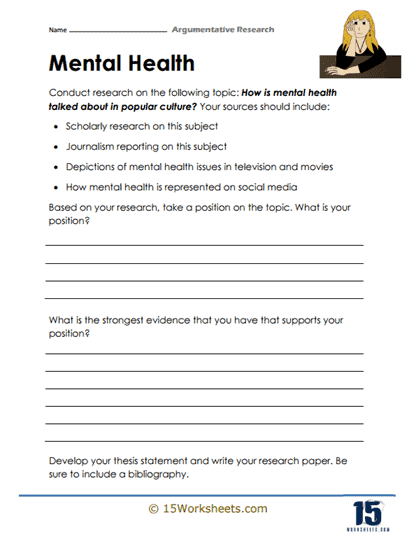
Mental Health
Students explore how mental health is portrayed in television, movies, journalism, research, and social media. The worksheet encourages critical thinking about how public perceptions are shaped. It’s a timely topic with important real-world connections.
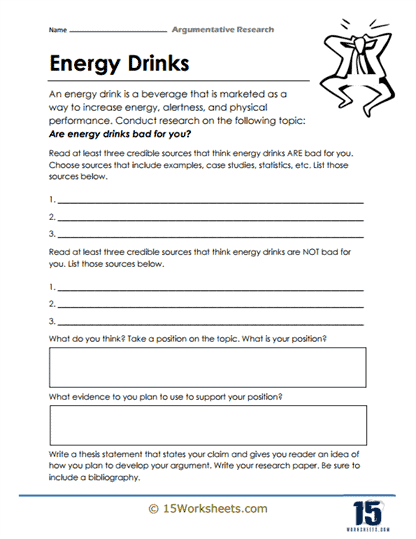
Energy Drinks
This activity challenges students to research both the benefits and risks associated with energy drinks. After reviewing the evidence, they must decide which side presents the stronger case. It’s a relatable topic that many students find immediately interesting.
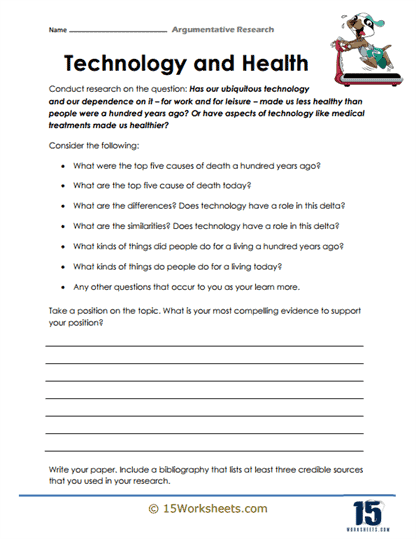
Technology and Health
Students compare life today with life a century ago to determine whether technology has improved or harmed overall health. The worksheet encourages them to analyze trends, data, and societal changes. It combines historical thinking with modern-day concerns.
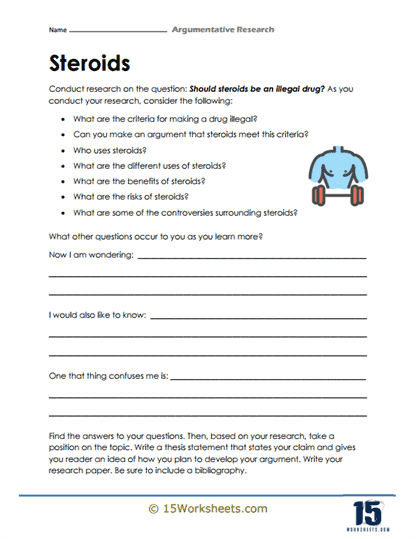
Steroids
This worksheet examines the debate over whether steroids should be considered illegal drugs. Students research medical uses, risks, benefits, and legal issues before developing their own position. It’s a challenging topic that encourages nuanced thinking.
The Poverty Level
Students investigate poverty, minimum wage, and economic policy in the United States. The activity asks them to consider how public policy affects individuals and communities. It’s a strong introduction to researching social and economic issues.
Gender Stereotypes
This worksheet explores whether parents play a role in shaping gender stereotypes. Students analyze research, media, and social influences while developing an evidence-based argument. It encourages thoughtful discussion about culture and society.
Are We Any Safer?
Students examine how national security has changed since the events of September 11, 2001. Through research and analysis, they evaluate whether the country is safer today than it was before. It’s a topic that combines history, policy, and critical thinking.
What Is Argumentative Research?
There are multiple types of research, one of which is argumentative research. Some people tend to get confused between argumentative and expository essays. Hence, before you start working on your research, you must understand the meaning of an argumentative essay.
An argumentative research refers to a type of research where the researcher must identify the research topic they will be exploring and the argumentative perspective they will take on. Both of these details must be covered in the thesis statement. This study attempts to convince the readers to accept the viewpoint presented in the research.
For example, a research paper focusing on how exposure to pornography can make a person violent would be categorized as argumentative research. Now that you know what is argumentative research, let’s explore a few tips that can help you write an argumentative research effectively:
Find Out the Primary Characteristics of an Argumentative Essay
The first and most important step is to determine the features and basic characteristics of argumentative research. Here are a few examples of the basic features of argumentative research:
- Convey the argumentative nature of the research through the thesis statement
- Research claims to help support your argument
- Find credible sources to support your argument
Ask For Help
If you have any confusion or questions about argumentative research, don’t be afraid to ask for help. You can take assistance from your teacher, thesis advisor, or your class fellows. It is better to clear any confusion beforehand rather than redo or make corrections later.
Additionally, understand how to cite sources and write accurate in-text citations. This will help you get your research approved quickly.
Select a Topic
Now that you know the basics, you can start researching topics for your argumentative essay and write down a few potential topics. Once you have a list of topics, research each topic individually and find relevant sources to support your argument. We recommend choosing the topic with a good amount of resources online to help you support your argument.
You should also discuss the topic with your thesis advisor or teacher and get approval before starting working on it.
Don’t Forget To Use Ethos, Pathos, and Logos in Your Research
You must show that you grasp the three fundamental rhetorical ideas of ethos, pathos, and logos in an argumentative essay. You must understand these elements and write your research with these concepts in mind.
Pathos deals with emotional appeals, logos deals with reasoning, logic, sequencing, and ethos, relates to the author’s credibility or reliability. An argumentative research study should have all three of these components. You can study these components in-depth to determine how to include these components in your research effectively.