
Two Truths and a Lie Worksheets
About Our Two Truths and a Lie Worksheets
Few classroom activities get students talking and laughing as quickly as Two Truths and a Lie. These worksheets take this classic game and turn it into an engaging learning experience that combines creativity, communication, critical thinking, and social interaction. Students create believable statements about themselves, carefully mixing facts with fiction, while classmates work to uncover the hidden lie. The result is a collection of activities that help students learn about one another while practicing important reasoning and communication skills.
This collection offers a variety of twists on the traditional format. Some worksheets focus on personal experiences, family stories, summer vacations, and favorite activities, while others incorporate research, themed categories, and peer analysis. Students not only create convincing statements but also learn how to evaluate information, identify clues, and justify their conclusions. The activities encourage thoughtful observation and help learners understand how facts and assumptions can sometimes be difficult to distinguish.
Beyond being a fun icebreaker, Two Truths and a Lie promotes valuable classroom skills. Students practice self-reflection, persuasive writing, listening, reasoning, and social awareness as they participate. The interactive nature of the activities helps build classroom community while encouraging respectful discussion and curiosity about others. Whether used at the beginning of the school year or as a quick team-building exercise, these worksheets create memorable opportunities for connection and learning.
About Each Worksheet
About Myself
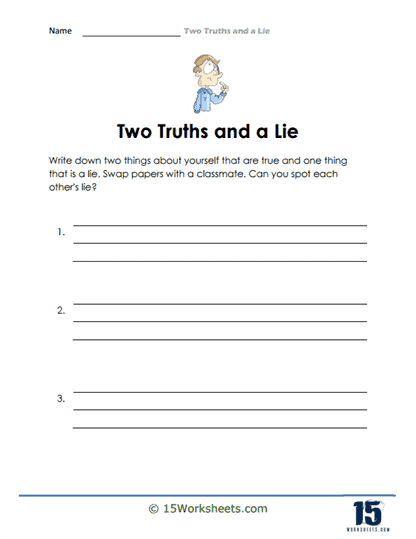
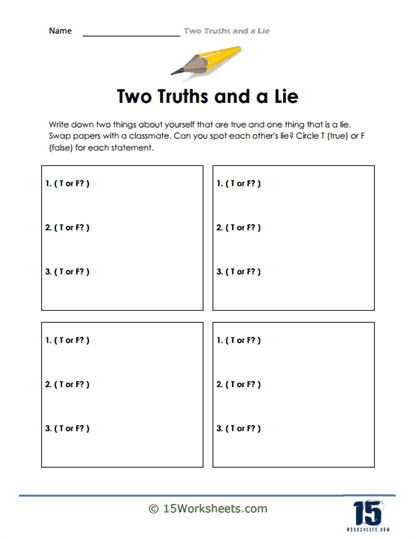
Students share two true facts and one carefully crafted fib about themselves in this classic version of the game. It’s a fun way to introduce classmates to surprising facts while encouraging everyone to think critically about what sounds believable.
Three Statements
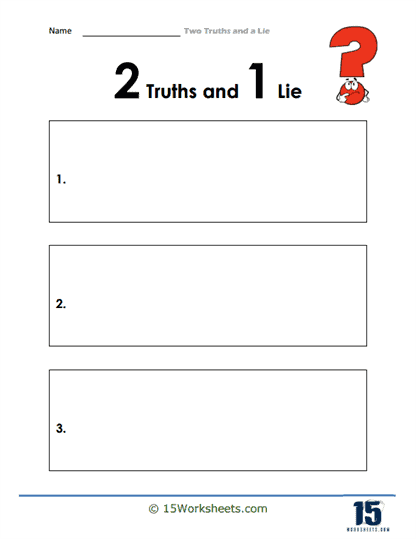
Sometimes the simplest format is the most effective, and this worksheet keeps the focus on the challenge itself. Students create three statements and see if their classmates can spot the one that doesn’t belong.
Spot The Lie Bubble
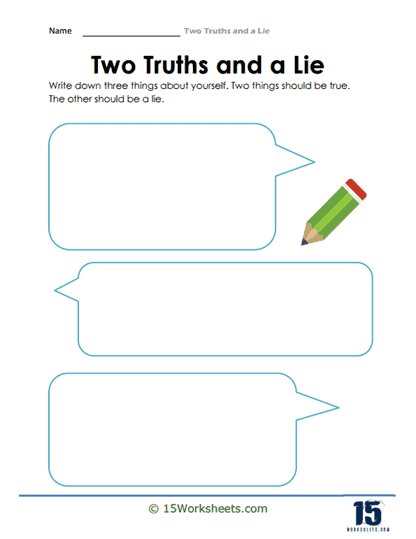
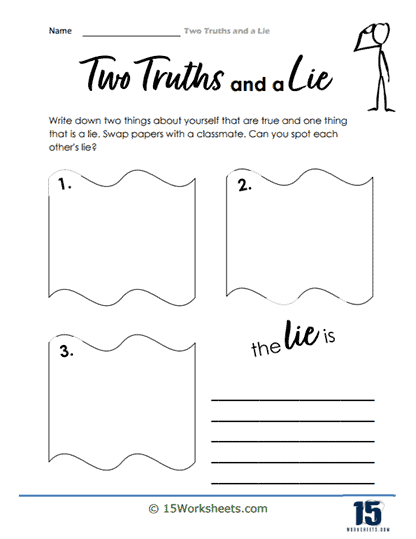
The speech-bubble design gives this activity a playful feel right from the start. Students get creative as they fill each bubble with personal facts and one sneaky lie designed to fool their audience.
Two Sheets
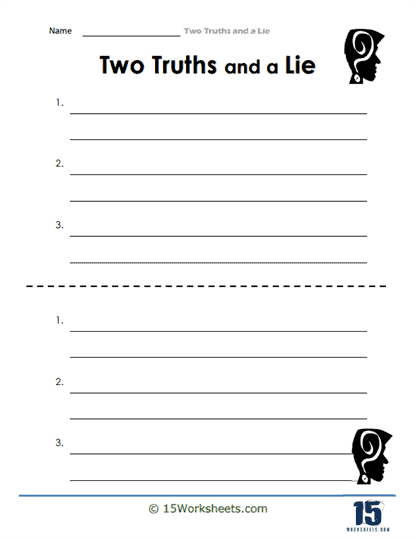
With room for multiple rounds, this worksheet lets the fun continue a little longer. Students can explore different topics or share new facts about themselves each time they play.
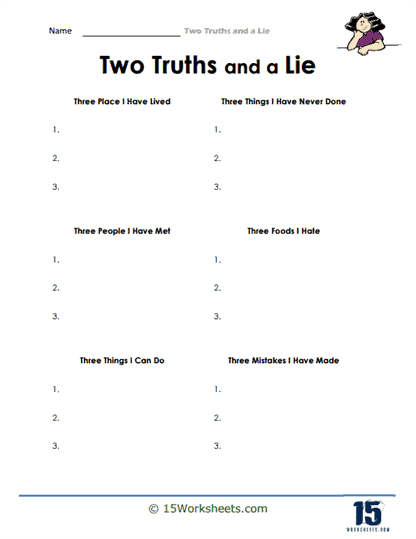
Six Themes
This worksheet takes the game to the next level by organizing statements into specific categories. From places lived to foods disliked, students discover interesting details about themselves and their classmates.
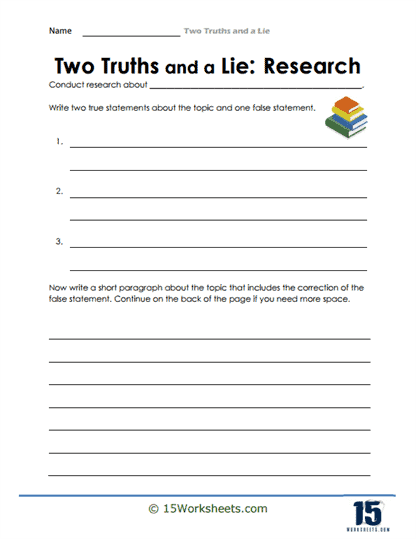
Conduct A Research
Research meets critical thinking in this unique variation of the game. Students investigate a topic, create two factual statements and one false one, then later explain and correct the misinformation.
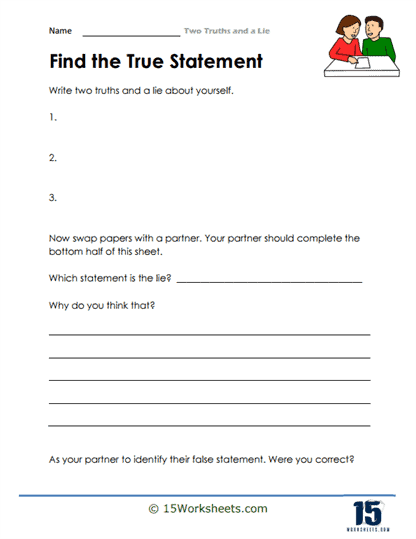
Swapping Papers
Students become detectives as they exchange worksheets and search for the lie hidden among the truths. Explaining their reasoning adds an extra layer of analysis and discussion.
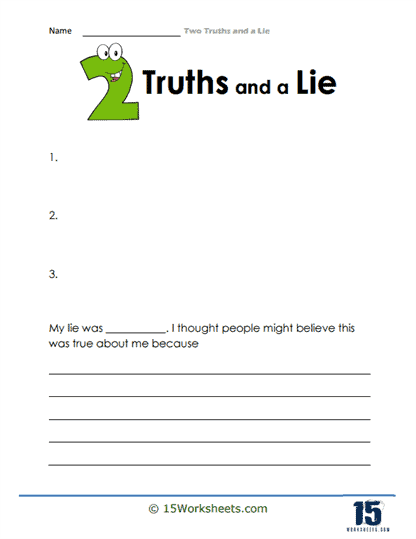
Seemingly True
Creating a believable lie isn’t always easy, and this worksheet challenges students to think carefully about perception. Reflecting on why others might believe the false statement adds a thoughtful twist to the activity.
Triple Sections
This worksheet offers several opportunities to play in one place. Students can explore different topics and discover just how difficult it can be to fool their classmates more than once.
My Summer Vacation
Summer adventures provide plenty of material for this themed version of the game. Students share memorable vacation experiences while slipping in one fictional event to keep everyone guessing.
My Family
Family stories often contain unexpected details, making them perfect for this activity. Students learn about one another’s backgrounds while practicing critical thinking and inference skills.
Check The Lies
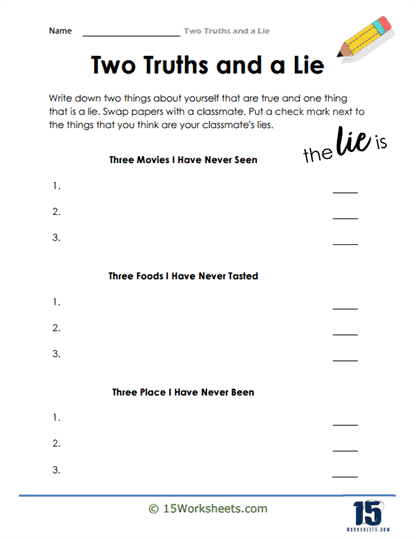
This worksheet challenges students to spot lies within categories like foods, movies, and travel experiences. The guessing process encourages learners to look closely at what seems realistic and what doesn’t.
True Or False?
Students evaluate each statement individually rather than simply identifying one lie. The format creates a fun challenge that encourages careful reading and thoughtful decision-making.
Interactive Notepads
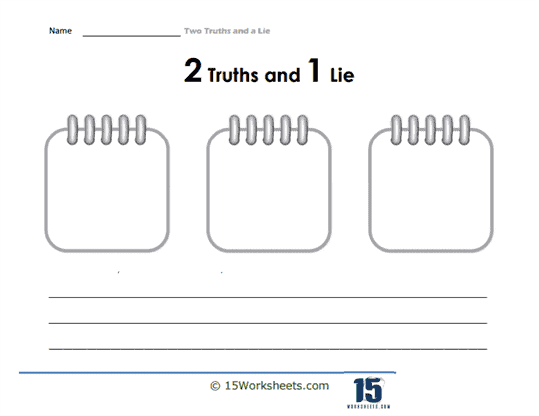
The notepad-style design gives this worksheet a fresh and engaging appearance. Students record their truths and lies while classmates examine each statement for clues.
Call It Out
This activity adds a social element by allowing classmates to record their guesses directly on the worksheet. Students enjoy seeing which of their statements fooled the most people and which ones gave them away.
What is Two Truths and a Lie?
Two Truths and a Lie is a popular icebreaker game often played in social settings, team-building activities, or as a get-to-know-you exercise. The objective of the game is for participants to share two true statements and one false statement about themselves, while the other players attempt to identify which statement is the lie.
Here’s how to play Two Truths and a Lie:
- Gather participants – The game can be played with as few as three people, but it’s more engaging with larger groups.
- Explain the rules – Each participant will take turns sharing three statements about themselves – two of which are true, and one that is a lie. The order of the statements does not matter.
- Share statements – When it’s a participant’s turn, they will share their two truths and a lie with the group. It’s essential for the person to keep a straight face and not give away the lie through non-verbal cues.
- Guess the lie – After the participant shares their statements, the other players will try to identify which statement is false. They can ask questions or discuss amongst themselves, but the person who shared the statements should not provide any additional information.
- Reveal the lie – Once everyone has had a chance to guess, the participant reveals which statement was the lie. This often leads to surprise or laughter, as well as an opportunity for the person to share a brief backstory related to the true statements.
- Rotate turns – Continue playing until everyone has had a chance to share their two truths and a lie.
Two Truths and a Lie is a fun and engaging way to learn more about others, break the ice in social situations, or foster teamwork and camaraderie in group settings. The game encourages active listening, critical thinking, and helps participants discover common interests or surprising facts about one another.