
Self Awareness Worksheets
All About These 15 Worksheets
Self-awareness isn’t just a buzzword-it’s the foundation of emotional intelligence, social success, and self-regulation. Activities that boost self-confidence skills help students reflect on their thoughts, emotions, and behaviors, turning reactions into thoughtful responses. These worksheets guide learners to pause, reflect, and better understand themselves while building habits they can use far beyond the classroom.
The collection covers a full spectrum: from understanding body cues and identifying emotions, to planning goals and improving behavior. Kids aren’t just told what to do-they’re taught how and why they do it, with tools to reflect, adapt, and grow. Whether they’re calming anger or planning tasks, each worksheet nudges them toward greater self-awareness and emotional confidence.
These tools are more than classroom activities-they’re life skills. The ability to recognize triggers, manage reactions, and reflect on themselves helps children make better choices and plan ahead. As they understand themselves more clearly, they become more capable of responding thoughtfully, building empathy, and growing both personally and socially.
Have a Look Inside Each Worksheet
Body Awareness
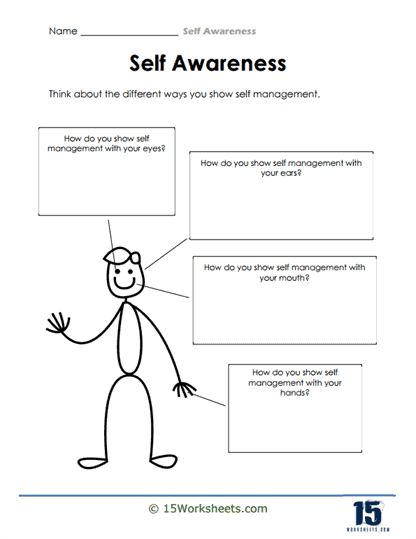
Students reflect on how their body language-like facial expressions, gestures, or posture-signals their feelings. This helps them connect inner emotions with outward actions. It’s an essential step in understanding how we communicate without words.
Behavior Choices
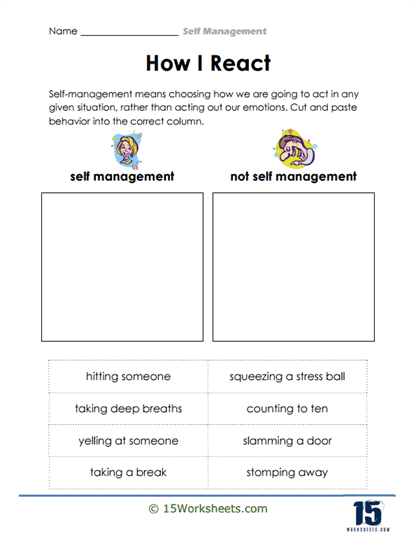
Learners consider different choices and their outcomes, thinking about how their actions affect themselves and others. The worksheet prompts them to weigh “helpful” vs. “hurtful” behaviors. It encourages intentional decision-making.
Impulse Control
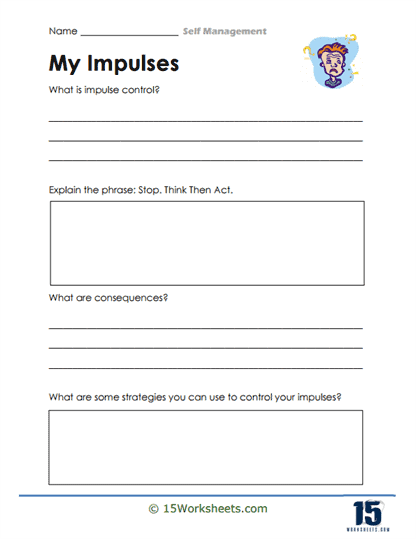
Kids explore what causes impulsive reactions and brainstorm strategies to pause and think before acting. The exercise teaches them that managing impulses is about recognizing the moment before the reaction. It builds patience and control over impulses.
Self Check
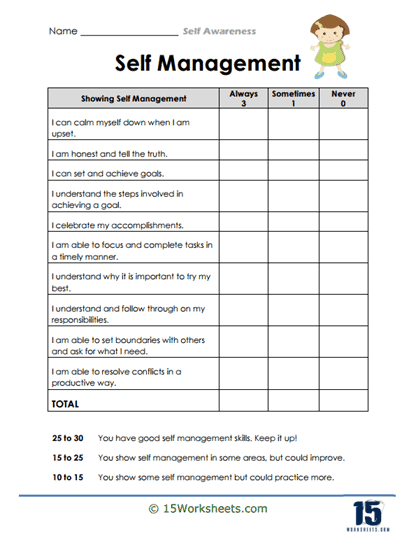
This activity has students evaluate how they’re feeling and behaving in specific situations. It encourages honest reflection and self-awareness. It’s like looking in a mirror for their inner thoughts and actions.
Stress Management
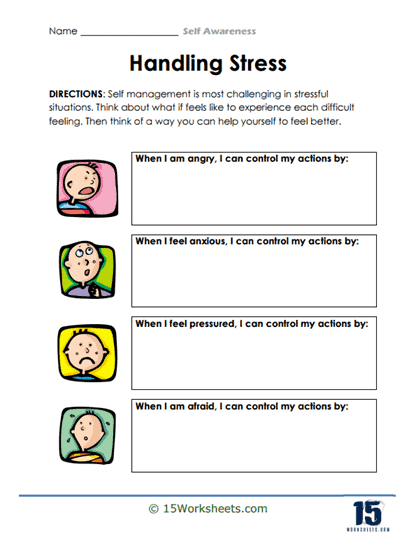
Learners reflect on what stresses them out and list techniques to handle that stress, like deep breathing or talking it out. It teaches that stress is normal and can be managed with the right tools. It empowers them with self-regulation strategies.
Problem Solving
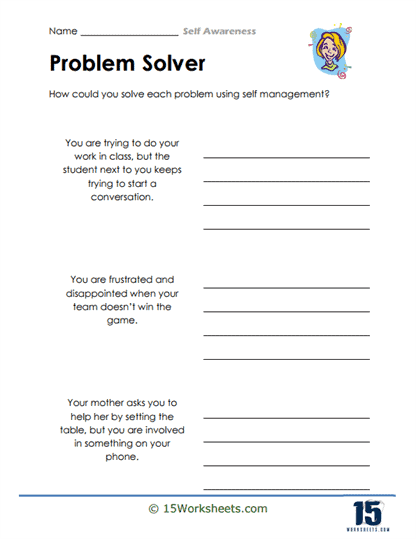
Kids are given hypothetical or real-life scenarios and invited to think through solutions thoughtfully. It guides them to break problems into steps and come up with action plans. It builds critical thinking tied to self-awareness.
Behavior Reflection
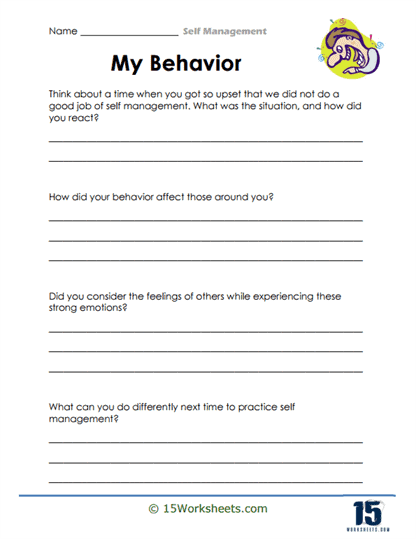
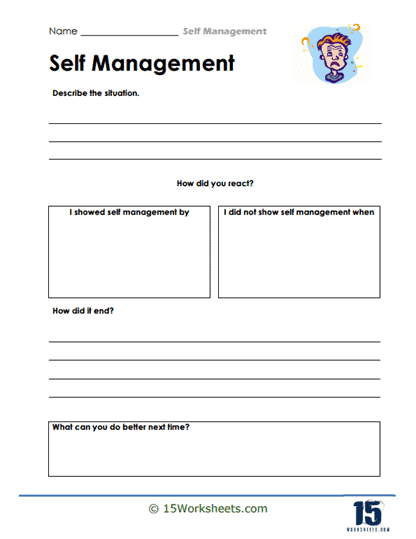
Students revisit a recent incident and reflect on their reactions, triggers, and alternative approaches. It helps them learn from experience instead of brushing it off. Self-reflection like this strengthens emotional growth.
Action Plan
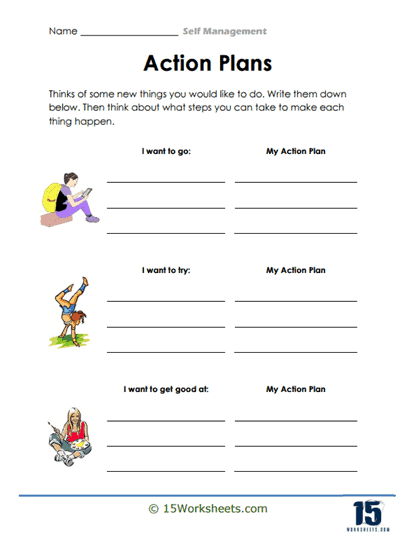
Here, learners set a personal goal and plan concrete steps to reach it. It turns intentions into tangible actions. This boosts accountability and follow-through.
Managing Emotions
Students identify different feelings and think of ways to respond to them healthily (e.g., calm down with drawing, talk it out). It teaches emotional literacy and coping strategies. It makes feelings easier to navigate.
Community Reflection
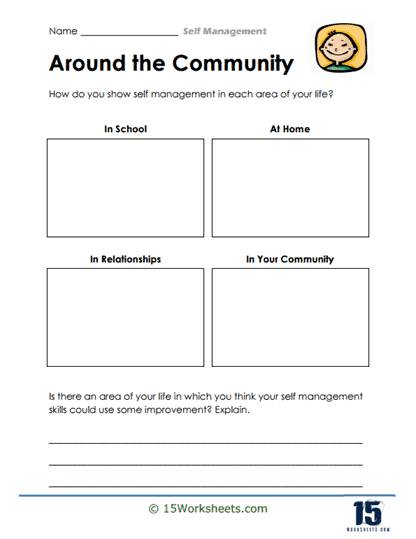
This worksheet asks students to consider how they impact others around them-positively or otherwise. It builds empathy and social self-awareness. It aligns personal insight with community connection.
Growth Reflection
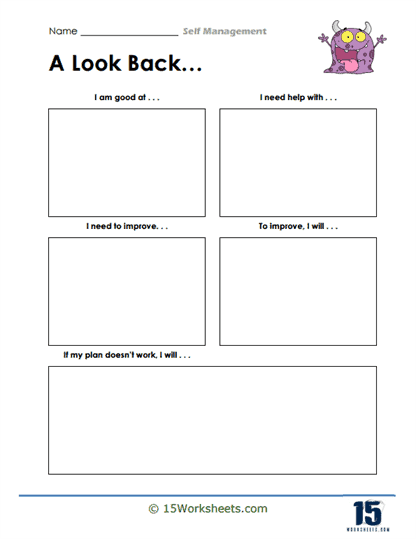
Learners look back on progress in a skill or behavior and journal about how they’ve grown. It highlights progress rather than perfection. It fuels motivation and self-appreciation.
Task Prioritizer
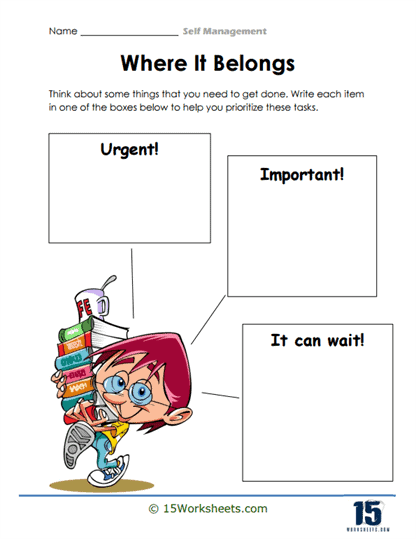
Kids sort tasks by urgency and importance, learning to manage time and attention. It enhances self-organization skills. It teaches that prioritizing helps reduce overwhelm and boosts productivity.
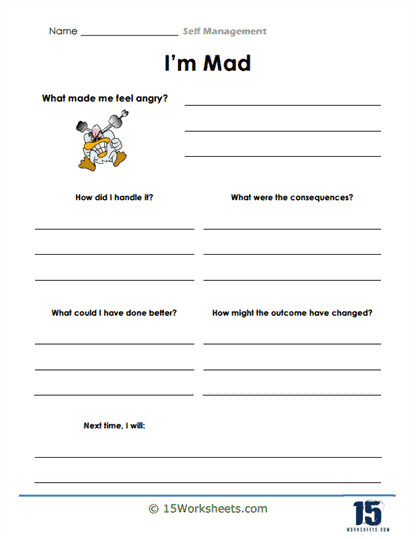
Anger Analyzer
This activity invites children to break down what makes them angry: triggers, physical signs, and coping strategies. It helps them understand that anger is natural and manageable. It builds self-control and emotional insight.
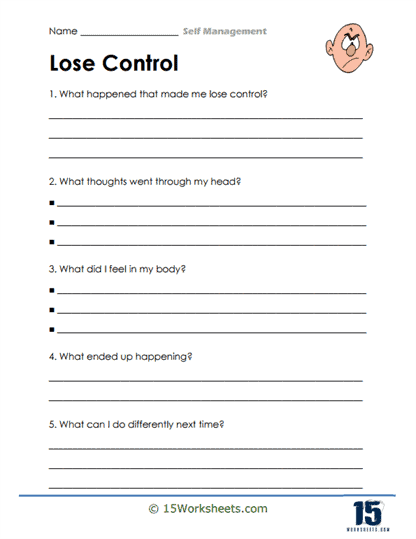
Control Tracker
Students track moments when they felt in control-or out of control-and note what helped them stay calm. It raises awareness about patterns in self-regulation. It encourages building on successful strategies.
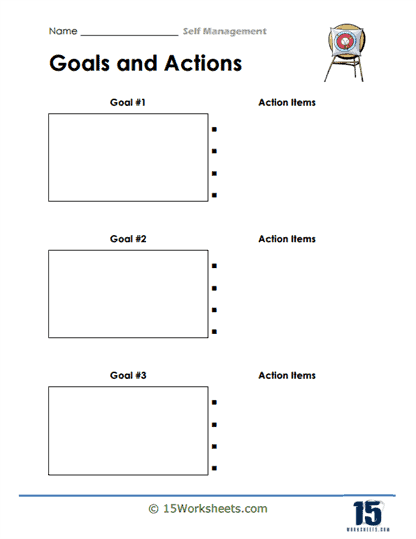
Goal Planner
Here, learners set a clear goal and outline the “who, what, and when” to make it happen. It turns dreams into doable plans. It fosters purpose-driven self-management.
Tips for Improving Your Self Awareness
1. Understanding Emotions
One of the first steps for kids to improve self-awareness is to understand their own emotions. Children often experience strong feelings like happiness, anger, or sadness, but they may not always recognize or name them. Teaching kids to identify and label their emotions helps them become more in tune with their inner world. Parents and teachers can encourage this by asking questions like, “How are you feeling right now?” or “Why do you think you feel that way?” Journaling or drawing emotions can also help younger kids express themselves. By understanding their emotional reactions, kids can start recognizing patterns in their behavior.
2. Reflecting on Behavior
Another essential aspect of self-awareness is reflecting on behavior. Kids need to recognize how their actions affect others and their environment. Encouraging reflection after events, like conflicts with friends or successes at school, helps children think about what they did well or what they could improve. A simple tool for this is asking kids reflective questions, such as, “What did you do today that made you proud?” or “What could you do differently next time?” Over time, this practice helps kids become more conscious of their behavior, building a sense of responsibility and insight into how they interact with the world.
3. Strengthening Observation Skills
To improve self-awareness, children also need to develop their observation skills. Paying attention to their thoughts, feelings, and bodily sensations in different situations can provide valuable insights into their personal experiences. Mindfulness exercises, like focusing on breathing or observing sounds around them, can help kids become more aware of the present moment. This practice encourages them to slow down and notice how they feel physically and emotionally. These skills can help them understand their reactions better and make thoughtful decisions rather than impulsive ones.
4. Building Empathy
Empathy plays a significant role in self-awareness. When children learn to see things from another person’s perspective, they not only improve their social skills but also deepen their understanding of their own feelings. For instance, discussing stories, movies, or real-life scenarios where characters experience different emotions can help kids imagine how others feel. Role-playing games and cooperative activities can also foster empathy by allowing kids to experience diverse points of view. When they understand others’ emotions, they can better connect with their own feelings and reactions.
5. Setting Personal Goals
Lastly, improving self-awareness involves setting personal goals. Kids should be encouraged to think about what they want to achieve, both short-term and long-term. Goal setting helps them reflect on their strengths and weaknesses and track their progress over time. When kids set achievable goals, such as learning a new skill or improving a relationship with a friend, they become more aware of the steps required to reach those goals. This process helps them gain a sense of control over their actions and learn from their experiences, which ultimately strengthens their self-awareness.