
Positive Affirmations Worksheets
About These 15 Worksheets
Affirmations are like little pep talks we give ourselves, and kids need them just as much as adults do. These worksheets turn affirmations into fun, engaging self-esteem building activities that help children practice saying kind things about themselves. From tracing sentences to designing posters, each task blends positivity with creativity, making confidence feel natural instead of forced.
Working through this collection, students slowly learn how powerful their words can be. One worksheet asks them to fill in the blanks, another has them flip negative statements into positive ones, and another challenges them to create affirmations from A to Z. The variety keeps kids engaged while reinforcing the same important message: what you tell yourself matters. The more they practice, the more natural it becomes to reach for supportive words instead of critical ones.
The magic here is that affirmations don’t just boost self-esteem inside the classroom-they help kids handle real-life challenges too. Whether it’s preparing for a test, trying a new sport, or making friends, these worksheets teach children to carry positive words with them as tools. Affirmations also tie into gratitude and perspective, helping kids see the good in themselves and their world. With regular practice, positivity becomes less of an assignment and more of a lifelong skill.
Have a Look Inside Each Worksheet
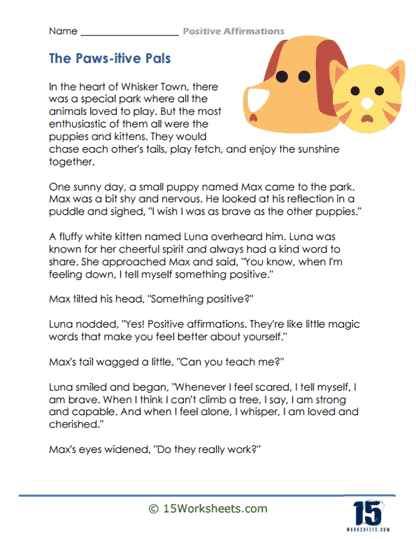
The Paws-itive Pals
This worksheet introduces fun animal characters who remind children how special they are. Students connect positive statements with each “pals” pair, building confidence through playful imagery. It’s a gentle way to learn that affirmations can be both fun and meaningful. By associating affirmations with friendly animals, kids remember to say something good about themselves.
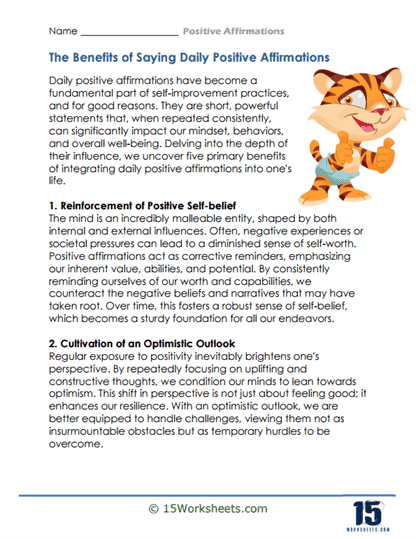
The Benefits of Saying Them
Here, students explore why using affirmations matters-like how they boost mood, reduce stress, or spark self-belief. They reflect on the real-world payoff of simple positive phrases. It’s a thoughtful activity that helps kids understand why affirmations aren’t just words, but little mental pick-me-ups. This worksheet supports learning that positivity is a practice, not just a sentence.
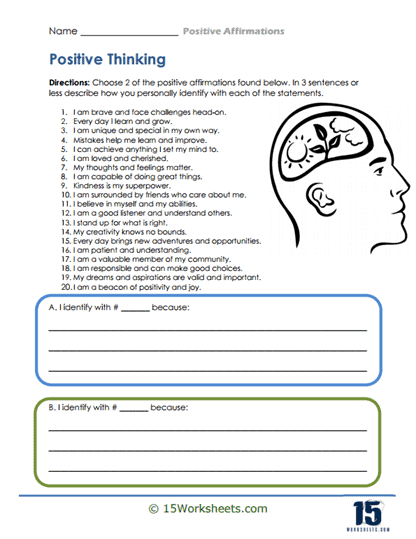
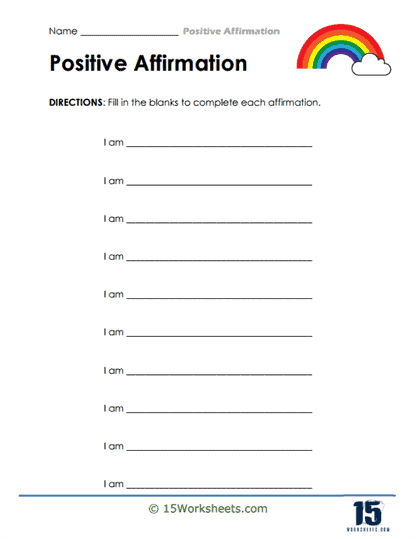
Positive Thinking – I Am…
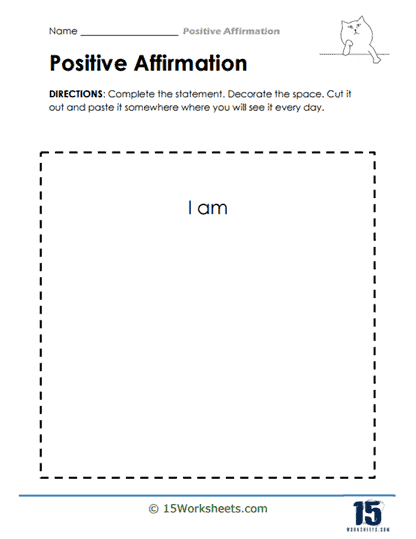
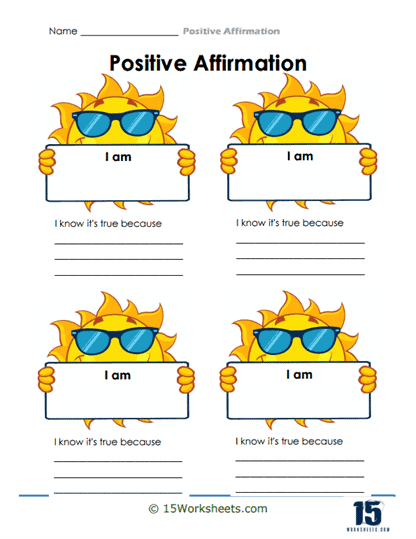
Learners complete the phrase “I am…” with uplifting qualities about themselves. This exercise encourages self-recognition and builds pride through self-expression. Writing something kind about yourself is like giving your brain a high-five. It’s quick, expressive, and plants seeds of positive self-image.
Fill In The Blanks
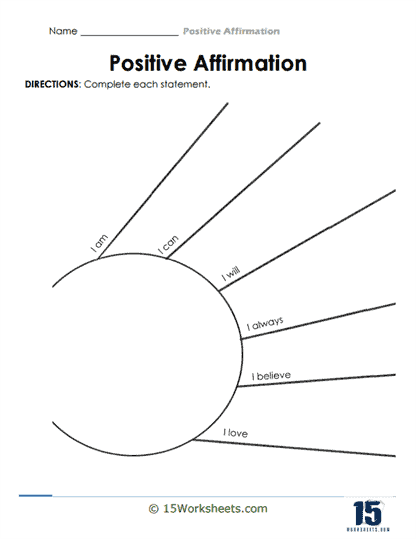
Kids engage in a mad-libs-style activity by filling in missing words in affirming sentences. This worksheet helps them practice vocabulary while internalizing kind, self-supportive messages. They get to creatively finish thoughts like “I am ____” or “I can ____,” making affirmations personal and fun. It’s both a language and confidence booster rolled into one.
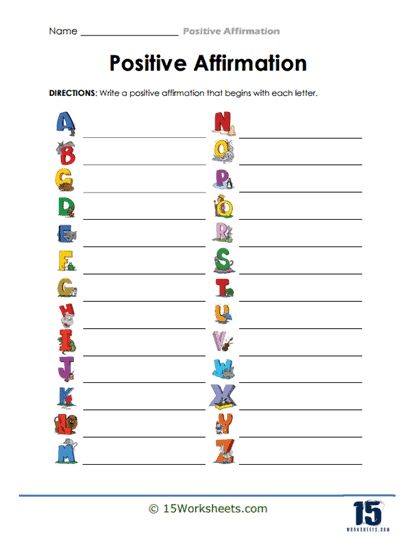
From A To Z
Students use each letter of the alphabet to write affirmations-like “A is for Amazing,” “B is for Brave.” This turns positivity into a playful learning challenge. It’s a clever way to build vocabulary and self-esteem at the same time. Plus, having a reminder for every letter embeds positivity across the whole day.
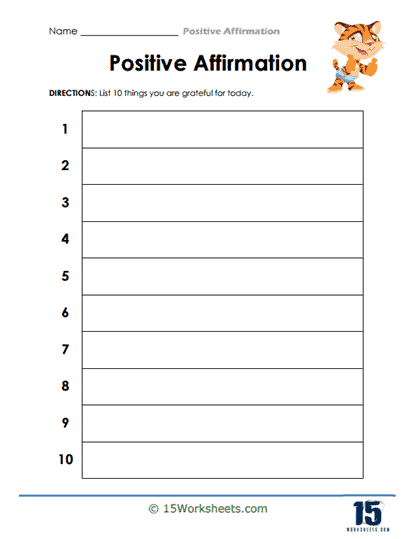
My Gratitude List
This worksheet asks students to list things they’re thankful for. Practicing gratitude alongside affirmations helps reinforce positivity from both inside and outside. It broadens awareness-what makes me good and what makes my life good. It’s a combo boost: self-love plus appreciation for the world around us.
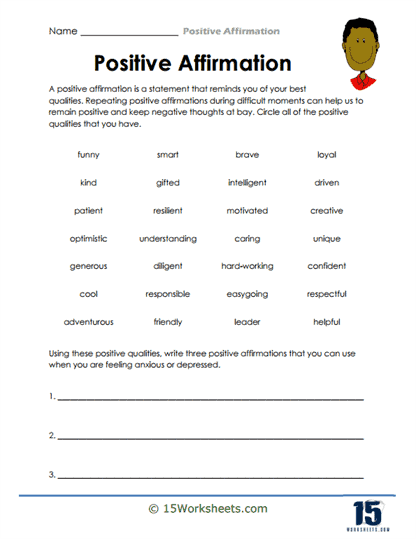
Positive Qualities
Students reflect on their strengths by listing or matching positive attributes. It reminds them that they already embody many wonderful traits. This fosters self-respect and encourages self-kindness. Recognizing your own good qualities is a small act that can make a big impact.
A Good Perspective
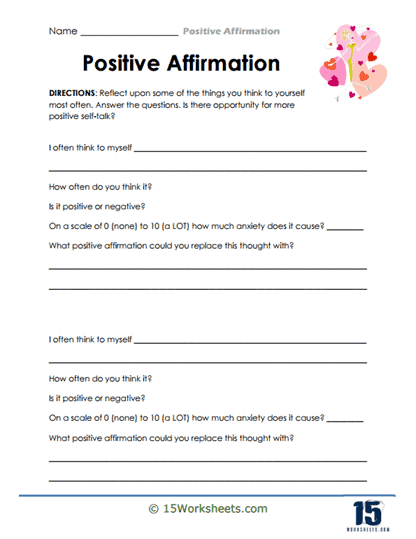
Here, kids practice turning negative thoughts into uplifting ones-helping reframe how they view challenges or mistakes. They learn perspective-shifting affirmations like “I can learn from this” or “Mistakes help me grow.” This teaches resilience and growth mindset in a gentle way. It says: your voice inside can be kind, even when things go wrong.
Think To Yourself
Students are encouraged to come up with private affirmations they can say quietly when they need a pick-me-up. It’s about learning to be your own best friend. Encouraging self-talk empowers them to self-soothe and self-motivate. Saying positive words to yourself-especially when no one else hears it-builds an inner cheerleader.
Weekly Bright Side
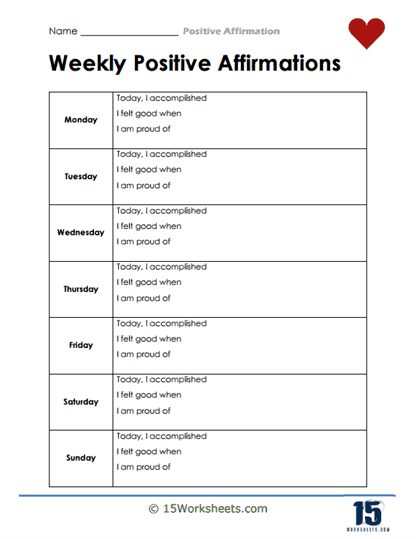
This worksheet invites students to choose an uplifting affirmation each week to focus on. It turns affirmations into a habit, not just a one-time activity. Having a weekly positive mantra gives learners something to carry with them. It’s like setting a good vibe for the next seven days.
Powerful Words
Here, children learn which words-like “brave,” “capable,” or “kind”-carry lots of meaning when used in affirmations. They practice identifying or choosing these strong words to make their affirmations more impactful. It’s a lesson in language and emotional strength. They realize that words can genuinely boost their mental muscles.
What Makes It True?
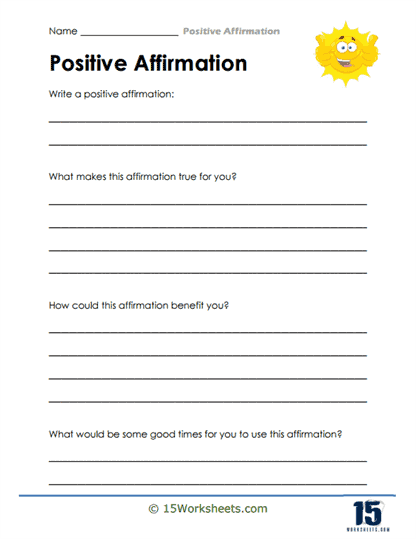
Students are asked to back up their affirmations with examples or evidence-like “I am helpful because I shared my toy.” This encourages self-awareness and reinforces that they have reasons to believe their own compliments. It boosts authenticity and confidence, rooted in real moments. Affirmations become believable when students can say, “Yes, it’s true because…”
Affirmative Poster
This creative worksheet invites kids to design a poster with their favorite affirmation. Drawing, coloring, and decorating makes the message stick-literally. Creating a visual reminder helps affirmations become part of their environment. It turns confidence-building into an art project that students can display proudly.
A Brighter Outlook
Learners reflect on how affirmations change their feelings or outlook on a situation-like feeling calm instead of nervous. This helps them link positive self-talk to mood improvement. It teaches that words can shift how we see our day. Over time, a brighter outlook can become second nature.
Tracing Sentences
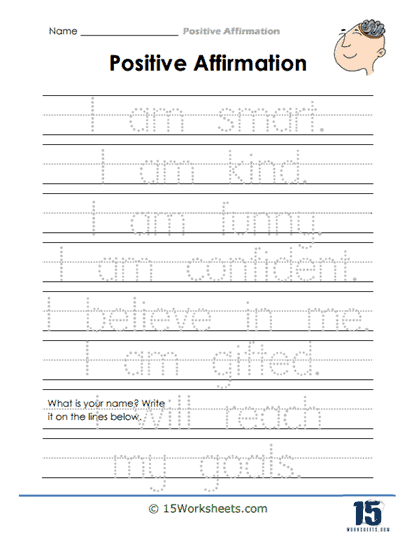
For younger learners, tracing sentences like “I am smart” includes both handwriting practice and affirmation. It combines motor skills with positive messaging. Every letter they trace reinforces both literacy and self-love. It’s a gentle, hand-guided way to plant affirmations early.
Turning Around Negatives
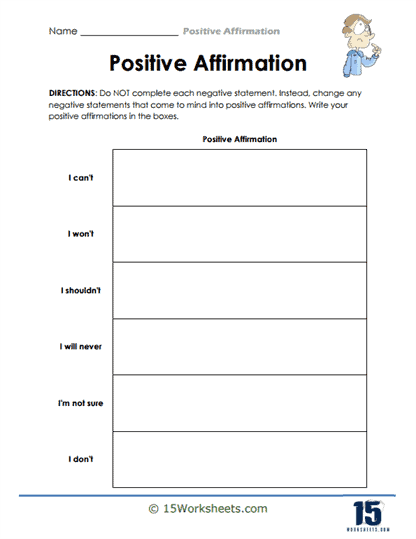
Kids are guided to take negative statements like “I can’t do it” and reframe them into positive ones like “I can try my best.” This teaches the power of wording and resilience. It’s a practical, mind-shifting activity: change the words, change the outcome. It empowers them to shift their mental lens.
Complete The Affirmations
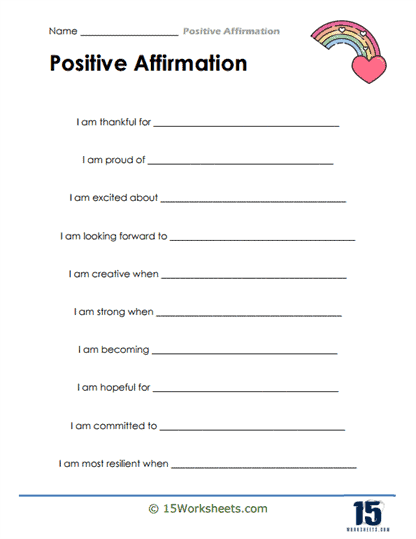
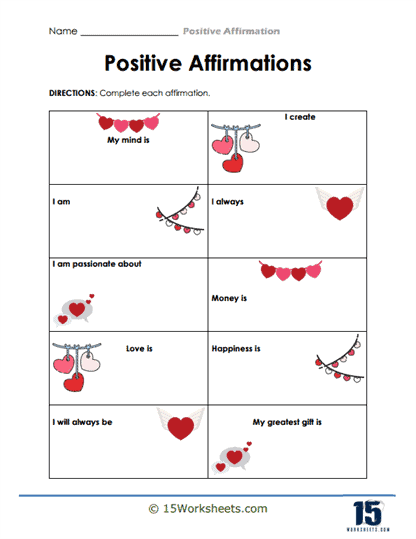
This worksheet gives partially completed affirmations and invites students to finish them in a way that resonates. It lets learners personalize affirmations and make them meaningful. Providing openings but leaving space for self-expression invites internal engagement. It’s like handing them a canvas and letting them fill in the good.
What Are Positive Affirmations?
Positive affirmations are short, encouraging phrases we say to ourselves to build confidence, calm nerves, or spark motivation. They can be as simple as “I am strong,” “I can do this,” or “I am enough.” Think of them like planting seeds-every time you repeat one, you’re watering a little belief that can grow into something bigger. They remind us to be kind to ourselves, even when we don’t feel like it.
Why do they matter? Because words have power. When kids learn to tell themselves positive things, they start to shift how they see themselves and the world. Affirmations don’t magically solve problems, but they make it easier to face challenges with a steady heart and a hopeful outlook. It’s about changing the inner voice from “I can’t” to “I can try.”
These worksheets help children get comfortable practicing affirmations in ways that are fun and meaningful. By writing, tracing, drawing, or reflecting, they not only learn the words but also start to feel their impact. The collection turns affirmations into more than just phrases-it turns them into habits. And the more often kids practice, the more natural it becomes to carry positivity into their everyday lives.