
Pros and Cons Worksheets

All About These 15 Worksheets
Pros and cons-sounds simple, right? It’s basically a tug-of-war between the “yay” and the “nay” sides of any decision. But when you’re a student (or even an adult, honestly), laying it out clearly can make all the difference between a thoughtful choice and a hasty guess. These worksheets break down that process into bite-sized, fun, and practical activities so kids learn that good decisions don’t just happen-they’re made.
This collection is like a toolbox full of thinking strategies. Some worksheets focus on comparing two options, while others let students score their choices, predict consequences, or even debate with themselves. By practicing these different angles, kids get comfortable with slowing down, asking questions, and really weighing the outcomes. It’s the perfect mix of structure and creativity for building solid decision-making skills.
And here’s the bonus: pros and cons aren’t just for schoolwork-they show up everywhere in life! From picking what movie to watch, to deciding whether to join a club, to weighing bigger life choices later on, these skills stick. Practicing now gives students a taste of how to navigate the real-world choices they’ll face daily. In short, these worksheets help kids grow into thoughtful, reflective, and empowered decision-makers.
Have a Look Inside Each Worksheet
Uniform Choice
This worksheet discusses the pros and cons of school uniforms. Uniforms can save time and make everyone equal, but they also take away personal style and can be uncomfortable. Students read the reasons and explain their own opinion about wearing uniforms.
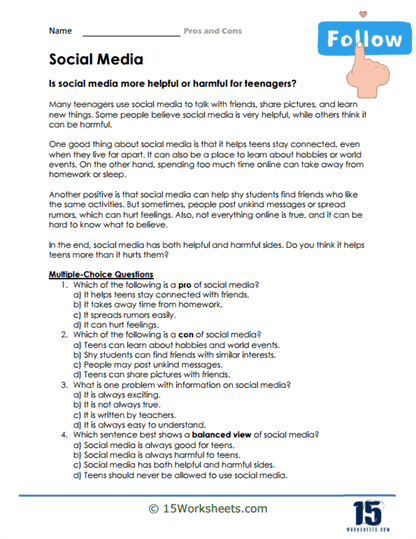
Follow Frenzy
This worksheet talks about the good and bad sides of social media for teenagers. It explains how social media helps teens stay connected and learn new things, but it can also waste time and spread rumors. Students answer questions to think about whether social media helps more than it harms.
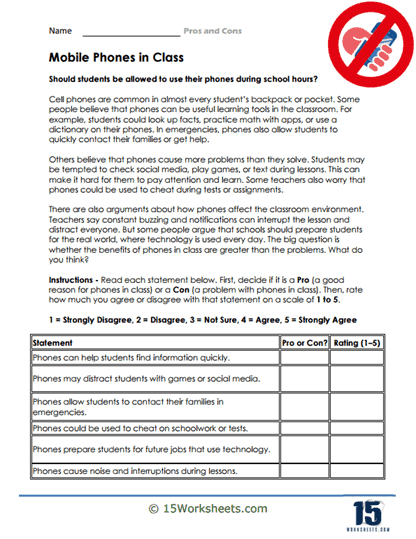
Phone Debate
This worksheet looks at whether students should use phones in class. Phones can help with emergencies and finding information, but they can also cause distractions and cheating. Students decide if each reason is a pro or con and share how much they agree.
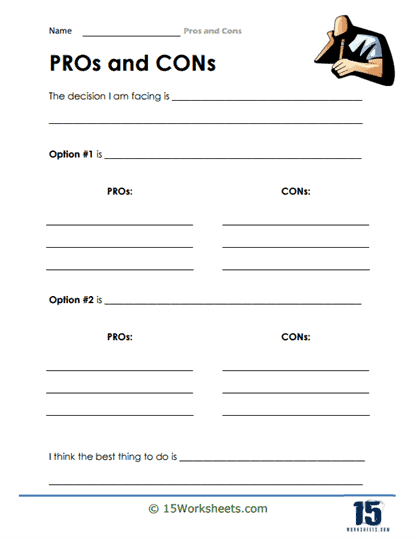
The Decision I Am Facing
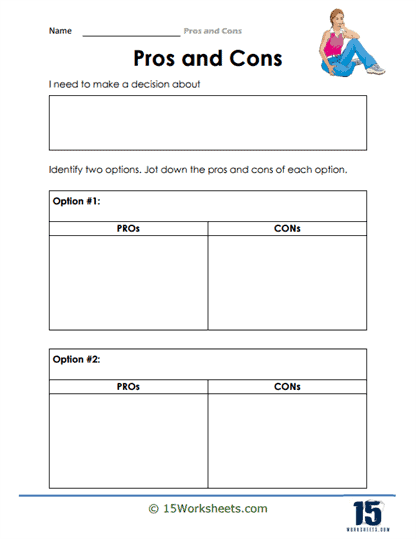
This worksheet invites students to pinpoint a personal choice they’re wrestling with-like deciding between two fun activities or a snack dilemma. They’ll practice clarifying their decision-making context in a thoughtful (and perhaps hilarious) way. Through this scenario-based prompt, they delve into the foundational step of weighing options. It’s a great hands-on intro to critical thinking in relatable terms.
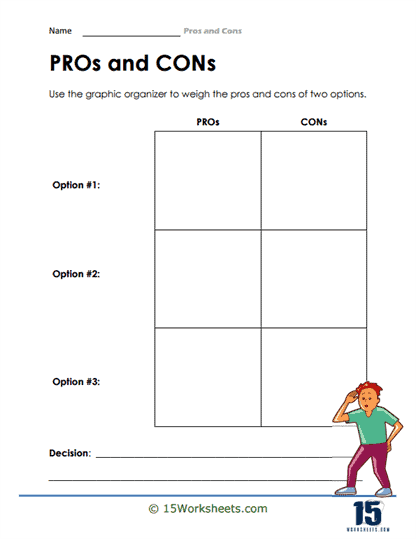
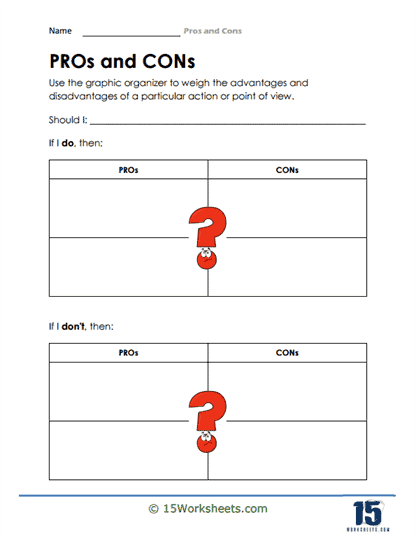
Graphic Organizer
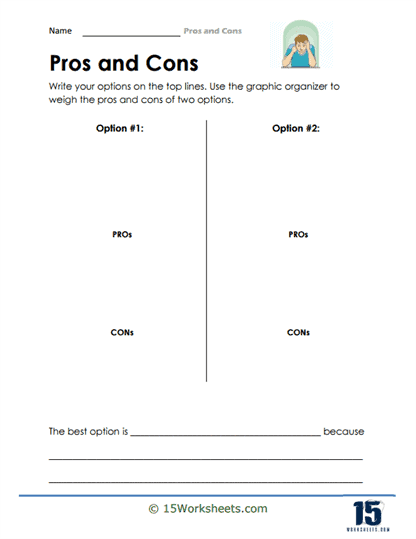
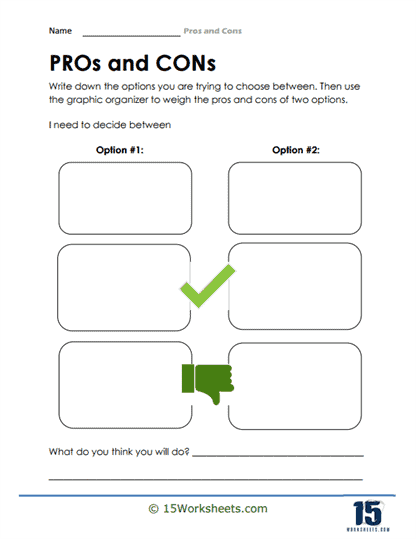
Here, students get to arrange their thoughts visually, organizing pros and cons into boxes or columns. It’s like building a tidy blueprint of their thinking-practical and neat. This format supports both visual learning and logical structure. It’s ideal for sharpening clarity when comparing choices.
The Best Option
This one nudges students to evaluate their pros and cons list and decide which option stands out as the winner. They develop evaluative skills by weighing which factors carry more weight. It turns list-making into decision-making practice in a fun way. It’s like crowning the smartest choice in their own personal contest.
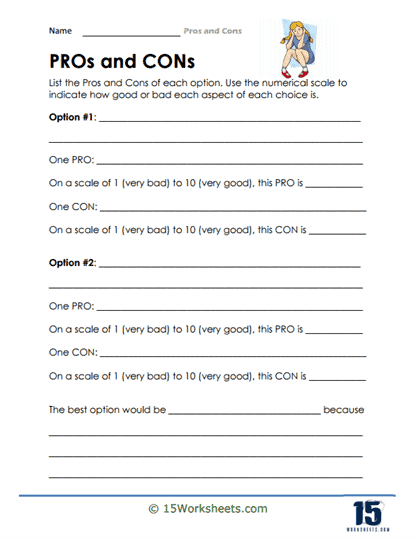
Option 1 Or 2?
As the name suggests, this worksheet boils decisions down to two clear-cut choices. It helps students compare just two paths-maybe staying in or going out, picking between two snacks, or choosing one book over another. This simplicity aids focus and helps avoid overwhelm. It’s a smart exercise in direct comparison.
Between Two Options
This builds on the previous idea-students explore two scenarios but may also consider context or nuanced differences. It encourages deeper reflection: not just “which,” but “why.” It fosters awareness of circumstances beyond surface-level choice. It’s like a thoughtful debate between two close contenders.
Decision Table
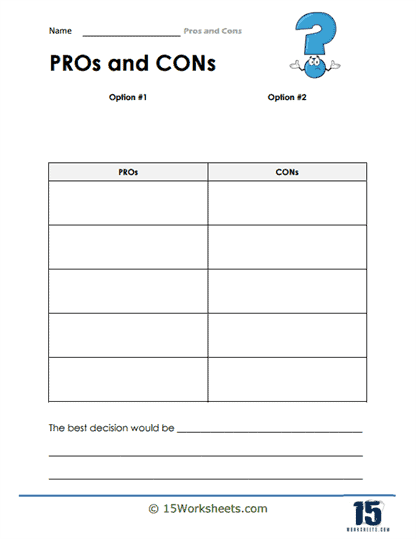
Students use a structured table to jot down pros and cons side by side, possibly across multiple options. This format encourages organizing thinking like a mini-data analyst. It’s perfect for handling more complex, multi-faceted decisions. It brings order and logic to what might otherwise feel overwhelming.
Numerical Scale
Here, students rate each pro and con with numbers-turning feelings and facts into measurable scores. It adds an analytic layer: “this plus is +5, this minus is -3” kind of thinking. This helps quantify gut feelings and prioritize. It’s critical thinking with a numeric edge.
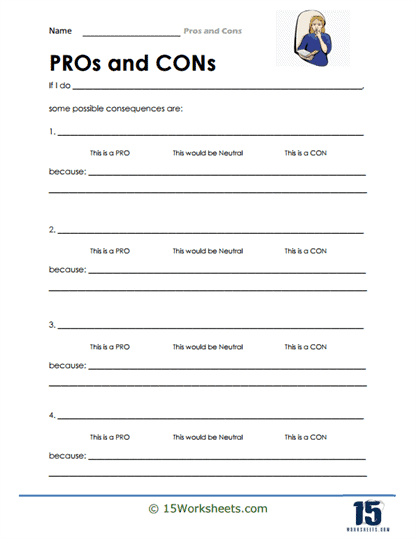
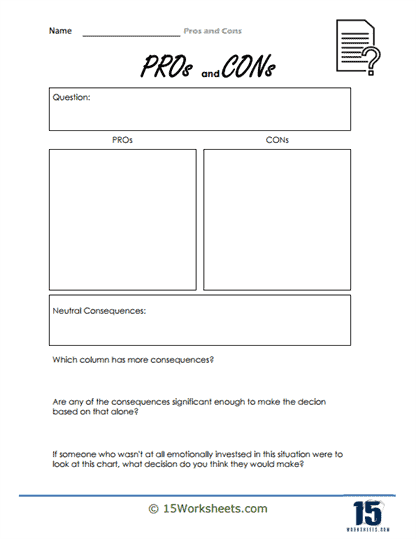
Possible Consequences
This worksheet asks students to consider what might happen following each choice-short-term and perhaps long-term. It moves beyond pros and cons to bringing cause and effect into play. They start thinking like little time travelers, weighing what could actually happen. It’s a thoughtful, future-aware approach to decision-making.
Should I Or Should I Not?
A more internal, introspective take-students reflect on whether they should make a decision at all. It helps recognize doubt and moral or emotional hesitation. It’s helpful for teaching restraint and deeper questioning. Sometimes, not choosing immediately is a choice, too!
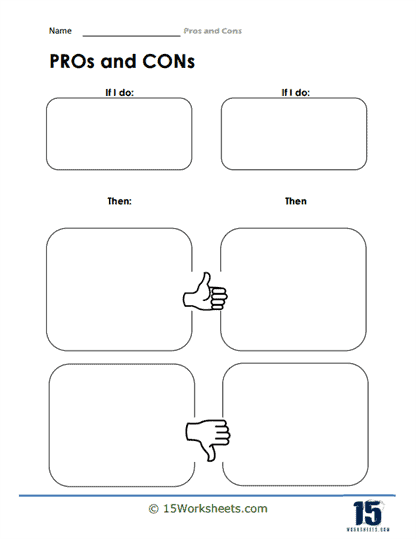
If And Then
Students map decisions using “if this, then that” logic, like “If I choose option A, then this will happen.” It helps draw out cause-and-effect in a clear, conditional way. It’s like a mini logic puzzle embedded in their choices. Great for teaching how decisions ripple into outcomes.
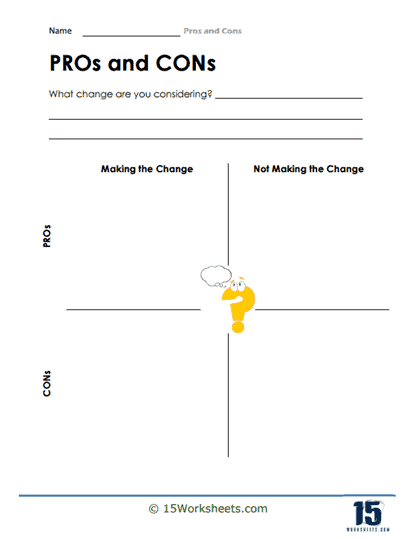
Making A Change
This worksheet cues students to consider how their decision might change things-maybe habits, routines, or feelings. It’s about visualizing transformation. It encourages thinking not just about the choice, but about how it shifts things moving forward. Excellent for connecting decisions to life adjustments.
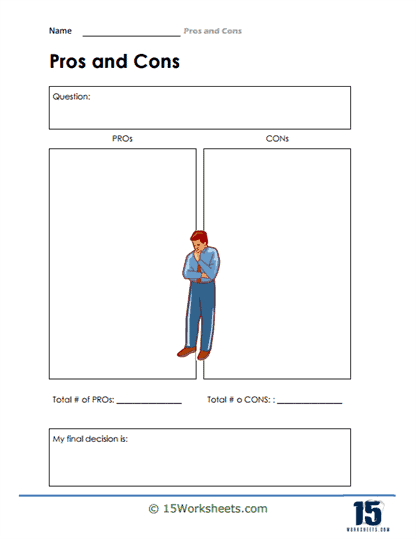
Counting Pros And Cons
Here, students literally count the positives versus the negatives to see which side is heavier. It’s simple, fair-and, for many kids, intuitive. It introduces basic quantitative thinking without the math anxiety. A fun, clear-cut approach to “who wins?”
Weigh Both Sides
This asks students to consider both pros and cons equally before reaching a verdict-like giving each side a fair seat at the table. It reinforces balance and thoroughness. It’s a visual and conceptual reminder that good decisions come from honest reflection. Think of it like holding a mini debate with yourself!
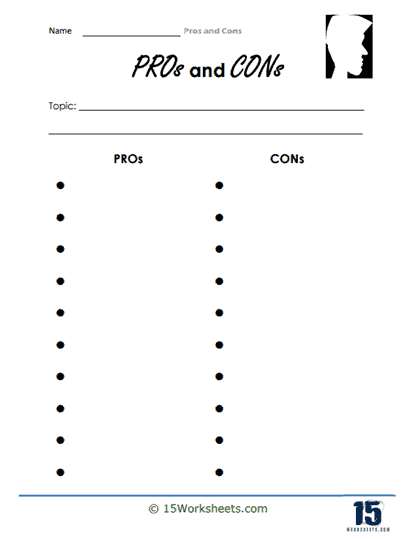
Bullet Points
Tidy and punchy-students list pros and cons in neat bullet form. This keeps thinking simple and organized. No frills, just clear points, ideal for quick reflection. Great for younger students or when you want to boil decisions down to the essentials.
Actions And Assumptions
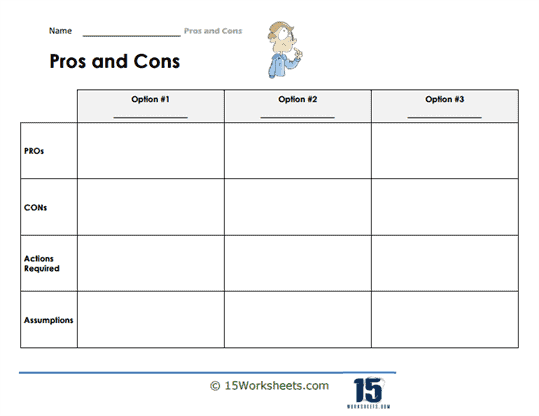
This one digs deep-students note both what actions their decision entails and what they’re assuming about outcomes or others. It teaches mindfulness of hidden assumptions. It’s an advanced step: every choice comes with both a plan and beliefs. It pushes critical thought beyond obvious pros and cons.
What Are Pros and Cons?
“Pros and cons” is a phrase used to describe the positive (pros) and negative (cons) aspects of a decision, idea, or situation. Weighing the pros and cons helps individuals make informed choices by evaluating the potential benefits and drawbacks before taking action. This method allows for a more balanced and objective assessment of the different factors involved.
Pros
Pros are the advantages or positive aspects of a decision, idea, or situation. They represent the reasons in favor of a particular choice, as well as the potential benefits or desirable outcomes that may result from that choice. Pros help you identify the factors that support your decision or the aspects that may make a situation appealing.
Cons
Cons are the disadvantages or negative aspects of a decision, idea, or situation. They represent the reasons against a particular choice, as well as the potential drawbacks or undesirable outcomes that may result from that choice. Cons help you identify the factors that may discourage you from making a decision or the aspects that may make a situation less appealing.
When evaluating pros and cons, it is important to consider both the short-term and long-term implications of each option. This comprehensive analysis can help you make more informed decisions that align with your values, goals, and priorities, ultimately leading to better outcomes in various aspects of your life.