
Respect Worksheets
About These 15 Worksheets
Respect is one of those life skills that never goes out of style-it’s like the little black dress of good character. These worksheets take the big, sometimes abstract idea of “respect” and make it fun, practical, and kid-friendly. From forests filled with polite animals to space missions powered by good manners, the activities give students concrete ways to understand and practice respect in action.
What makes this collection so useful is the variety of approaches. Some worksheets are playful and imaginative (like quests and crafts), while others are thoughtful and reflective (like pledges and value reflections). This mix keeps kids engaged while helping them explore respect from different angles-whether they’re noticing it in daily life, planning their own behaviors, or imagining respectful futures.
And respect doesn’t just stay on the page. Practicing these worksheets helps kids connect respect to real-world interactions-listening, sharing, being kind, and taking care of themselves. They learn that respect is not just about following rules but about creating a kinder, more thoughtful world around them.
Have a Look Inside Each Worksheet
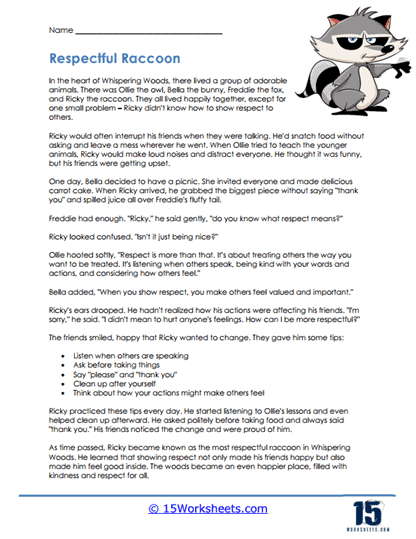
Forest Manners
This worksheet invites students to practice respect by imagining polite animal behaviors in a forest setting. They might match forest creatures to polite actions-think: “the owl says please.” It’s playful and nature-centric, ideal for engaging young minds. Through it, students learn that respect is universal, whether among people or animals.
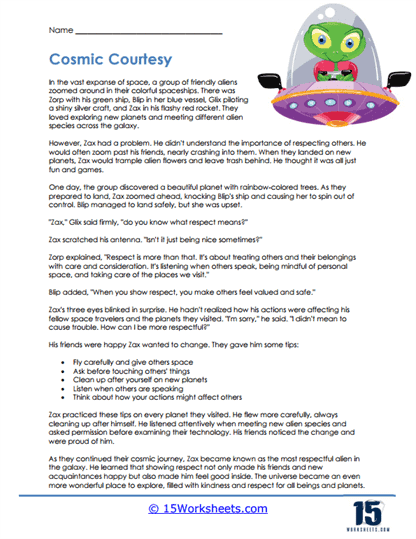
Galaxy Etiquette
Blast off into respectful behavior-themed after outer space, this activity lets kids explore manners in cosmic scenarios. Maybe matching “astronauts waiting their turn” or “aliens listening kindly” ideas. It feels like space camp meets etiquette class, with fun visuals and imaginative prompts. It teaches that respect isn’t only down here-it’s out of this world!
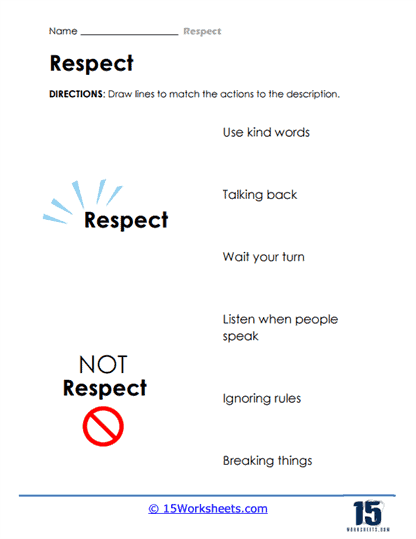
Behavior Match
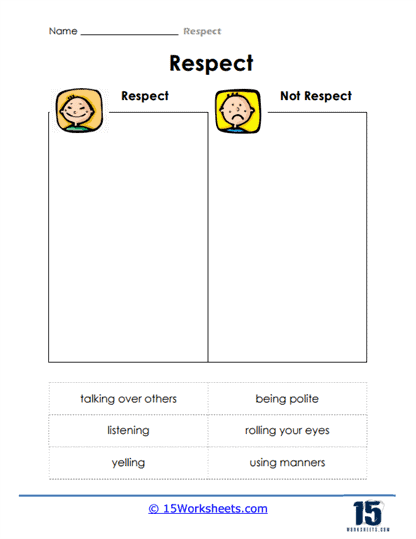
Students match courteous behaviors to corresponding examples or scenarios, practicing recognition of what shows respect. It’s like a matching game-connect “holding the door” with “helping someone enter.” The task is engaging, like a memory game, but with a positive social twist. Through this, kids reinforce what respectful behavior looks like in everyday life.
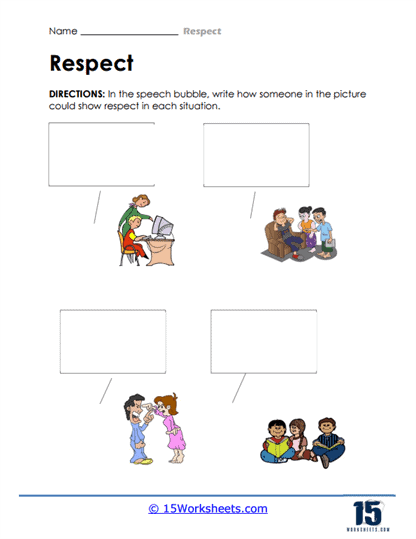
Polite Pointers
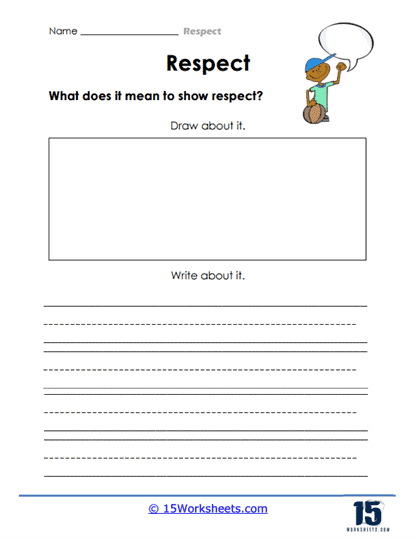
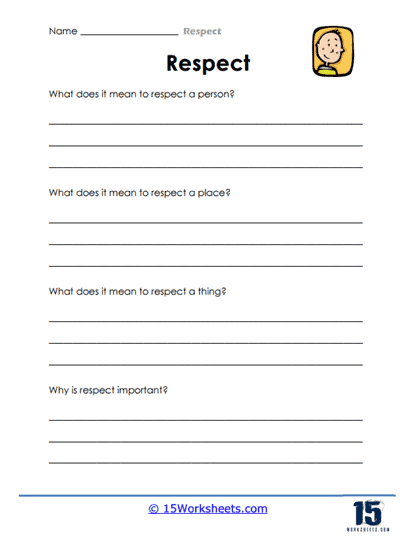
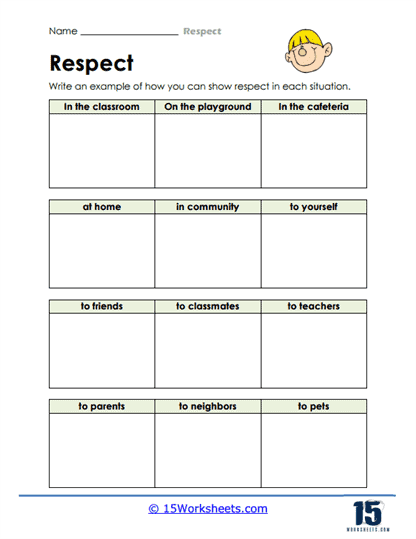
A worksheet prompting children to think of respectful behaviors in different contexts-maybe listing ways to show respect at home or school. It’s simple yet direct: fill in behavior pointers with your own ideas. This task encourages personal reflection with a splash of creativity. It supports learning by helping students articulate and own their respectful choices.
Manners Map
Here, students might organize manners across different places-home, school, playground-like mapping respect through life zones. It’s like plotting polite behavior on a travel map, but with zones like “lunchtime” or “bedtime.” The exploratory format is engaging and helps students connect manners to real life. It reinforces that respect adapts to context but remains essential everywhere.
Courtesy Quest
An adventure-style activity encouraging kids to go on a “quest” to spot or list instances of courtesy around them. It turns manners into a mission-like detective work in everyday interactions. This game-like format is motivating and invites active participation. It roots respect in observation and action-students see it, name it, and claim it.
Manners Match
Similar to “Behavior Match,” this worksheet has students link manners-related words or images to their meanings or correct situations. It’s matching, but specifically about manners vocabulary and real-life examples. The visual matching keeps it playful and educational. It builds both language and social understanding-knowing what courteous terms mean-and how they apply.
Kindness Craft
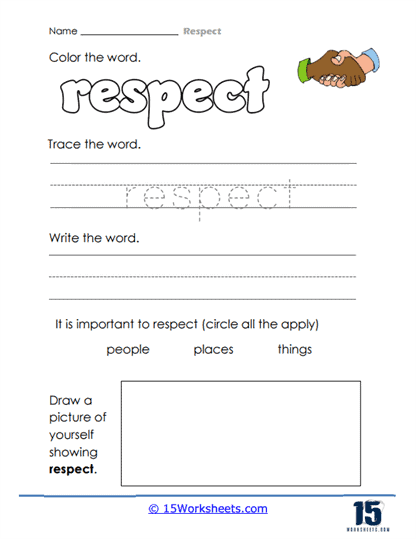
This worksheet combines a creative art activity with lessons in respectful kindness-maybe making a “kindness card” or drawing acts of considerate behavior. It’s hands-on, colorful, and encourages expression through crafting. Blending creativity with character-building, it’s a favorite for artsy learners. It teaches that respect can be shown through thoughtful gestures you create yourself.
Honor Guide
Students reflect on what “honor” means and list respectful behaviors related to it-perhaps crafting personal honor codes. It’s thoughtful and a bit ceremonial-writing down values like honesty or gratitude. The guide feels meaningful, like crafting a personal declaration of respect. It nurtures deeper appreciation for respect as a principle, not just behavior.
Self-Care Checklist
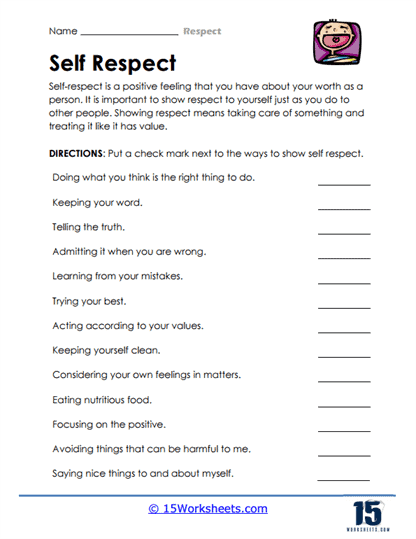
Focuses on respect toward oneself-students tick off self-care habits like “rest when tired” or “speak kindly to myself.” It’s about showing yourself respect through healthy actions. The checklist format is clear and empowering, aligning respect with well-being. It reinforces that treating yourself well is part of a respectful life.
Courtesy Guide
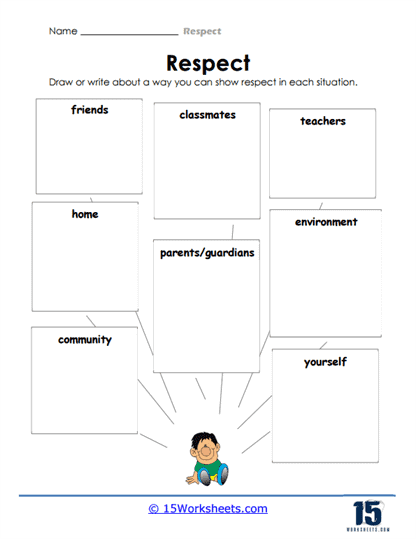
This worksheet likely helps students list ways to behave courteously across different settings-like manners at the dinner table or in lines. Pretty similar to “Polite Pointers,” but with a broader or more organized approach. It’s like designing a mini guide you can carry with you. It supports students in thinking through respectful behavior proactively.
Value Reflection
An introspective worksheet where students consider personal values and how respect aligns-maybe writing how respect matters to them or reflecting on what they respect. It’s a quiet, reflective activity fostering self-awareness. Through it, respect becomes personal and meaningful, not abstract. It deepens understanding by tying respect to individual values.
Behavior Blueprint
This worksheet might guide students in planning respectful behaviors-drawing or listing steps to show respect in certain scenarios. It’s blueprint-style-mapping respect action plans. It’s structured and strategic, teaching students to think before they act. It underlines that respect is intentional and can be designed.
Kindness Canvas
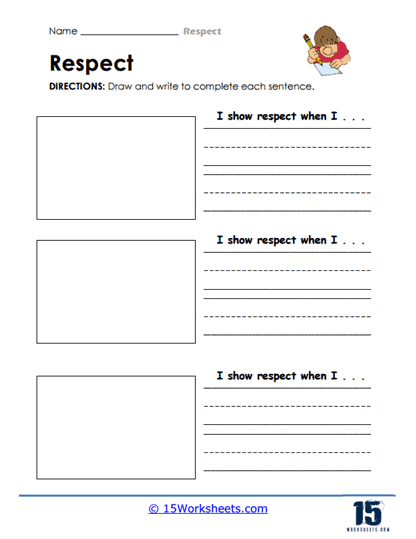
An open-ended worksheet for drawing or writing respectful acts in a “canvas” format-like painting kindness with words or images. It’s free-form and creative, letting students frame what respect looks like for them. The canvas approach invites imagination and personal connection. It reinforces that respect can be visual and expressive.
Respect Pledge
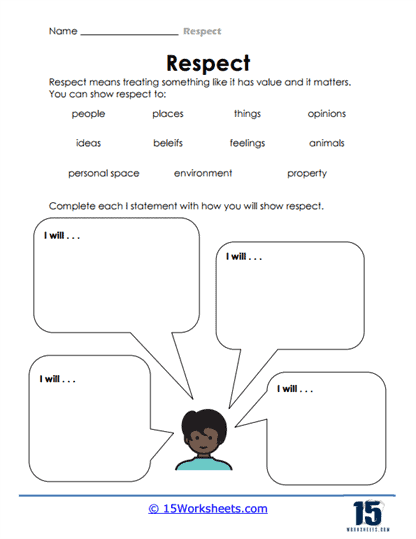
Students write a pledge-a promise-to practice respect in certain ways. It’s like creating a mini-contract with oneself about respectful behavior. The pledge feels earnest and motivational. It cements commitment, turning respect into a conscious choice.
Respect Radar
This worksheet might involve spotting examples of respect in given scenarios-like tuning your “radar” to detect respectful actions. It feels like a perceptive game-exercise your radar! It sharpens awareness of respectful moments around you. It trains students to notice-and appreciate-respect in everyday life.
Value Vision
Students envision their world if respect guided it-writing or drawing respectful futures. It’s forward-thinking and creative, projecting values into the future. The vision format is inspiring and idealistic-building respectful worlds. It connects respect to hope and possibility.
What Is Personal Respect?
Personal respect refers to the recognition and appreciation of one’s own worth and dignity. It involves valuing oneself enough to maintain boundaries, make thoughtful decisions, and treat oneself with care and kindness. When a person respects themselves, they are more likely to engage in behaviors that are healthy and positive, such as pursuing goals, standing up for their beliefs, and maintaining their well-being. Personal respect is foundational to self-esteem, as it reflects how much we value our own existence and the choices we make in life. When we respect ourselves, we set a standard for how we expect to be treated by others, and this, in turn, influences our interactions and relationships.
Exhibiting respect towards others is crucial for creating harmonious and positive social environments. Respecting others means acknowledging their worth, listening to their opinions, and valuing their feelings and experiences. This behavior fosters trust, cooperation, and mutual understanding, which are essential components of any healthy relationship, whether it be with friends, family, colleagues, or even strangers. When we show respect, we contribute to a culture of kindness and consideration, where people feel safe, valued, and appreciated. This not only improves interpersonal dynamics but also strengthens the social fabric by promoting inclusivity and empathy.
Respect is a key ingredient in all types of relationships, from personal to professional. In friendships, respect allows individuals to feel heard and valued, which deepens the bond and trust between them. In professional settings, respect leads to effective collaboration, as it encourages open communication and the free exchange of ideas. When people feel respected, they are more likely to be engaged, motivated, and willing to contribute positively to the relationship or group dynamic. Conversely, a lack of respect can lead to conflicts, misunderstandings, and a breakdown in communication, which can harm relationships and create a toxic environment.
Respect is inherently reciprocal; when we show respect to others, we are more likely to receive respect in return. This reciprocal nature of respect is what sustains positive relationships and social cohesion. When people feel respected, they tend to mirror that behavior back to those who have shown them respect. This creates a cycle of positive interactions, where mutual respect leads to greater understanding, cooperation, and a sense of belonging. Conversely, disrespect often breeds resentment and conflict, disrupting the balance of relationships and community life.