
Identifying Emotions Worksheets
About These 15 Worksheets
This collection of Identifying Emotions Worksheets is designed to help children build the essential skill of emotional awareness in fun and engaging ways. Through a variety of activities-such as matching expressive faces to emotion words, drawing feelings, and connecting scenarios with appropriate emotional responses-students learn how to recognize, name, and understand a wide range of emotions. The worksheets strike a balance between playful illustration and meaningful practice, making them a perfect fit for classrooms, counseling sessions, or at-home learning.
Beyond simple recognition, the collection also encourages deeper reflection and self-expression. Activities like journaling prompts, mood trackers, and situational exercises invite learners to think about how emotions are experienced in real life, fostering empathy, vocabulary growth, and self-awareness. Printable and easy to use, these worksheets provide a versatile toolset for educators and parents alike-ideal for supporting social-emotional learning and helping children navigate the complex world of feelings with confidence.
Have a Look Inside Each Worksheet
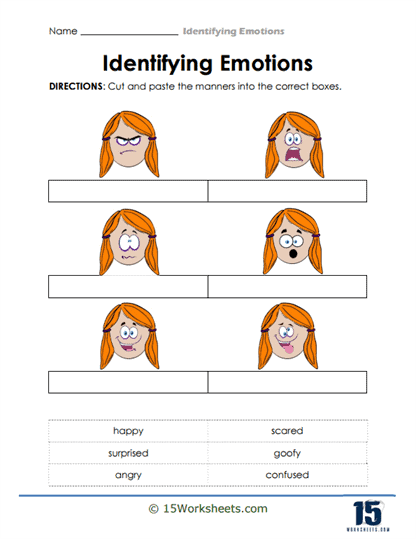
Face Match
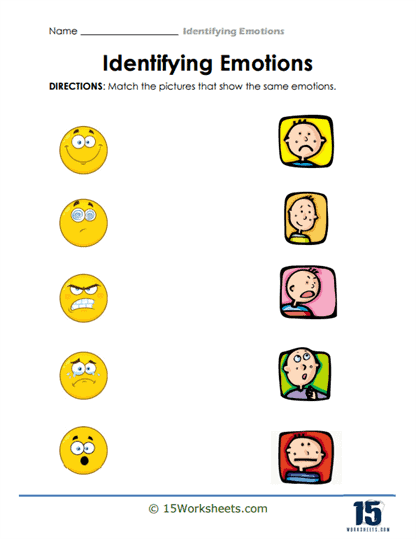
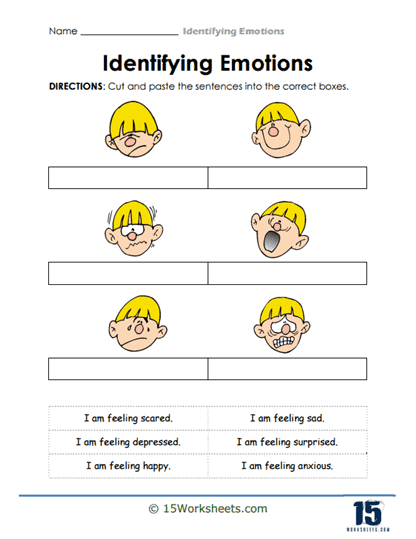
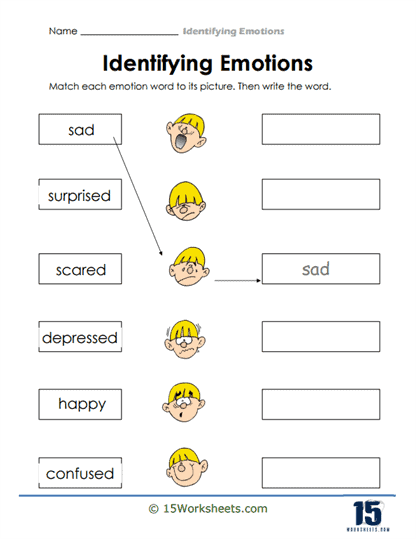
Kids match expressive faces to the correct emotion words, turning feelings into an easy visual game. They practice reading facial cues like eyebrows, eyes, and mouth shapes. This builds emotion vocabulary and quick visual recognition. It directly supports learning in Identifying Emotions by linking pictures to precise feeling words.
Face Feelings
Students study illustrated faces and choose which feeling each one shows. They learn to slow down, notice details, and justify their choices. The activity strengthens observation and labeling skills. It supports Identifying Emotions by training kids to decode expressions accurately.
Mood Matchup
Learners pair mood words with matching faces-word meets picture in a friendly puzzle. They refine understanding of similar terms (happy vs. excited, worried vs. scared). Repeated matching cements vocabulary and confidence. It supports Identifying Emotions by reinforcing the connection between labels and looks.
Feeling Faces
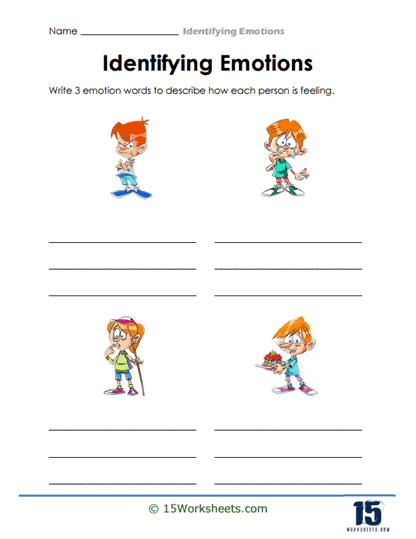
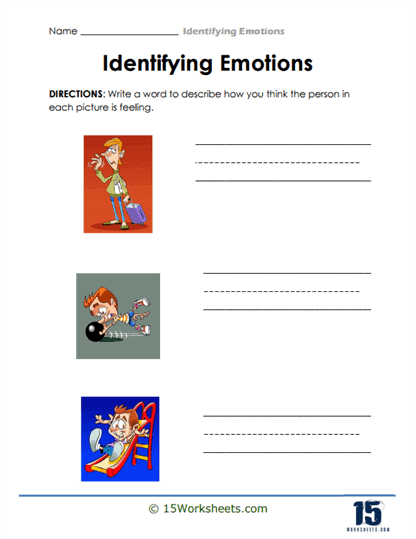
Children act like “emotion detectives,” deciding what each character is feeling from facial clues. They notice how tiny changes-arched brows, curved mouths-signal big differences. The task sparks empathy and discussion. It supports Identifying Emotions through careful analysis of expressions.
Face Feelings
This version invites kids to match, circle, or draw lines from faces to feeling words. The varied response types keep engagement high. Students rehearse the same core skill from a fresh angle. It supports Identifying Emotions by giving extra practice reading faces and naming feelings.
Mood Matcher
Students link a mood word bank to a set of expressive faces. The structure encourages process-of-elimination and close looking. They gain precision with nuanced terms. It supports Identifying Emotions by sharpening word-expression mapping.
Feelings Finder
Think “emotional scavenger hunt”-kids scan faces to find the best-fitting label. They compare similar options and justify their picks. This builds attention, vocabulary, and decision-making. It supports Identifying Emotions by training fast, accurate recognition.
Face Match
A second pass at the matching game gives spaced practice for long-term learning. Students see familiar expressions in a new arrangement. Confidence grows as accuracy improves. It supports Identifying Emotions by reinforcing rapid label selection from visual cues.
Mood Matcher
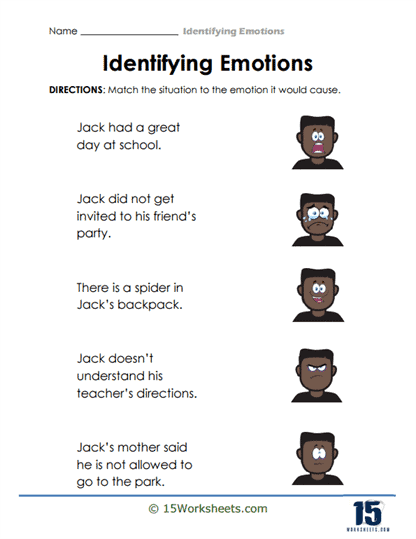
Here, matching is paired with quick check-ins or mini-prompts (e.g., “How do YOU look when…?”). Kids connect words, pictures, and self-awareness. The blend of recognition and reflection deepens understanding. It supports Identifying Emotions by tying faces on the page to feelings in real life.
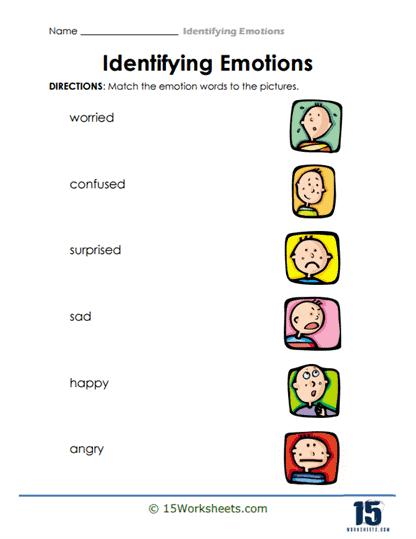
Mood Match
Learners match mood terms to pictures in a clean, straightforward layout. The repetition makes tricky pairs easier to remember. It’s ideal for centers or warm-ups. It supports Identifying Emotions by automating the basics so kids can tackle nuance later.
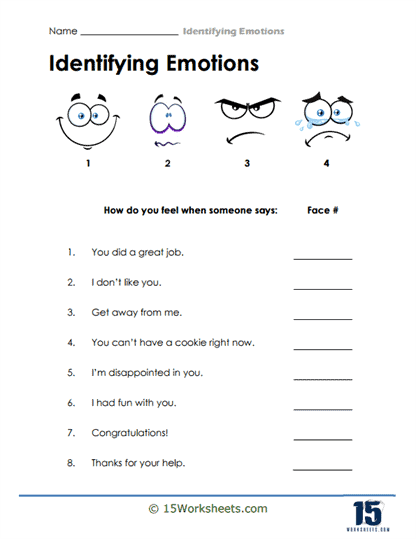
Smiley States
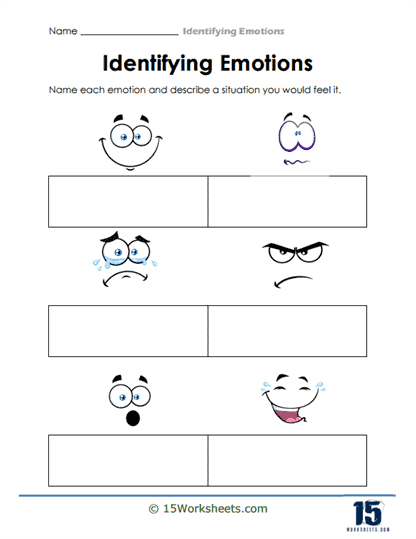
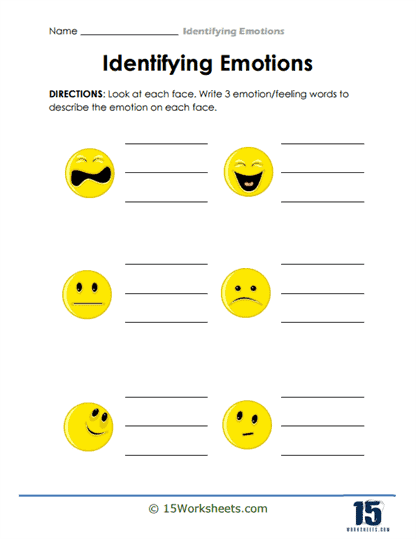
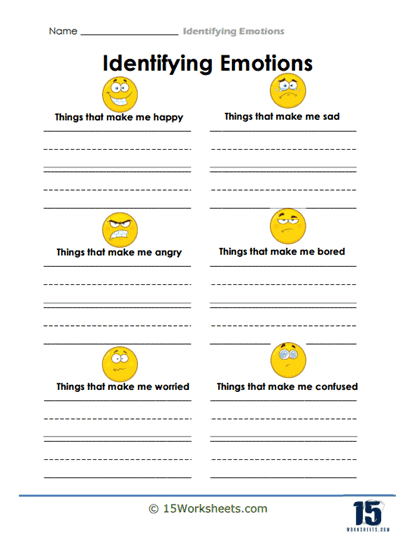
Emoji-like faces make feelings instantly relatable. Students learn that small graphic changes signal big emotional shifts. It’s especially friendly for early readers. It supports Identifying Emotions by offering a simple, accessible bridge from symbols to feelings.
Feelings Finder
Another search-and-find round helps kids sort close calls like “confused” vs. “surprised.” They practice explaining the clue that led to their choice. This turns guessing into reasoning. It supports Identifying Emotions by building evidence-based identification.
Mood Tracker
Students log how they feel across days or parts of a day. Patterns emerge, and vocabulary grows with use. Gentle reflection builds self-regulation. It supports Identifying Emotions by helping kids notice, name, and normalize their own feelings.
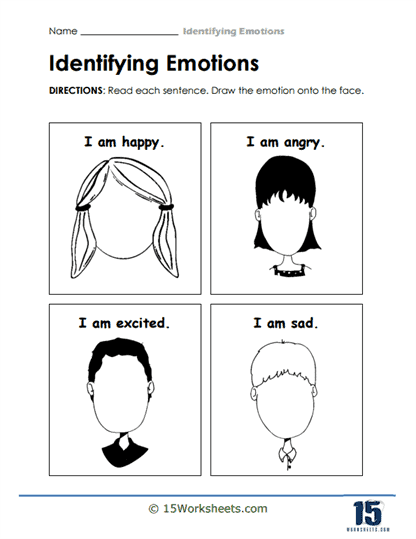
Face Draw
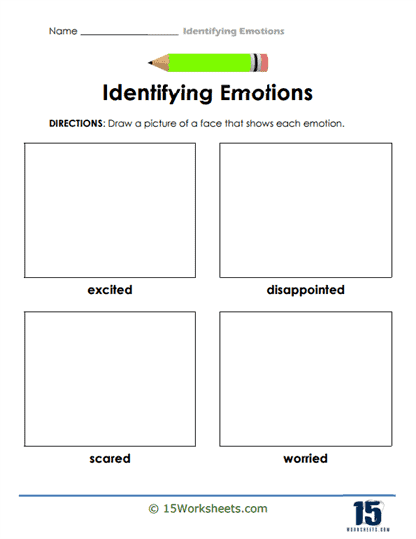
Kids draw a face to match a given feeling word-creating the expression from scratch. They think about which features to change and why. Art and SEL combine for deep learning. It supports Identifying Emotions by translating words into accurate visual expressions.
Feeling Journal
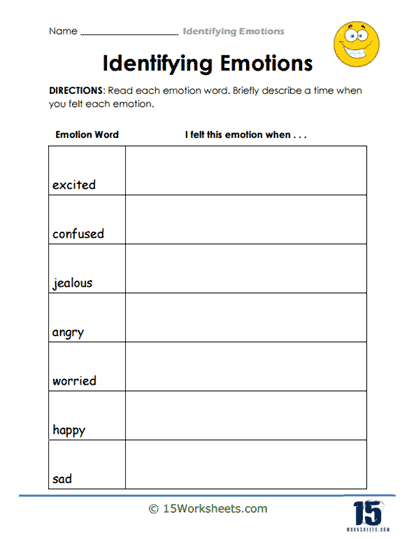
Learners write or draw about their feelings and what sparked them. Reflection turns fleeting moods into understandable stories. Optional prompts guide even reluctant writers. It supports Identifying Emotions by strengthening the habit of naming and explaining emotions.