
Goal Setting Worksheets
About Our Goal Setting Worksheets
Learning how to set goals is one of the most valuable skills students can develop. Whether they want to improve their grades, build better habits, learn a new skill, or accomplish something personal, goals help give them direction and purpose. These worksheets teach students how to move beyond simply wishing for something and instead create a plan to make it happen. By breaking big dreams into manageable steps, students learn that success often comes from consistent effort and thoughtful planning.
This collection helps students explore every part of the goal-setting process, from identifying priorities and creating action plans to tracking progress and overcoming obstacles. Students will practice self-reflection, organization, decision-making, and problem-solving while learning how to set realistic and meaningful goals. Many of the activities use SMART goal strategies, helping students create objectives that are clear, measurable, and achievable. The worksheets encourage students to take ownership of their growth while building confidence in their ability to succeed.
Goal setting isn’t just important in school-it is a skill that supports success throughout life. Learning how to plan, stay motivated, adjust when challenges arise, and celebrate progress helps students become more independent and resilient. These worksheets provide practical tools that students can use both now and in the future. Most importantly, they help children see that meaningful accomplishments often begin with a simple plan and a willingness to take the first step.
About Each Worksheet
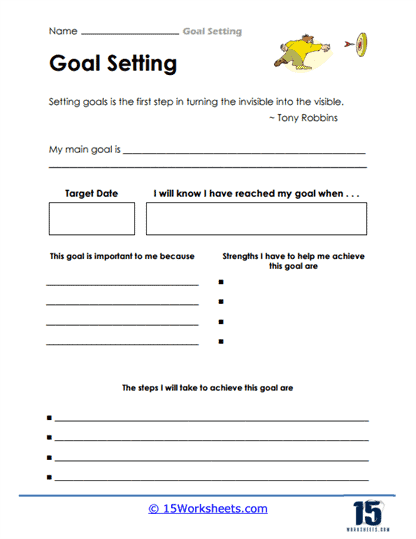
Vision Target
This worksheet helps students turn a big idea into a clear objective with a target date and action plan. By thinking about why their goal matters and what strengths they already have, students build confidence before they even begin. It’s a great starting point for creating purposeful goals.
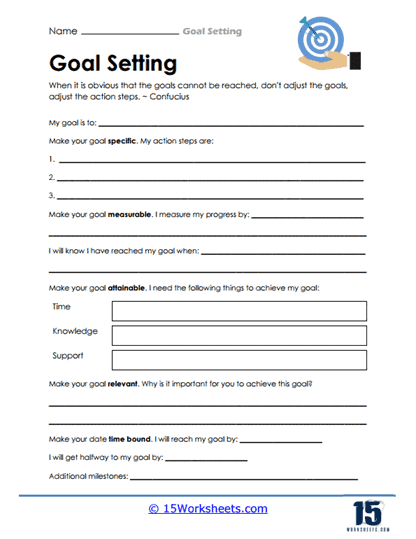
Action Blueprint
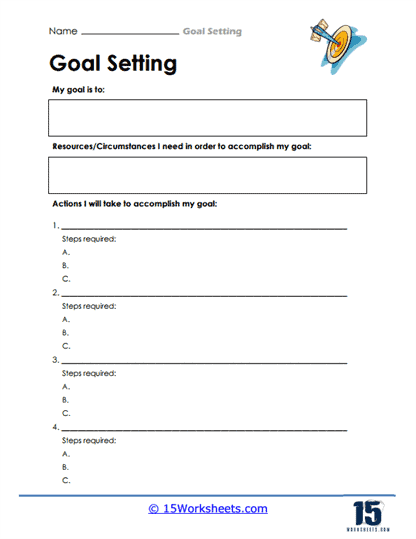
Students learn how to transform a goal into a step-by-step plan using SMART goal principles. The worksheet encourages them to think about resources, support, and timelines so their objective feels achievable. It helps take the guesswork out of planning.
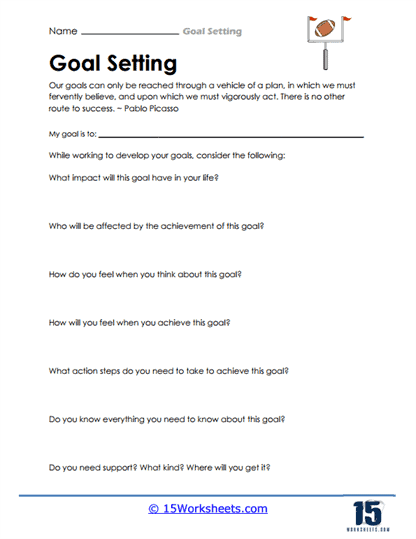
Vision Map
This activity encourages students to think beyond the goal itself and consider how success might affect their lives and the people around them. The reflective questions help build a stronger emotional connection to their objectives. It’s a thoughtful approach to long-term planning.
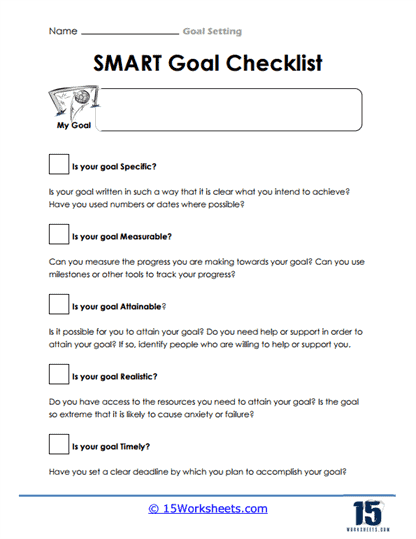
SMART Steps
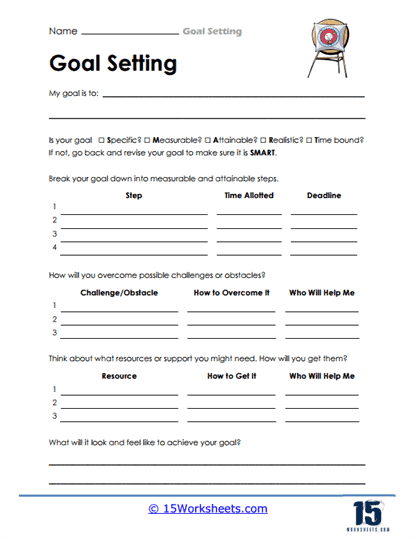
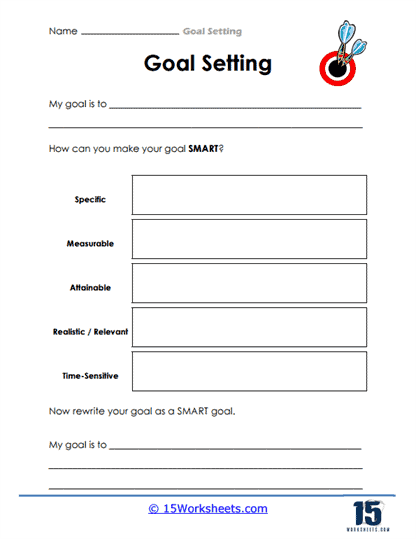
This worksheet walks students through the SMART goal framework in a simple and practical way. By evaluating their goal against each criterion, they learn how to make their plans more focused and realistic. It’s an excellent tool for strengthening goal-setting skills.
Purpose Planner
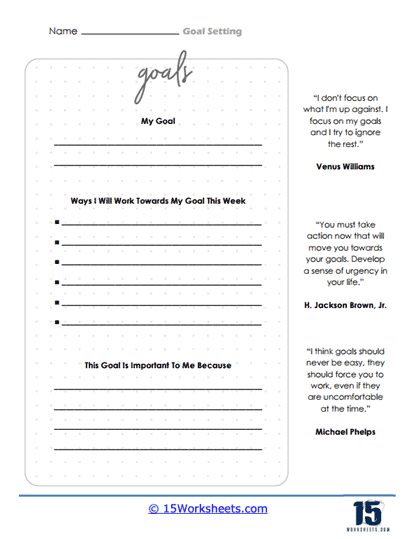
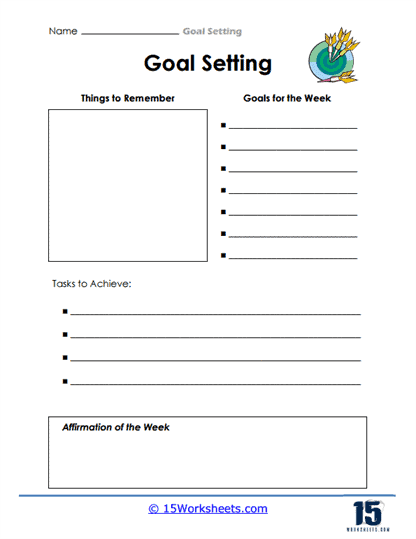
Students identify an important goal and map out ways they can work toward it throughout the week. The motivational format helps keep them focused on why the goal matters in the first place. It’s a simple worksheet with a powerful message about persistence.
Focus Finder
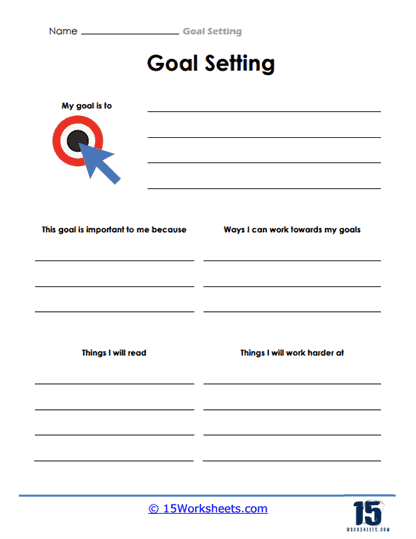
This activity helps students clarify what they want to achieve and identify the actions needed to get there. By thinking about resources, learning opportunities, and areas that require extra effort, students create a practical roadmap for success. It encourages both reflection and action.
Achievement Steps
Big goals can feel overwhelming, but this worksheet helps break them into smaller, manageable tasks. Students learn how to organize their efforts and focus on one step at a time. The structured format makes progress feel much more achievable.
Success Path
Students create a detailed plan while also thinking ahead about possible challenges and solutions. The worksheet encourages resilience by helping learners prepare for obstacles before they appear. It’s a great way to build confidence and problem-solving skills.
Priority Planner
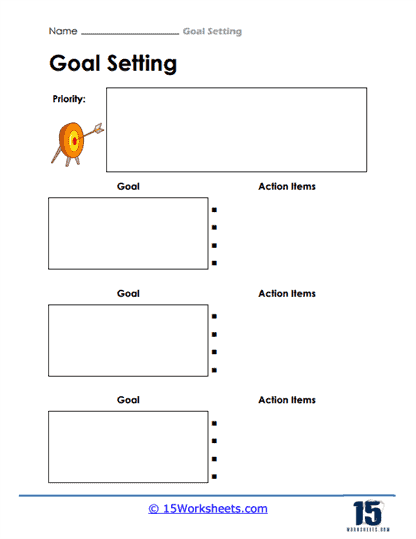
This worksheet helps students decide what matters most and organize their efforts around that priority. By breaking larger goals into smaller action items, students learn how to stay focused without becoming overwhelmed. It’s a valuable lesson in time management and decision-making.
Triple Focus
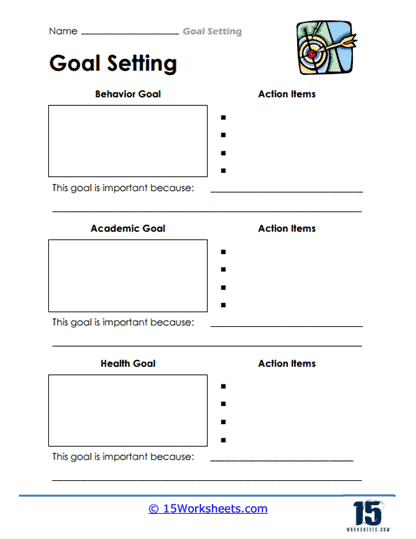
Students set goals in three important areas of life: behavior, academics, and health. The balanced approach encourages them to think about personal growth from multiple angles rather than focusing on just one area. It promotes well-rounded development and healthy habits.
Change Maker
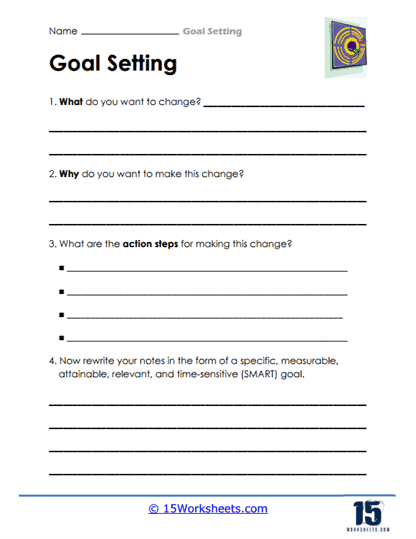
This worksheet helps students identify a positive change they would like to make and develop a realistic plan to achieve it. By converting their ideas into SMART goals, they learn how to make change feel more manageable. It’s a great exercise in personal growth and self-improvement.
Action Plan
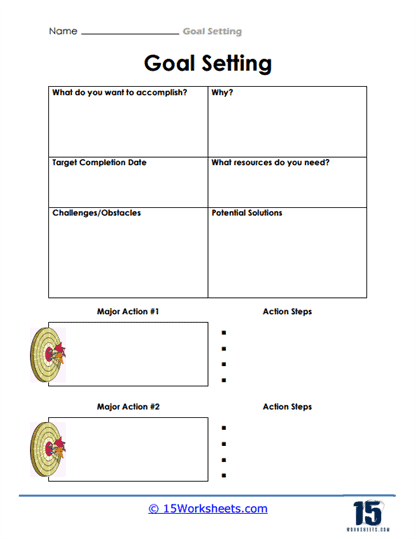
Students create a detailed roadmap for achieving an objective by identifying resources, challenges, deadlines, and major action steps. The planning process helps them think ahead and stay organized. It’s a practical tool for turning intentions into action.
SMART Start
This worksheet teaches students how to take a broad goal and refine it into a SMART goal that is specific and measurable. The step-by-step process helps students build stronger planning habits and clearer expectations. It’s an excellent introduction to effective goal setting.
Goal Tracker
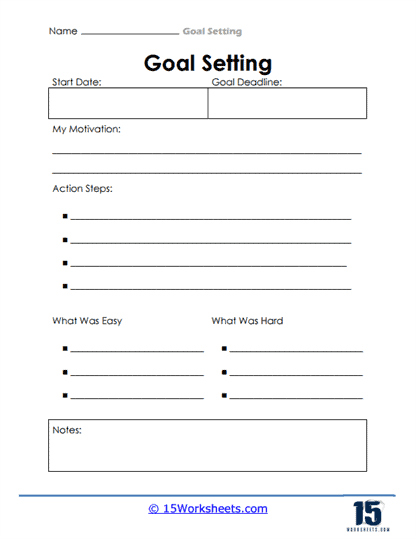
Tracking progress becomes much easier with this reflection-focused worksheet. Students document their goals, monitor their efforts, and think about what worked well and what was challenging. The self-assessment component helps build resilience and continuous improvement.
What is Goal Setting?
Goal setting is the process of deciding what you want to achieve and creating a plan to make it happen. Goals can be short-term, such as finishing a project by the end of the week, or long-term, such as improving a skill over several months. Having a goal gives students direction and helps them stay focused on what is important. It turns ideas and dreams into something concrete and achievable.
Effective goal setting often involves breaking large objectives into smaller steps. This makes progress easier to track and helps students stay motivated along the way. Many people use the SMART goal framework to make sure their goals are specific, measurable, attainable, relevant, and time-bound. Having a clear plan increases the chances of success and helps students stay committed even when challenges arise.
Learning how to set goals teaches valuable life skills that go far beyond the classroom. Students develop responsibility, organization, perseverance, and problem-solving abilities as they work toward their objectives. They also learn how to evaluate their progress and make adjustments when needed. These skills help build confidence and prepare students for success in school, careers, and everyday life.