
Diverse Perspectives Worksheets
About Our Diverse Perspectives Worksheets
Understanding different perspectives is an important part of learning how to communicate, collaborate, and connect with others. These worksheets help students explore how people can experience the same situation in different ways based on their backgrounds, beliefs, cultures, and life experiences. Through stories, discussions, videos, and reflection activities, students learn that there is often more than one way to view a topic. This collection encourages open-minded thinking while helping children become more thoughtful and respectful learners.
The activities in this collection invite students to analyze characters, compare viewpoints, discuss meaningful questions, and engage with ideas that may be different from their own. Along the way, they strengthen reading comprehension, listening skills, writing, critical thinking, and communication abilities. Students are encouraged to reflect on their own opinions while learning to appreciate the value of hearing from others. These lessons help create meaningful conversations both inside and outside the classroom.
In today’s diverse world, the ability to understand different perspectives is more important than ever. Whether students are discussing books, current events, friendships, or classroom topics, perspective-taking helps build empathy and respect. These worksheets provide practical opportunities for students to practice those skills while learning that differences in opinion and experience can enrich our understanding of the world. The result is a stronger sense of curiosity, compassion, and inclusion.
About Each Worksheet
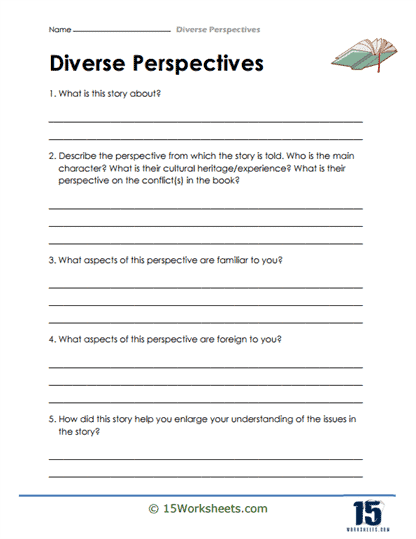
Close Reading
This worksheet encourages students to look beyond the surface of a story and think about how a character’s experiences shape their point of view. It helps them understand that background, culture, and personal experiences often influence the way people see situations. It’s a thoughtful reading activity that promotes deeper comprehension.
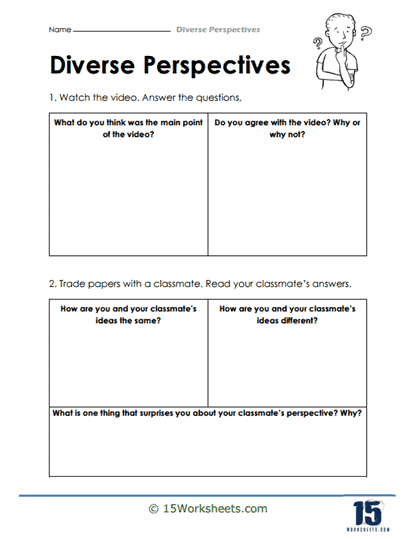
Watch And Trade
After watching a video, students get the chance to share their opinions and compare them with a classmate’s. Seeing where viewpoints overlap-and where they differ-helps children understand that people can interpret the same message in different ways. The discussion component makes learning feel active and engaging.
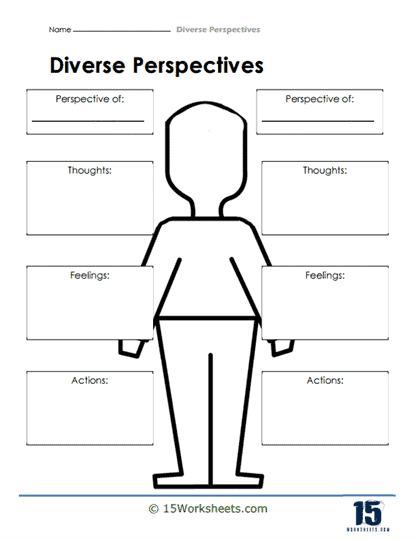
Thoughts, Feelings, Actions
This worksheet helps students explore how thoughts, emotions, and actions are connected. By examining two different perspectives, they gain a better understanding of why people may respond differently to the same situation. It’s an excellent activity for building empathy and emotional awareness.
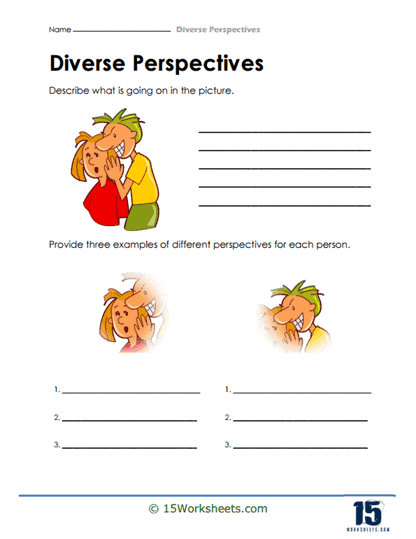
What’s Going On?
A simple picture becomes the starting point for some big thinking. Students look closely at a scene and imagine how each person involved might see the situation differently. The activity encourages observation, creativity, and perspective-taking all at once.
Different Points Of View
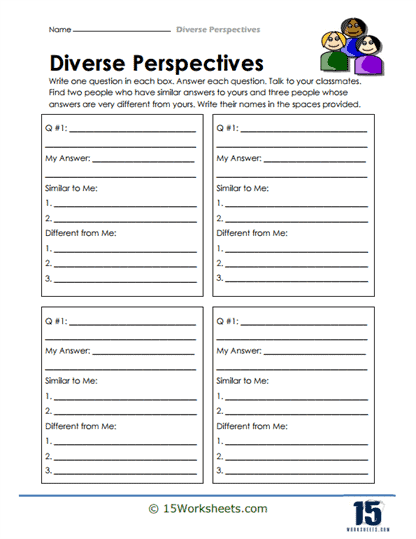
Students discover firsthand that their classmates may have very different opinions on the same questions. By comparing answers and discussing differences, they learn that disagreement doesn’t have to be a bad thing. It’s a great exercise in respectful conversation and open-mindedness.
Circle What’s Different
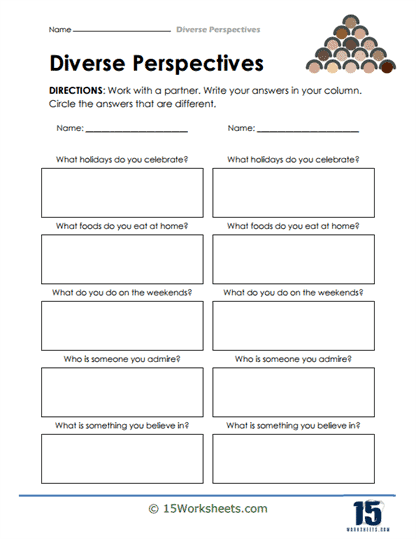
This partner activity highlights both the differences and similarities that make people unique. Students compare answers about traditions, beliefs, interests, and experiences, sparking meaningful conversations along the way. It helps children appreciate diversity within their own classroom community.
My Hero
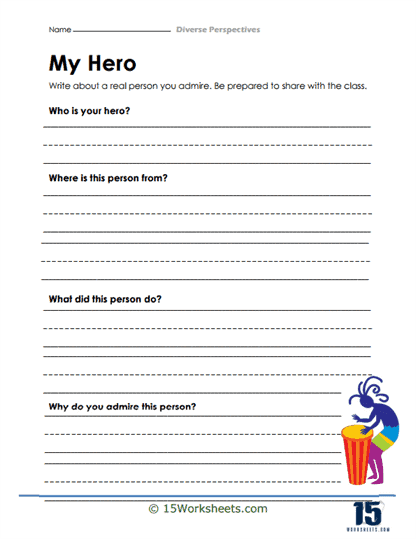
Everyone has someone they admire, and this worksheet gives students a chance to explain why. As they share stories about their heroes, classmates gain insight into different values, inspirations, and life experiences. It’s a simple activity that often leads to meaningful discussions.
What Gives Life Meaning?
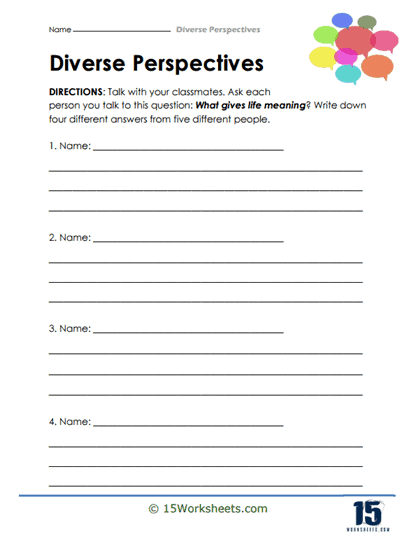
This worksheet encourages students to ask a big question and listen carefully to a variety of answers. By gathering perspectives from different people, they learn that meaning and purpose can look different for everyone. The activity promotes curiosity, empathy, and thoughtful reflection.
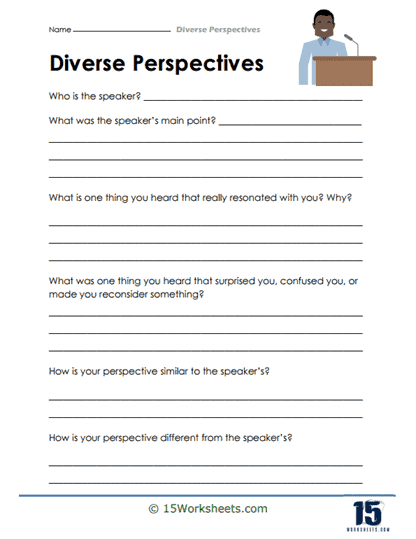
Resonating With A Speech
Listening becomes more meaningful when students think about how a speaker’s ideas connect to their own experiences. This worksheet helps learners reflect on what they agree with, what surprises them, and what challenges their thinking. It encourages active listening and personal growth.
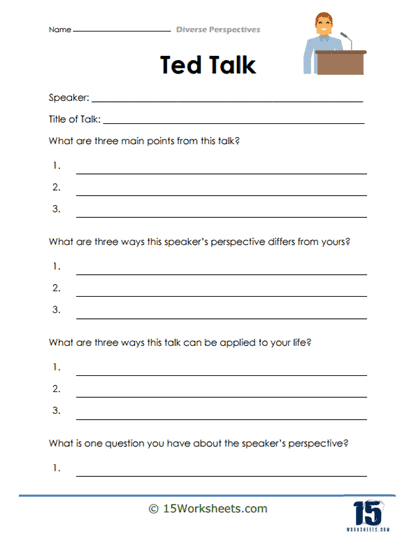
Ted Talk In Three’s
Students break down a TED Talk into its most important ideas while reflecting on how the message relates to their own lives. The activity strengthens comprehension and critical-thinking skills without feeling overwhelming. It also encourages students to ask thoughtful questions about what they’ve learned.
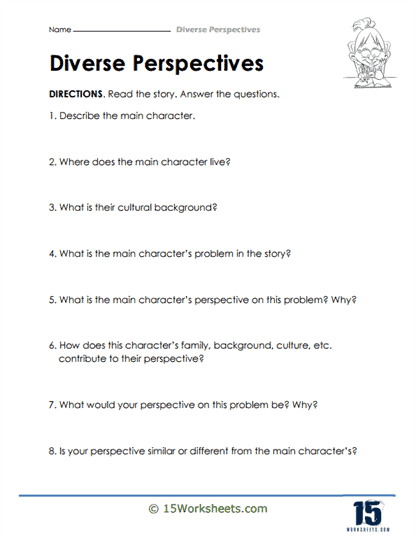
The Main Character
This worksheet helps students step into a character’s shoes and examine how background and experiences influence decisions. By comparing their own opinions to the character’s, students gain a deeper appreciation for different perspectives. It’s a powerful reading and reflection activity.
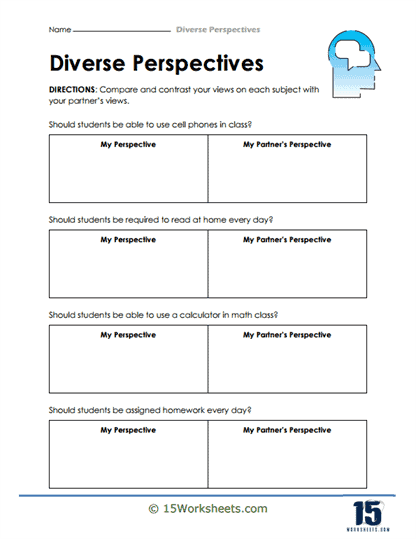
Comparing And Contrasting
Students share opinions on familiar school topics and compare their responses with a partner. The activity shows that reasonable people can have different viewpoints on the same issue. It’s a practical lesson in respectful discussion and understanding.
The Danger Of A Single Story
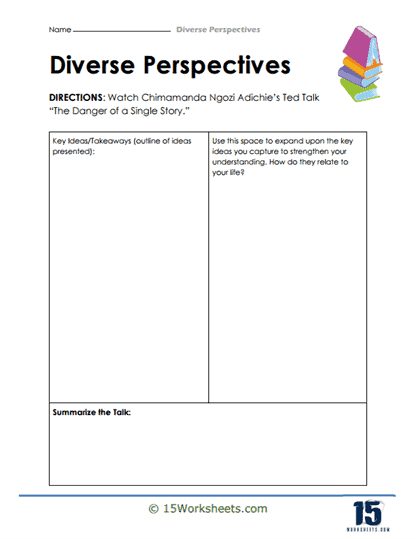
Inspired by Chimamanda Ngozi Adichie’s well-known TED Talk, this worksheet encourages students to think about the risks of making assumptions based on limited information. It challenges learners to consider how multiple stories create a fuller understanding of people and cultures. The reflection questions promote thoughtful and meaningful conversations.
Three Books, One Topic
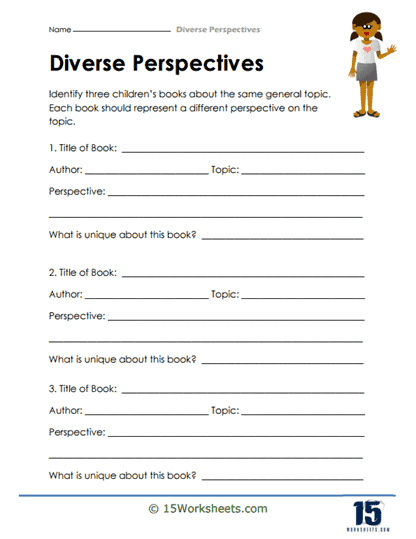
This activity encourages students to explore how different authors approach the same topic from unique perspectives. By comparing books, they discover that there is rarely just one way to tell a story. It’s a wonderful exercise in critical reading and analysis.
A Deeper Dive
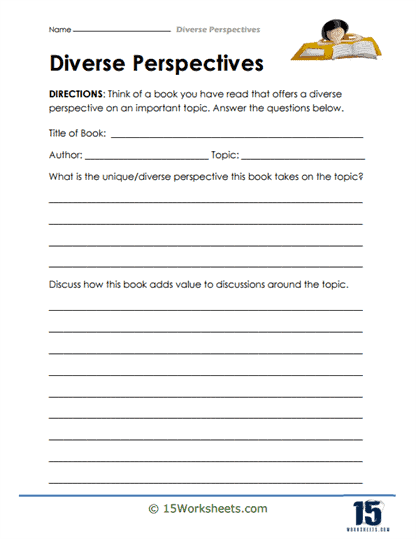
Students take a closer look at a book that presents a unique viewpoint and consider how it adds to larger conversations about the topic. The worksheet encourages thoughtful reflection and helps students appreciate the value of diverse voices. It’s an excellent activity for developing analytical thinking.
What are Diverse Perspectives?
Diverse perspectives are the different ways people understand, experience, and interpret the world around them. A person’s perspective is often shaped by factors such as their culture, family, experiences, beliefs, traditions, and personal interests. Because everyone has a unique life story, people may see the same event, problem, or idea in very different ways. Learning about these differences helps students become more open-minded and understanding.
Exploring diverse perspectives doesn’t mean everyone has to agree with each other. Instead, it encourages people to listen, learn, and consider viewpoints they may not have thought about before. When students hear different opinions and experiences, they gain a broader understanding of the world and develop stronger communication skills. These conversations often lead to greater empathy and respect for others.
Learning about diverse perspectives supports important skills in reading, writing, speaking, and critical thinking. It helps students analyze characters, evaluate ideas, and participate in meaningful discussions. Just as importantly, it prepares them to live and work in communities where people come from many different backgrounds. Understanding diverse perspectives helps build stronger relationships, better problem-solving skills, and a greater appreciation for the richness of human experience.