
Kindness Worksheets
About These 15 Worksheets
Kindness isn’t just about saying “please” and “thank you”-it’s about the little choices we make every day that make life better for others. These worksheets give students the chance to think about, practice, and even plan acts of kindness in fun, creative ways. From sorting good and bad actions to writing poems or filling in thought bubbles, kids explore kindness from many different angles. The activities turn abstract ideas into real, meaningful actions they can use in their daily lives.
The collection is packed with variety to keep students engaged. Some worksheets focus on words, like building a library of caring phrases or creating kindness word art. Others emphasize actions, like planning daily good deeds or rewriting unkind situations with better choices. There are even reflection activities that connect kindness to gratitude and school spirit. Together, they make kindness feel less like a lesson and more like a habit.
Beyond classroom practice, these worksheets also prepare kids to carry kindness into the real world. They encourage empathy, teamwork, and respect, helping students see that being kind is both powerful and simple. Whether it’s through a smile, a thoughtful word, or a helpful action, kindness becomes something kids can choose every single day.
Have a Look Inside Each Worksheet
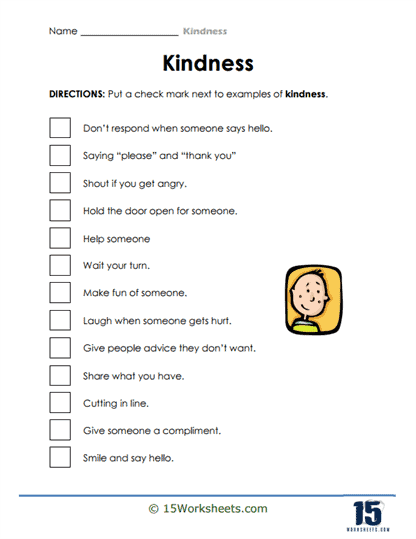
Right Choices
Students sort through actions and identify which ones show kindness. It helps them spot positive behaviors in everyday life. The activity makes kids think about how small choices affect others. It’s a clear, practical way to build social awareness.
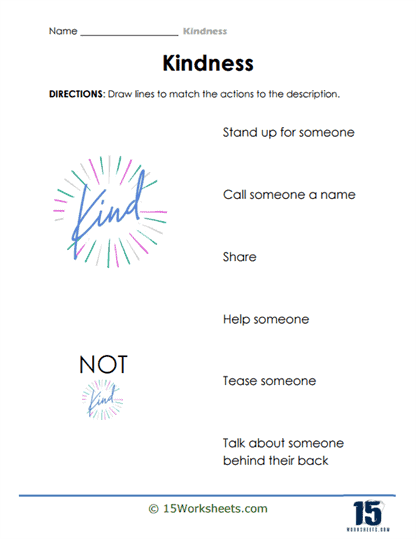
Action Match
Here, learners match acts of kindness with the right description. The puzzle-like activity sharpens critical thinking while reinforcing caring actions. It’s interactive and keeps kids engaged as they connect words to meaning. The worksheet shows kindness in action step by step.
Helpful Words
This worksheet focuses on using kind language in conversations. Students practice choosing friendly, respectful words. It highlights how speech can build others up instead of bringing them down. The activity strengthens both communication and empathy.
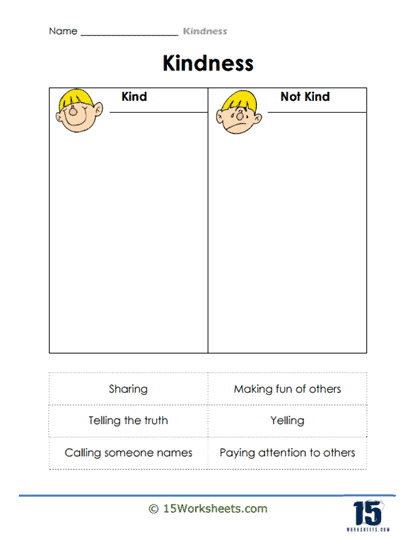
Good vs. Bad
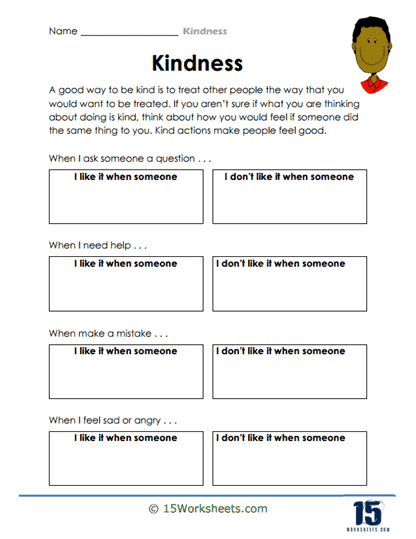
Kids compare kind actions with unkind ones to see the difference. The contrast makes lessons about empathy and respect more concrete. It helps learners reflect on how their own choices affect relationships. The worksheet encourages making thoughtful, positive decisions.
Daily Deed
Students commit to doing one kind act each day and recording it. This worksheet turns kindness into a daily habit. It promotes responsibility and consistency. The activity builds mindfulness about treating others well.
Grateful Moments
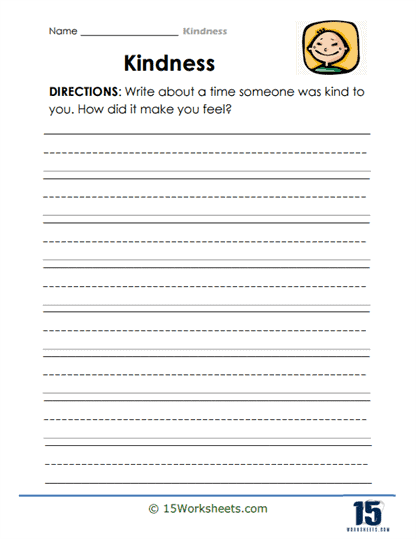
Here, kids reflect on moments when they felt thankful and kind. The worksheet ties gratitude closely to kindness. It develops emotional awareness alongside social skills. Students learn to appreciate and share positive feelings.
Poetic Warmth
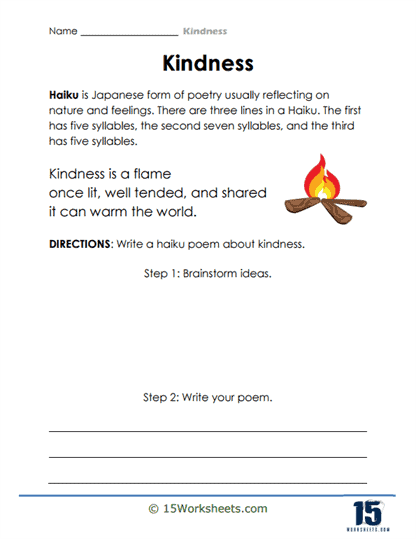
This activity has learners write poems about kindness. It blends creativity with social-emotional learning. Students express empathy and caring through words. The worksheet makes kindness both artistic and personal.
Better Choices
Students are asked to improve on unkind scenarios by rewriting them with kind responses. This worksheet builds problem-solving and perspective-taking. It teaches kids that kindness is often a decision. The activity turns negative examples into positive possibilities.
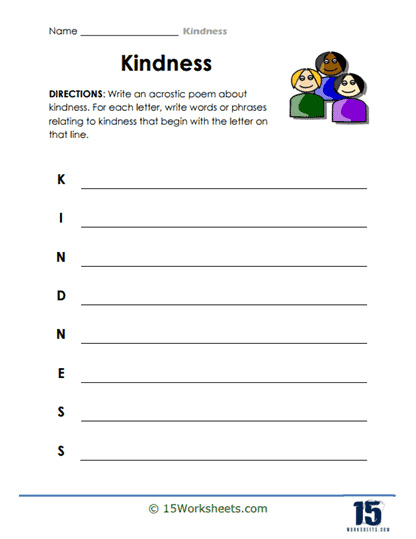
Word Weave
Kids create word art or acrostics using kindness-related words. The activity makes vocabulary building fun and imaginative. It’s a creative spin on learning positive language. The worksheet connects art, literacy, and character education.
Caring Words
Here, learners brainstorm caring phrases they can use with friends, family, or classmates. It builds a library of positive communication tools. The activity helps students realize that kindness often starts with words. It boosts confidence in speaking kindly.
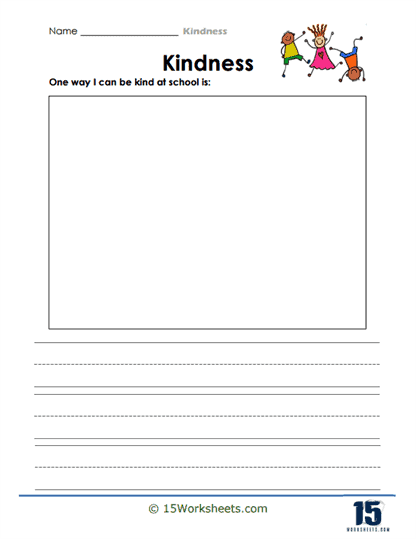
School Spirit
This worksheet focuses on showing kindness in the school community. Students reflect on how to support peers and teachers. It strengthens teamwork and respect within the classroom. The activity makes kindness feel like a shared responsibility.
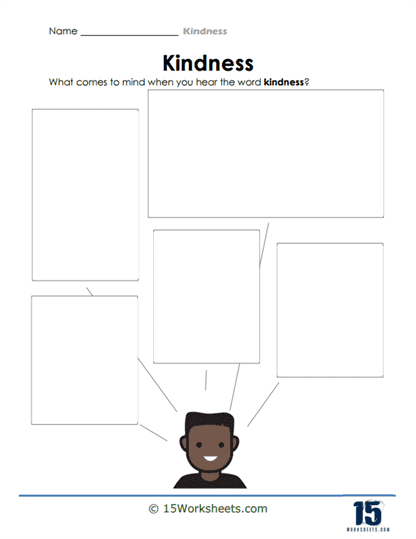
Thought Bubbles
Students fill in character thought bubbles with kind responses. It’s a role-playing activity that makes empathy more concrete. Kids practice putting themselves in others’ shoes. The worksheet develops perspective-taking and respectful dialogue.
Friendly Faces
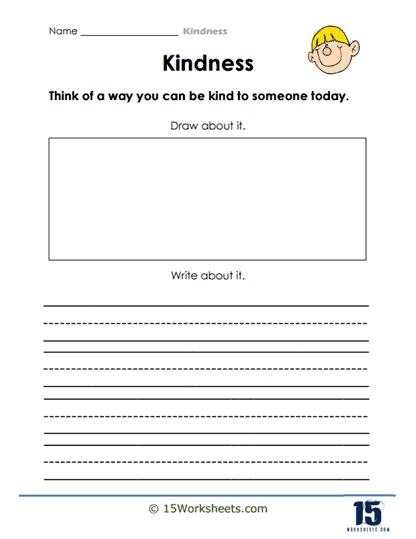
Here, learners identify ways to show kindness to classmates and friends. It focuses on small gestures that make a big impact. The worksheet highlights the value of caring in friendships. It supports social-emotional development in a relatable way.
Good Deeds
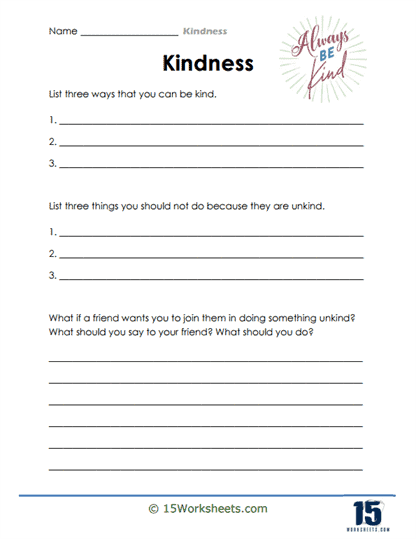
Kids list and reflect on good deeds they can do for others. The activity makes kindness intentional and planned. It empowers students to take action in real life. The worksheet reinforces that kindness can be simple and everyday.
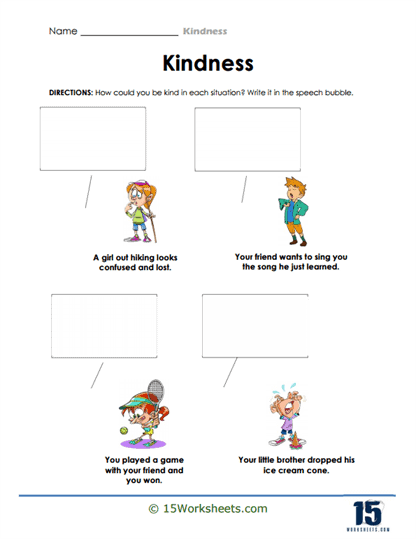
Friendly Actions
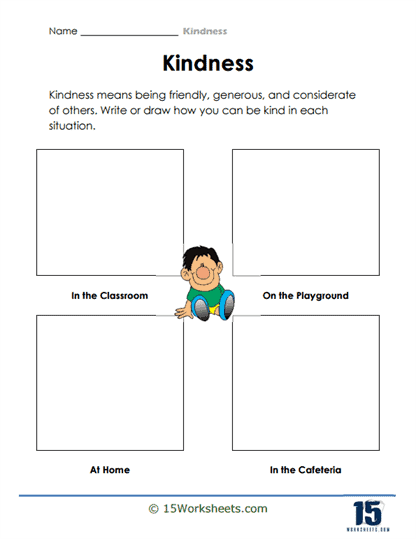
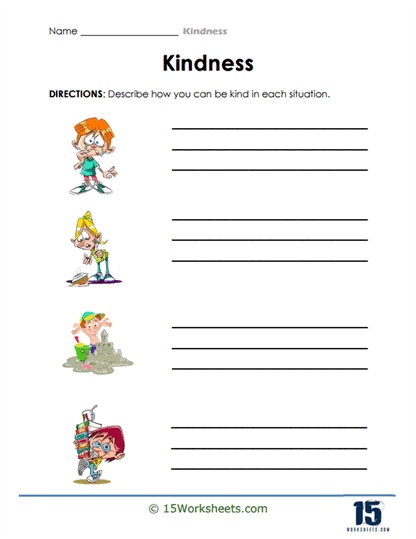
Students explore scenarios and brainstorm how to act kindly. It’s a guided activity that encourages proactive behavior. The worksheet shows that kindness is more than words-it’s what we do. It helps kids see opportunities to make a difference daily.
What Is Kindness?
Kindness is the quality of being friendly, generous, and considerate towards others. It involves showing empathy, understanding, and a willingness to help without expecting anything in return. Kindness can manifest in small acts, like offering a smile or helping someone carry their bags, to more significant actions, such as standing up for someone in need or volunteering time to assist others. At its core, kindness is about recognizing the humanity in others and choosing to treat them with care and respect. In educational settings, fostering kindness not only creates a positive learning environment but also helps build strong, supportive communities where every student feels valued.
To encourage students to exhibit kindness regularly, it’s essential to create a classroom culture that models and rewards kind behavior. Teachers can start by incorporating kindness into their daily routines, such as greeting each student warmly or encouraging students to share compliments with one another. Discussing the importance of kindness through stories, discussions, and role-playing scenarios can also help students understand and appreciate its impact. Highlighting examples of kindness in everyday situations and encouraging students to share their own experiences can reinforce the behavior.
Another effective strategy is to create opportunities for students to practice kindness in real, tangible ways. This could involve classroom activities like “kindness challenges,” where students are tasked with performing a certain number of kind acts each day or week. Group projects that require cooperation and mutual support can also help students learn to work together kindly. Additionally, recognizing and celebrating acts of kindness when they occur can motivate students to continue engaging in kind behavior. This could be through a “kindness board” where students post examples of kind acts they’ve witnessed or participated in, or by offering small rewards for particularly thoughtful actions.
It’s also important to teach students about the broader impact of kindness, emphasizing that it’s not just about being nice in the moment but about creating a ripple effect that can positively influence the larger community. Teachers can introduce service projects or community outreach programs that allow students to extend kindness beyond the classroom. This not only helps students practice kindness but also teaches them the value of contributing to the well-being of others, fostering a sense of responsibility and empathy.