
Disability Worksheets
About Our Disability Worksheets
Learning about disabilities helps students better understand the world around them and the many different experiences people may have. These worksheets introduce important topics like accessibility, inclusion, empathy, advocacy, and respect in a way that is age-appropriate and easy to understand. Rather than focusing on limitations, the activities encourage students to recognize strengths, talents, and the unique contributions that every person brings to a community. The goal is to help children develop a deeper appreciation for diversity and kindness.
Throughout this collection, students will read stories, explore vocabulary, research real people, examine common misconceptions, and think critically about how communities can become more inclusive. The activities encourage thoughtful discussions while helping students build reading, writing, research, and critical-thinking skills. Many of the worksheets also challenge students to consider how their own actions can make a positive difference for others. By connecting learning to real-world situations, students gain a more meaningful understanding of inclusion and accessibility.
Perhaps most importantly, these worksheets encourage empathy. Students learn that disabilities can affect people in many different ways and that everyone’s experiences are unique. They discover how support, understanding, accommodations, and advocacy can help create opportunities for everyone to participate and succeed. These lessons help foster a classroom culture built on respect, acceptance, and belonging.
About Each Worksheet
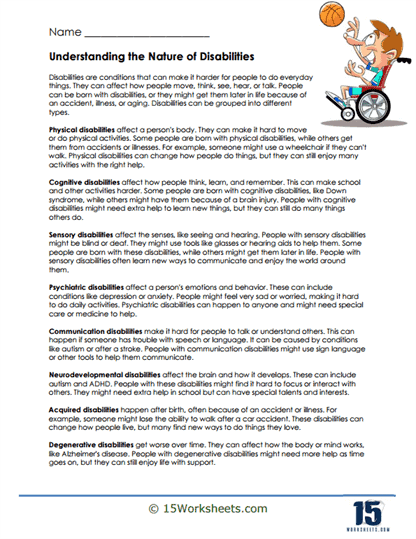
Everyday Heroes
This worksheet introduces students to the many different types of disabilities and the ways they can affect daily life. The information is presented in a clear and thoughtful way that helps children better understand the experiences of others. It’s a great starting point for building empathy and awareness.
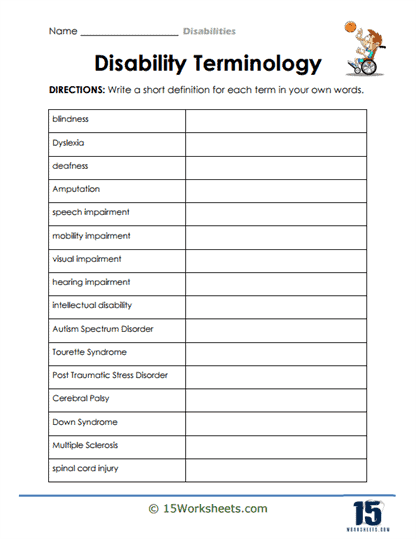
Term Tracker
Learning new vocabulary becomes much more meaningful when students connect words to real-life situations. This worksheet helps children understand important disability-related terms while building a stronger foundation for future discussions. It encourages both learning and respectful communication.
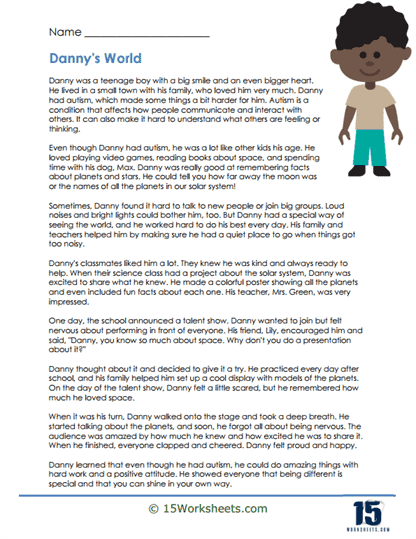
Space Explorer
Danny’s story shows students that everyone has unique strengths worth celebrating. As they follow his journey, children see how determination, support, and confidence can help someone overcome challenges. It’s an uplifting reading activity with an inspiring message.
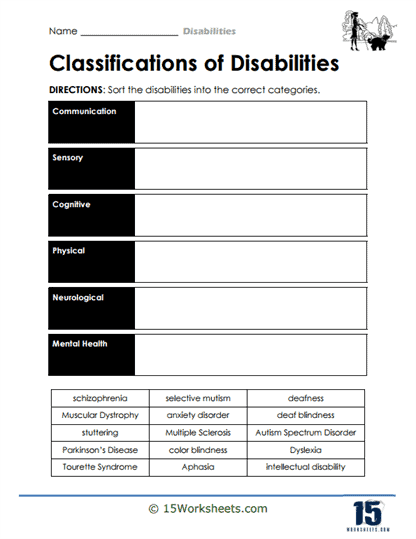
Category Quest
This sorting activity gets students thinking about the many different ways disabilities can affect people’s lives. By organizing conditions into categories, they strengthen both their understanding and their critical-thinking skills. It feels a bit like solving a puzzle while learning something important.
Inclusive Bonds
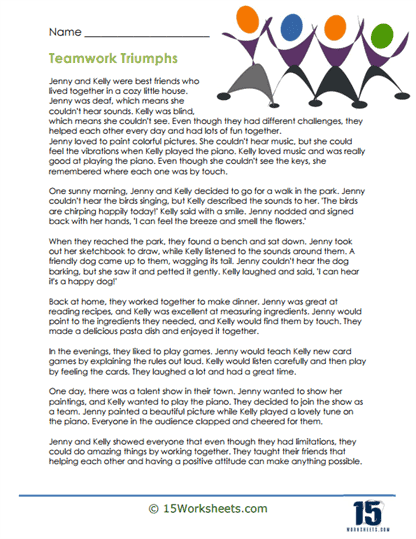
Jenny and Kelly’s friendship is a wonderful example of teamwork and mutual support. Students quickly see how different strengths can complement one another and help people accomplish great things together. The story encourages kindness, cooperation, and understanding.
Cause Quest
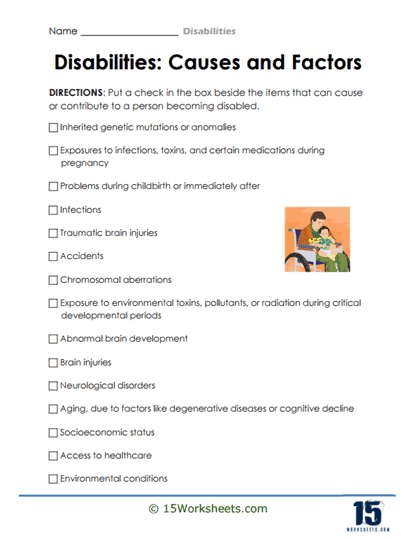
This worksheet helps students explore the many factors that can contribute to disabilities. It encourages thoughtful discussion about genetics, accidents, illnesses, and environmental influences without oversimplifying the topic. Students gain a broader understanding of how varied life experiences can be.
Truth Check
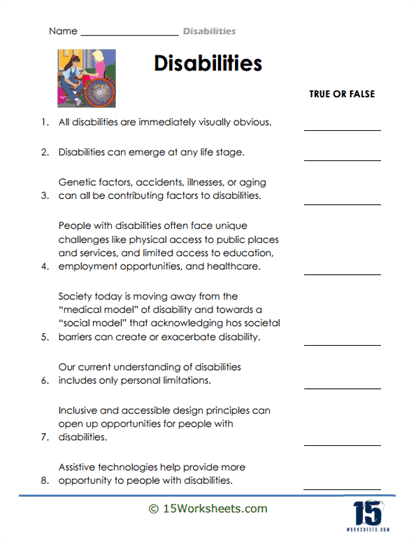
Students put their knowledge to the test as they sort facts from misconceptions. The activity challenges common assumptions and encourages learners to think carefully about what they know. It’s a great way to promote accurate understanding and respectful perspectives.
Fill-In Fun
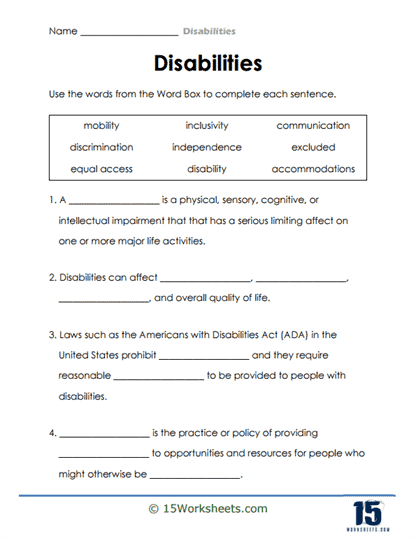
Vocabulary practice gets an important purpose in this worksheet. Students use key terms related to accessibility, accommodations, and inclusion while strengthening their understanding of how these concepts work in everyday life. The activity reinforces both language and awareness.
Inclusive Inquiry
This worksheet invites students to dig deeper into important questions about disabilities, rights, and inclusion. It encourages thoughtful reflection rather than simple memorization. The open-ended format helps students develop empathy and critical-thinking skills at the same time.
Support Strategies
Creating an inclusive society takes many different tools and approaches, and this worksheet explores several of them. Students learn about accommodations, technology, support systems, and accessibility in a practical way. It helps them see how small changes can make a big difference.
Impact Insight
This activity encourages students to think about the real-life experiences of people living with disabilities. Rather than focusing only on challenges, it helps students understand the importance of support, resilience, and accessibility. The thoughtful format promotes compassion and perspective-taking.
Profile Pair
Students compare the experiences of two individuals with disabilities and discover that everyone’s journey is different. The activity encourages them to look beyond labels and focus on achievements, challenges, and personal strengths. It’s a powerful lesson in understanding individual experiences.
Truth Quest
Research takes center stage as students investigate facts and myths about a specific disability. By separating accurate information from misconceptions, they strengthen both their research skills and their understanding of the topic. It’s an engaging way to encourage informed thinking.
Word Explorer
This worksheet helps students build a vocabulary that supports respectful and inclusive conversations. As they explore important terms, they gain a better understanding of concepts like discrimination, accommodation, and accessibility. The activity provides useful language for meaningful discussions.
Advocacy Action
Students learn that positive change often happens because people speak up and take action. By researching advocacy efforts, they see how individuals and organizations work to create more accessible and inclusive communities. It encourages students to think about how they can make a difference too.
Model Matters
This worksheet introduces students to two different ways society has viewed disabilities over time. By comparing the medical and social models, learners gain a better understanding of how attitudes and policies can affect people’s lives. It encourages thoughtful reflection on inclusion and accessibility.
Inclusive Actions
Students move from learning about inclusion to thinking about ways they can actively support it. The worksheet challenges them to brainstorm practical ideas for making schools and communities more welcoming for everyone. It promotes problem-solving and social responsibility.
Inspiring Lives
This research activity highlights the accomplishments of famous individuals who have lived with disabilities. Students discover how perseverance, talent, and determination helped these individuals achieve success. It’s an inspiring reminder that disabilities do not define a person’s potential.
What are Disabilities?
A disability is a condition that may affect how a person moves, learns, communicates, sees, hears, or interacts with the world around them. Disabilities can be present from birth, develop over time, or occur as a result of illness, injury, or aging. Some disabilities are visible, while others may not be immediately noticeable. Every person’s experience is unique, and no two individuals are exactly alike.
People with disabilities participate in schools, workplaces, sports, arts, science, government, and countless other areas of life. Many use tools, accommodations, technology, or support systems that help them navigate daily activities and achieve their goals. While disabilities may create challenges, they do not define a person’s abilities, talents, interests, or potential. Understanding this helps create more inclusive and supportive communities.
Learning about disabilities helps students develop empathy, respect, and awareness. It encourages them to recognize the value of accessibility, fairness, and equal opportunities for everyone. These lessons also support important communication, social-emotional, and critical-thinking skills. By learning about different experiences and perspectives, students become better prepared to build welcoming communities where everyone feels included and valued.