
Safety Signs Worksheets
About These 15 Worksheets
Safety signs are everywhere-on the road, in schools, in stores-and these worksheets give kids the chance to really notice and understand them. Instead of just walking past a “Caution: Wet Floor” sign, students start to think, Why is that sign there? What’s it trying to tell me? That kind of awareness is a huge step in helping them stay safe and make smart choices.
The activities in this set mix things up-some are quick matching games, others involve writing, drawing, or even creating flashcards. This variety makes it easy for teachers and parents to find a worksheet that clicks with a child’s learning style. More importantly, kids begin to see that signs aren’t random pictures-they’re part of a system designed to protect us.
Working through these pages helps students practice real-world problem-solving. They don’t just learn to recognize a stop sign; they learn why stopping matters. They don’t just color in shapes; they realize triangles and reds usually mean “pay attention!” By practicing here, they’re better prepared to read their environment and keep themselves-and others-safe.
Have a Look Inside Each Worksheet
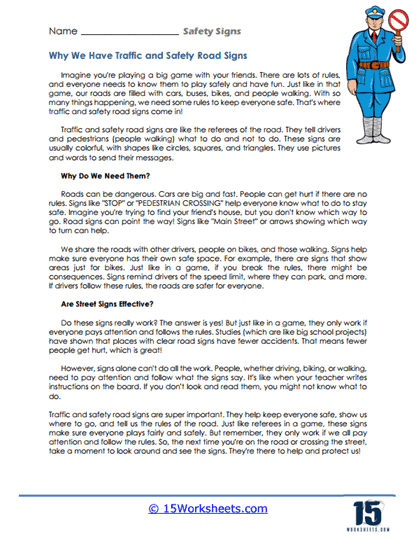
Why We Have Traffic and Safety Road Signs
This worksheet gets students thinking about the why behind signs-why do they exist anyway? It introduces the idea that signs help keep us safe by communicating important messages quickly. Kids learn that behind every sign there’s a reason-like warning, guiding, or protecting us. It sets the stage with a thoughtful foundation about real-world safety.
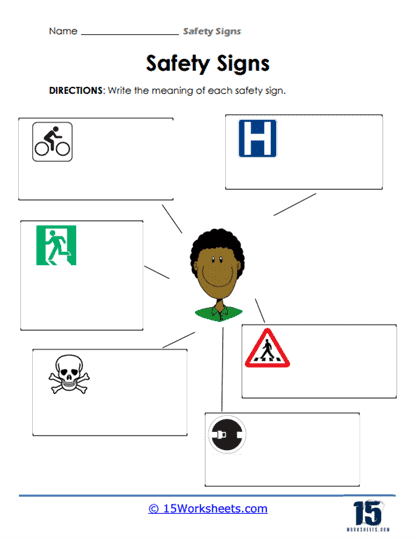
For Your Safety
Here, children explore everyday signs and what they’re telling us to do (or not do) to stay safe. It might show a “Wet Floor” or “Fire Exit” and ask what they mean. The clear purpose makes them think practically and carefully. It reminds kids that signs are like little safety helpers all around us.
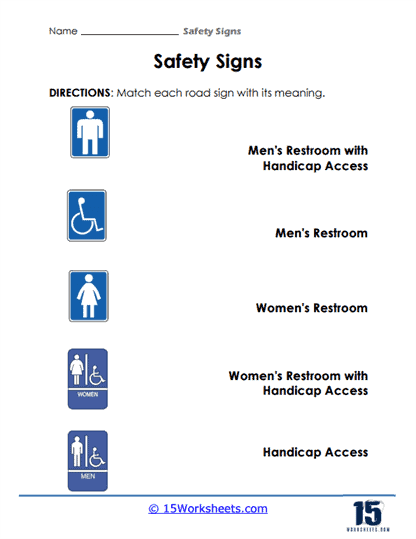
Public Restrooms
This worksheet uses familiar restroom signs to practice matching or naming skills. Whether it’s men, women, or accessible signs, kids learn to recognize them confidently. It’s simple and relevant-everyone uses restrooms! It connects visual symbols with real-life routines.
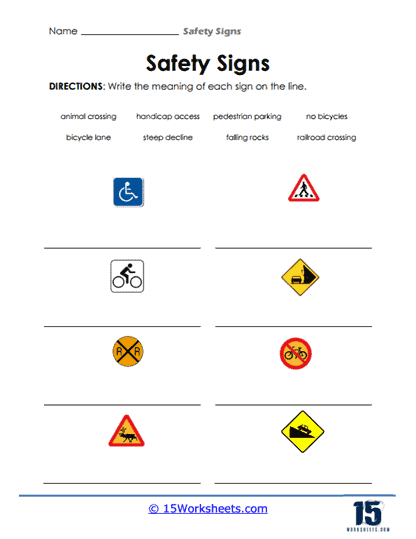
Interpret and Write
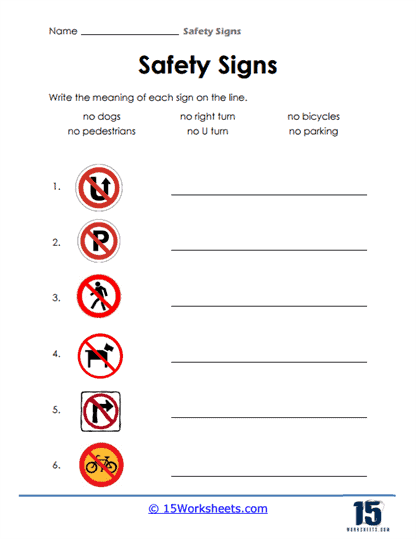
Here, students read a sign and write down its meaning in their own words. It strengthens both their comprehension and writing-“Stop” becomes “We must halt the car.” The act of writing “translates” visual information into words. It helps them feel smart and in control.
Potential Dangers
This one highlights warning signs we often ignore-like slippery surfaces or low clearance. Students match or identify what each danger symbol means. It builds awareness of hazards around them, from playgrounds to parking lots. It emphasizes that signs often help us dodge trouble before it happens.
Match to the Meaning
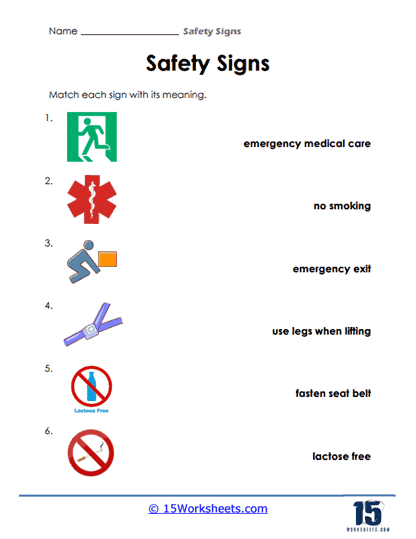
A classic pairing game-line up signs with their correct meaning. It’s great for quick recall and visual matching. It reinforces that recognizing a sign means knowing what to do. Plus, matching is always satisfying when it clicks.
On the Road
This worksheet digs into road-specific signage-like curves, school zones, or crosswalks. Kids learn what drivers (and pedestrians) need to watch for. It connects signs to traffic behavior and safety rules. It shows that signs are part of bigger street-smart thinking.
Where Would You See It?
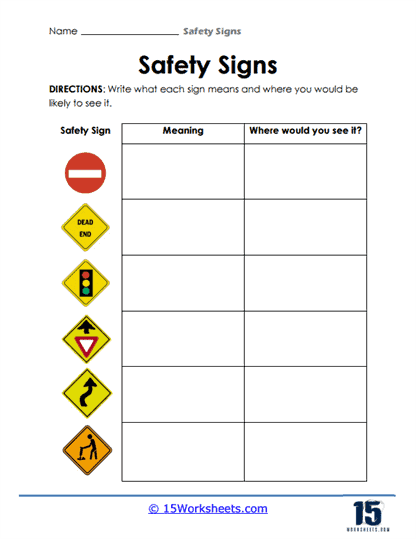
Students identify where a sign belongs-like a rest stop, construction area, or school. This helps them tie context to meaning. It strengthens understanding of how location and message go hand in hand. It also sparks curiosity-“Where is that sign found?”
Recall and Illustrate
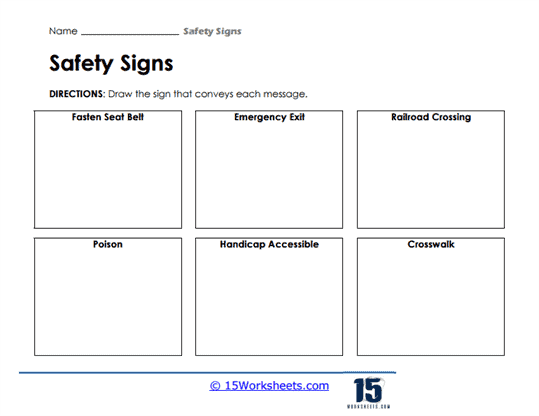
Kids think of a sign, remember it, and draw it themselves. Drawing deepens memory-especially colorful or shape-based images like “Yield” or “No Entry.” It’s creative, hands-on, and personal. Plus, drawing is fun and confident-making.
Look Out!
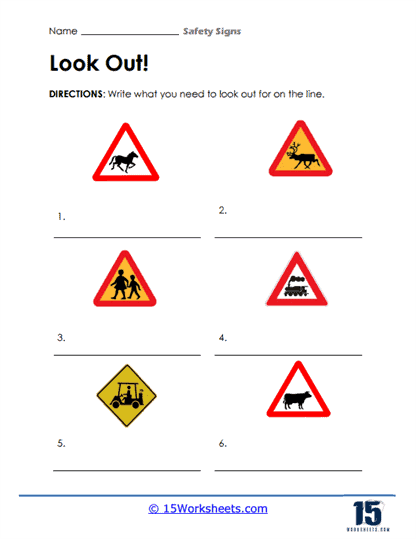
Signaling something to be cautious about? This worksheet zooms in on warning signs and their meanings. It may ask kids to circle or explain what they must watch out for. The tone is alert-but reassuring. It teaches attention and readiness.
Red Triangles
Often, warning or yield signs come in triangle form-this worksheet highlights the shape and its meaning. Students link triangular signs to caution and slow-down messages. It teaches that shapes carry meaning, too. Kids learn to “read” shapes as much as symbols.
Circle the Correct Choice
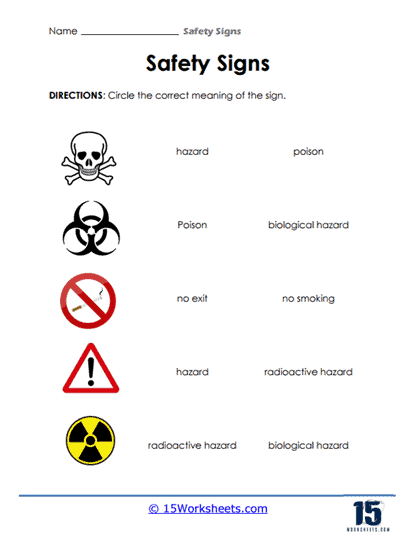
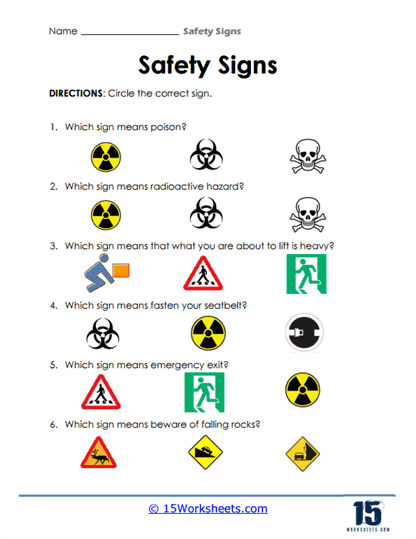
Here we have multiple-choice sign recognition-kids circle the accurate match to a description. It’s low-pressure but teaches precision. They practice reading both text and image. It’s a quick check-in for what they’ve absorbed.
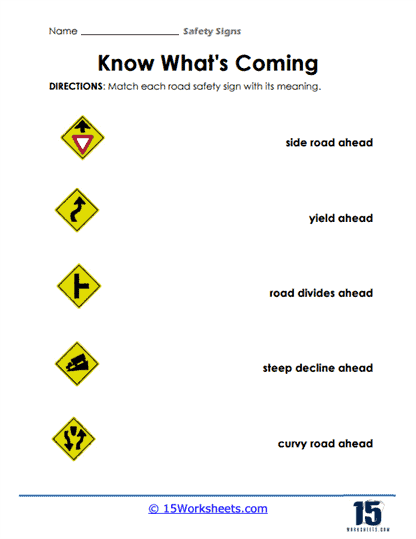
Know What’s Coming
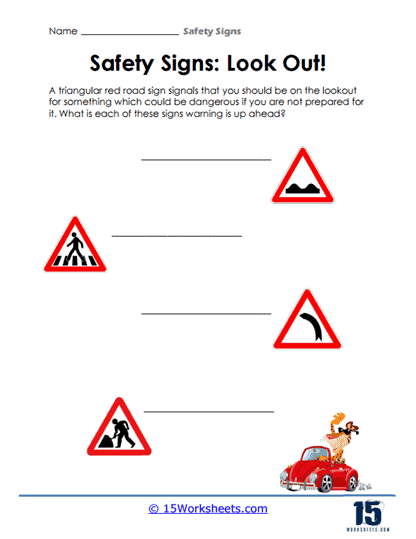
This focuses on advance warning signs-like “Curve Ahead” or “Pedestrian Crossing.” Kids learn that these signs help people prepare before something happens. It builds anticipation and planning. Great for teaching foresight in traffic-and life.
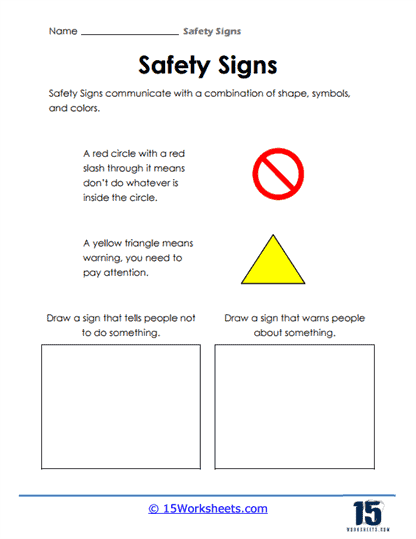
Shapes, Symbols, Colors
This worksheet has students explore the differences among shapes (circle, triangle), symbols (skull, arrow), and colors (red, yellow). It reinforces that signs rely on familiar patterns to share meaning quickly. It also supports skills like understanding position words, helping kids describe where signs or symbols appear and how they relate to their surroundings. This builds stronger visual awareness in a fun and practical way.
Flashcards Activity
A quick and interactive match-practice-the flashcard format lets kids quiz each other or themselves. It’s ideal for review or game-like repetition. Kids enjoy flipping and guessing. It’s full of energy and memory-building power.
Sign Feature
A deeper look at what makes a sign effective-maybe analyzing text size, color contrast, or symbol clarity. It asks, “What makes this sign easy to read?” It turns kids into junior designers and safety experts. It encourages thoughtful observation about how information is shared.
Why It Is Important To Understand These Symbols
Safety signs play a vital role in our daily lives, from warning us about potential hazards to guiding us in emergencies. The question of their effectiveness, however, depends on various factors. Let’s delve into whether safety signs are effective and under what circumstances they are most useful.
Safety signs provide crucial information. For example, a sign indicating a “Wet Floor” makes people aware of the potential slipping hazard, prompting them to tread cautiously. Without such a sign, individuals might walk at their usual pace, increasing the risk of accidents.
Research has shown that proper signage can significantly reduce vehicle collisions and pedestrian accidents. For instance, studies have demonstrated the effectiveness of signs that warn of curves, intersections, or pedestrian crossings in reducing speeds and improving driver awareness.
A study published in the Journal of Safety Research found that the introduction of safety signs in workplaces can significantly reduce accidents. These signs ranged from warnings about machinery operation to reminders about wearing personal protective equipment.
Thanks to international standards, many safety signs are universally recognized. Stop signs, hazardous material symbols, and emergency exit signs, for instance, have a standardized look across different countries, making them easily recognizable even in unfamiliar territories.