
Research Worksheets

All About These 15 Worksheets
This series of 15 worksheets on research is designed to help students develop essential skills for conducting thorough and effective research on various topics. These worksheets cover a wide range of research-related topics, including partnered research projects, researching famous individuals, conducting independent research projects, utilizing internet resources, exploring animal research, and investigating notable inventions.
By engaging with these worksheets, students can enhance their information literacy, critical thinking, and research skills, enabling them to gather and analyze information, synthesize findings, and present their research in a coherent and well-supported manner. Through these worksheets, students will:
- Work in pairs to investigate a specific topic or theme, honing their collaborative research skills;
- Explore various sources, synthesize information, and present their findings in a creative and informative way;
- Be guided through the research process, including selecting a topic, formulating research questions, gathering and analyzing information, and presenting their research in a structured manner;
- Evaluate the credibility of online sources, refine search queries, and navigate through digital information effectively;
- Explore both primary and secondary sources, including scientific journals, books, and documentaries, to gather accurate and reliable information for an Animal Research;
- And critically analyze the significance of their chosen notable invention and present their research findings in a clear and engaging manner.
About Each Worksheet
Partnered Project
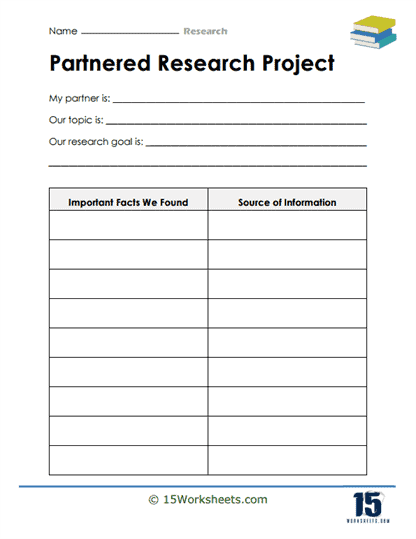
This worksheet helps students work together as a research team while staying organized. Partners record important facts, track sources, and focus on a shared research goal. It’s a great way to build collaboration skills while learning how to gather information responsibly.
A Famous Person
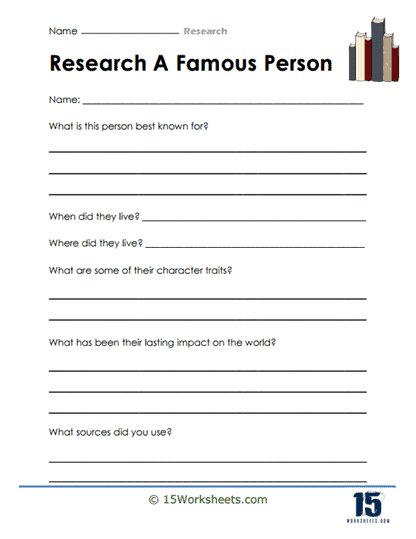
Students explore the life and accomplishments of a notable individual through guided research questions. They learn about the person’s achievements, character traits, and lasting impact on the world. The worksheet makes biography research feel structured and approachable.
New Questions
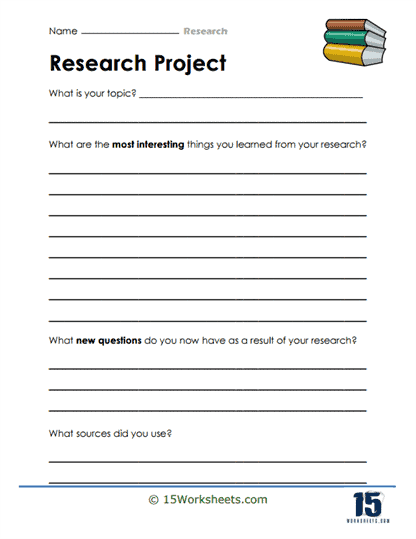
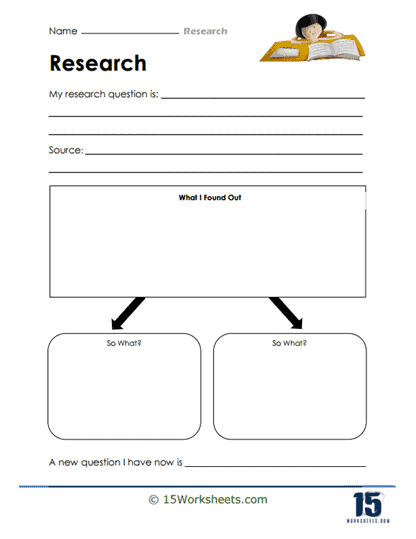
Research often leads to even more questions, and that’s exactly what this worksheet encourages. Students reflect on what they learned, identify interesting discoveries, and think about what they still want to know. It helps promote curiosity and lifelong learning.
Internet Research
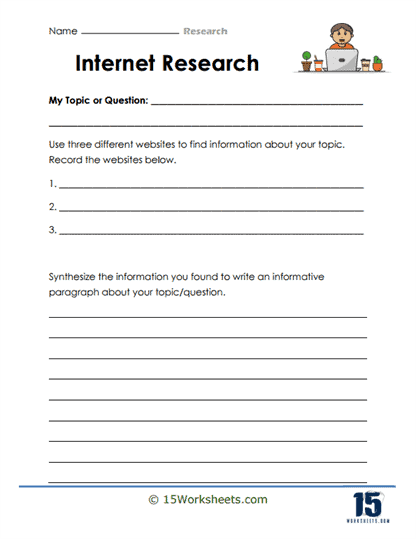
This worksheet teaches students how to gather information from multiple online sources and combine their findings into a clear summary. By comparing information from different websites, they practice evaluating and synthesizing information. It’s an excellent introduction to digital research skills.
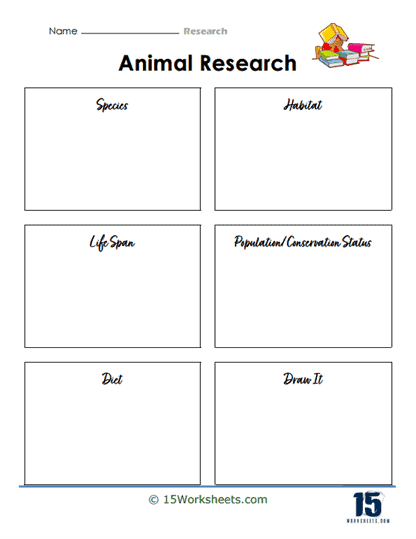
Animal Research
Students become wildlife researchers as they investigate an animal’s habitat, diet, lifespan, and conservation status. The drawing section adds a creative touch that helps reinforce learning. It’s a fun blend of science, research, and art.
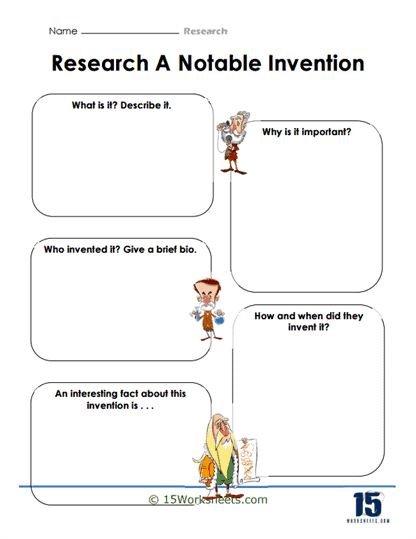
A Notable Invention
Every invention has a story, and this worksheet helps students uncover it. They explore who created the invention, why it matters, and how it changed the world. The activity encourages appreciation for innovation and problem-solving.
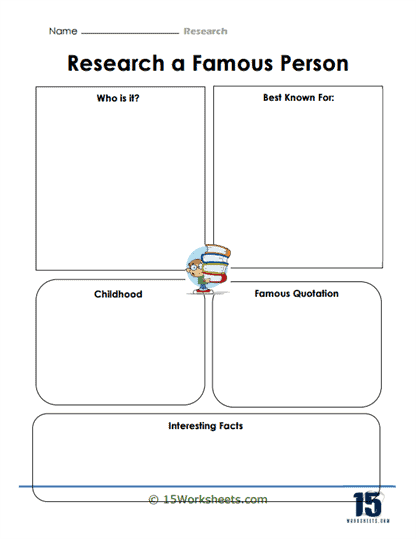
About Someone Popular
This worksheet helps students dig deeper into the life of a famous person by exploring their childhood, achievements, quotations, and interesting facts. It goes beyond basic facts to help students understand the person behind the accomplishments. The format encourages thoughtful research and reflection.
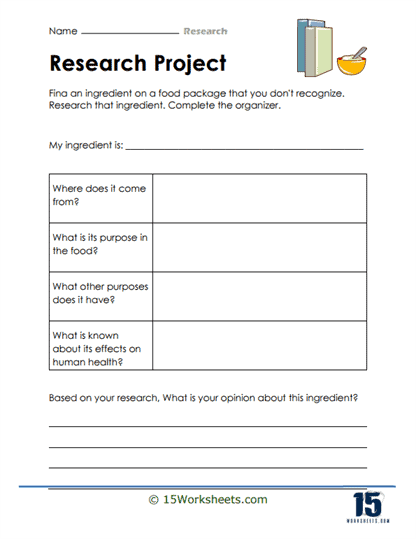
An Unfamiliar Ingredient
Students investigate a food ingredient they’ve never heard of before and discover where it comes from and how it’s used. The activity encourages critical thinking about food labels and consumer choices. It’s a unique research project that connects learning to everyday life.
Developing Your Thesis
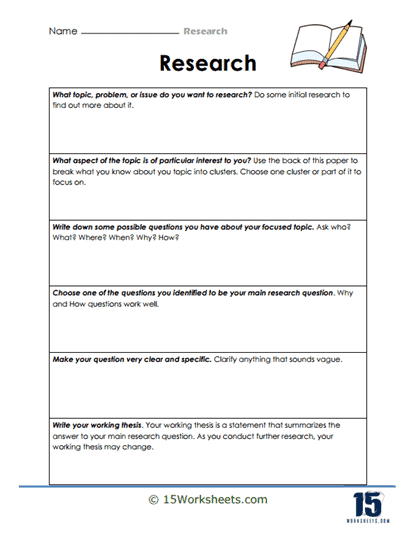
This worksheet walks students through the important process of narrowing a broad topic into a focused research question. By exploring different possibilities, they begin building a strong thesis statement. It’s a valuable tool for developing more advanced research and writing skills.
What Did They Do?
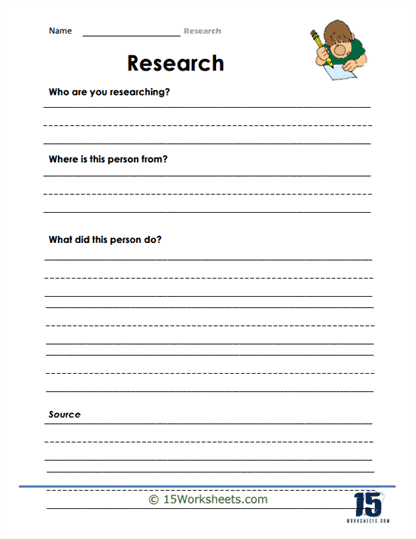
Students research a notable person and organize key facts about their life and accomplishments. The straightforward format makes it especially useful for younger researchers. It provides a simple introduction to biography research and source citation.
Relation To The Topic
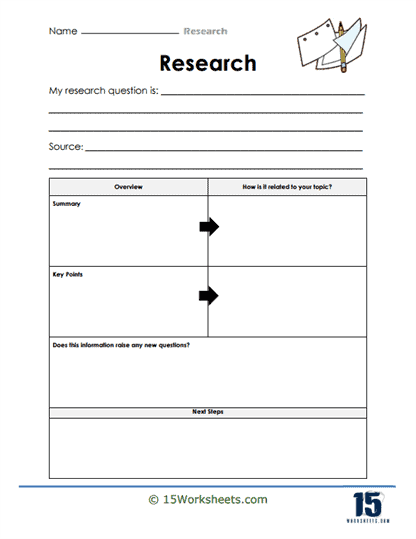
This worksheet helps students think critically about the information they find during research. They summarize key ideas, explain how the information connects to their topic, and consider new questions that arise. It’s a great exercise in analysis and organization.
Refining Your Research
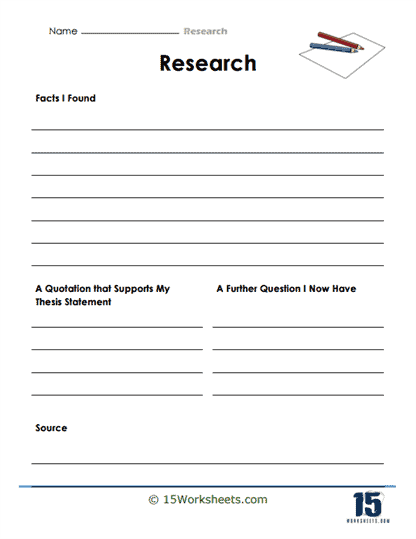
Students focus on identifying the strongest facts, supporting quotations, and emerging questions from their research. The worksheet helps them sort through information and determine what is most useful. It encourages deeper thinking and stronger research habits.
Create A Working Thesis
This activity helps students connect research questions, answers, and personal opinions into a developing thesis statement. The process teaches them how to form an argument based on evidence. It’s an important step toward writing stronger research papers.
So What?
Students move beyond collecting information and begin thinking about why their findings matter. The worksheet encourages them to analyze significance and consider broader implications. It helps transform research into meaningful learning.
Why Does It Matter?
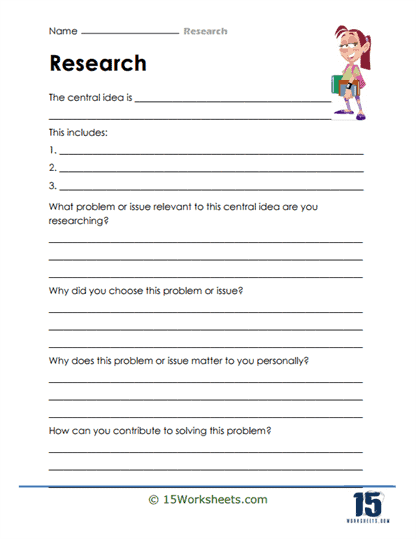
This worksheet challenges students to connect their research topic to real-world problems and possible solutions. They reflect on why the issue is important and how their research might contribute to understanding it. It’s an excellent activity for encouraging purpose-driven inquiry.
How to Improve Your Research Skills
Improving your research skills can enhance your academic performance, problem-solving abilities, and decision-making processes. Here are some tips to help you develop and refine your research skills:
Define Clear Research Questions or Objectives
Begin by identifying a specific topic or issue you want to explore. Develop clear, focused research questions or objectives that guide your research process and help you stay on track.
Familiarize Yourself with Various Research Methods
Learn about different research methodologies, such as qualitative, quantitative, and mixed-methods approaches. Understanding the strengths and limitations of each method will help you choose the most appropriate approach for your research.
Develop a Plan
Create a structured plan outlining your research objectives, methods, data sources, and a timeline for completing your project. This will help you stay organized and ensure you allocate sufficient time and resources for each stage of the research process.
Learn to use a Range of Resources
Become proficient in using various research tools and resources, such as libraries, databases, search engines, and reference materials. Familiarize yourself with both print and digital resources to access the most relevant and up-to-date information.
Refine your Search Skills
Improve your search techniques by using advanced search options, Boolean operators, and filters to locate relevant information more effectively. Learn how to assess the credibility and reliability of sources by examining their authorship, publication date, and affiliations.
Take Notes and Stay Organized
Develop an effective note-taking system that helps you keep track of important information, sources, and ideas. Use tools like spreadsheets, citation managers, or digital notebooks to organize your research materials and make it easier to find and retrieve information when needed.
Analyze and Synthesize Information
Practice critical thinking skills by analyzing, interpreting, and synthesizing the information you gather. Look for patterns, trends, or relationships in the data, and evaluate the quality and relevance of the evidence to support your research questions or objectives.
Communicate your Findings Effectively
Develop strong writing and presentation skills to communicate your research findings clearly and persuasively. This includes organizing your thoughts coherently, using proper citation styles, and presenting your work in a visually engaging manner.
Collaborate
Engage in collaborative research projects, join study groups, or attend workshops and conferences to learn from others and broaden your perspective on research topics.
Seek Feedback and Continuously Learn
Seek feedback from peers, mentors, or instructors to identify areas for improvement and refine your research skills. Continuously update your knowledge and stay informed about new research methods, tools, and best practices in your field.
By following these tips and practicing regularly, you can improve your research skills and become a more effective researcher, which will benefit you in various aspects of your academic, professional, and personal life.