
Collaborative Writing Worksheets
About Our Collaborative Writing Worksheets
Writing doesn’t always have to be a solo activity. Our Collaborative Writing Worksheets give students the opportunity to create stories, solve problems, conduct research, and share ideas while working together with partners or small groups. Through structured activities that encourage communication and cooperation, learners discover how multiple writers can contribute to a single project. These worksheets help students understand that collaboration often leads to stronger ideas, more creative solutions, and richer writing experiences.
This collection introduces students to many different forms of collaborative writing. Some activities focus on storytelling, dialogue, journaling, and descriptive writing, while others involve research projects, planning meetings, role-based problem solving, and reflection exercises. Students learn how to listen to others, build on existing ideas, share responsibilities, and contribute meaningfully to a group effort. The variety of tasks keeps collaboration engaging while reinforcing important writing and communication skills.
Collaborative writing helps students develop skills that extend far beyond language arts. Working with others teaches flexibility, teamwork, organization, leadership, and problem-solving. These worksheets encourage respectful discussion, shared decision-making, and thoughtful communication while helping learners become more confident writers. By combining creativity with cooperation, students gain valuable experience working toward a common goal and creating something they could not have produced alone.
About Each Worksheet
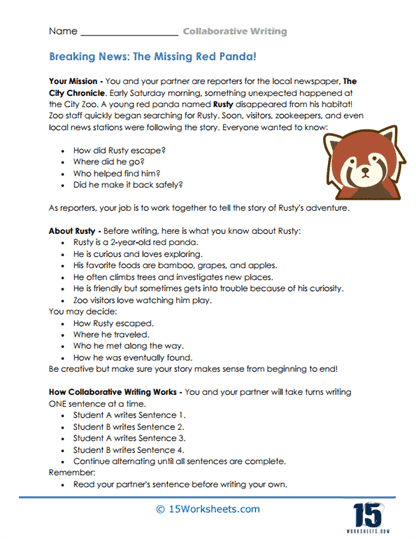
Breaking News: The Missing Red Panda!
Students become newsroom reporters as they work together to piece together the story of Rusty’s unexpected disappearance. The collaborative format turns storytelling into a fun investigative challenge where every contribution matters.
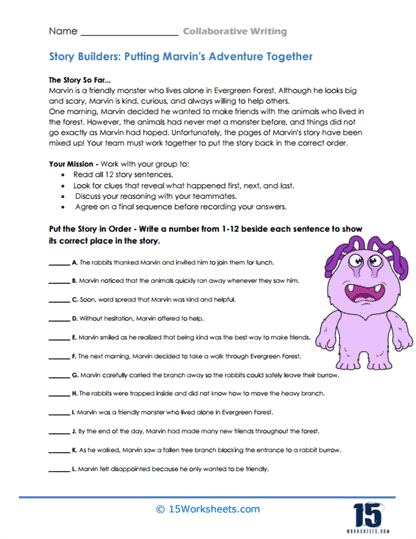
Story Builders: Putting Marvin’s Adventure Together
This worksheet transforms students into story detectives who must sort mixed-up events into the correct order. The teamwork involved encourages lively discussion as groups defend their sequencing choices.
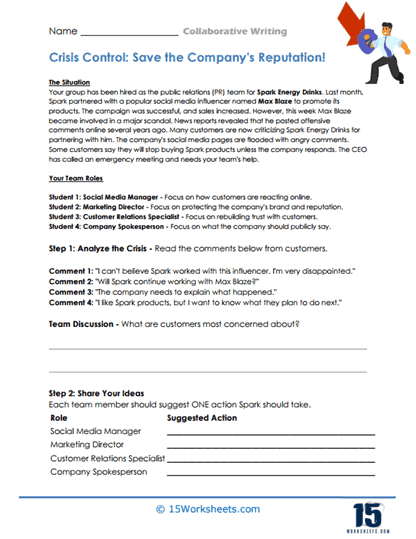
Crisis Control: Save the Company’s Reputation!
Students step into professional roles and tackle a challenging public relations problem together. The real-world scenario encourages thoughtful discussion and creative problem-solving.
Circle Journal Starter
A shared journal grows one entry at a time as students add their thoughts and ideas to a collaborative piece of writing. It’s a wonderful way to see how different voices can come together to create something unique.
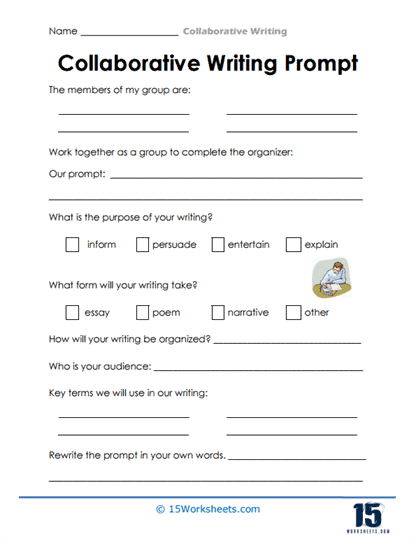
Collaborative Writing Prompt Planner
Before writing begins, students work together to map out a successful plan. The organizer helps groups align their ideas, goals, and expectations before tackling a larger project.
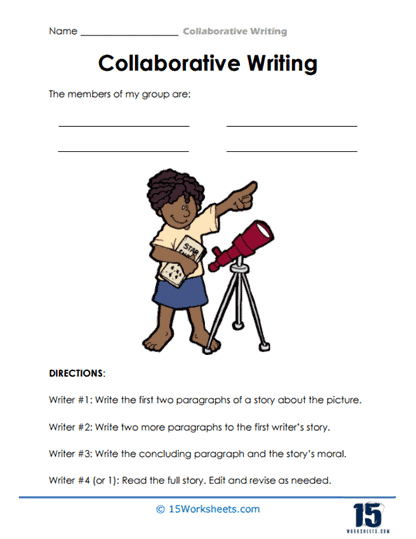
Shared Story Starters
Each student takes responsibility for a different part of the story, creating a true team-writing experience. Watching the narrative grow from multiple contributors makes the process both engaging and unpredictable.
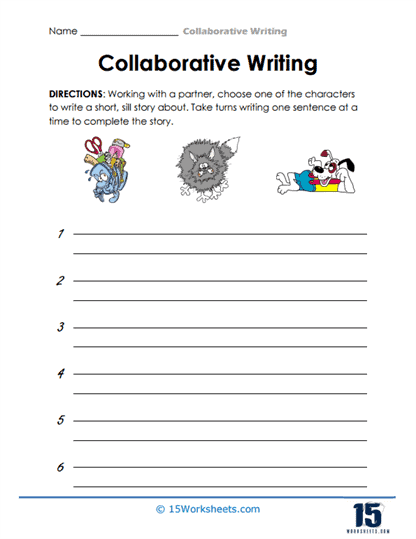
Character Story Chain
Partners build a story one sentence at a time while following the adventures of an illustrated character. The activity encourages careful reading because every new sentence depends on what came before.
Round-Robin Story Writing
This classic collaborative exercise keeps students on their toes as the story changes with each new contribution. The result is often a creative and surprising narrative no single writer could have planned alone.
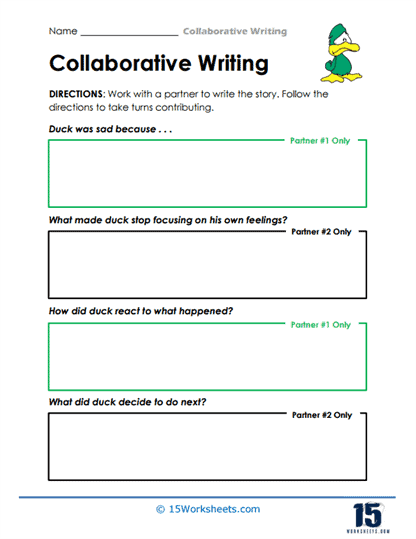
Duck’s Dilemma
A series of guided questions helps partners develop a complete story together. The structured approach makes storytelling easier while encouraging thoughtful character development.
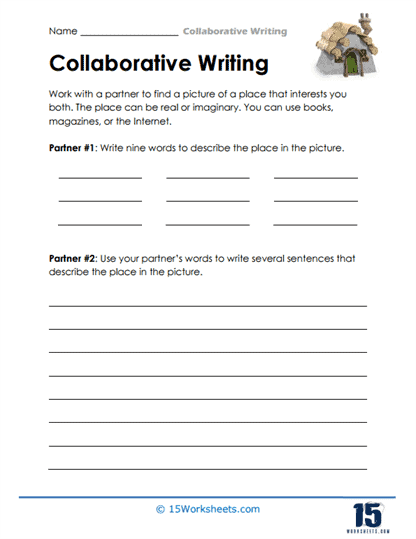
Place Description Partners
One student generates descriptive words while another transforms them into vivid writing. This teamwork-focused activity shows how strong vocabulary can bring a setting to life.
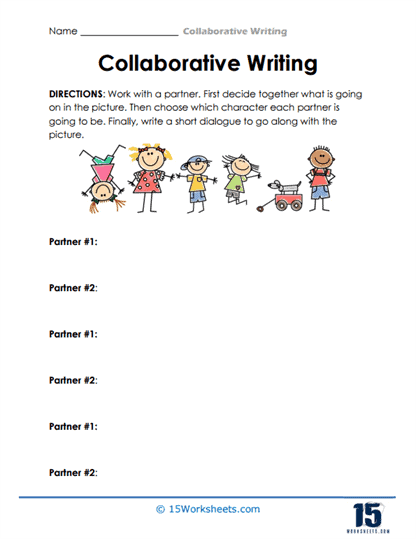
Dialogue Builders
Students imagine what characters might be saying and work together to create a believable conversation. The collaborative process helps bring scenes to life while strengthening dialogue-writing skills.
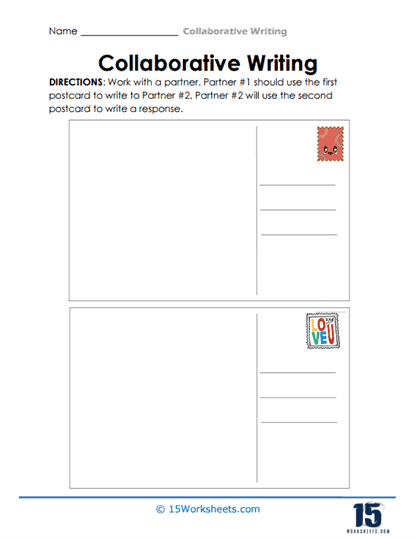
Postcard Exchange
Partners communicate through a creative postcard conversation that unfolds from two different perspectives. The format encourages concise writing while adding an element of imagination and role-play.
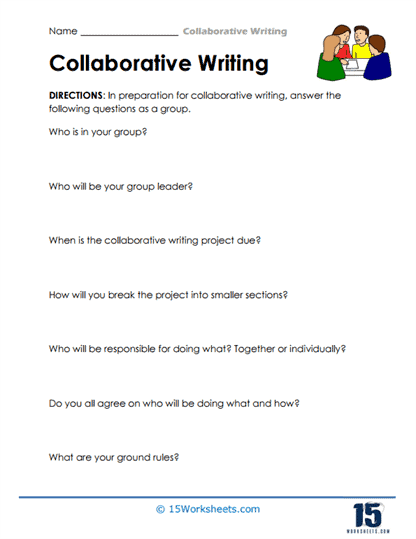
Project Planning Meeting
This worksheet helps groups organize roles, responsibilities, and timelines before beginning a larger writing assignment. It feels a bit like a real-world team meeting, giving students valuable planning experience.
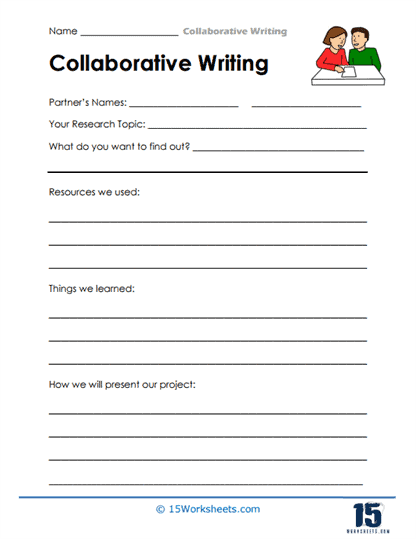
Research Partners
Students collaborate to investigate a topic, gather information, and organize their findings. The shared responsibilities help make research feel more manageable and interactive.
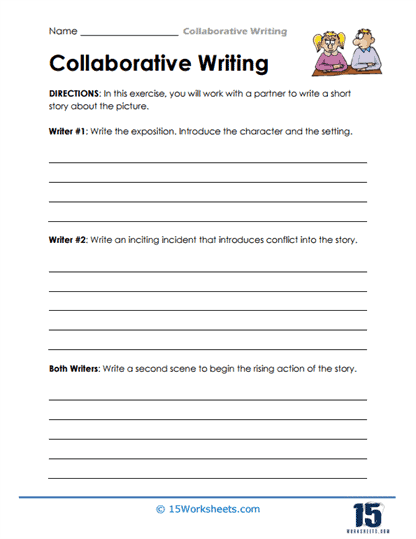
Story Structure Partners
Each writer takes ownership of different parts of the narrative while working toward a shared ending. The activity helps students understand how story elements fit together to create a complete plot.
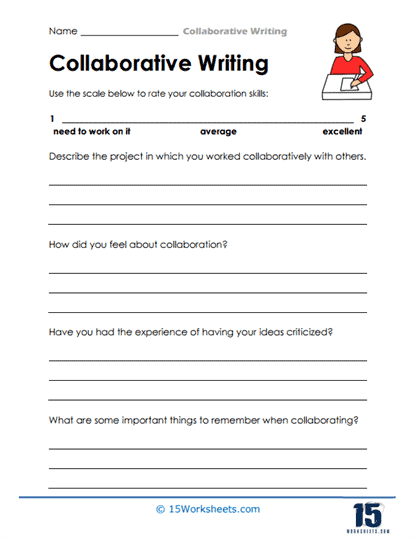
Collaboration Reflection
After the writing is finished, students take time to think about what went well and what they learned from working with others. The reflection encourages personal growth and stronger teamwork habits.
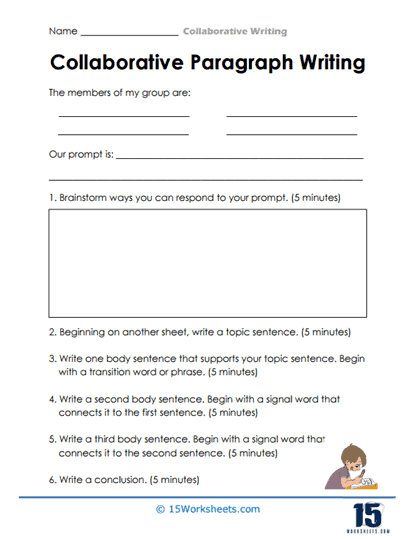
Collaborative Paragraph Writing
Groups work together to build a complete paragraph from the topic sentence to the conclusion. The structured process helps students see how strong paragraphs develop through planning and cooperation.
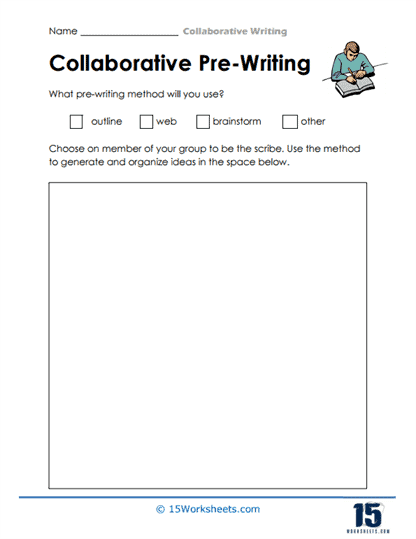
Collaborative Pre-Writing
Before drafting begins, students choose a pre-writing strategy and organize ideas as a team. This planning-focused activity demonstrates how preparation can make collaborative writing much more successful.
What is Collaborative Writing?
Collaborative writing is a process where two or more people work together to create a single piece of writing. Instead of one writer completing every part of the task, group members contribute ideas, organize information, draft content, revise sections, and make decisions together. Collaborative writing can be used for stories, essays, research projects, reports, presentations, and many other types of assignments. The goal is to combine different strengths and perspectives to create a stronger final product.
Successful collaborative writing requires more than simply dividing the work. Team members must communicate clearly, listen carefully, share responsibilities, and respect each other’s ideas. Writers often need to discuss organization, resolve disagreements, and make decisions as a group. These interactions help students develop important interpersonal and communication skills while strengthening their writing abilities.
Collaborative writing is valuable because it mirrors the way many projects are completed in schools, workplaces, and communities. Scientists, journalists, researchers, authors, and business professionals often work together to create written materials. By practicing collaborative writing, students learn how to contribute to a team, solve problems collectively, and build on the ideas of others. These experiences help prepare learners for future academic, professional, and real-world success.