
Study Skills Worksheets
All About These 15 Worksheets
Study skills are like the hidden superpowers of school success-once kids learn them, everything else becomes easier. This collection of worksheets helps students explore their learning styles, organize their time, and set meaningful goals. From note-taking to test prep, each activity gives practical tools that take the mystery (and stress!) out of studying. The worksheets encourage self-reflection, planning, and consistency-three habits that turn good students into great learners.
What makes these worksheets special is how varied they are. Some focus on self-awareness, like figuring out where and how a student studies best. Others are more hands-on, teaching kids how to organize homework, summarize lessons, or make mnemonic devices for memory. By mixing reflection with practice, the collection makes study strategies feel both personal and practical. Students aren’t just told what to do-they get to try it out step by step.
The benefits of strong study skills go way beyond the classroom. Kids who learn how to manage their time, take good notes, and prepare calmly for tests are also developing lifelong habits for success. These worksheets help students see studying not as a chore, but as a toolkit for reaching their goals. With practice, they gain confidence, independence, and the sense that learning is something they can control.
Have a Look Inside Each Worksheet
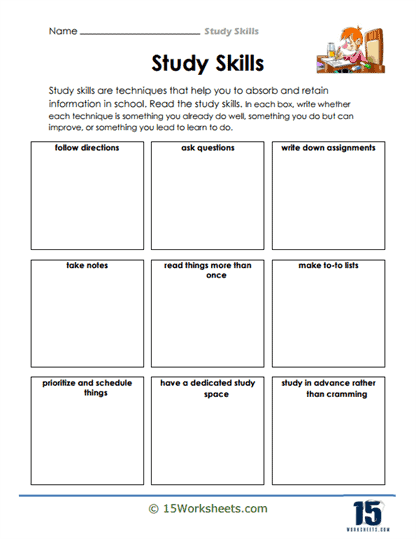
Always Or Never?
Students reflect on their current study habits by sorting behaviors into “always” or “never.” This self-check activity makes them more aware of what works and what doesn’t. It encourages honesty and reflection in a low-pressure way. The worksheet sets the stage for better study routines.
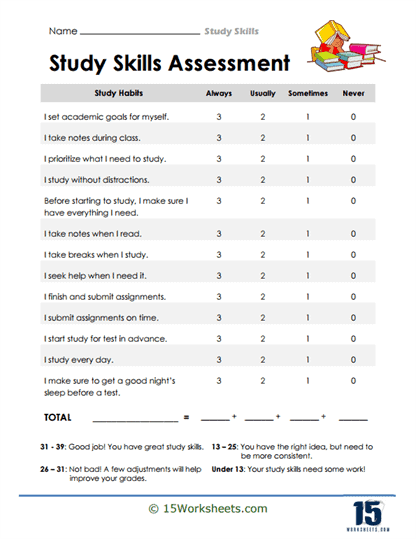
Assess Yourself
Here, learners complete a self-assessment about their study strengths and weaknesses. It builds self-awareness and helps them identify areas for improvement. The worksheet gives students a clear picture of where they stand. It’s a great starting point for setting personal study goals.
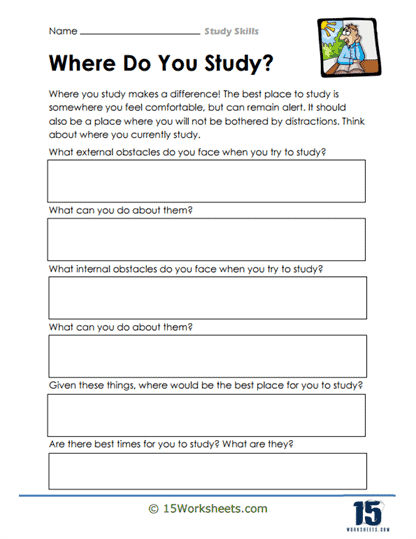
Where Do You Study?
Students think about their study environment and whether it helps or hurts their focus. They learn how lighting, noise, and comfort affect productivity. The worksheet helps them create an ideal learning space. It connects habits with real-world results.
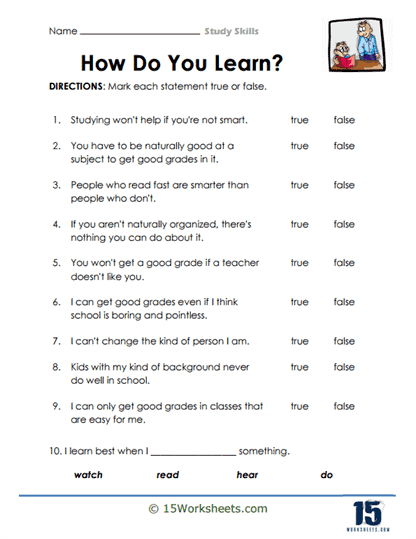
How Do You Learn?
This activity explores learning styles like visual, auditory, and kinesthetic. Students reflect on what works best for them. The worksheet shows that there’s more than one way to learn effectively. It helps kids personalize their study strategies.
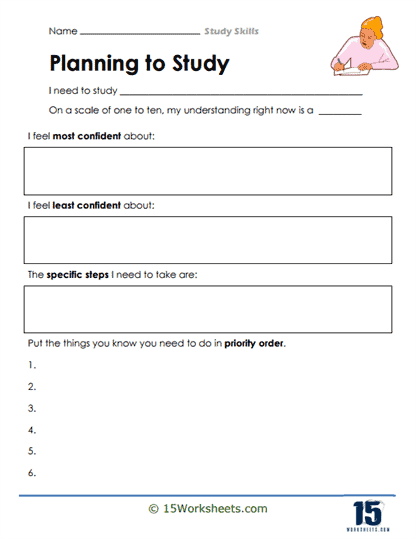
Planning To Study
Here, learners practice breaking down assignments into smaller steps. The worksheet teaches time management and organization. It makes studying less overwhelming and more achievable. Students see how planning leads to success.
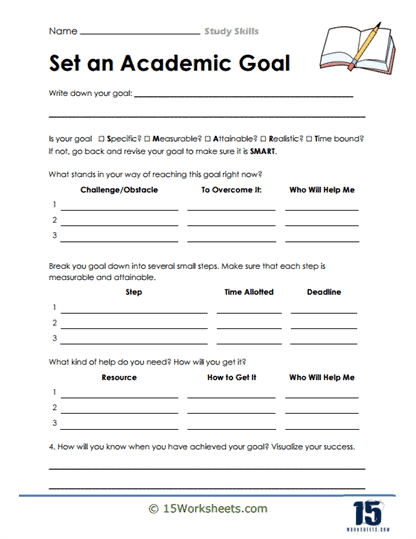
Set An Academic Goal
Students set specific, measurable goals for their schoolwork. The worksheet walks them through making goals realistic and motivating. It’s all about turning dreams into doable steps. This activity builds responsibility and focus.
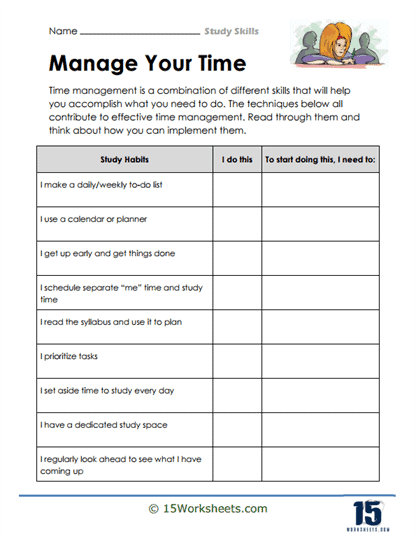
Manage Your Time
Learners practice scheduling their study hours around other activities. The worksheet teaches balance and prioritization. It shows kids that time is a resource they can control. This builds strong lifelong habits.
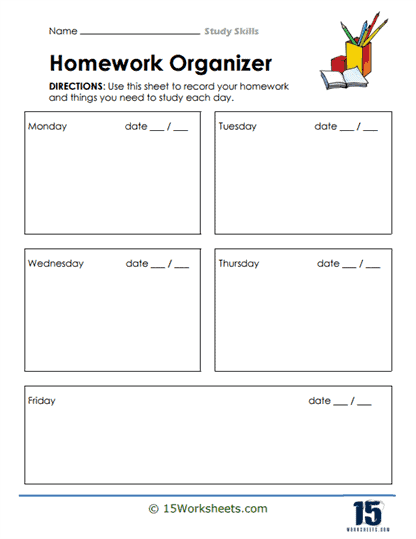
Homework Organizer
This worksheet helps students keep track of assignments and deadlines. It makes organization visual and practical. Learners reduce stress by seeing everything laid out clearly. It encourages responsibility and consistency.
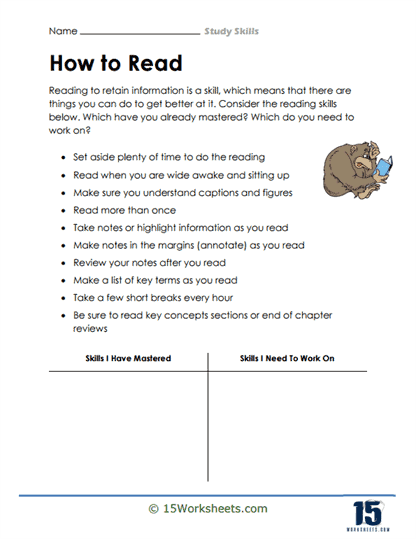
How To Read
Students explore strategies for active reading, like highlighting or summarizing. The worksheet makes reading more purposeful and engaging. It turns reading into learning instead of just “getting through pages.” Kids pick up skills that last across subjects.
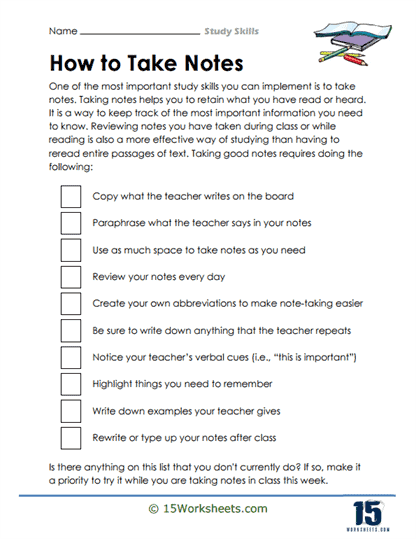
How To Take Notes
Learners practice different note-taking strategies, such as outlines or key words. The worksheet shows how good notes make studying easier later. It builds listening, writing, and organization skills. Students gain confidence in handling information.
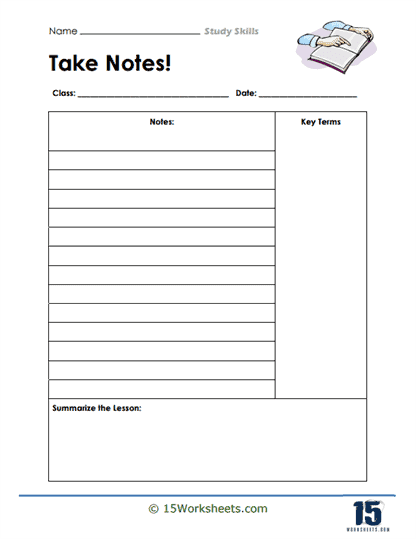
Summarize The Lesson
This activity guides students in writing short summaries after reading or class. It helps them process and retain information. The worksheet strengthens both comprehension and memory. It turns reviewing into an active skill.
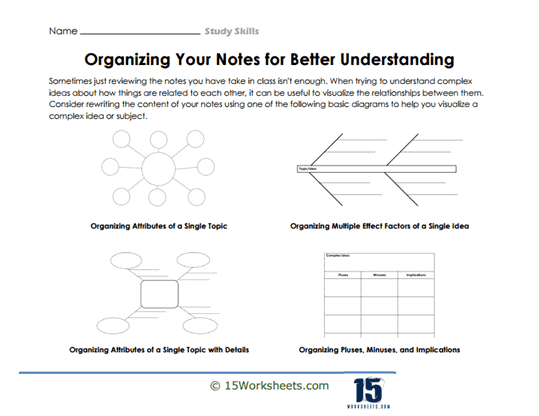
Better Understanding
Students practice checking their comprehension with strategies like questioning and clarifying. The worksheet teaches that confusion is normal and fixable. It builds persistence and confidence in learning. Kids learn how to move from “I don’t get it” to “I’ve got it.”
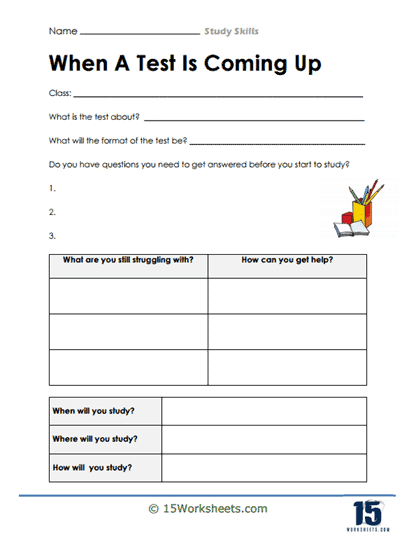
When A Test Is Coming Up
Learners prepare a study plan for upcoming tests. The worksheet shows them how to review steadily instead of cramming. It reduces test anxiety by making prep manageable. Students learn to study smarter, not harder.
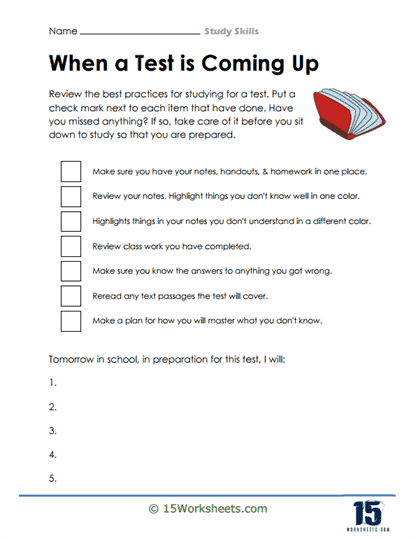
Best Practices
This worksheet introduces a variety of proven study strategies. Students pick which ones they’d like to try. It gives them a toolbox of options instead of a one-size-fits-all plan. The activity encourages experimentation and independence.
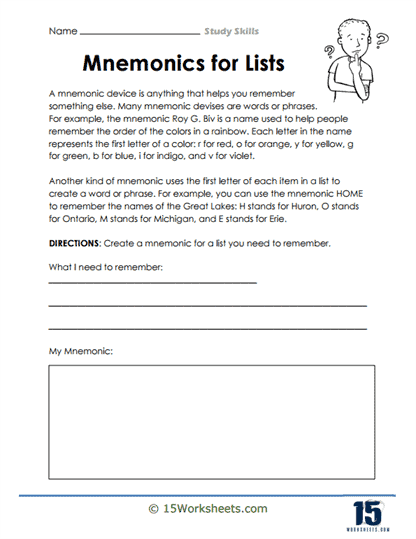
Mnemonics For Lists
Learners create memory tricks for lists and key facts. The worksheet makes studying fun and creative. It shows how to use rhymes, acronyms, and images to remember more. Kids discover that memorization doesn’t have to be boring.
What Are Learning Styles?
Learning styles are the preferred ways in which individuals process, comprehend, and retain information. Each person has a unique way of learning, which may involve one or more learning styles. Recognizing and understanding these styles can help learners optimize their study techniques and educators tailor their teaching methods to suit different students.
There are several models of learning styles, but one of the most widely recognized is the VARK model, which identifies four primary types of learners:
Visual Learners
Visual learners prefer to process information through images, diagrams, charts, graphs, and other visual aids. They typically have strong spatial awareness and can easily visualize concepts in their minds. Visual learners may benefit from using mind maps, color-coding, and other visual techniques when studying.
Auditory Learners
Auditory learners learn best through listening and verbal communication. They excel at retaining information from lectures, discussions, and audio recordings. These learners may benefit from reading aloud, participating in group discussions, and using mnemonic devices based on sound patterns.
Reading/Writing Learners
Reading/Writing learners prefer to learn through written text, such as books, articles, and notes. They often have strong reading comprehension and writing skills and may benefit from taking detailed notes, summarizing concepts in their own words, and reading a variety of texts on a subject.
Kinesthetic Learners
Kinesthetic learners learn best through hands-on experiences, physical activities, and direct interaction with their environment. They often have strong motor skills and excel at learning through practice and trial-and-error. Kinesthetic learners may benefit from participating in lab experiments, role-playing activities, and other experiential learning opportunities.
It’s important to note that most people use a combination of learning styles, and these preferences may change depending on the context or subject matter. Understanding your own learning style or those of your students can help create more effective learning experiences and improve overall academic success. However, it’s also essential to remain adaptable and explore different learning methods, as some subjects or tasks may require a more diverse approach.
How To Improve Your Study Technique
Improving how you study can lead to better retention of information, increased understanding, and more efficient use of your time. Here are some tips to help you enhance your study habits:
Set Clear Goals
Define specific, achievable goals for each study session, such as mastering a particular concept or completing a certain number of practice problems. This will help you stay focused and motivated.
Develop a Study Schedule
Create a consistent study routine by allocating specific times each day or week for studying. Stick to your schedule as much as possible to build good study habits and maintain momentum.
Find a Conducive Study Environment
Choose a quiet, comfortable space with minimal distractions to help you focus. Ensure you have adequate lighting, a comfortable chair, and all the necessary materials within reach.
Break Tasks into Smaller Chunks
Divide larger tasks or topics into smaller, manageable sections. This makes the material less overwhelming and allows you to focus on one aspect at a time.
Use Active Learning Techniques
Engage with the material actively by taking notes, summarizing concepts in your own words, asking questions, or teaching the material to someone else. Active learning promotes deeper understanding and better retention.
Apply Different Learning Styles
Experiment with various learning styles, such as visual, auditory, and kinesthetic, to determine which methods work best for you. Use a combination of techniques, like reading, listening to lectures, watching videos, or working with hands-on activities, to reinforce your understanding.
Utilize Mnemonic Devices
Employ mnemonic strategies, such as acronyms, associations, or visualizations, to help you remember key concepts or facts more easily.
Practice Regularly
Consistent practice and review are crucial for long-term retention. Schedule regular review sessions to reinforce your learning and identify areas that need further study.
Test Yourself
Use self-assessment techniques, like quizzes, flashcards, or practice exams, to evaluate your understanding and identify areas that need improvement. Testing yourself helps strengthen memory recall and reinforces learning.
Take Breaks and Manage Stress
Avoid cramming and lengthy study sessions, which can lead to burnout and reduced retention. Schedule regular breaks and engage in stress-relief activities, such as exercise, meditation, or hobbies, to maintain a healthy balance.
Seek Help (when needed)
If you’re struggling with a concept or topic, don’t hesitate to ask for help from teachers, tutors, classmates, or online resources. Getting assistance can help you overcome obstacles and deepen your understanding.
By implementing these strategies and continuously refining your study habits, you can improve your overall learning experience and achieve better results in your academic pursuits.