
Fractions Worksheets
About Our Fraction Worksheets
Fractions don’t have to be scary-they can actually be pretty fun once you break them down! This collection of fraction worksheets is packed with activities that turn tricky math concepts into step-by-step challenges, puzzles, and even games. Whether students are adding, subtracting, multiplying, or dividing fractions (or just learning how to compare them), each worksheet gives them a chance to practice in a way that feels approachable and confidence-boosting. From visual aids like number lines and shaded shapes to real-life applications like recipes and sharing, these worksheets make fractions click-and maybe even a little enjoyable!
Let’s take a look at each collection of fraction worksheets in this section.
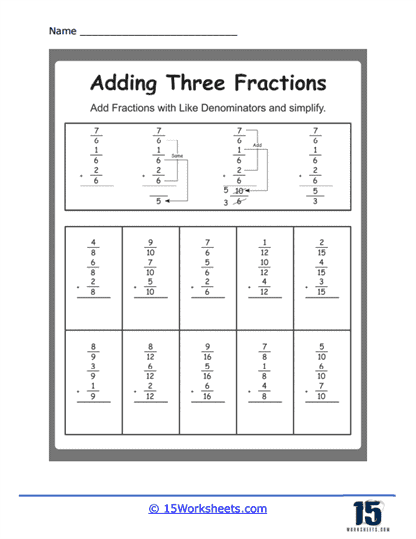
Adding 3 Fractions
Students practice adding three fractions together in one problem, carefully lining up denominators. It’s like juggling numbers, only with a clear process to keep everything balanced. They’ll strengthen their addition and fraction fluency with a fun challenge. This builds multi-step problem-solving skills with fractions.
Adding Fractions
This worksheet guides kids through adding two fractions, sometimes with like denominators and sometimes with different ones. They’ll learn the step-by-step method and see the math come alive visually. It’s a straightforward and confidence-boosting way to tackle fraction addition. This strengthens foundational fraction operations.
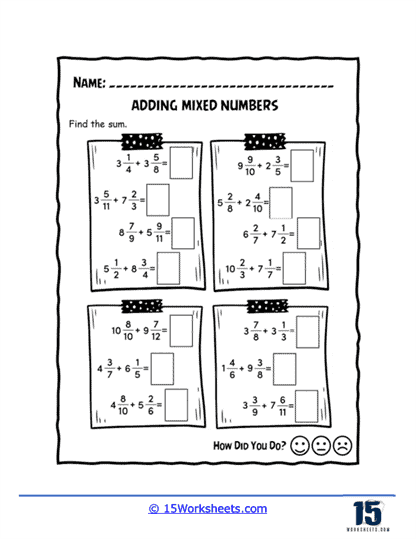
Adding Mixed Numbers
Students work with mixed numbers, adding both the whole number parts and the fractional parts. It feels like a puzzle, lining up pieces until the total makes sense. They’ll gain confidence with real-world style problems like recipes or measurements. This builds skills in handling fractions and whole numbers together.
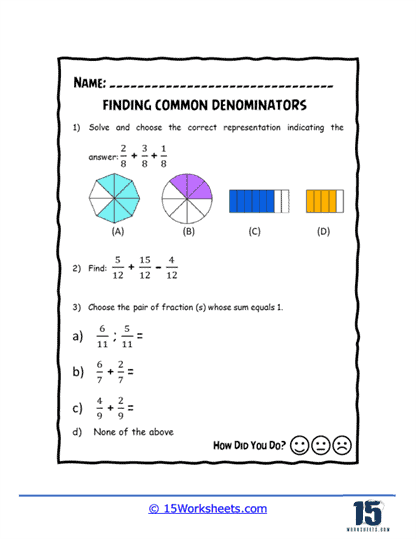
Common Denominators
Here, students practice finding a common denominator to prepare fractions for addition or subtraction. It’s like teaching fractions to “speak the same language.” They’ll use multiplication facts and logic to get both denominators in sync. This supports fraction fluency and prepares learners for complex operations.
Comparing Fractions
This worksheet challenges students to decide which fraction is bigger or smaller. They’ll visualize fractions with shapes or number lines to make comparisons clear. It’s a bit like a game of “which one wins?” but with numbers. This develops number sense and deepens fraction understanding.
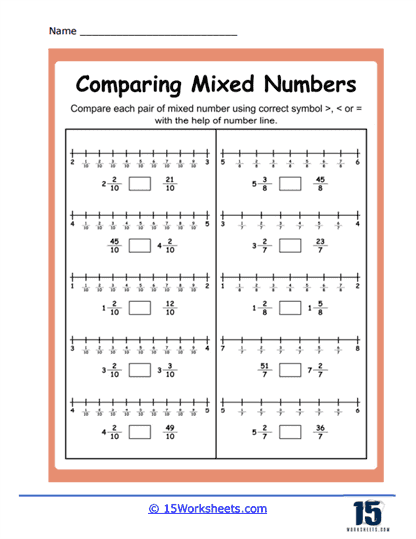
Comparing Mixed Numbers
Students compare mixed numbers-looking at both the whole and fractional parts. It’s a two-step thinking process that keeps them engaged. They’ll practice identifying greater than, less than, and equal to. This builds reasoning skills for real-life uses of fractions.
Converting Fractions
In this sheet, kids convert improper fractions into mixed numbers (and vice versa). It’s a swap-and-trade game between two forms of the same value. They’ll get comfortable moving between representations. This builds flexibility and understanding of equivalence.
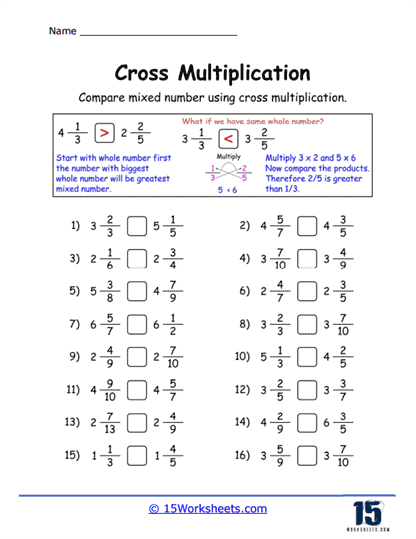
Cross Multiplication
This worksheet teaches cross multiplication as a quick way to compare fractions. It’s a neat trick that feels like a math shortcut, but it works every time. Students will practice setting up and solving comparisons step by step. This strengthens arithmetic and logical reasoning.
Decomposing Fractions
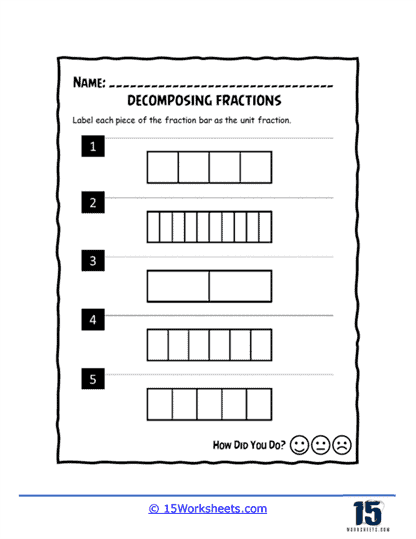
Students break fractions down into smaller parts-like splitting 3/4 into 1/4 + 2/4. It’s hands-on fraction play that helps them see numbers inside numbers. They’ll realize how flexible fractions can be. This supports deeper conceptual understanding of parts and wholes.
Dividing Fractions
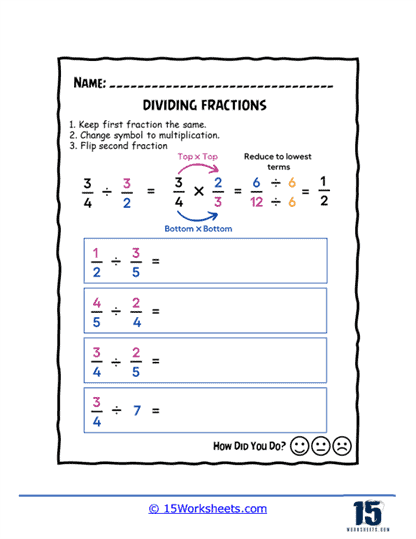
This worksheet focuses on dividing fractions by fractions or whole numbers. It gives plenty of practice with the “keep, change, flip” method. Students will see how dividing by a fraction often makes a bigger number. This builds confidence with more advanced fraction operations.
Dividing Mixed Numbers
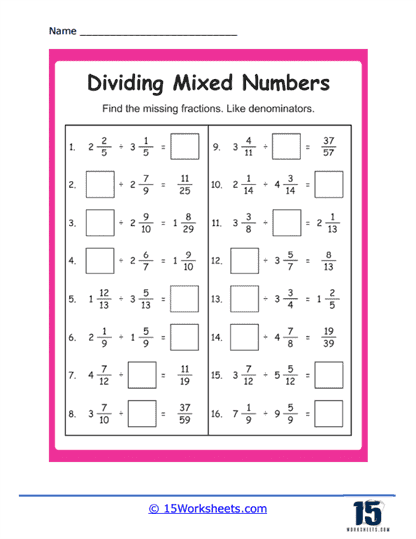
Students practice dividing mixed numbers step by step. They’ll first convert to improper fractions, then use the division process. It’s a multi-skill challenge that strengthens fraction flexibility. This worksheet sharpens critical thinking and procedural fluency.
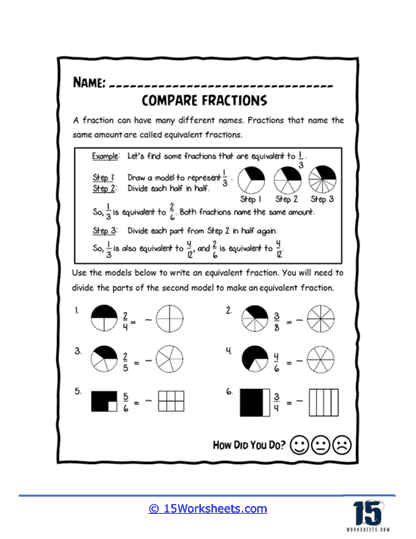
Equivalent Fractions
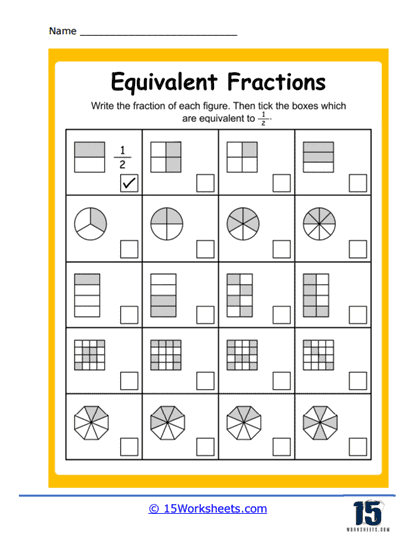
Here, kids generate and match fractions that look different but mean the same thing. It’s a great “aha!” activity when they see 1/2 is the same as 2/4 or 3/6. Visuals help bring the idea to life. This builds a core skill for all future fraction work.
Fractions of a Whole Number
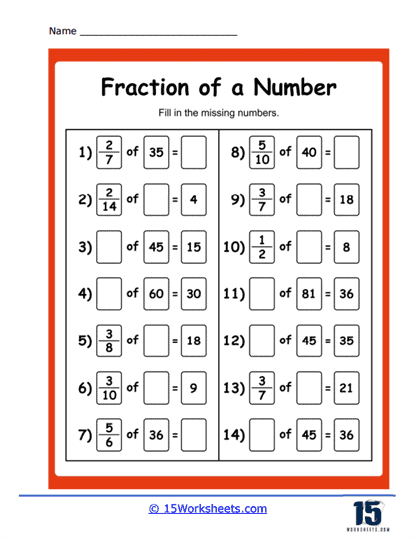
Students find parts of a whole number-for example, 1/3 of 12. It’s very practical, like sharing food or dividing objects. They’ll see fractions connect directly to multiplication and division. This builds real-world math application skills.
Fractions on a Number Line
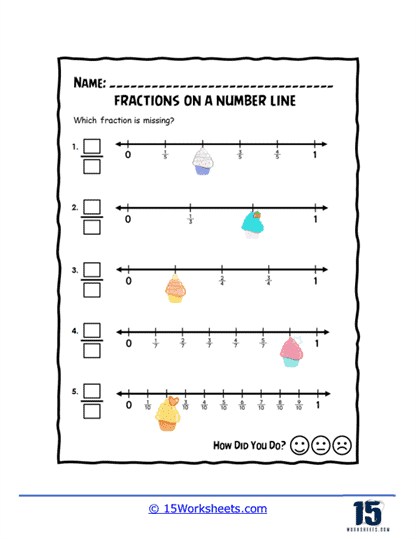
This worksheet shows fractions spaced out on number lines, helping kids visualize size and order. They’ll place and label fractions to see how they compare. It turns abstract numbers into a simple picture. This builds strong number sense and fraction placement skills.
Improper Fractions to Mixed Numbers
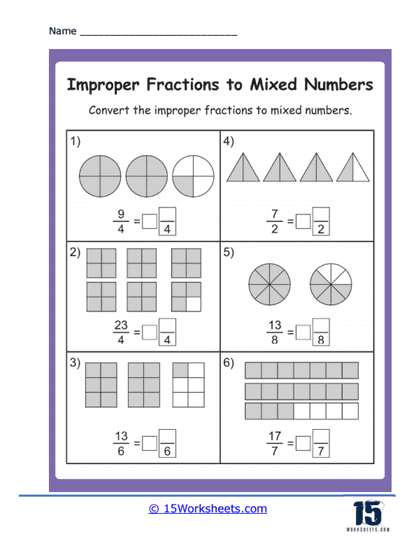
Students take improper fractions and convert them into neat mixed numbers. It feels like turning “messy” numbers into “tidy” ones. They’ll learn the division step behind the conversion. This boosts their confidence in making fractions practical and usable.
Least Common Denominator
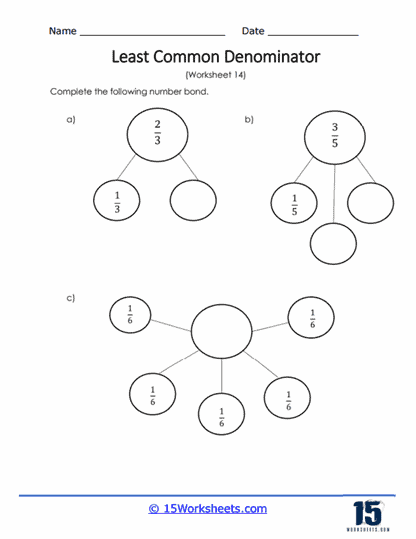
This worksheet has students practice finding the least common denominator between two fractions. It’s like finding the smallest “meeting place” for both numbers. They’ll use multiples to line things up. This builds problem-solving and prepares them for advanced operations.
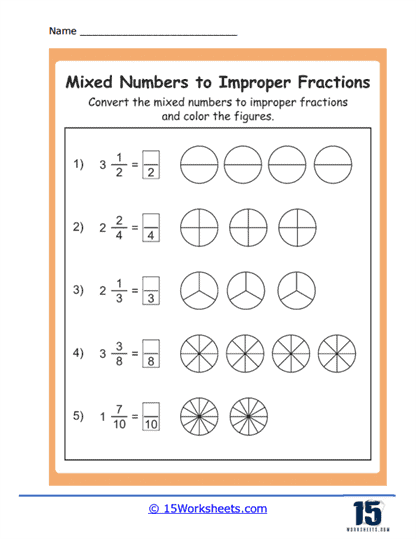
Mixed Numbers to Improper Fractions
Here, kids flip mixed numbers into improper fractions for easier computation. It’s the reverse of simplifying, but equally important. They’ll see how two forms represent the same value. This supports flexibility and fluency in fraction work.
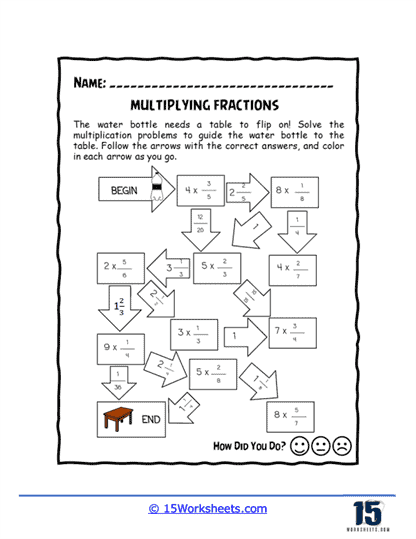
Multiplying Fractions
This worksheet introduces multiplying fractions-top times top, bottom times bottom. It’s surprisingly straightforward, making it a student favorite. They’ll see how multiplication sometimes makes numbers smaller, not bigger. This strengthens math intuition and skills.
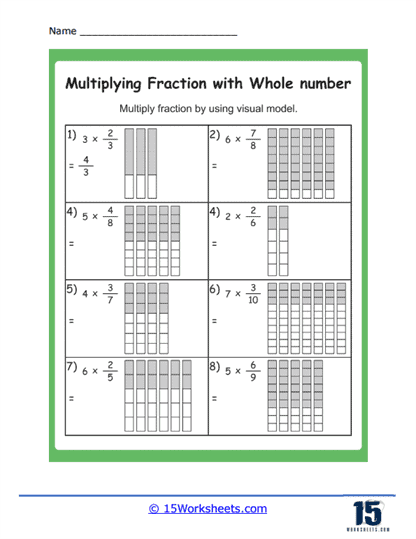
Multiplying Fractions with Whole Numbers
Students multiply fractions by whole numbers, like 3 × 1/4. It’s very relatable, like doubling recipes or dividing a pizza. They’ll understand fractions as repeated parts. This bridges everyday life with formal math.
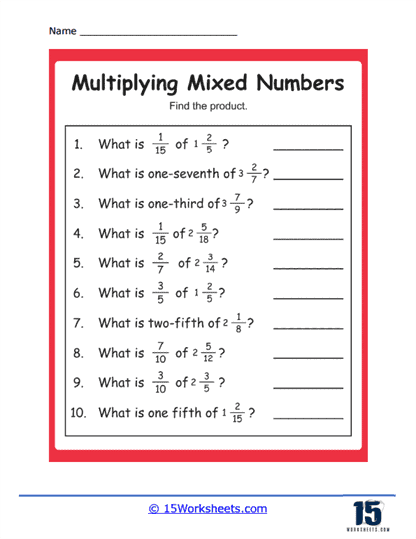
Multiplying Mixed Numbers
Kids multiply mixed numbers, a slightly trickier process with multiple steps. They’ll practice converting, multiplying, and simplifying. It’s like building a math recipe with more than one ingredient. This builds confidence with advanced operations.
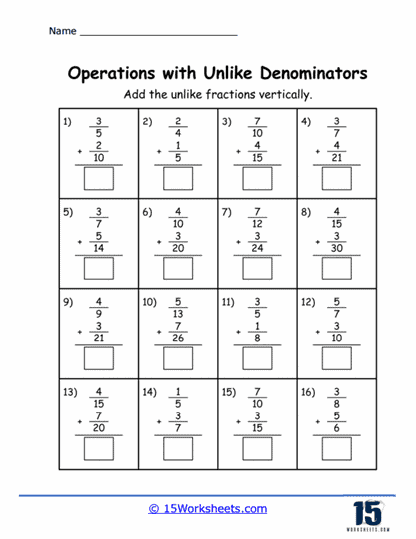
Operations with Unlike Fractions
This worksheet has students add and subtract fractions with unlike denominators. It combines multiple skills-finding denominators, rewriting fractions, and calculating. It’s a challenge but rewarding when the pieces click. This strengthens fraction mastery through practice.
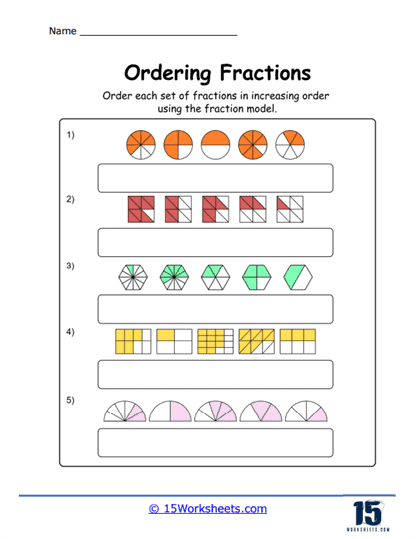
Ordering Fractions
Students arrange fractions from smallest to largest (or the other way around). They’ll compare by cross-multiplying or visualizing with number lines. It’s like building a math ladder, one fraction at a time. This boosts number sense and comparison skills.
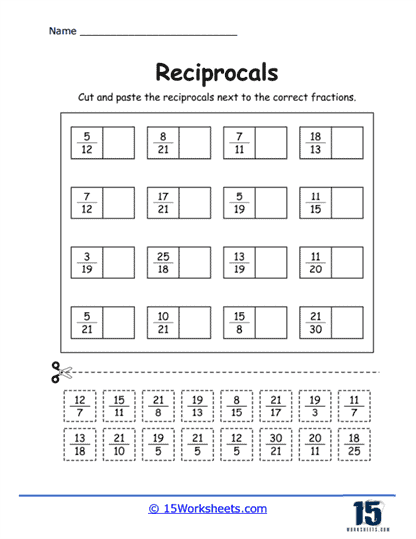
Reciprocals
Here, kids find reciprocals and see how fractions flip upside down. It’s a fun discovery that makes dividing fractions make sense. They’ll practice writing reciprocals and testing them with multiplication. This builds conceptual understanding of inverse operations.
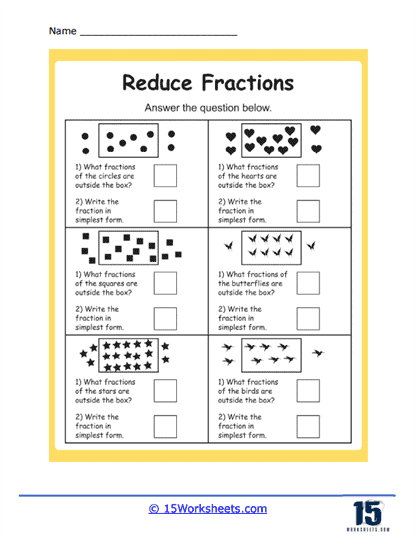
Reducing Fractions
This worksheet guides students to simplify fractions into their lowest terms. It’s like trimming numbers down to their neatest size. They’ll practice dividing by greatest common factors. This builds efficiency and clarity with fractions.
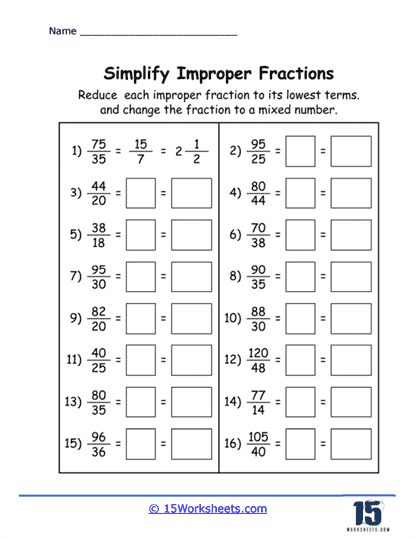
Simplifying Improper Fractions
Students reduce improper fractions step by step into simplest form. It’s a mix of division and simplification. They’ll get practice moving between fraction forms. This helps polish fraction fluency.
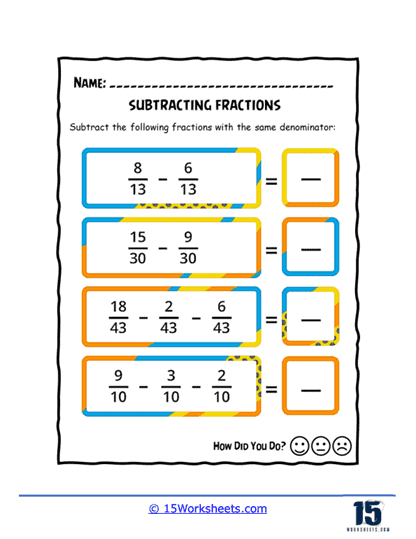
Subtracting Fractions
Here, kids practice subtracting fractions with like and unlike denominators. It’s a hands-on way to reinforce subtraction rules. They’ll visualize differences with number lines or pictures. This builds fluency with everyday fraction subtraction.
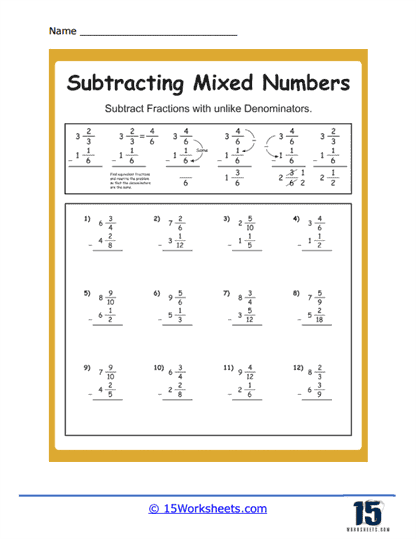
Subtracting Mixed Numbers
Students subtract both whole numbers and fractions in mixed number problems. They’ll practice borrowing and regrouping when needed. It’s a fun but challenging extension of subtraction skills. This supports problem-solving and confidence with real-world math.
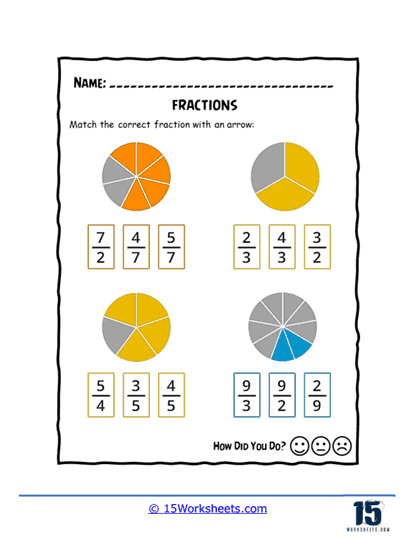
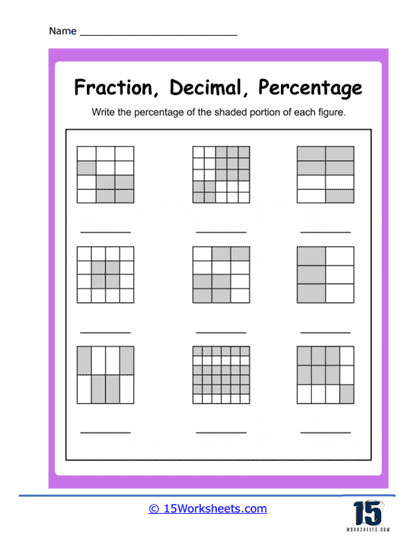
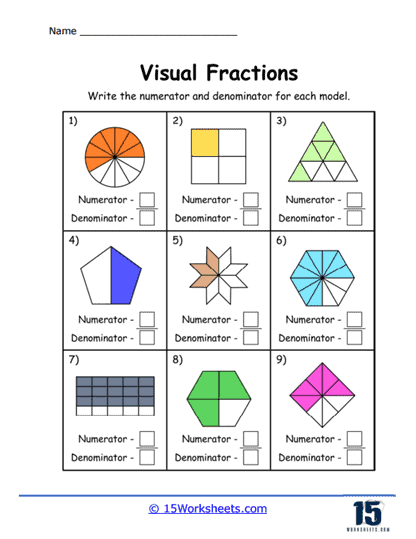
Visual Fractions
This worksheet uses shapes and pictures to show fractions-students match numbers to shaded parts. It’s ideal for learners who need a concrete start with abstract ideas. They’ll connect numbers to visuals in a friendly way. This builds strong foundations in fraction understanding.