
Deciding On Sources Worksheets
About Our Deciding On Sources Worksheets
Research is only as strong as the sources behind it. With so much information available online and in print, students need to know how to tell the difference between trustworthy information and sources that may be unreliable, outdated, or biased. These worksheets help students become smarter researchers by teaching them how to evaluate credibility, relevance, accuracy, and bias before using a source in their work. Instead of accepting information at face value, students learn to ask important questions and make informed decisions.
This collection walks students through many different aspects of source evaluation, including author expertise, publication processes, audience expectations, source relevance, timeliness, bias detection, and credibility assessment. Students will compare sources, apply evaluation frameworks, analyze evidence, examine author qualifications, and determine whether information supports their research goals. The activities encourage critical thinking and help students develop habits that will benefit them across all academic subjects. By practicing these skills, students become more confident and independent researchers.
One of the most valuable lessons these worksheets teach is that not all sources are created equal. A source may sound convincing while still containing bias, outdated information, or unsupported claims. Learning how to evaluate sources carefully helps students build stronger arguments, create more reliable research projects, and become better consumers of information. These skills are useful not only in school but also in everyday life.
About Each Worksheet
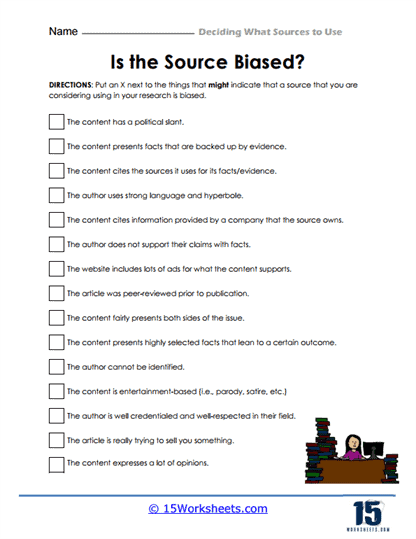
Put An X
Students use a checklist to identify possible signs of bias within a source. By looking for things like one-sided arguments, missing evidence, or persuasive language, they learn how to spot potential red flags. It’s a practical activity that encourages healthy skepticism.
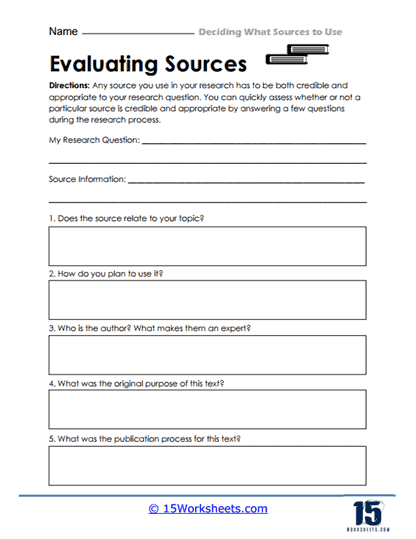
The Process
This worksheet walks students through a step-by-step system for evaluating a source’s value and reliability. They consider the author’s expertise, the purpose of the source, and how it connects to their research question. It helps transform source evaluation into a clear and organized process.
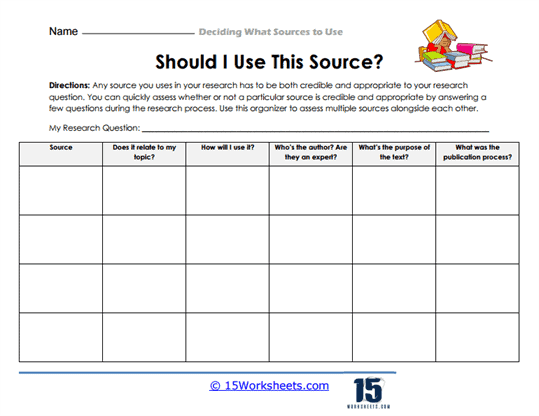
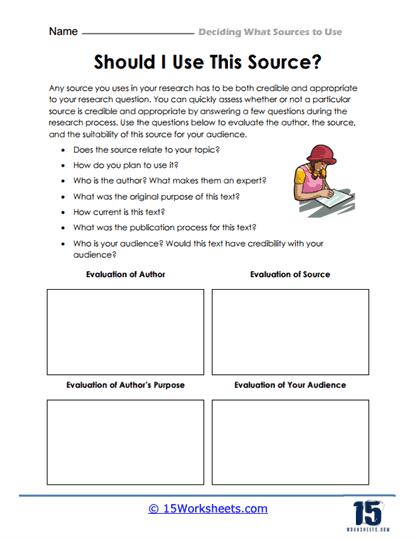
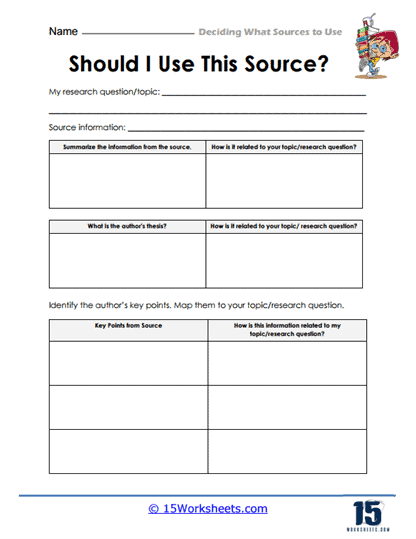
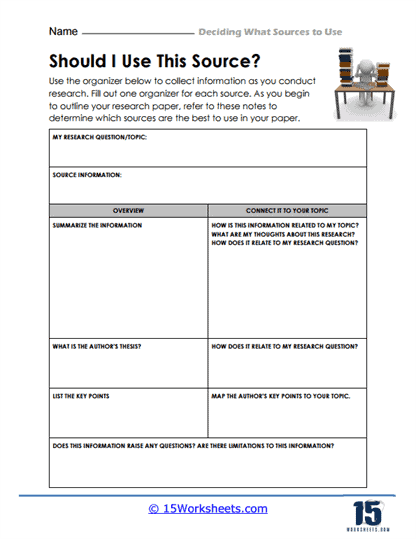
Should I Use This?
Students compare multiple sources using a structured chart that focuses on relevance, credibility, and usefulness. The side-by-side format makes it easier to decide which sources deserve a place in a research project. It’s like creating a report card for research materials.
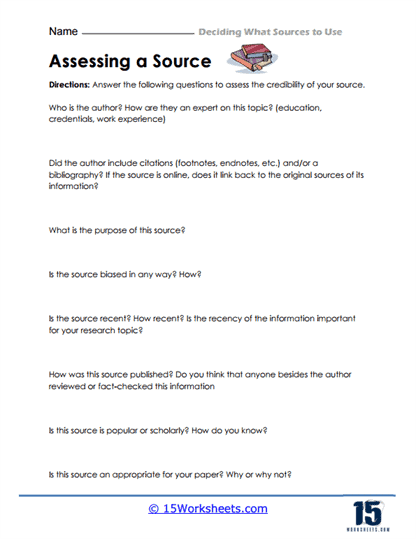
Credibility Assessment
This worksheet encourages students to dig deeper into a source’s trustworthiness. They examine factors such as citations, publication methods, author qualifications, and potential bias. It’s a great exercise for developing strong research habits.
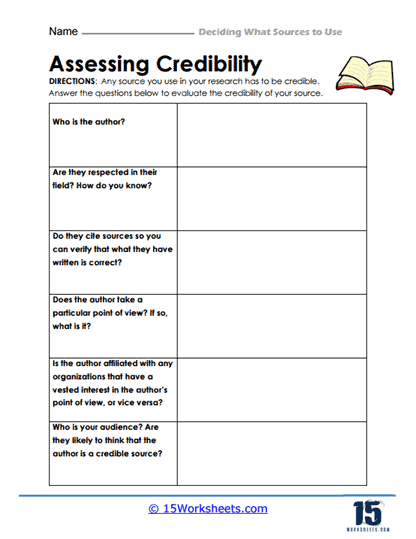
Answer The Questions
Students evaluate a source by answering a series of guided questions about the author, citations, affiliations, and intended audience. The activity encourages thoughtful analysis rather than quick judgments. It helps students understand what makes a source credible.
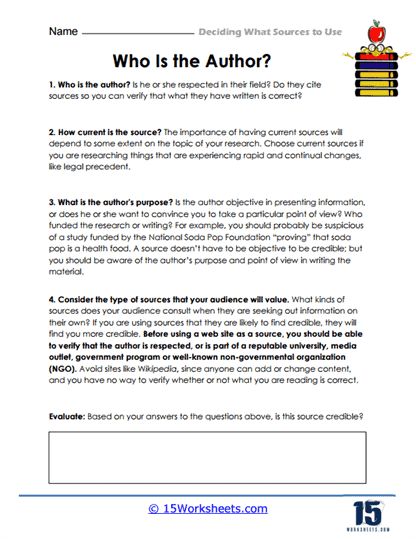
Who’s The Author?
This worksheet focuses on one of the most important research questions: who created the information? Students investigate the author’s background, expertise, and purpose for writing. It’s a valuable reminder that the source of information matters.
Four Evaluations
Students examine a source from multiple angles, including relevance, credibility, timeliness, and audience suitability. The structured approach helps them see source evaluation as more than just checking a publication date. It’s a thorough review process for serious researchers.
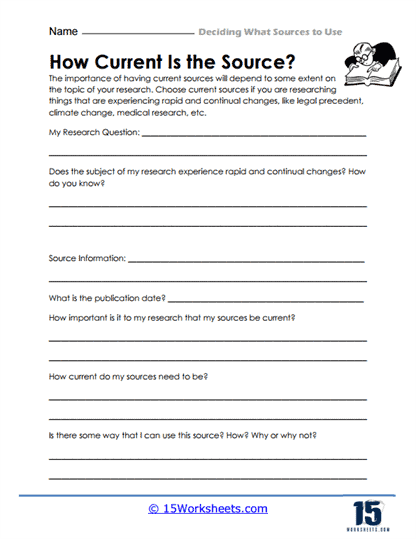
How Current Is It?
This worksheet helps students determine whether a source is recent enough for their topic. They consider how quickly information changes in different fields and whether older sources can still be useful. It’s a great lesson in the importance of context.
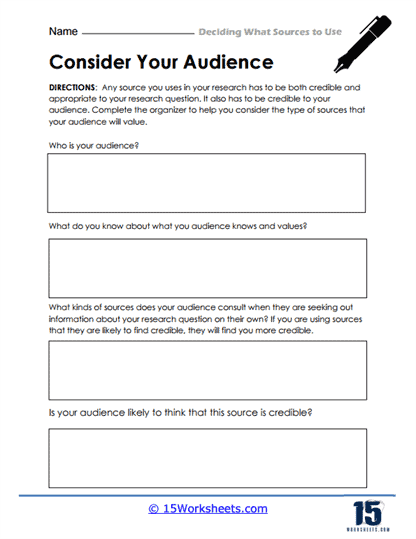
Consider Your Audience
Students think about their intended audience and evaluate whether a source would be considered credible by those readers. The activity highlights the connection between source selection and effective communication. It teaches students to research with their audience in mind.
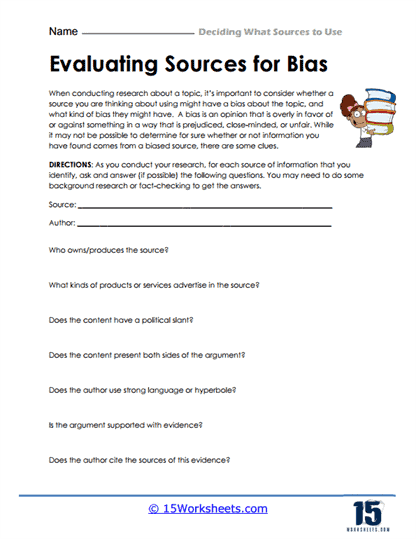
Seeing Bias
This worksheet helps students identify bias by examining ownership, advertising, political viewpoints, language choices, and evidence. It encourages them to look beyond the surface of a source. The activity strengthens critical-thinking skills that apply far beyond research projects.
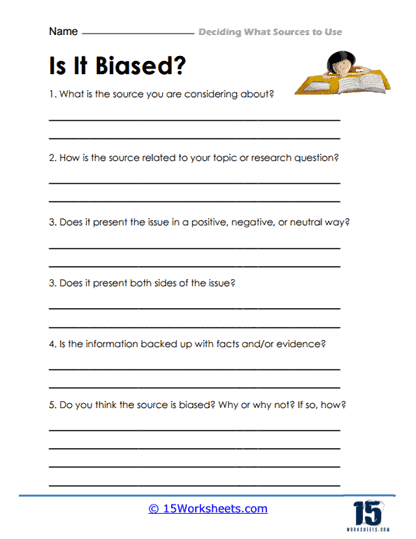
Is It Biased?
Students analyze a source’s tone, perspective, evidence, and treatment of opposing viewpoints. After reviewing the information, they make their own judgment about whether bias is present. It’s a thoughtful exercise in evaluating fairness and objectivity.
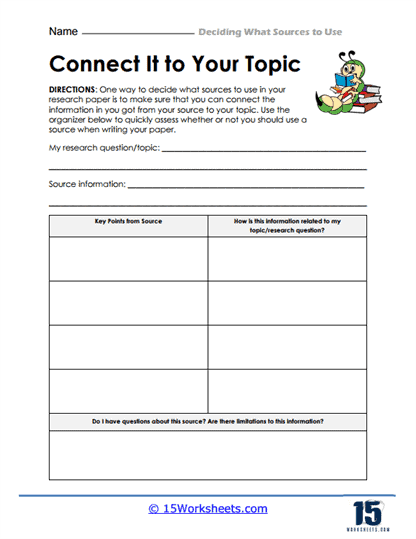
Mapping Key Points
This worksheet asks students to summarize a source’s main ideas and connect those ideas directly to their research question. The process helps them determine whether the information truly supports their topic. It’s an excellent way to stay focused during research.
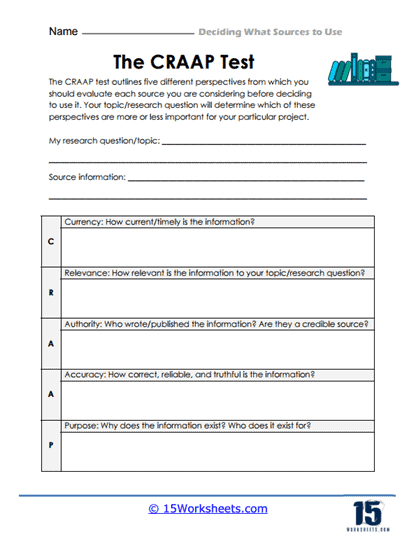
The CRAAP Test
Students apply the popular CRAAP Test by evaluating a source’s Currency, Relevance, Authority, Accuracy, and Purpose. The structured framework makes source evaluation easy to remember and apply. It’s a powerful tool that students can use throughout their academic careers.
Connect Them
Students summarize a source and explain exactly how it relates to their research topic. They also identify limitations and unanswered questions that may affect its usefulness. The activity encourages deeper engagement with source material.
Which Is The Best?
This worksheet helps students compare several sources before choosing the strongest option for their research. By examining relevance, credibility, key points, and limitations, they learn how to make informed decisions. It’s a great final step in the source-selection process.
How to Determine Which Source to Use
Once you have planned your research project, you need to start writing. However, for this, you need to ensure that the research and sources you use are accurate and credible. Understanding which source to use can take time, but as long as you are willing to read the sources properly, take proper notes, and think about how to utilize the information, you should be good to go.
Over the years, there has been a lot of online media. As a 21st-century student, it is highly possible that you have to go through numerous sources of information when researching any topic. However, it can be challenging to determine which source to use when writing. Here, we will tell you how to guide you and help you understand the kind of sources to use when writing.
Getting Started with Research
To choose a topic to write on and understand the research question, you must conduct some preliminary research to boost your thinking.
Once your initial research proposal has been made and you have included general ideas on how to proceed with your research, you need to identify a couple of possible sources you will use. This means that you need to come up with a method that is more focused and will help you search for primary as well as secondary sources.
Pay Close Attention to the Domain Name
When you click on an article you think you can use, look at the website’s domain name. This should include edu, gov, org, or com. The most credible sources are .edu and .gov websites, but you should keep an eye out as sometimes, these suffixes can be used to mislead readers.
You may also find credible information on nonprofit websites, but do proper research about the purpose and agenda of the organization so that you can ensure that the information you are using is not biased. Even though commercial websites like news organizations might be good sources to use, we recommend you do your due diligence to ensure that the information posted is reliable.
Check the Source
Look closely at the article you are reading- does it have a list of authors? Has the essay been cited from authoritative sources, or is the website writing down opinions without backing them up with facts? Have the credentials been mentioned at the end of the article?
Moreover, look at the date of publication as well. Sometimes, it does not matter if the source is old, but depending on the field of study, some information can get outdated quickly, making the data obsolete.
Back Up Information You Have Found
When you use any source within your writing, you must verify its legitimacy and authenticity. This means finding other sites that have used the same source as you.
If you find that the source you want to use has not been used by anyone else, we recommend doing some further research to ensure that it is reliable.
Certain Sources Can Only be Used to Jumpstart Research
Some sources like Wikipedia should not become the entire basis of your writing. You will find a considerable volume of data on Wikipedia but keep in mind that this information has been worked upon by several writers, which means that it has questionable reliability.
You might even find some incorrect information, so you should only use these websites to kickstart your research rather than cite them in your writing.