
Critical Thinking Worksheets
About These 15 Worksheets
Critical thinking is like exercise for the brain-it keeps students sharp, flexible, and ready to solve problems from all angles. This collection of worksheets offers brain teasers, riddles, logic puzzles, and reflection prompts that challenge kids to look beyond the obvious. From “Odd One Out Safari” to “2 Truths and a Trick,” the activities feel playful but are designed to build deeper reasoning skills. They help kids question assumptions, spot patterns, and explain their thinking clearly.
The variety of activities keeps things fresh and engaging. Some worksheets focus on observation and logic puzzles, while others emphasize writing, reflection, or analysis of arguments. Whether students are counting hidden squares, dissecting a print ad, or exploring philosophical questions, they’re practicing the same skill: slowing down and thinking carefully. The balance between creative and analytical tasks ensures that different types of learners find something that clicks.
Beyond academics, critical thinking is a life skill. These worksheets encourage kids to apply their reasoning to real-world challenges-like spotting fallacies, solving conflicts, or questioning messages in media. By practicing in a safe, structured way, students build the confidence to think independently, ask better questions, and make thoughtful decisions.
Have a Look Inside Each Worksheet
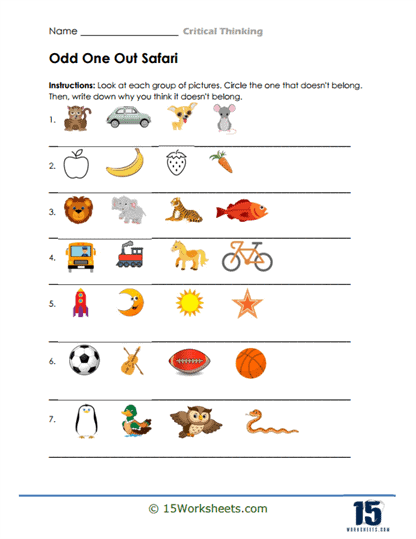
Odd One Out Safari
Students look at groups of animals and objects to decide which one doesn’t belong. The activity sharpens observation skills and logical reasoning. It feels like a game but builds classification abilities. Kids practice justifying their choices with clear explanations.
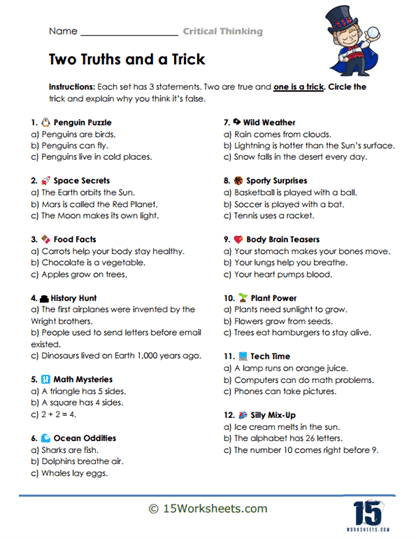
2 Truths and a Trick
This worksheet challenges learners to spot the false statement among three options. It encourages critical thinking, skepticism, and careful reading. Students practice weighing evidence and questioning assumptions. It’s a playful way to build sharper judgment skills.
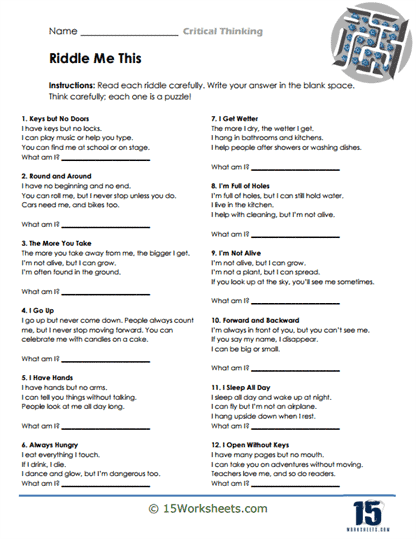
Riddle Me This
Here, students solve fun riddles that require logic and creativity. The worksheet pushes them to think outside the box and look for hidden clues. It makes problem-solving engaging through wordplay. Kids strengthen reasoning while having a laugh at clever puzzles.
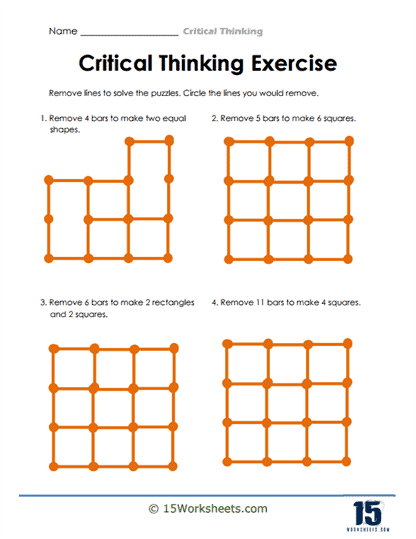
Bar Puzzle
Students use logic and spatial skills to solve a bar arrangement challenge. It encourages persistence and step-by-step reasoning. The activity feels like a hands-on brain teaser. It’s great for building patience and critical analysis.
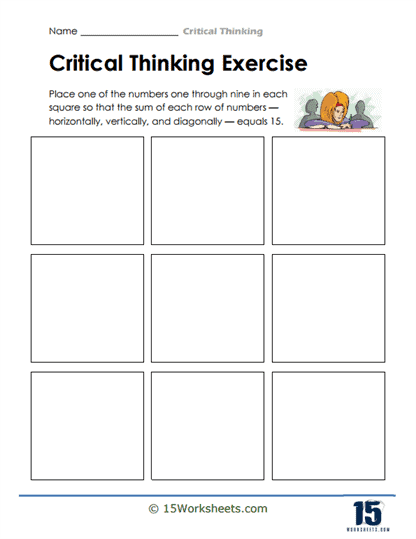
A Total of 15
This worksheet asks students to use numbers creatively to reach a sum of 15. It blends math with strategy and critical thinking. Kids test different combinations to find solutions. The challenge builds problem-solving stamina.
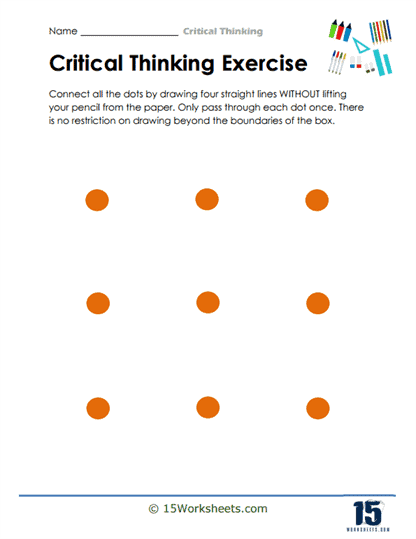
Connect the Dots
Instead of pictures, this activity has students connect related ideas. It emphasizes relationships between concepts. The worksheet builds flexible thinking. Learners practice making meaningful connections beyond surface details.
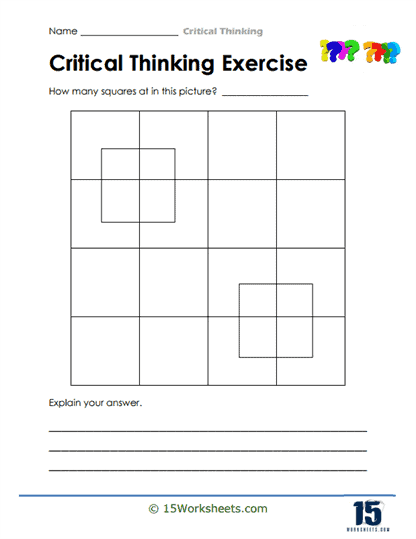
Count the Squares
Students are tasked with finding all the squares hidden in a complex figure. It encourages attention to detail and persistence. The activity shows how things aren’t always as simple as they first look. Kids learn the value of careful observation.
Proving Your Belief
This worksheet guides students to take a position on a statement and back it up with reasoning. It fosters evidence-based argumentation. Kids practice explaining their thoughts clearly. The activity boosts both critical and communication skills.
What You Learned
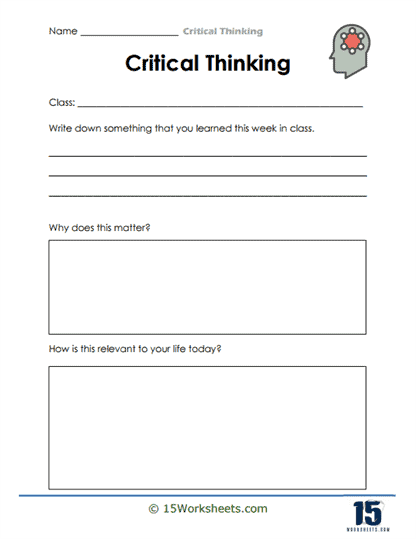
Students reflect on a passage or lesson and summarize it in their own words. It builds comprehension and metacognition. The activity pushes learners beyond memorization. Reflection deepens understanding and retention.
Choose a Prompt
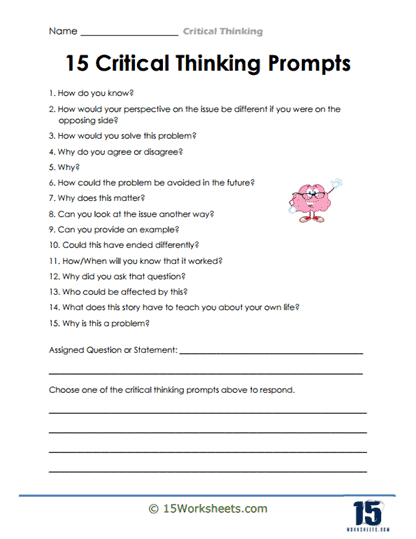
Here, students respond to thought-provoking questions or scenarios. It encourages creative and logical thinking. Learners must support their ideas with reasoning. The activity helps them practice open-ended problem-solving.
Narrative Parallels
This worksheet asks students to compare stories or texts for similarities and differences. It develops analytical and comparative thinking. Learners practice spotting themes, structures, and connections. It builds a deeper appreciation of literature.
Real-Life Applications
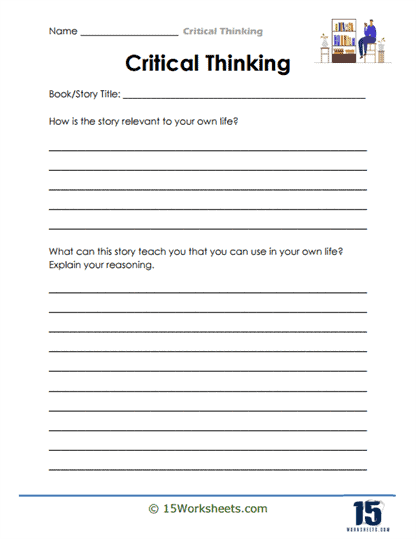
Students connect abstract concepts to everyday life situations. It highlights the practicality of what they learn in class. The activity fosters relevance and critical reflection. It encourages kids to see knowledge as useful beyond school.
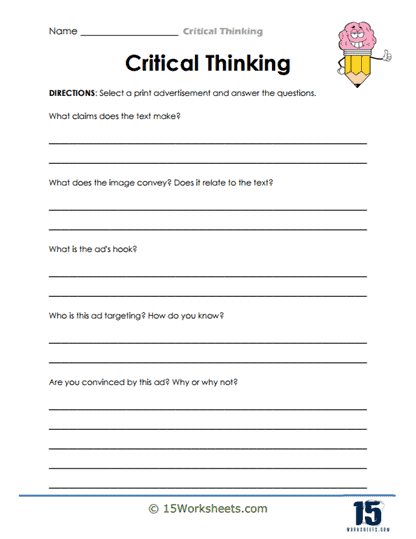
Dissecting a Print Ad
Here, students analyze advertisements for persuasive techniques and bias. The worksheet teaches media literacy and skepticism. It sharpens awareness of how messages influence audiences. Kids learn to question what they see in everyday media.
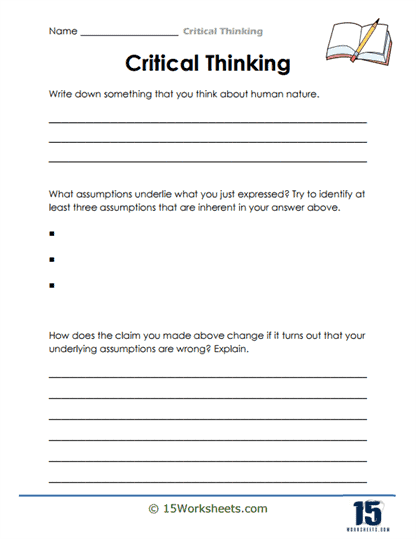
A Philosophical Inquiry
This worksheet poses big questions for students to explore. It develops curiosity, reasoning, and discussion skills. Learners consider multiple perspectives instead of one “right” answer. It builds open-mindedness and reflective thinking.
Beyond the Surface
Students practice looking deeper into ideas rather than settling for first impressions. The activity fosters questioning and careful analysis. It encourages patience in thinking through problems. Kids learn not to jump to conclusions too quickly.
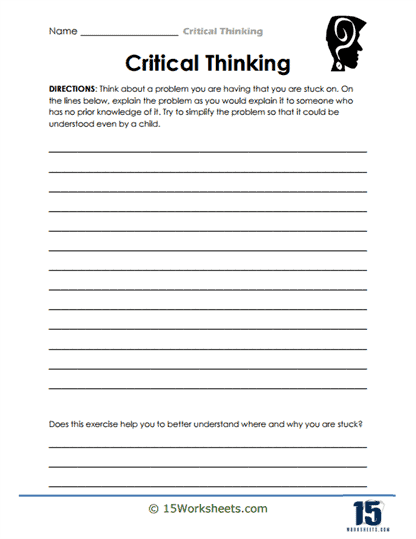
Simplify the Problem
Here, students break down complicated challenges into smaller parts. It teaches logical sequencing and step-by-step problem-solving. The worksheet makes hard problems feel manageable. Kids gain confidence by mastering pieces before the whole.
Explain Your Reasoning
This activity emphasizes articulating the “why” behind answers. Students strengthen logic by putting thoughts into words. It values the process as much as the result. The worksheet supports both critical and communication skills.
Looking for Fallacies
Students learn to spot errors in reasoning and faulty arguments. The activity makes logic fun by exposing common mistakes. It sharpens debate and critical reading skills. Kids learn how to avoid weak arguments in their own work.
How to Help Foster Student Critical Thinking Skills
Improving critical thinking skills in students is a fundamental role of educators, as these skills equip students to analyze, evaluate, and synthesize information in a reasoned manner. To begin with, teachers should cultivate a classroom environment that values questions over answers.
Encouraging students to ask “why” and “how” helps them delve deeper into topics and challenges their preconceived beliefs. Incorporating problem-based learning into the curriculum is another effective approach. By presenting students with real-world problems, they learn to apply their knowledge, analyze situations, and come up with solutions.
Regularly engaging students in debates or discussions on diverse topics can also sharpen their ability to think on their feet, consider different viewpoints, and defend their perspectives with evidence. Furthermore, teachers should emphasize the importance of reflection. After tasks or discussions, providing opportunities for students to reflect on their thinking process can foster self-awareness of their cognitive habits.
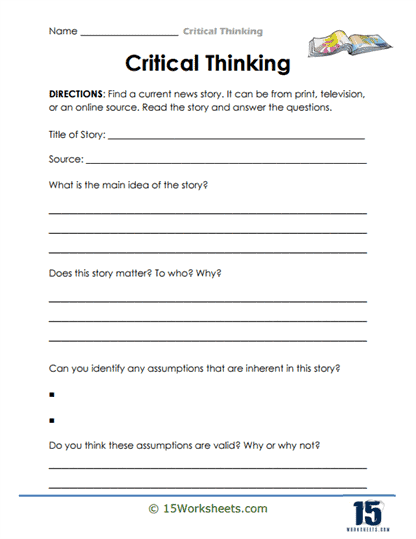
Assigning projects that require evaluating information from various sources also helps. In a digital age where misinformation is rampant, teaching students to discern credible from non-credible sources is crucial.
Promoting metacognition-thinking about one’s thinking-can be transformative. By making students conscious of their thought processes and guiding them in recognizing biases, assumptions, or logical fallacies, educators empower them to become more discerning and independent thinkers. In essence, fostering critical thinking is about providing students with tools to think clearly and rationally, equipping them for challenges both inside and outside the classroom.