
Word Chops Worksheets
About These 15 Worksheets
Big words can sometimes feel intimidating to young readers, but breaking them into smaller pieces makes them much easier to understand. That’s exactly what these Word Chops Worksheets are all about. Students practice taking words apart into syllables and putting them back together again, almost like solving tiny language puzzles. Through matching, sorting, cutting, blending, and building activities, learners strengthen their understanding of how words are formed while developing important phonics and decoding skills.
This worksheet collection helps students become more comfortable recognizing syllable patterns, vowel teams, compound words, and other phonics concepts that appear in everyday reading. Learners practice combining chopped word parts, identifying sound patterns, and analyzing how vowels and consonants work together inside words. The activities are designed to feel interactive and approachable, keeping students engaged while reinforcing reading fluency and spelling development. Whether students are practicing independently, in literacy centers, or with teacher guidance, these worksheets turn word study into a hands-on experience instead of a boring memorization drill.
Beyond phonics practice, these worksheets also help students understand the structure of language itself. Learners begin noticing patterns in spelling, pronunciation, and syllable division that appear across stories, conversations, and classroom reading activities. These skills strengthen reading confidence because students learn strategies for tackling unfamiliar vocabulary instead of guessing or giving up. By the end of the collection, students may find themselves happily “chopping” random words into syllables during regular conversations like tiny word scientists with invisible scissors.
About Each Worksheet
Puzzle Pieces
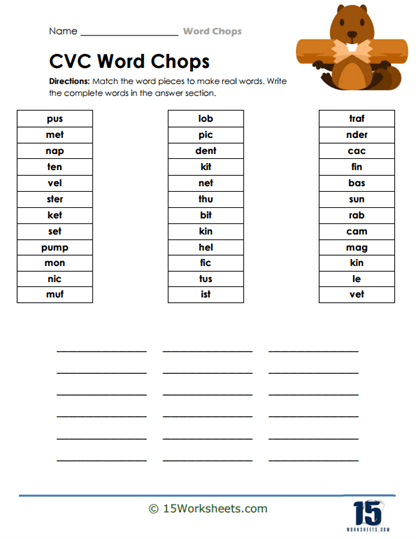
Puzzle Pieces asks students to combine chopped word parts to create complete vocabulary words. Learners carefully study syllable fragments and match beginnings with endings before writing the finished words on the lines provided. The activity helps students understand how words are built from smaller sound units while strengthening phonics awareness. It’s a fun hands-on worksheet that works well for literacy centers or independent phonics practice. Students often enjoy the satisfying puzzle-solving feeling that comes from building real words successfully.
Hint Builders
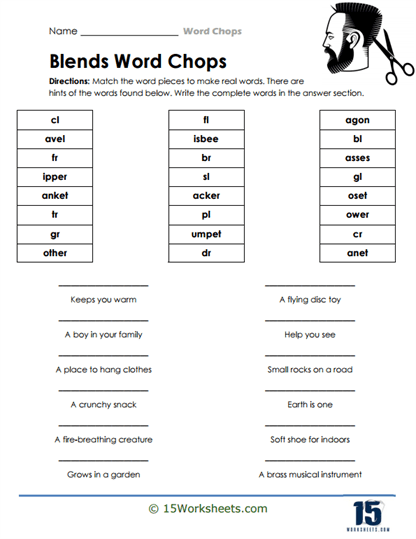
Hint Builders challenges students to create complete words from chopped syllable pieces while using written clues for support. Learners combine sound parts to form words connected to objects, actions, or ideas described in the hints. The worksheet encourages students to use both phonics knowledge and reading comprehension skills together. It’s a great activity for helping learners strengthen reasoning while practicing word construction. Students may feel like little language detectives solving secret word clues as they work.
Chopped Clues
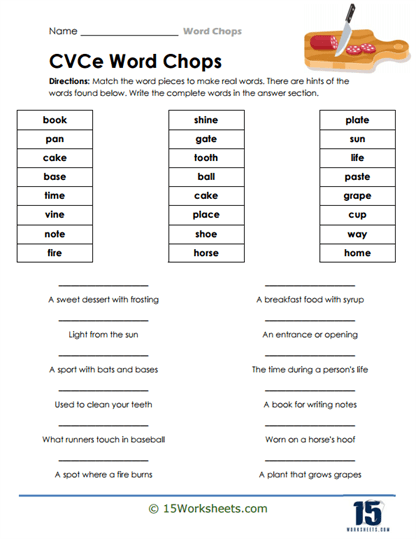
Chopped Clues asks students to combine word parts into complete vocabulary words using helpful written hints. Learners blend syllable chunks together while practicing sound recognition and clue interpretation. The activity strengthens understanding of how syllables connect to form meaningful language. It works especially well for building decoding confidence in an interactive and engaging format. Students often enjoy the challenge of figuring out which syllable combinations make the most sense.
Closed Cuts
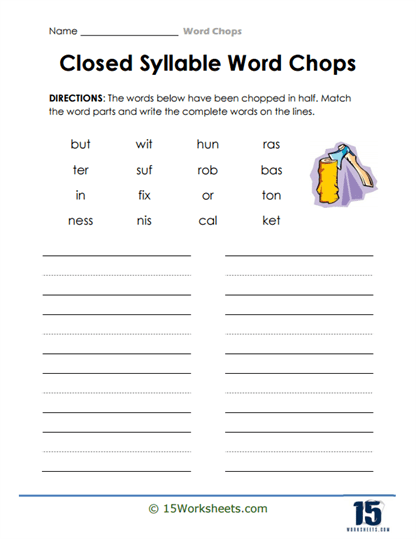
Closed Cuts introduces students to closed syllable patterns through chopped word matching activities. Learners combine syllable fragments to create words that follow important closed syllable phonics rules. The worksheet helps students recognize how vowels and consonants work together to shape pronunciation. It’s a helpful activity for reinforcing foundational reading and spelling strategies. Students may start noticing closed syllables hidden inside all sorts of familiar words after practicing.
Open Sounds
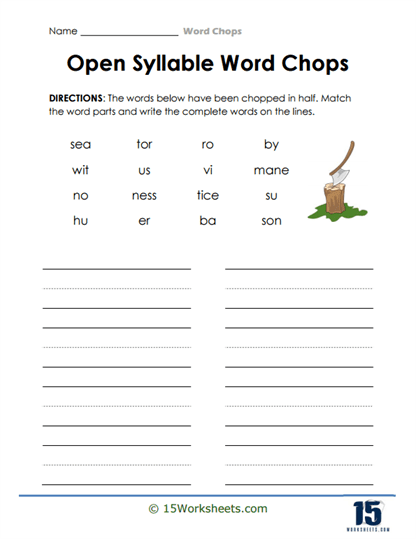
Open Sounds teaches students about open syllable patterns while asking them to build complete words from chopped pieces. Learners focus on how open syllables create long vowel sounds within words. The activity strengthens sound analysis and helps students better understand vowel pronunciation patterns. It’s a wonderful worksheet for introducing more advanced phonics concepts in a manageable way. Students often enjoy hearing how vowel sounds change depending on syllable structure.
Magic Matches
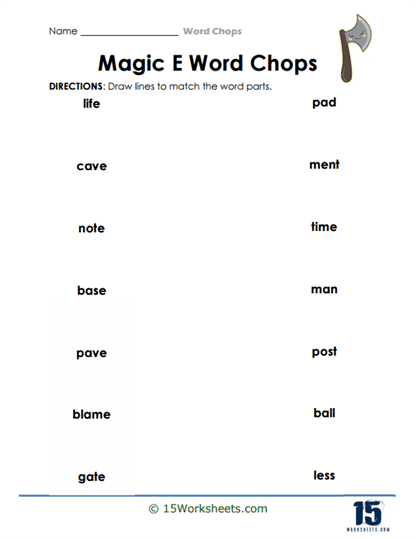
Magic Matches asks students to connect word parts that form complete magic-e words. Learners study beginning and ending syllables while practicing silent-e spelling patterns and long vowel sounds. The worksheet reinforces important phonics rules through interactive matching practice. It works especially well for helping students notice how one silent letter can completely change a word’s pronunciation. Students may suddenly realize the silent “e” is secretly doing a lot of hard work behind the scenes.
Team Builders
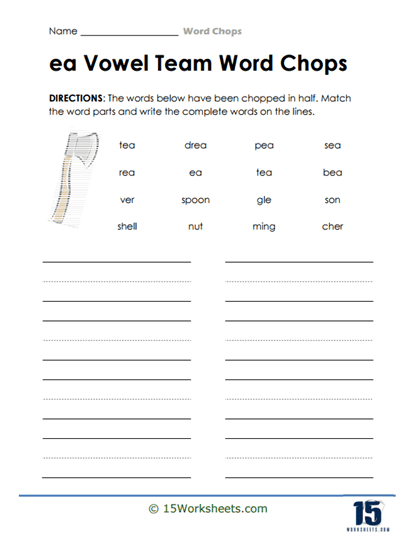
Team Builders introduces students to vowel team patterns through chopped word-building exercises. Learners combine syllables containing vowel teams and blend them together into complete words. The activity helps students recognize common vowel combinations that appear frequently in reading and spelling. It’s a great worksheet for strengthening decoding confidence and sound recognition skills. Students often enjoy spotting familiar vowel teams they’ve seen in books and classroom vocabulary.
Controlled Connections
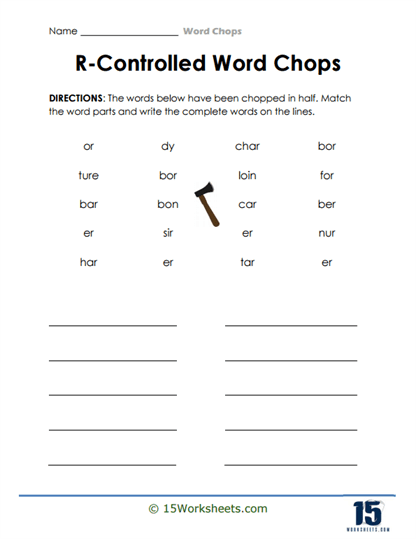
Controlled Connections focuses on r-controlled syllables while asking students to blend chopped word parts into complete vocabulary words. Learners practice recognizing how the letter “r” changes vowel sounds in different words. The worksheet strengthens advanced phonics understanding while encouraging careful sound analysis. It’s a helpful activity for improving pronunciation and decoding strategies with more challenging vocabulary. Students may begin hearing those strong r-controlled sounds everywhere once they know what to listen for.
Little Endings
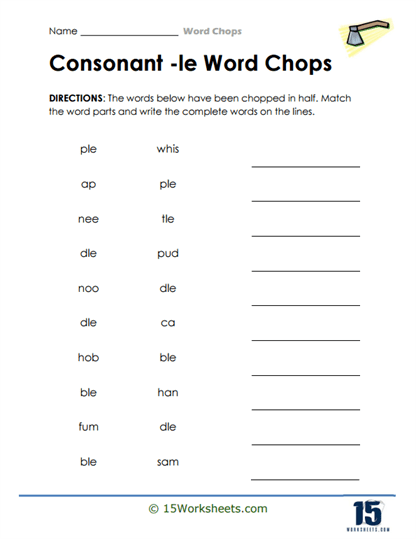
Little Endings teaches students about consonant-le word patterns through interactive chopped word matching activities. Learners combine beginning and ending parts to create complete consonant-le words. The worksheet helps students recognize common spelling structures while reinforcing syllable awareness. It works especially well for strengthening spelling confidence and reading fluency at the same time. Students often enjoy discovering how many everyday words end with these special syllable patterns.
Diphthong Divides
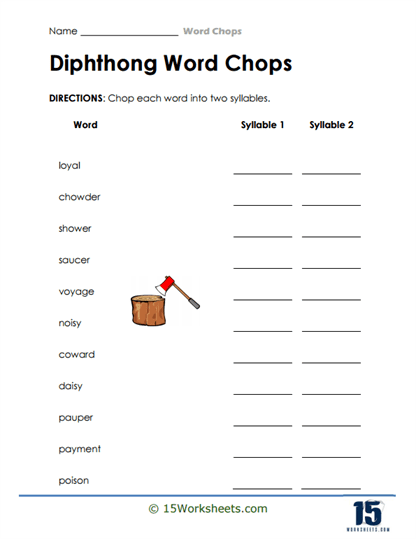
Diphthong Divides asks students to separate diphthong words into two syllables by writing each part separately. Learners analyze blended vowel sounds while practicing syllable division skills. The activity strengthens understanding of complex vowel patterns and spoken sound combinations. It’s a great worksheet for helping students tackle longer words with more confidence and organization. Students may feel pretty accomplished when tricky-looking words suddenly become much easier to read.
Compound Combos
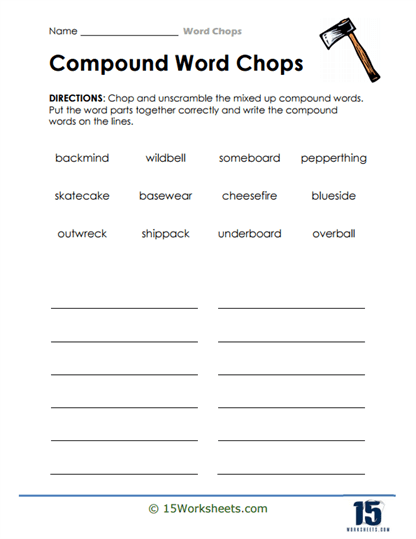
Compound Combos challenges students to unscramble chopped compound words and rebuild them correctly. Learners combine smaller familiar words to form larger compound vocabulary terms. The worksheet helps students understand how compound words are created while strengthening spelling and vocabulary skills. It works nicely as both a phonics activity and a word meaning exercise. Students often enjoy realizing that giant-looking words are really just two smaller words working together.
Sorting Sounds
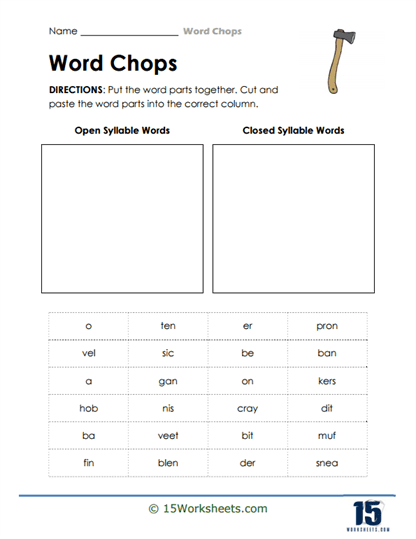
Sorting Sounds asks students to cut and paste chopped word parts into open syllable and closed syllable categories. Learners carefully study sound patterns before deciding where each word belongs. The activity combines hands-on participation with important phonics analysis practice. It’s an engaging worksheet that supports organization, classification, and reading fluency development all at once. Students often enjoy the movement and sorting process while practicing sound recognition skills.
Vowel Teams
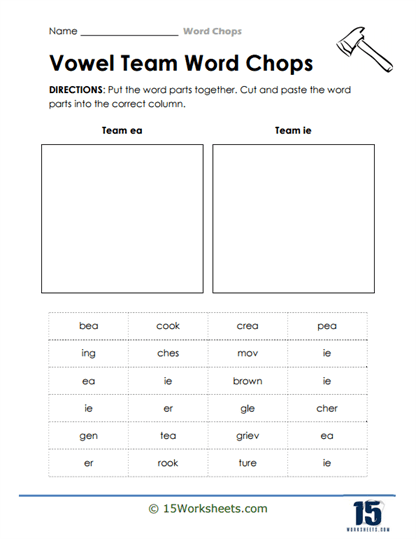
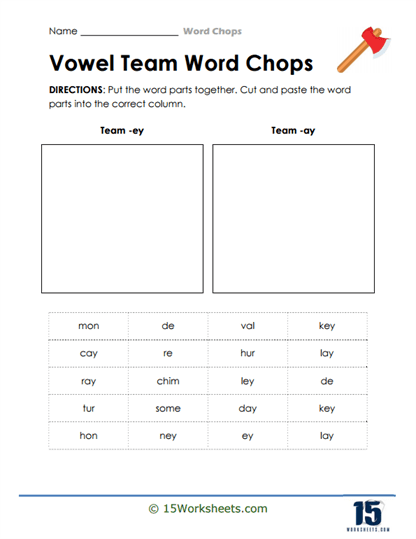
Vowel Teams focuses on common vowel team spelling patterns through chopped word sorting activities. Learners build complete words and organize them into matching vowel team categories. The worksheet helps students recognize sound similarities and spelling structures that appear often in everyday vocabulary. It’s a helpful activity for strengthening both pronunciation and spelling confidence. Students may begin spotting vowel teams all over the place once they become familiar with the patterns.
Kitchen Chops
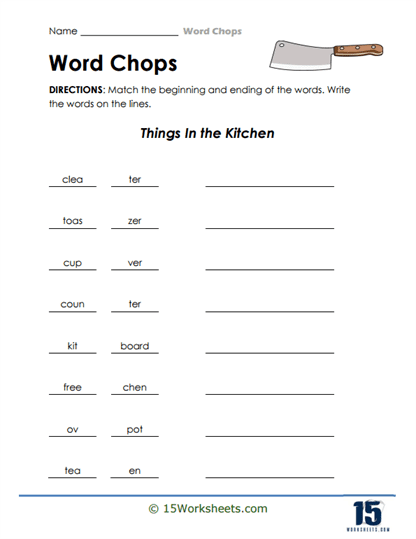
Kitchen Chops asks students to combine chopped word beginnings and endings to create kitchen-themed vocabulary words. Learners blend syllable fragments together while practicing phonics and word analysis skills using familiar household terms. The worksheet makes vocabulary learning feel practical and connected to real-life experiences. It’s an engaging activity for strengthening decoding while reinforcing useful everyday words. Students often enjoy recognizing kitchen objects they see at home every day.
Team Trails
Team Trails teaches students to sort chopped word parts based on vowel team patterns. Learners combine syllable pieces into complete words before placing them into the correct categories. The worksheet strengthens understanding of vowel combinations while reinforcing organization and sound analysis skills. It works especially well for helping learners recognize repeated spelling patterns across different words. Students may start seeing vowel teams like little word families traveling together through the worksheet.
Rule Breakers
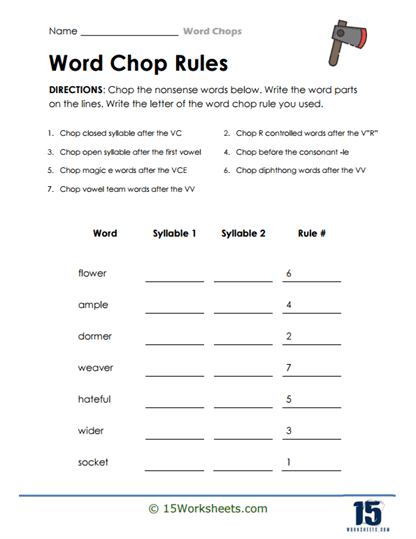
Rule Breakers asks students to chop words into syllables while identifying the phonics rule connected to each word. Learners carefully analyze spelling patterns and explain why words divide in certain ways. The activity introduces multiple phonics concepts in one organized and thoughtful format. It’s a fantastic worksheet for helping students move beyond memorization into true word analysis. Students often feel very accomplished when they can explain the “why” behind syllable division rules.
Two-Part Words
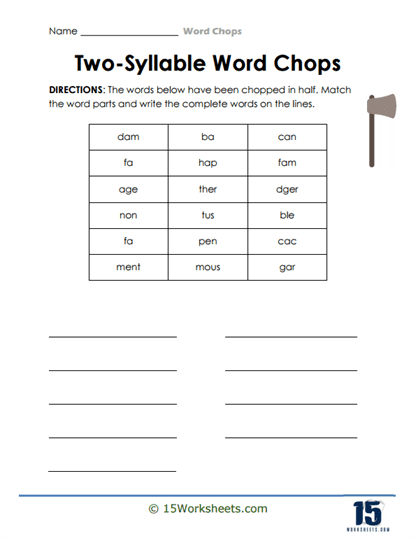
Two-Part Words encourages students to combine chopped syllables into complete two-syllable vocabulary words. Learners experiment with different combinations while practicing blending and decoding strategies. The worksheet reinforces understanding of syllable structure in a playful and approachable way. It works nicely for building reading confidence through repeated word construction practice. Students often enjoy testing different combinations until the pieces finally click together correctly.
Syllable Scramble
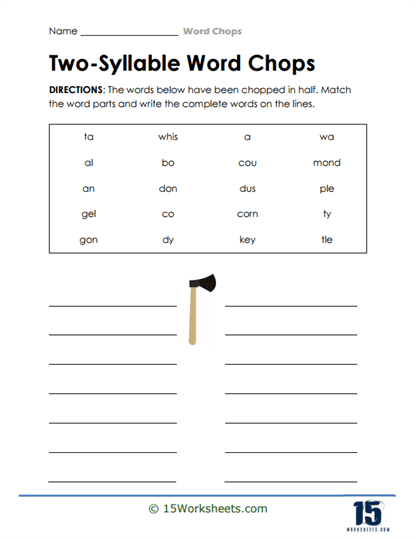
Syllable Scramble asks students to match chopped word parts together to create complete two-syllable words. Learners analyze syllable fragments carefully before writing the finished vocabulary words on the lines provided. The activity strengthens understanding of sound patterns, spelling structures, and syllable blending. It’s a helpful worksheet for reinforcing reading fluency and vocabulary recognition through hands-on problem-solving. Students may feel like word mechanics carefully rebuilding language one syllable at a time.
What are Word Chops?
Word chops are activities where students break words into smaller sound parts, usually syllables, and then put those parts back together again. Instead of reading a large word as one giant chunk, learners practice recognizing how words are organized into manageable pieces. This helps students understand pronunciation, spelling, and phonics patterns much more clearly. Think of it like taking apart a toy to see how all the pieces work together before rebuilding it again. Except in this case, the “toy” is language, and nobody loses the tiny screws under the couch.
Learning through word chops helps students become stronger readers because it improves decoding and phonemic awareness skills. When learners understand how syllables, vowel teams, and spelling patterns work together, unfamiliar words feel less intimidating. Students begin noticing repeated sound structures and recognizing common word patterns that appear throughout books and conversations. These skills also strengthen spelling because students can analyze words piece by piece instead of relying entirely on memorization. The more students practice chopping and rebuilding words, the more automatic strong reading habits become.
Studying word structure also supports broader literacy development connected to reading fluency, vocabulary growth, writing, and comprehension. Students improve pronunciation, strengthen sound analysis skills, and build confidence tackling larger vocabulary words independently. These activities encourage critical thinking because learners actively test patterns, compare sounds, and solve language puzzles while reading. Most importantly, word chops help students realize that even challenging words can be understood when broken into smaller, manageable parts. And honestly, chopping words apart is much less messy than chopping vegetables in the kitchen.